Counting skills Multiplication Worksheets for Ages 4-8
4 filtered results
-
From - To
Discover our engaging Counting Skills Multiplication Worksheets designed specifically for children aged 4 to 8! These worksheets offer fun and interactive ways to introduce young learners to the basics of multiplication while strengthening their counting abilities. Through colorful illustrations and creative exercises, kids will develop foundational math skills in an enjoyable manner. Our resources are perfect for at-home learning or classroom activities, ensuring that each child builds confidence as they progress. Foster a love for math and inspire curiosity with our carefully crafted worksheets that cater to early learners. Start your child's multiplication journey today and watch them excel!
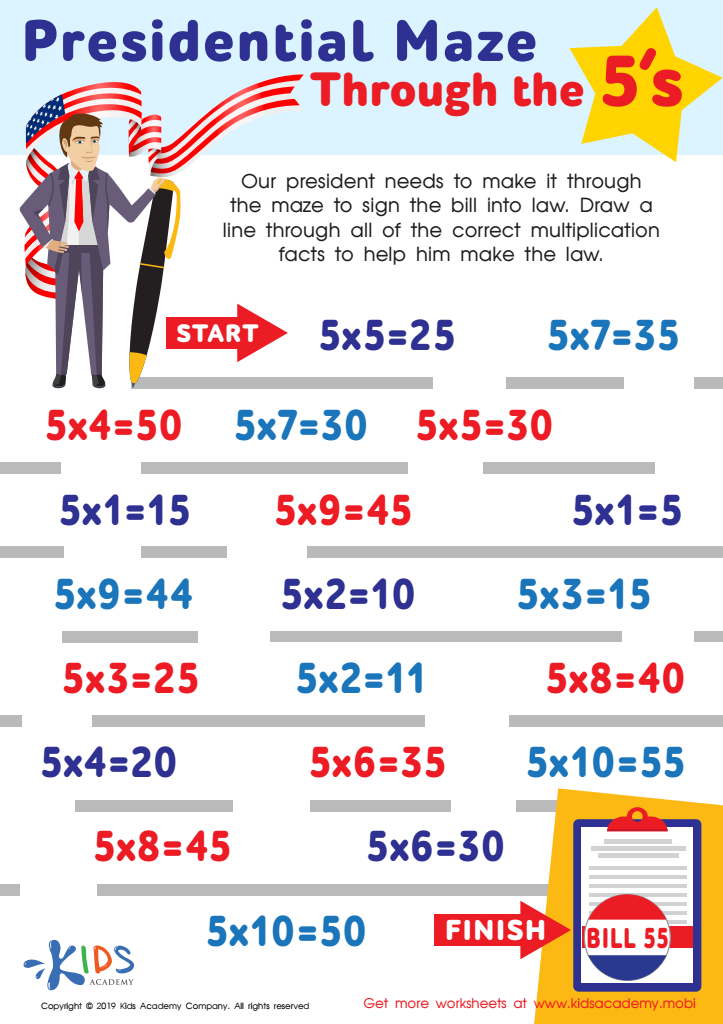
Presidential Maze Through the 5’s Worksheet
 Assign to My Students
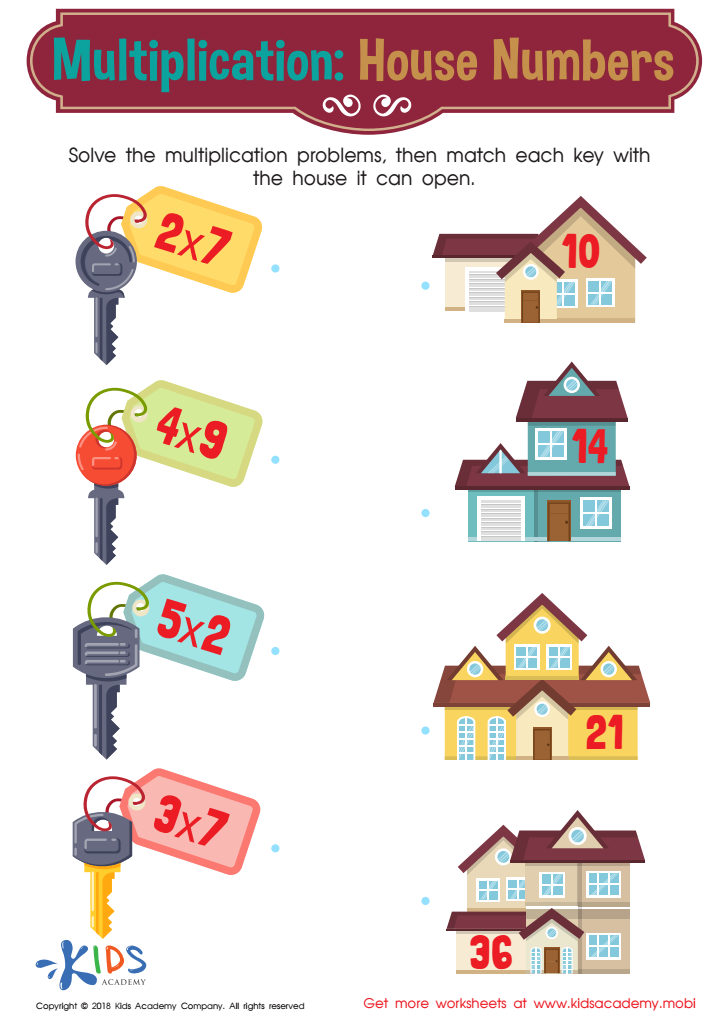
House Numbers Worksheet
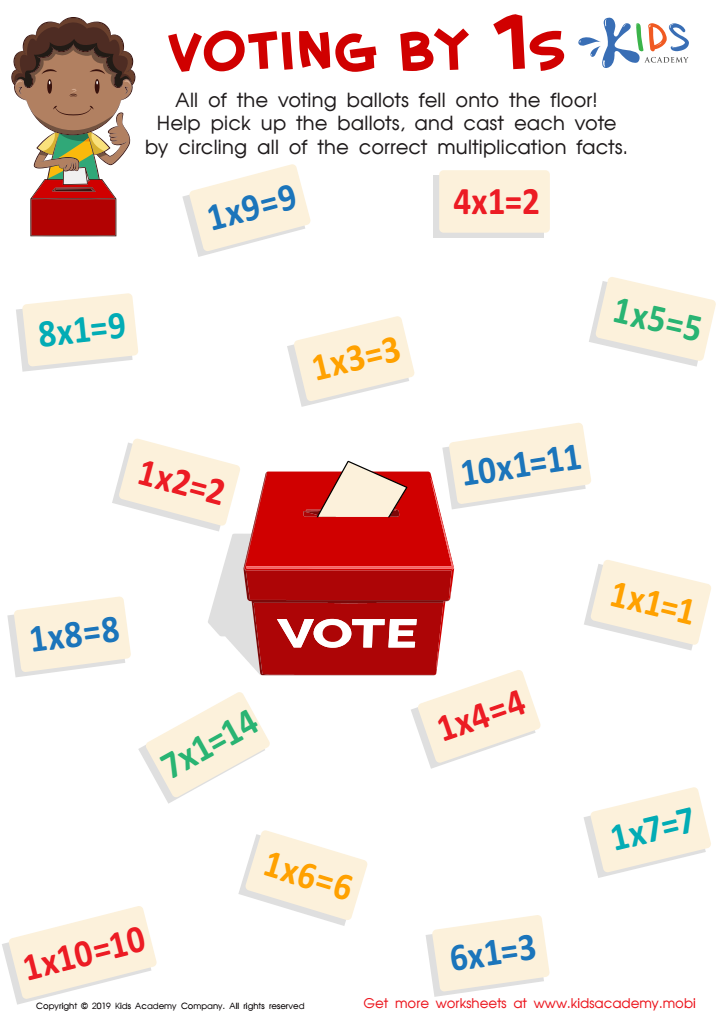
Voting by 1s Worksheet
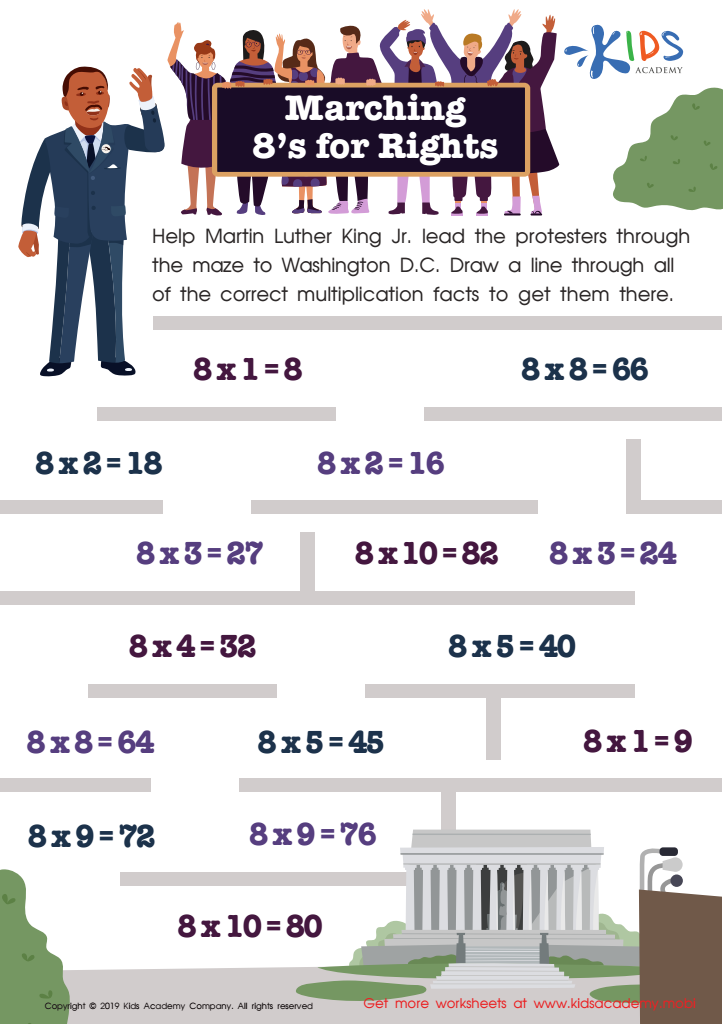
Marching 8’s for Rights Worksheet








Counting skills and multiplication proficiency are foundational elements of early mathematics education for children aged 4-8. Parents and teachers should prioritize these skills because they serve as the building blocks for more complex mathematical concepts encountered later in school.
Firstly, counting is crucial for developing number sense, which helps children understand quantity, order, and relationships between numbers. Mastering counting enables children to perform basic arithmetic operations, setting them up for success in addition and subtraction.
Multiplication, though often introduced later, relies on a solid understanding of counting. Early exposure to multiplication concepts through grouping and repeated addition not only builds calculation skills but also strengthens problem-solving abilities and logical thinking.
Moreover, proficiency in counting and multiplication fosters cognitive development. Engaging families in activities that promote these skills can enhance parent-child bonding and provide practical applications of math in everyday life, such as cooking or shopping.
In essence, nurturing counting and multiplication abilities equips children with essential skills for academic success, reinforces the importance of a positive attitude toward mathematics, and lays the groundwork for critical thinking in various real-world situations. Recognizing their importance can profoundly influence children’s overall educational journey.








