Number Recognition Multiplication Worksheets for Ages 4-8
4 filtered results
-
From - To
Discover our engaging Number Recognition Multiplication Worksheets designed specifically for children ages 4-8! These worksheets combine foundational number recognition skills with the basics of multiplication, making learning both fun and effective. Each activity promotes cognitive development and enhances mathematical understanding through colorful visuals and interactive tasks. Perfect for preschoolers and early elementary students, our worksheets encourage independent learning and boost confidence in math. Parents and teachers can easily print these resources for home or classroom use. Help your child build a strong mathematical foundation while having a blast with our exciting multiplication worksheets! Explore today for hours of educational fun!
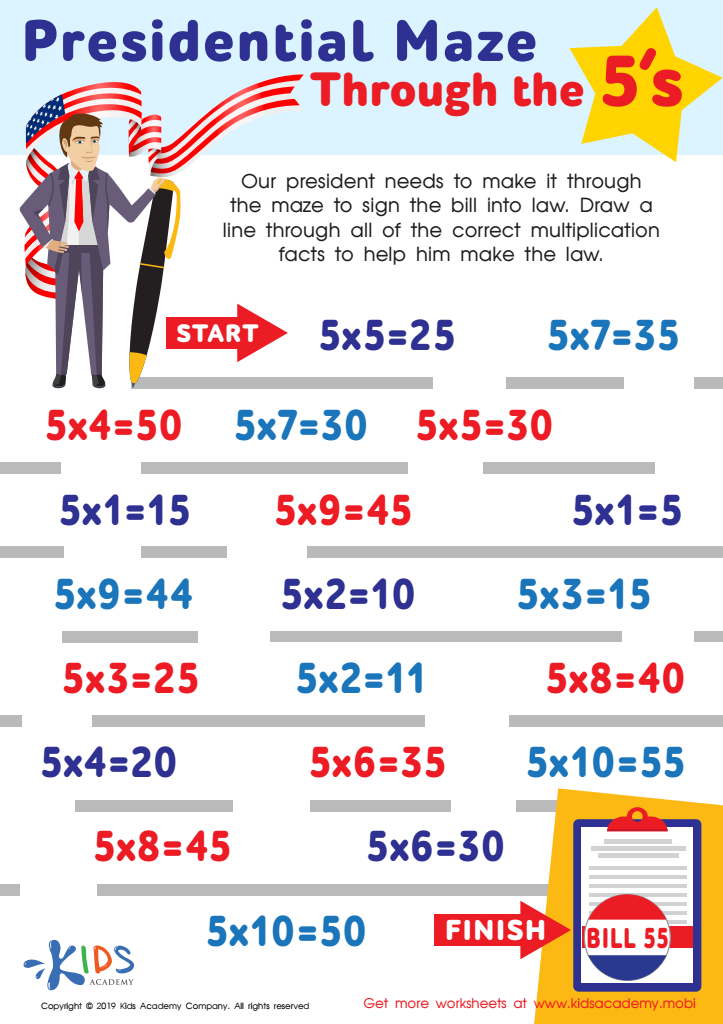
Presidential Maze Through the 5’s Worksheet
 Assign to My Students
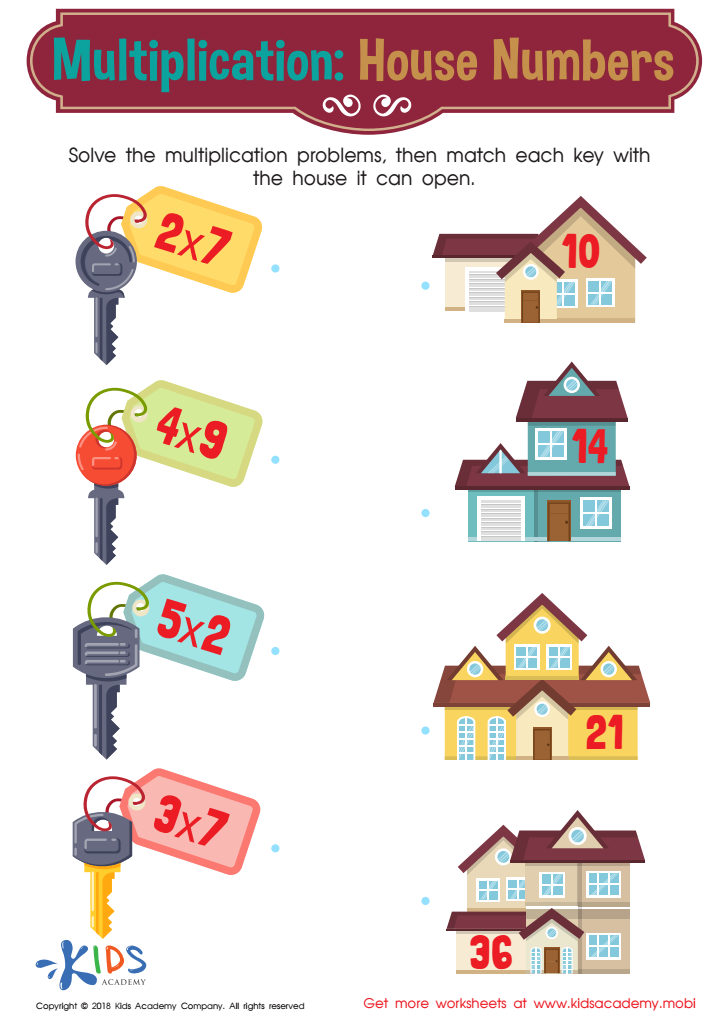
House Numbers Worksheet
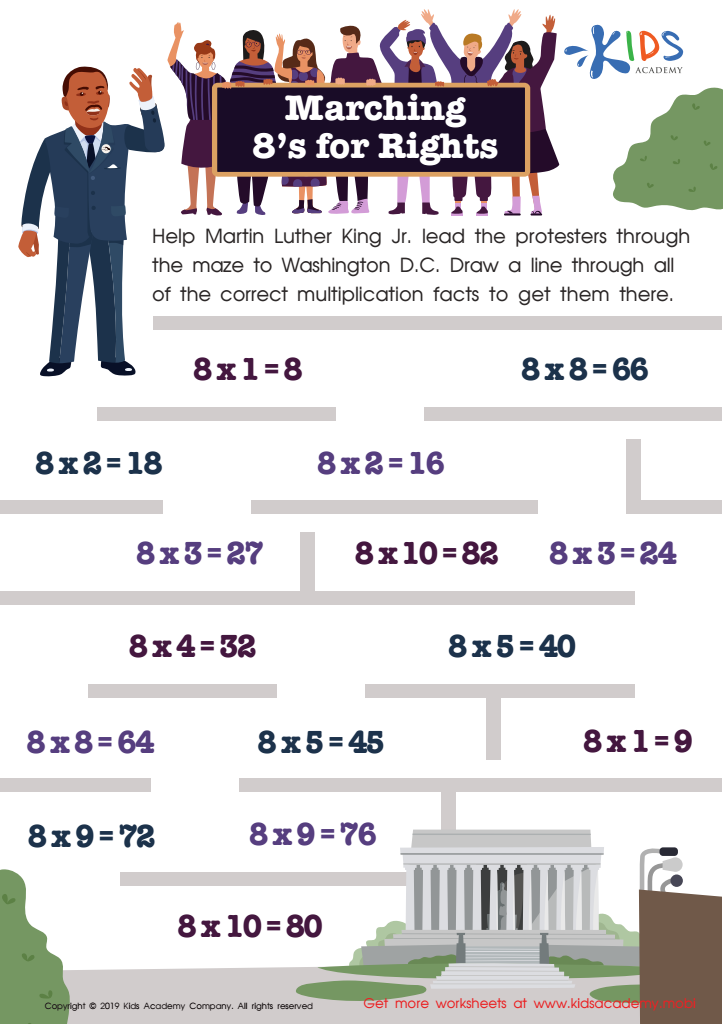
Marching 8’s for Rights Worksheet
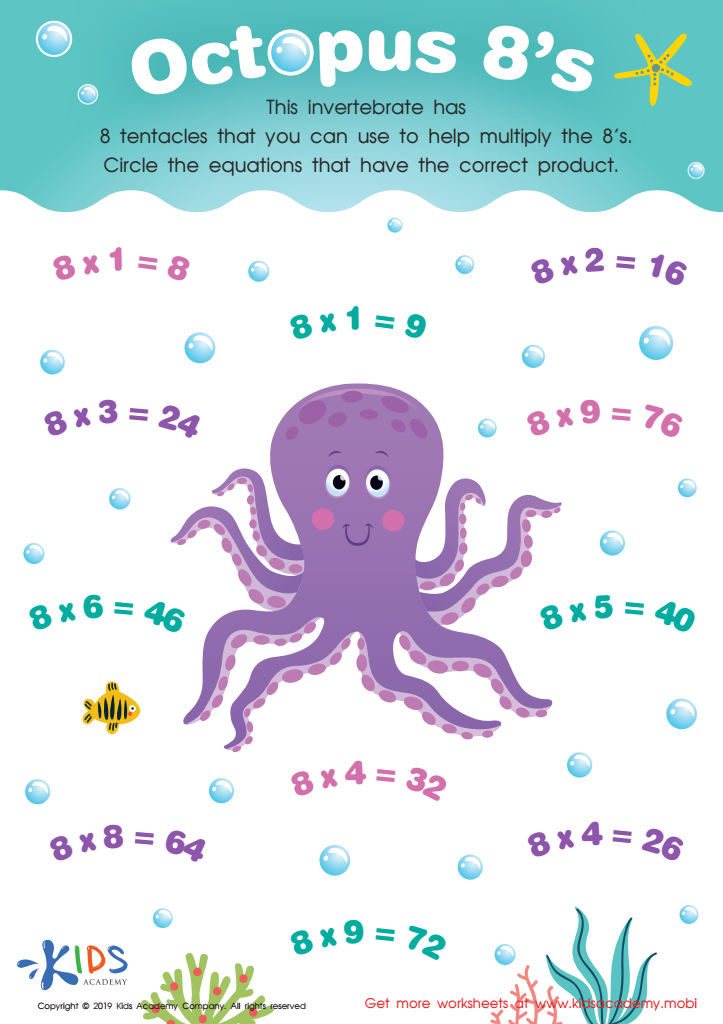
Octopus 8’s Worksheet





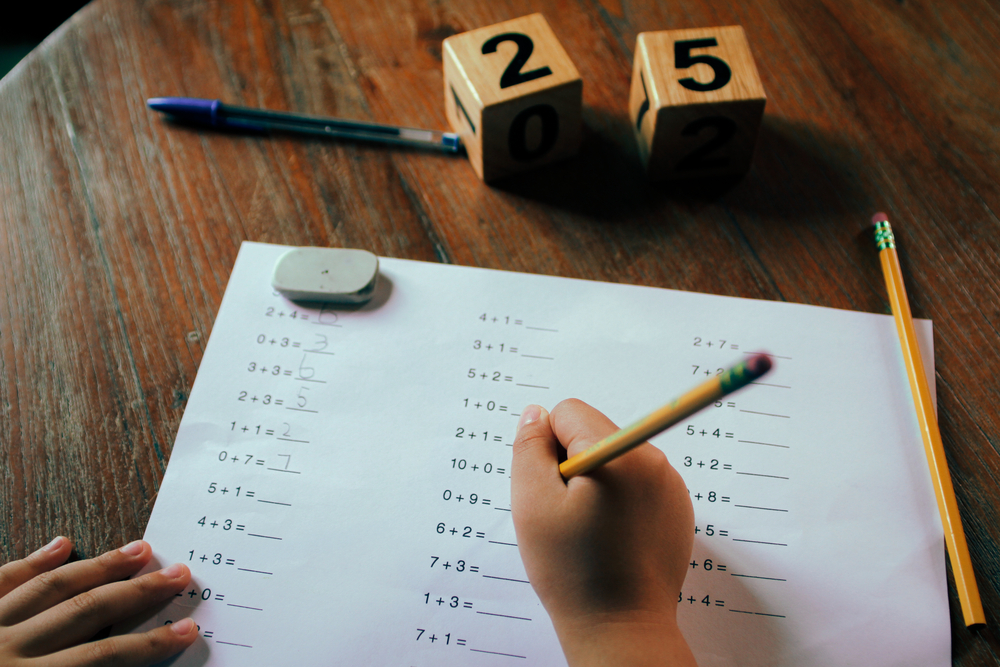


Number recognition and multiplication skills play a crucial role in the foundational development of children aged 4-8. During these formative years, children are introduced to basic mathematics, which is pivotal for their cognitive growth and everyday problem-solving abilities.
Recognition of numbers helps children understand quantities, counting, and patterns, forming a bedrock upon which future mathematical concepts, including multiplication, are built. Mastering multiplication at an early age fosters number sense, enabling children to grasp more complex concepts as they progress in their education. It also enhances critical thinking and spatial reasoning skills.
Furthermore, early exposure to multiplication can reduce math-related anxiety, leading to greater confidence in tackling mathematical problems later in life. Parents and teachers should advocate for engaging, interactive, and playful learning experiences that incorporate multiplication, such as games and hands-on activities. This approach not only makes learning enjoyable but also enhances retention and understanding.
By prioritizing number recognition and multiplication, parents and teachers empower children with essential skills for academic success and everyday life, paving the way for a lifetime of mathematical literacy and logical reasoning. Investing time in these skills now will yield significant benefits as children advance in their education.








