Number identification Numbers 0–10 Worksheets for Ages 4-8
3 filtered results
-
From - To
Our "Number Identification Numbers 0–10 Worksheets" for ages 4-8 are designed to help young learners recognize and confidently identify numbers 0 through 10. These engaging worksheets feature a variety of activities, including counting, tracing, and matching games. Perfect for preschoolers and early elementary students, each worksheet aims to enhance numerical awareness through fun and educational exercises. Foster foundational math skills with our skillfully crafted resources, ensuring your child develops a strong number sense while enjoying the learning process. Whether at home or in the classroom, these printables make learning numbers an exciting adventure.
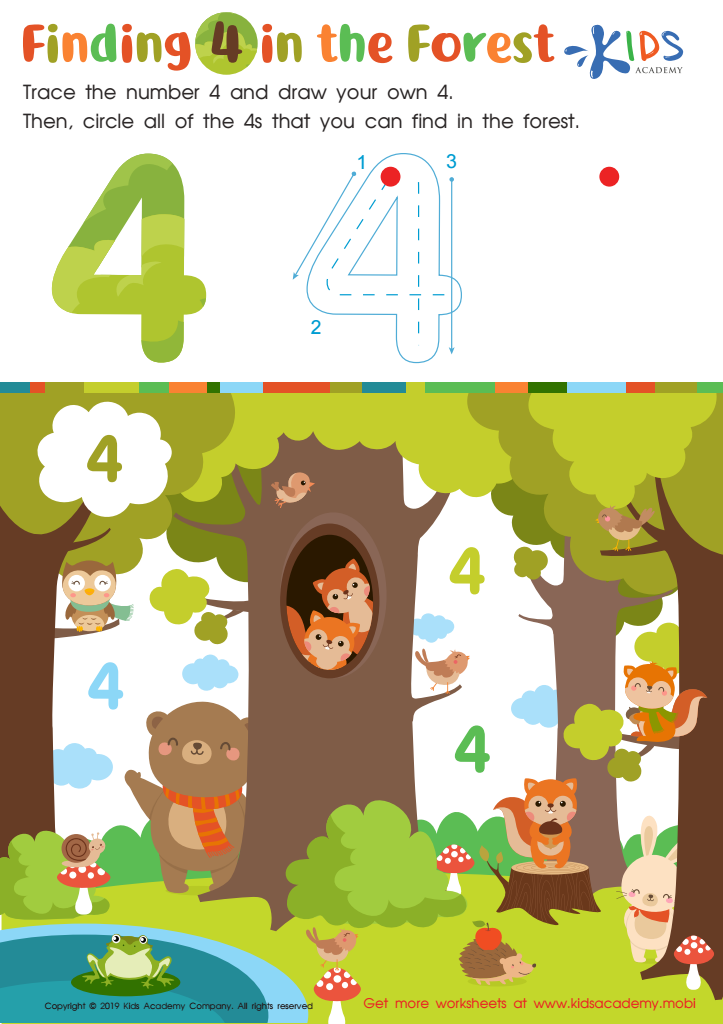
Finding 4 in the Forest Worksheet
 Assign to My Students
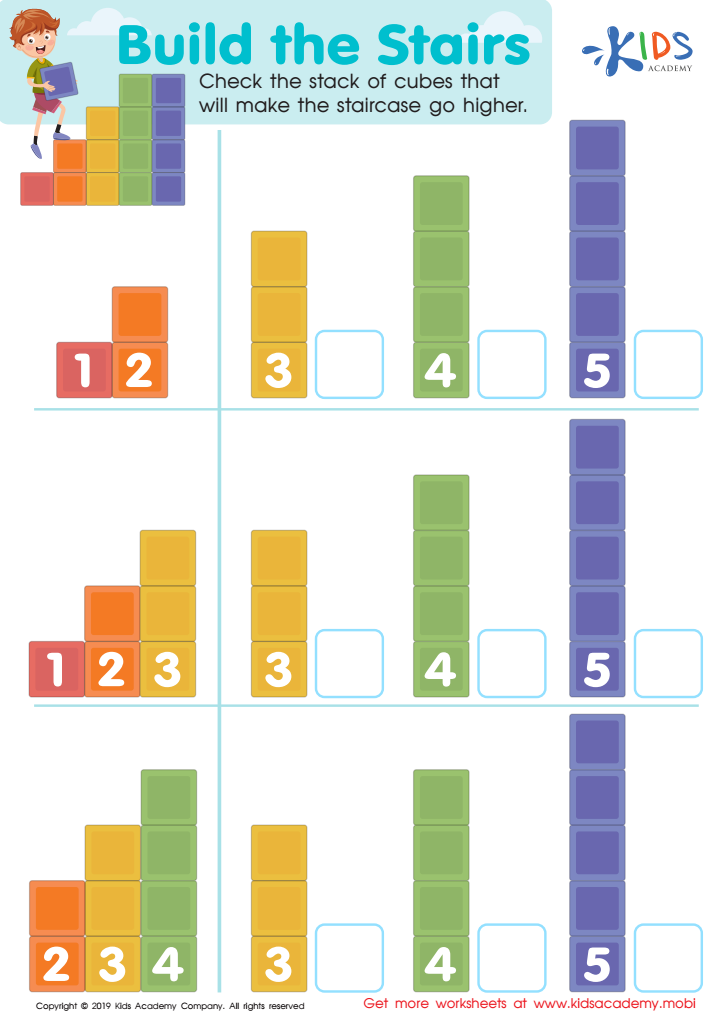
Build the Stairs Worksheet
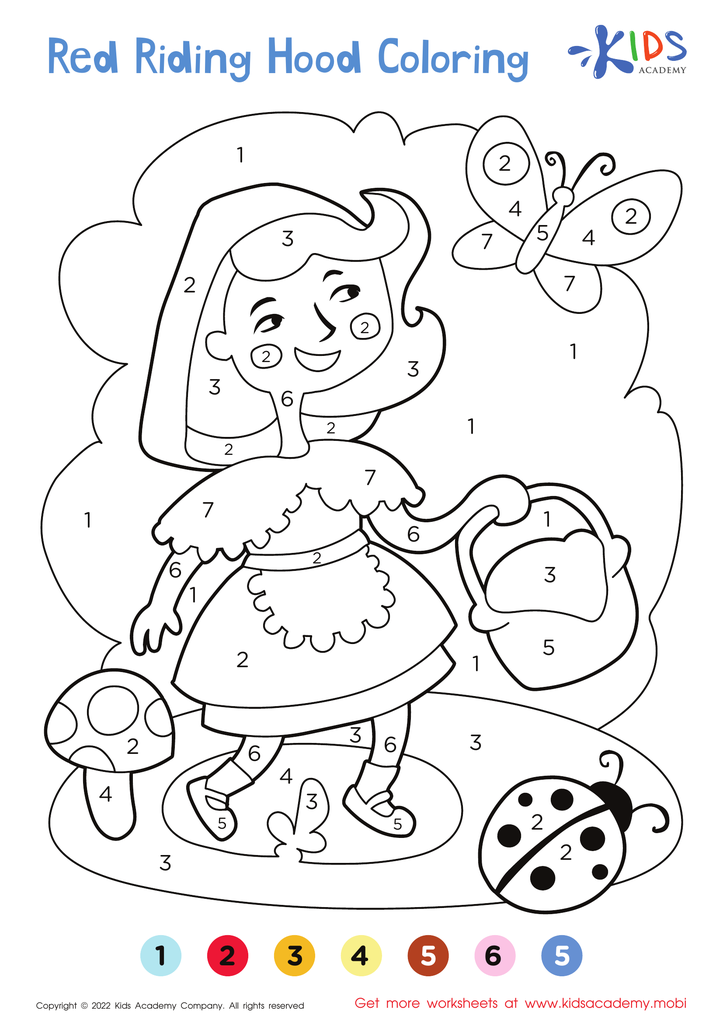
Little Red Riding Hood – Coloring by Numbers








Number identification is an essential skill for young children, typically aged 4-8, as it lays the foundation for future mathematical understanding and cognitive development. Successfully recognizing and comprehending numbers from 0 to 10 allows children to engage in basic arithmetic operations such as counting, addition, and subtraction, which are pivotal for more advanced math concepts later on.
At this crucial developmental stage, children's brains are highly receptive to new information. Familiarity with numbers helps build their confidence and enthusiasm for learning. It also enables children to better understand the world around them, as numbers are omnipresent in everyday life—from counting objects and understanding prices to telling time.
Teachers and parents play a significant role in facilitating this learning. By prioritizing number identification, they help children develop critical thinking and problem-solving skills, which are transferable to other academic areas. Providing positive reinforcement and varied, engaging learning experiences reinforces the idea that learning numbers is not just a task but a fun and valuable part of life.
Achieving proficiency in number identification can also significantly influence a child's academic self-esteem, leading to a more positive attitude toward school and learning in general. Early intervention in this area can set the stage for future educational success and competency in STEM (Science, Technology, Engineering, and Mathematics) fields.