Sorting skills Numbers 0–10 Worksheets for Ages 4-8
3 filtered results
-
From - To
Enhance your child's sorting skills with our engaging "Sorting Skills Numbers 0–10 Worksheets" designed for ages 4-8. These interactive worksheets provide a fun way for young learners to master number recognition while practicing sorting by quantity and organizing numbers. With colorful illustrations and age-appropriate activities, children can easily differentiate between numbers 0-10, developing both critical thinking and fine motor skills. Ideal for preschoolers and early grade students, these worksheets make learning enjoyable and effective, supporting foundational math skills. Download now and watch your child's confidence soar as they enjoy sorting and learning with numbers!
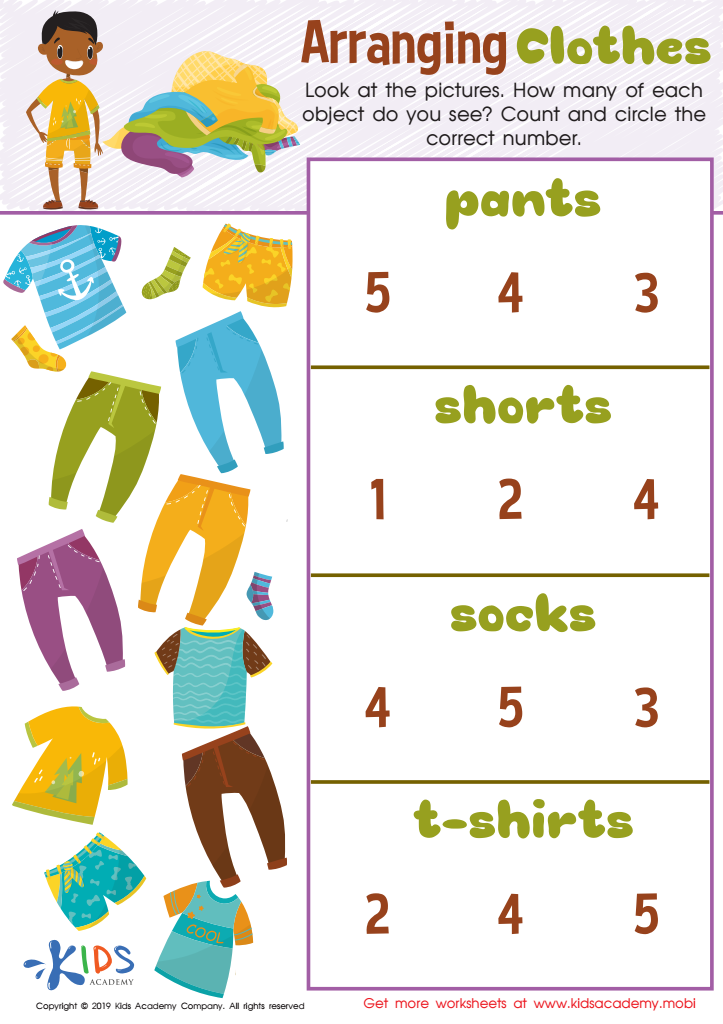
Arranging Clothes Worksheet
 Assign to My Students
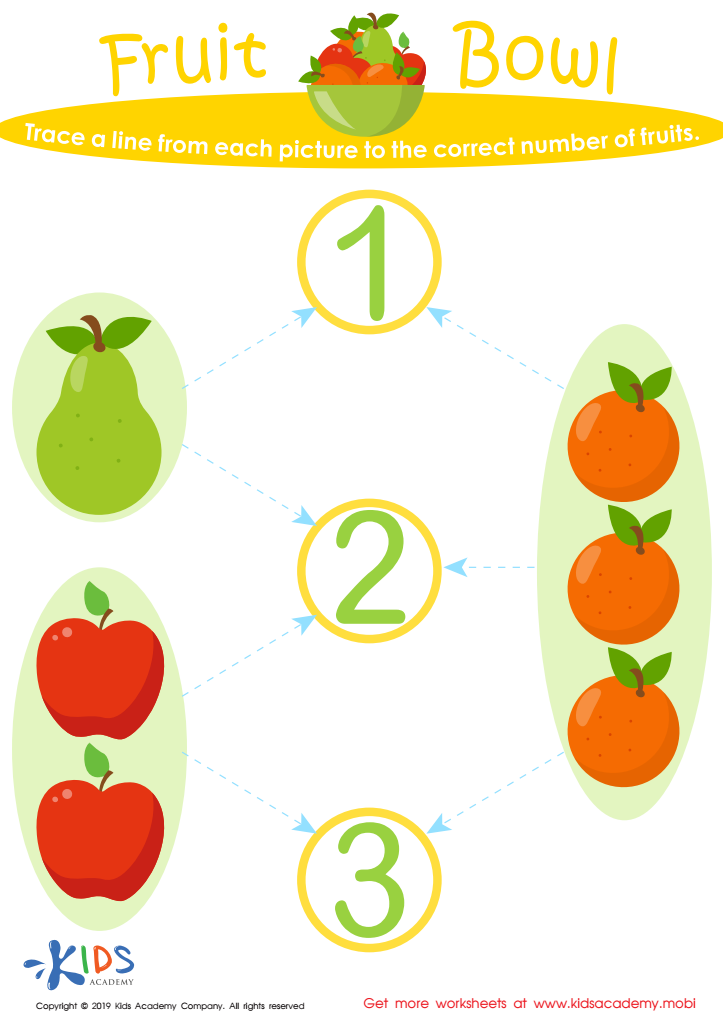
Fruit Bowl Worksheet
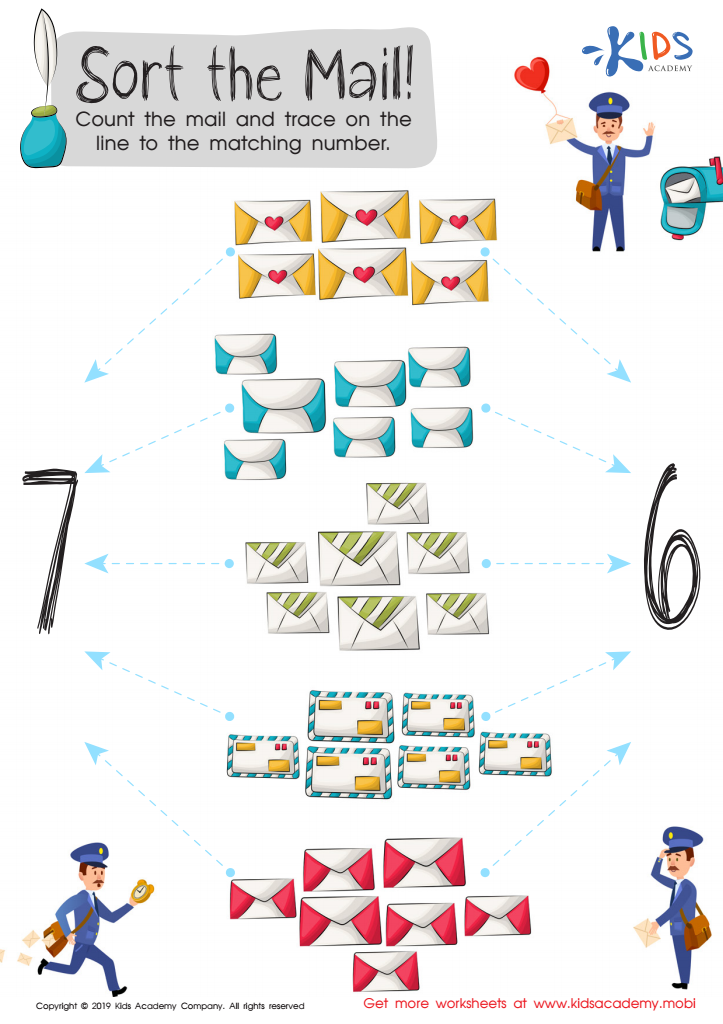
Sort the Mail Worksheet








Sorting skills for numbers 0–10 are foundational for young children aged 4-8, and parents and teachers should prioritize these skills for several reasons. Firstly, sorting encourages critical thinking and cognitive development. When children group numbers based on different criteria—like size, evenness, or category—they begin to understand relationships and patterns.
Moreover, sorting enhances mathematical understanding. By organizing numbers, children become more familiar with number recognition, sequencing, and basic operations, which are essential for later mathematical concepts. Mastery of numbers 0–10 sets the stage for addition, subtraction, and beyond.
Additionally, sorting activities foster fine motor skills as children manipulate and categorize objects, improving hand-eye coordination and dexterity. Socially, sorting can promote teamwork and communication skills during collaborative activities, as students discuss and reason their sorting criteria.
Lastly, engaging children in these activities cultivates enthusiasm for learning. Kids often enjoy hands-on, interactive tasks, making sorting not just an educational exercise but a fun experience that builds a positive attitude toward math.
Therefore, by prioritizing sorting skills, parents and teachers help children develop crucial cognitive, social, and motor skills, laying a strong foundation for their future educational journey.








