Number Recognition Numbers up to 100 Worksheets for Ages 4-8 - Page 2
27 filtered results
-
From - To
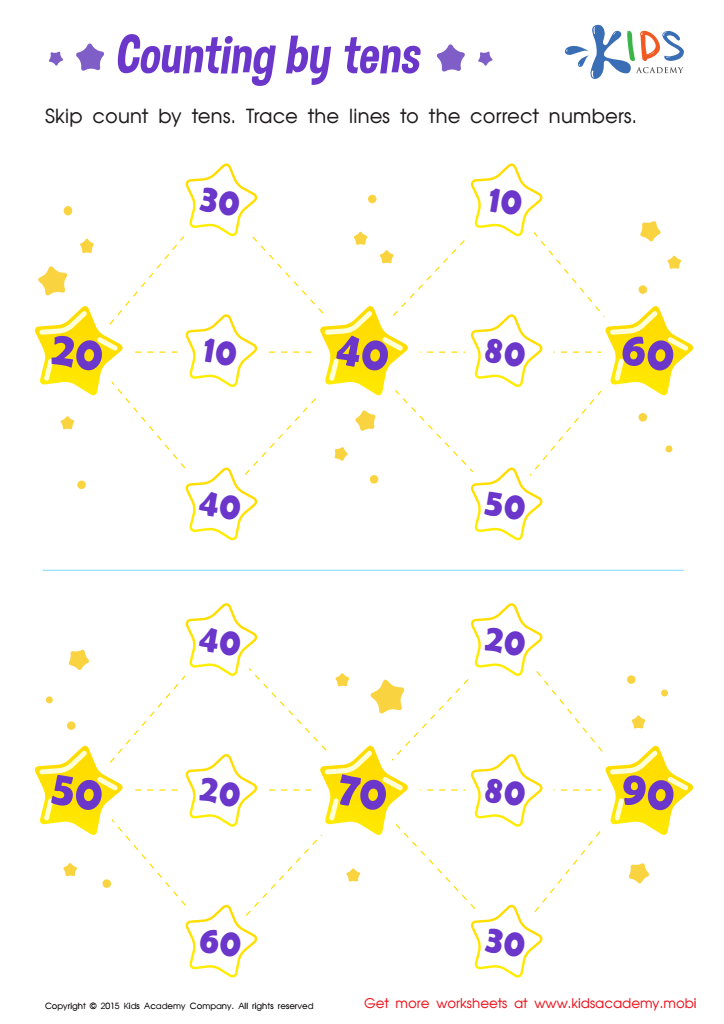
Learn Dozens: Counting by Tens Printable
 Assign to My Students
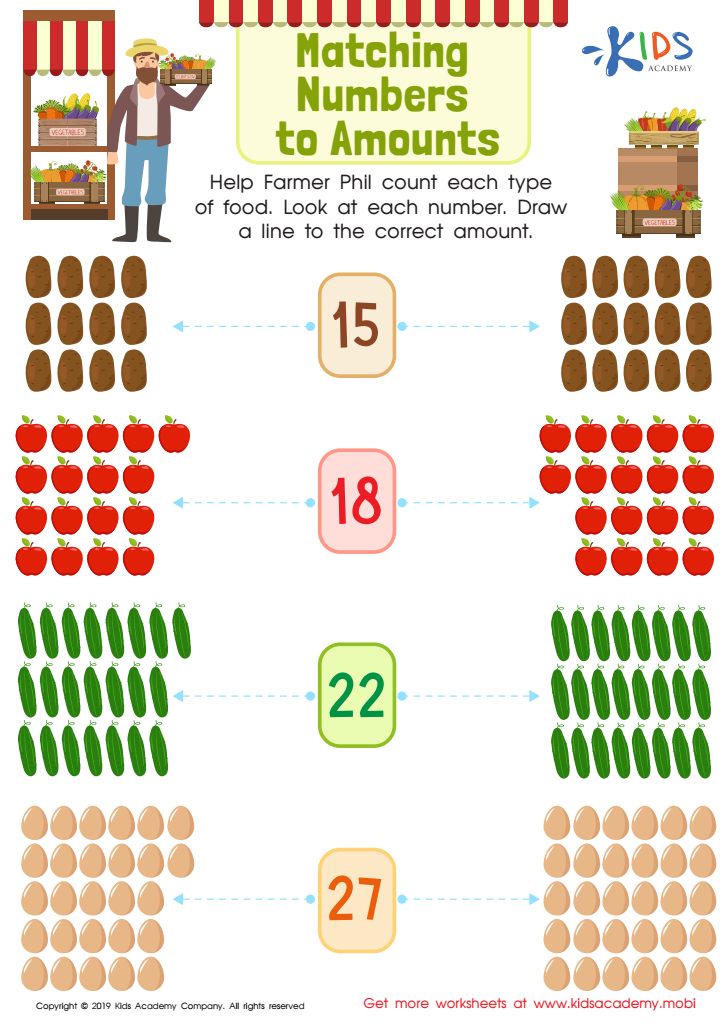
Matching Numbers to Amounts Worksheet

Counting on the City Skyline: Dot-to-Dot Worksheet




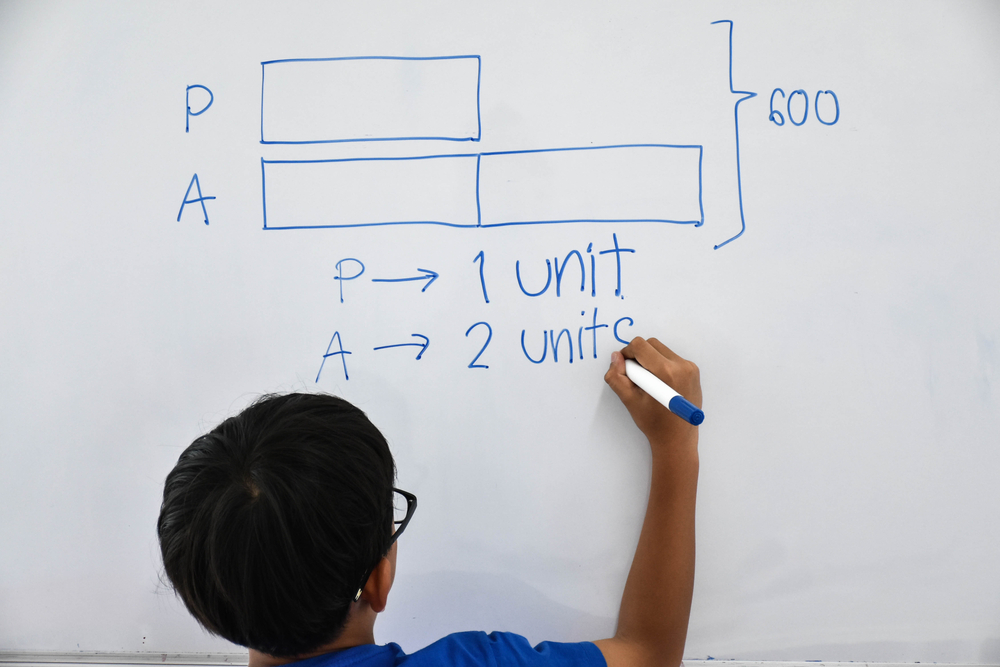



Number recognition, especially up to 100, is a fundamental skill for children aged 4-8 that serves as the cornerstone for future mathematical learning. During these formative years, young learners are developing the cognitive abilities to understand and engage with the world around them, and numeracy is a key part of that process. Recognizing numbers up to 100 lays the groundwork for more complex mathematical activities such as addition, subtraction, counting, and pattern recognition.
For parents, fostering number recognition can enhance everyday activities like counting objects, reading addresses, telling time, and understanding prices, thereby making children more confident and independent in practical scenarios. For teachers, instilling strong number recognition skills at an early age can ease the transition to the more sophisticated mathematical concepts students will encounter in later grades, resulting in a smoother academic progression.
Moreover, proficiencies in number recognition are closely linked to improvements in not just mathematics but also broader cognitive skills, including problem-solving, logical reasoning, and spatial awareness. Consequently, investing time in teaching children numbers up to 100 sets the stage for their future academic success, boosts their confidence, and provides them with critical life skills, making it an indispensable aspect of early education.








