
Subtraction skills Place Value Worksheets for Ages 4-8
3 filtered results
Difficulty Level
Grade
Age
-
From - To
Subject
Activity
Standards
Enhance your child's math proficiency with our Subtraction Skills Place Value Worksheets designed for ages 4-8. These engaging worksheets provide a fun and interactive way to grasp place value concepts while mastering subtraction. Tailored to different skill levels, they include a variety of exercises, from simple single-digit problems to more challenging multi-digit equations. Each sheet incorporates vibrant visuals and relatable scenarios, making learning enjoyable and effective. Perfect for both classroom and home use, our worksheets will help young learners build a strong foundation in math, boosting their confidence and academic success. Start transforming subtraction struggles into triumphs today!
Favorites
With answer key
Interactive
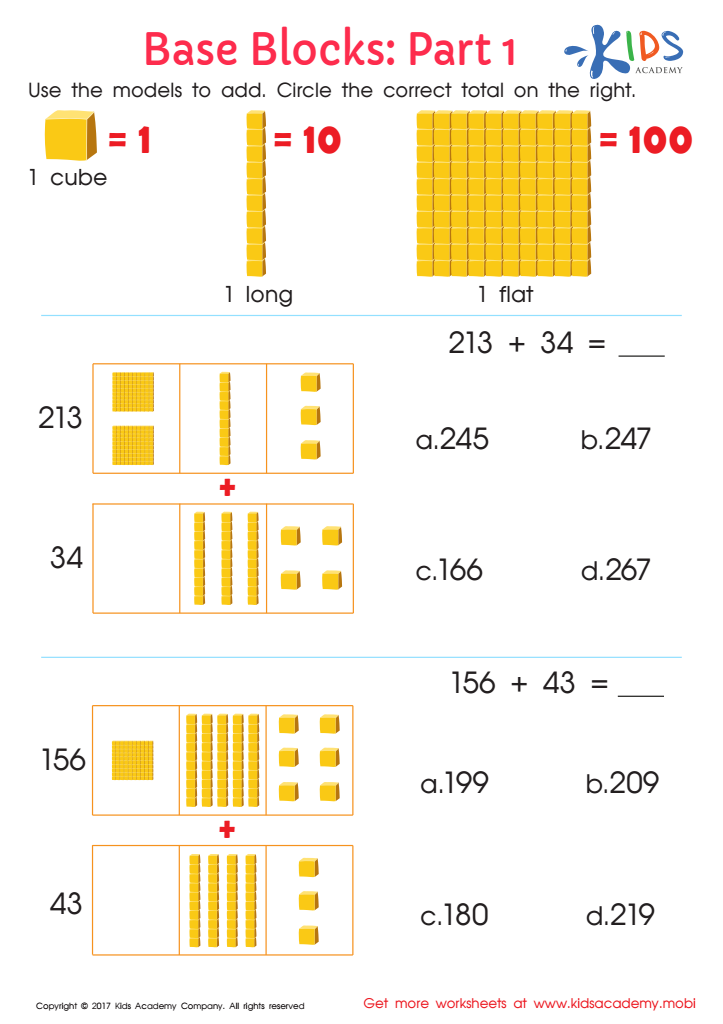
Base Ten Blocks Worksheet: Part 1
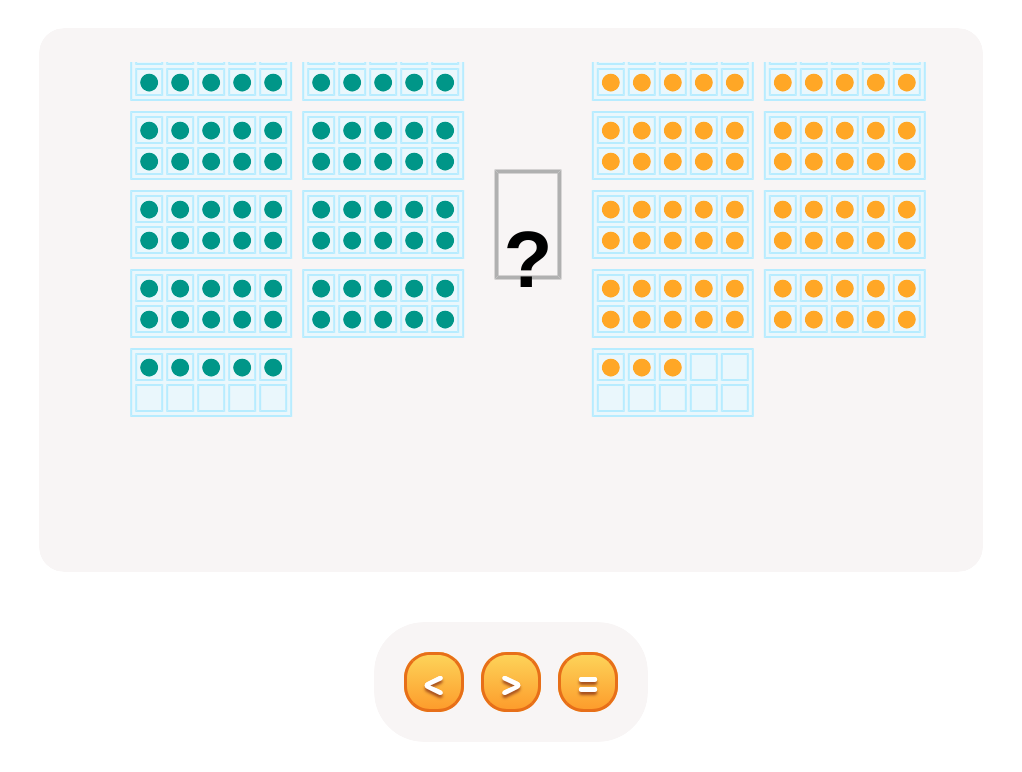
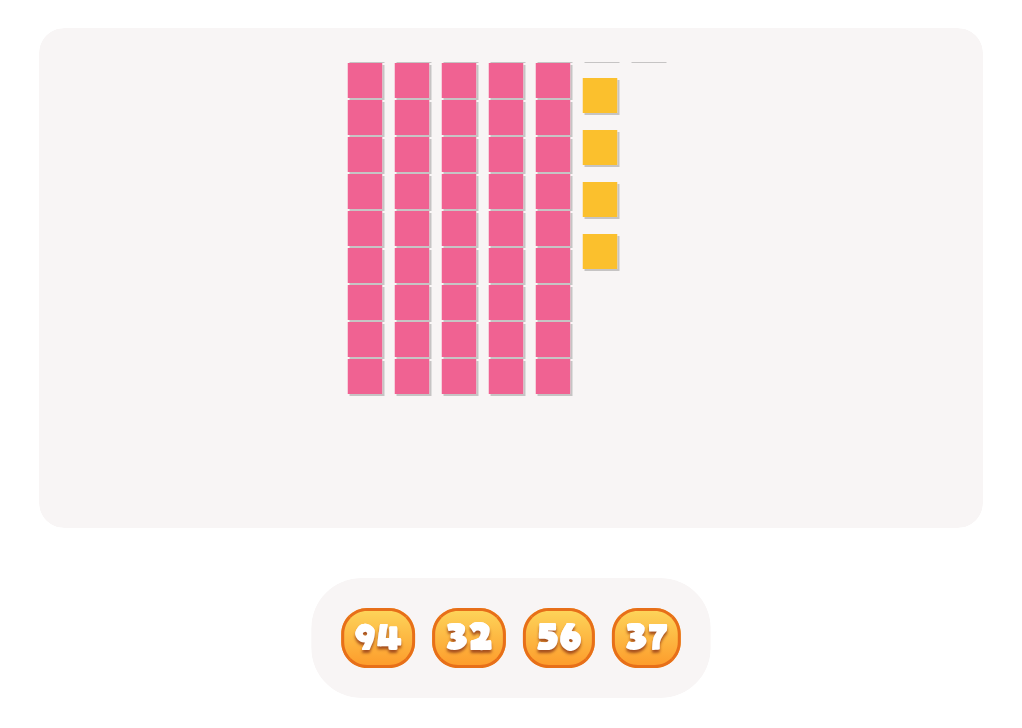
They promote numeracy and are a great substitute when kids don't have access to physical blocks.
 Assign to My Students
Base Ten Blocks Worksheet: Part 1
Worksheet
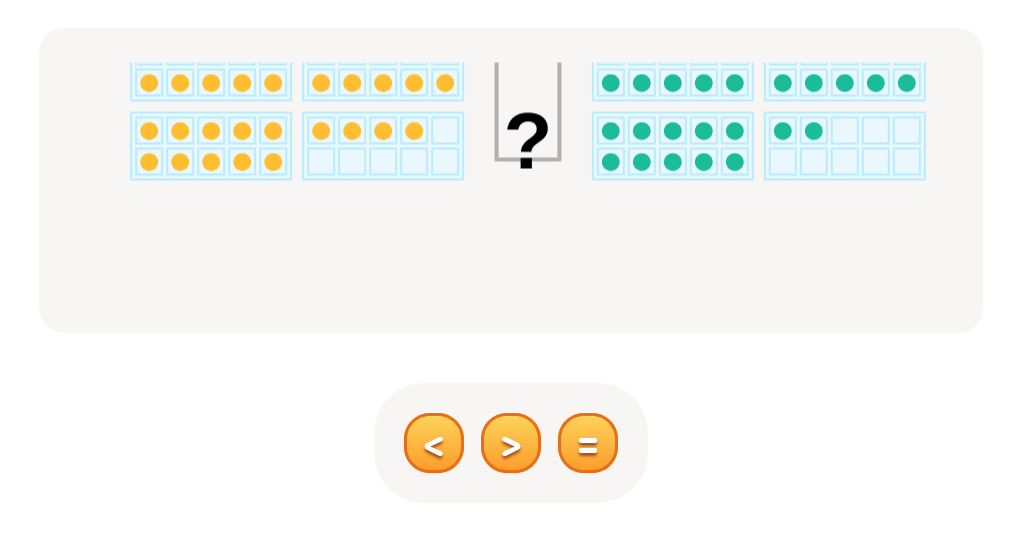

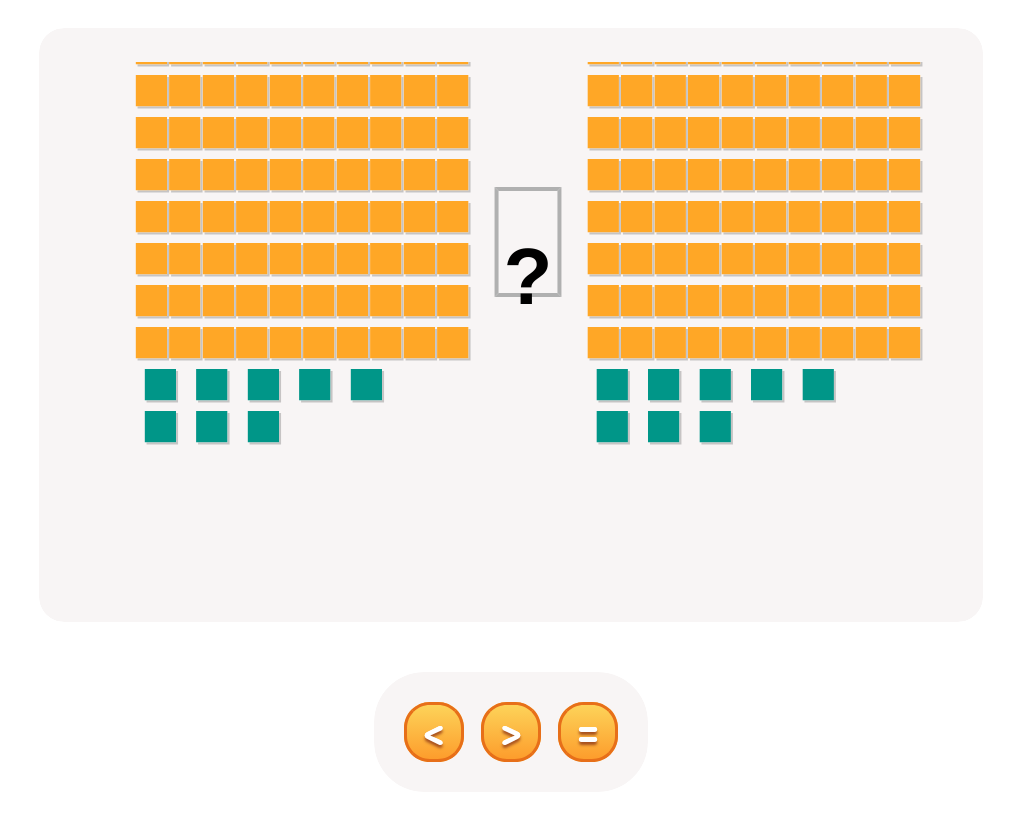
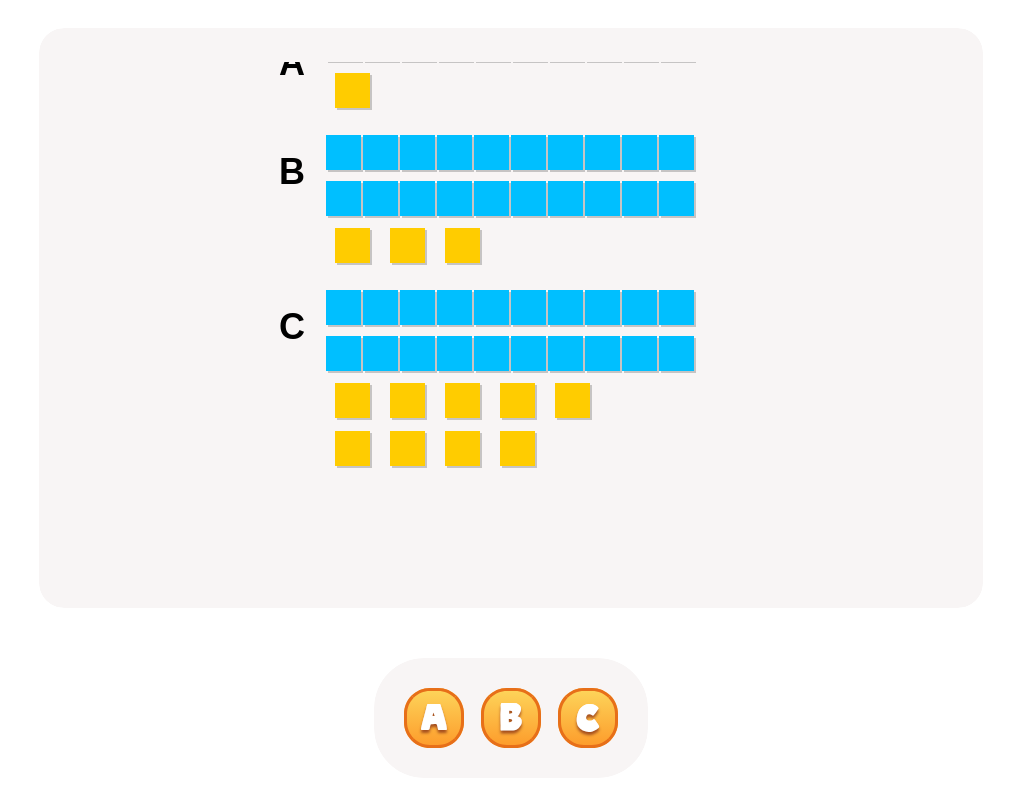
Addition and Subtraction Within 1000: Assessment 1 Worksheet
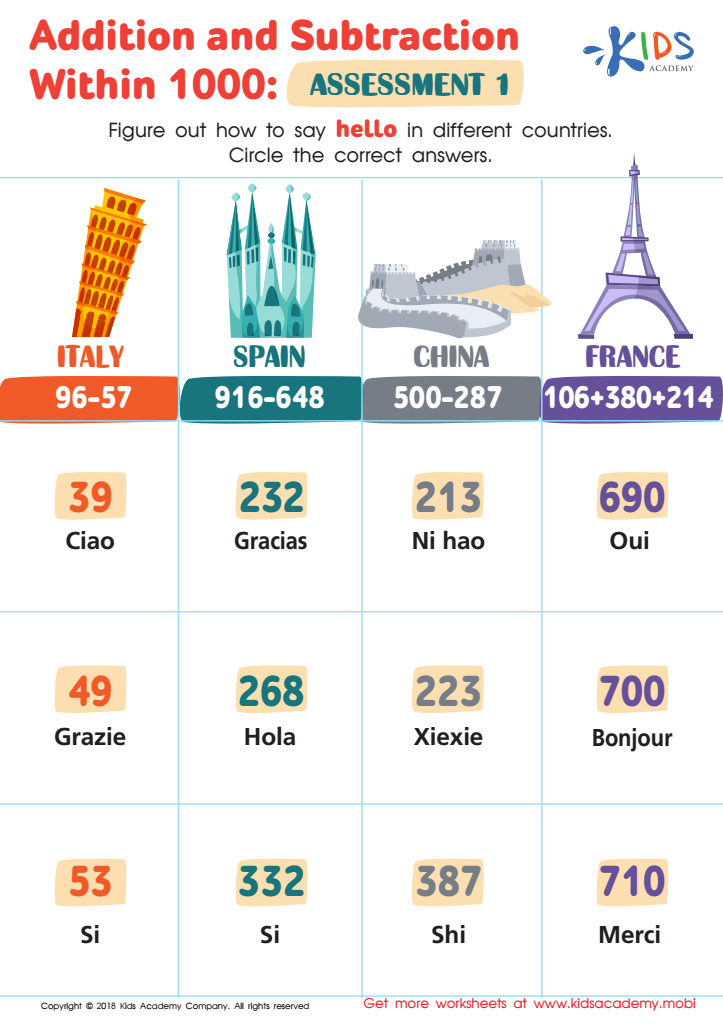
As your students grow, their knowledge and skills do too. Use this worksheet to test their adeptness in adding and subtracting numbers in the 1000s and introduce them to different ways to say hello. Let them circle the correct answers.
Addition and Subtraction Within 1000: Assessment 1 Worksheet
Worksheet
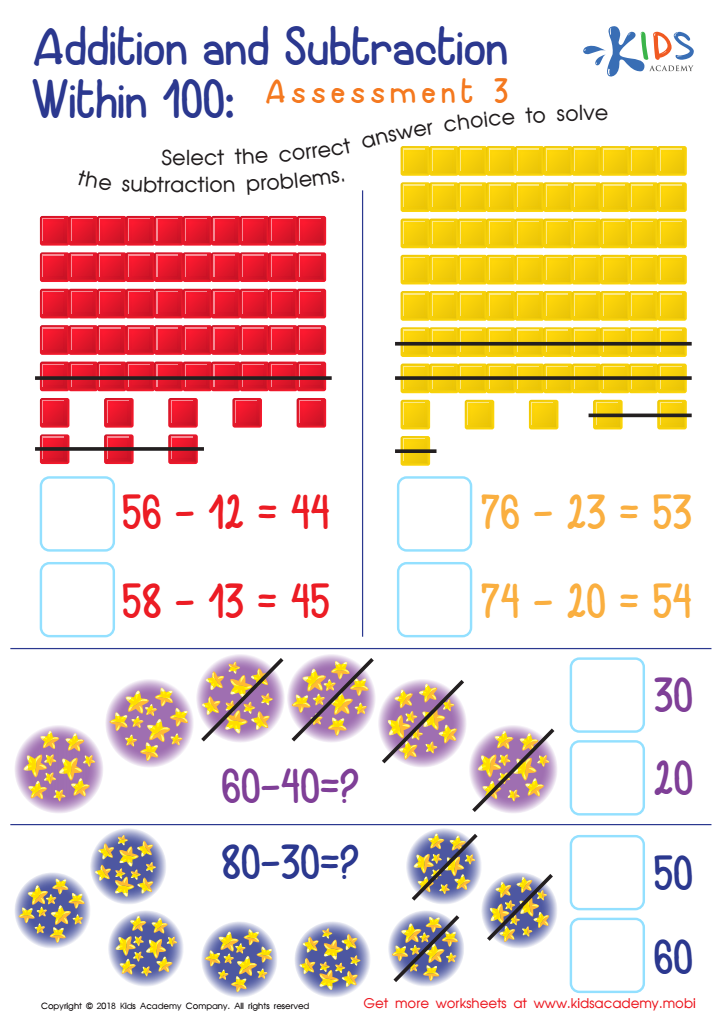
Addition and Subtraction Within 1: Assessment 3 Worksheet
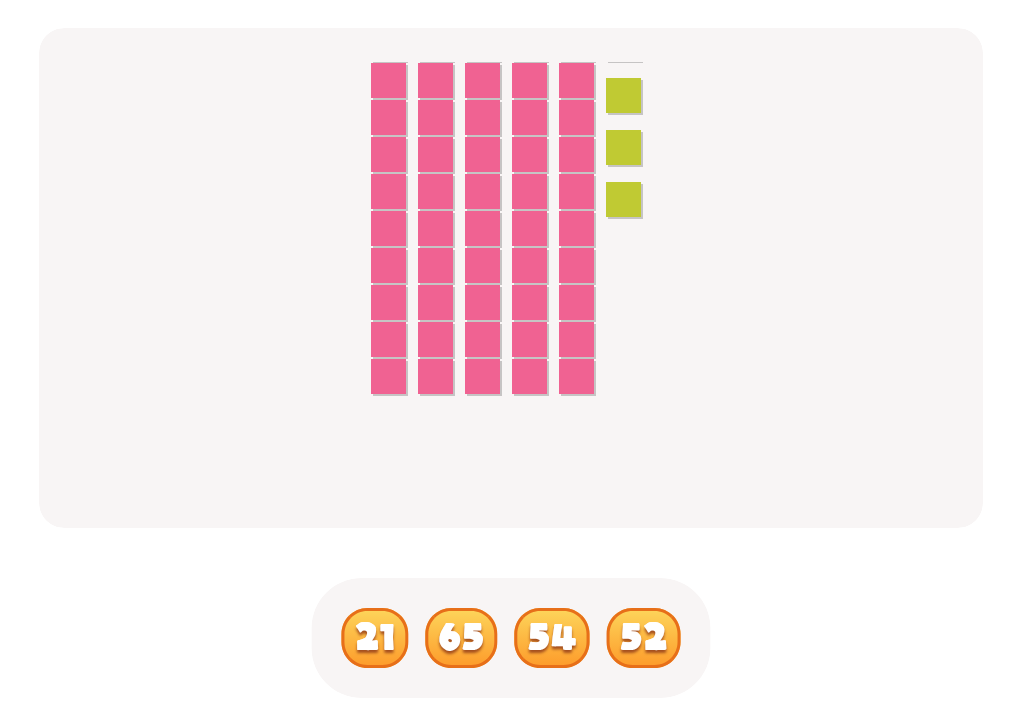
Help your kids count the base ten blocks in the picture. Then, count how many have been marked off. Ask them to select the correct answer choice to solve the subtraction problems based on the blocks counted. 80 words
Addition and Subtraction Within 1: Assessment 3 Worksheet
Worksheet
Join Kids Academy for Free
Who is primarily going to use this learning content?








Subtraction skills and an understanding of place value are foundational competencies for children aged 4-8, significantly impacting their long-term mathematical development. Mastering these concepts early serves as a building block for more advanced arithmetic and problem-solving skills.
Subtraction skills involve recognizing the need to remove or "take away" items from a group, which bolsters a child's ability to conceptualize differences between quantities—a fundamental aspect of daily life and future math lessons. Fastening subtraction techniques enhances cognitive abilities such as memory and reasoning while also supporting real-life applications like managing finances or sharing resources.
Simultaneously, comprehension of place value—that digits have different values depending on their position—is crucial in grasping larger numerical concepts. This understanding promotes efficient calculation methods and deeper number sense, enabling more straightforward addition, subtraction, and later concepts like multiplication and division. For young learners, visual and tactile aids like blocks or place value charts can be particularly effective tools.
When parents and teachers actively focus on these areas, children develop confidence and competence in mathematics, setting a positive attitude towards the subject. Investing effort into teaching these concepts at ages 4-8 creates a ripple effect, enhancing overall academic performance and equipping children with critical life skills.








