Mathematical reasoning Skip Counting Worksheets for Ages 4-8
3 filtered results
-
From - To
Discover our engaging "Mathematical Reasoning Skip Counting Worksheets for Ages 4-8," designed to boost foundational math skills in young learners. These printable worksheets help children practice skip counting by 2s, 5s, and 10s, fostering a strong understanding of number patterns and sequences. Ideal for early grade students, our worksheets blend fun activities with educational content, enhancing mathematical reasoning and problem-solving abilities. Perfect for both classroom and home use, they offer an interactive way to develop fluency in basic arithmetic, setting the stage for future math success. Start empowering your child's math journey today!
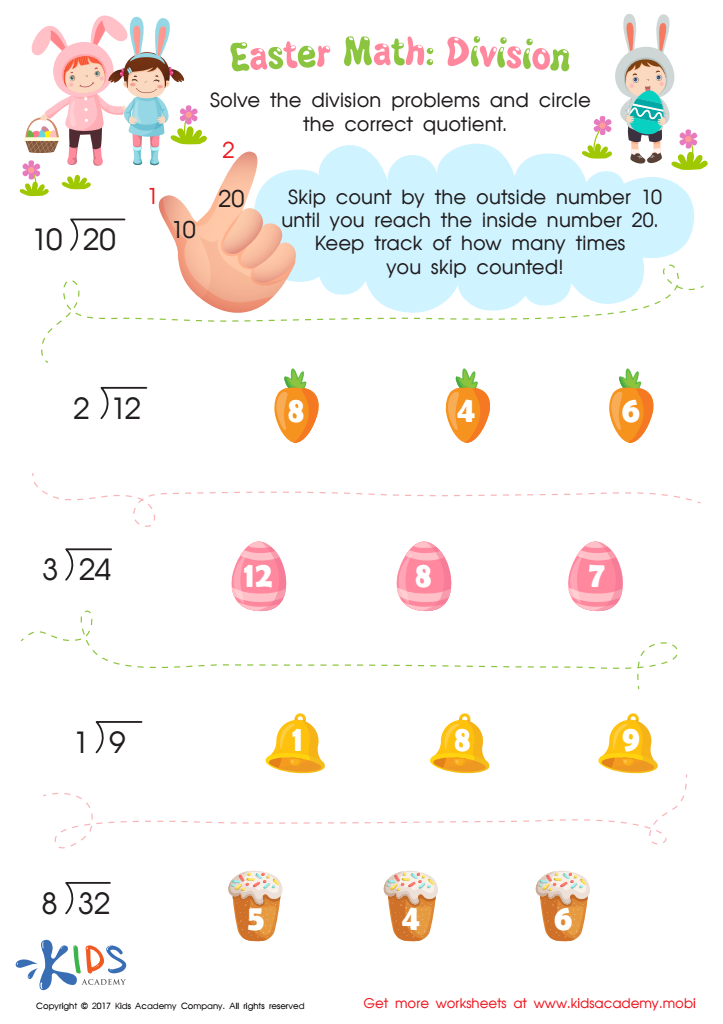
Division Worksheet
 Assign to My Students
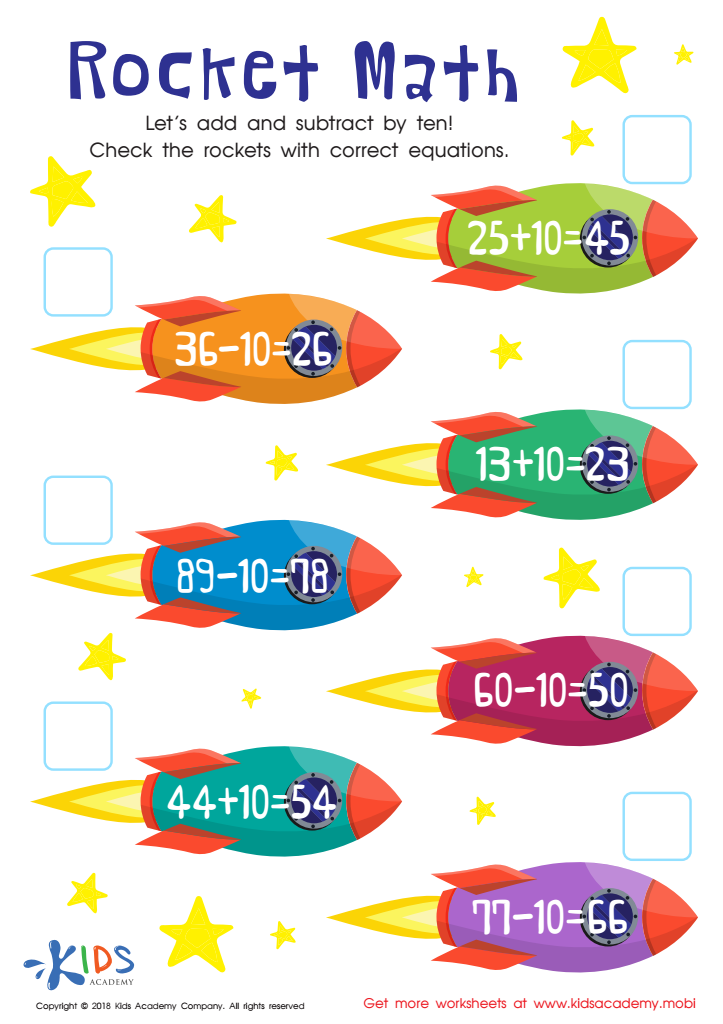
Rocket Math Worksheet
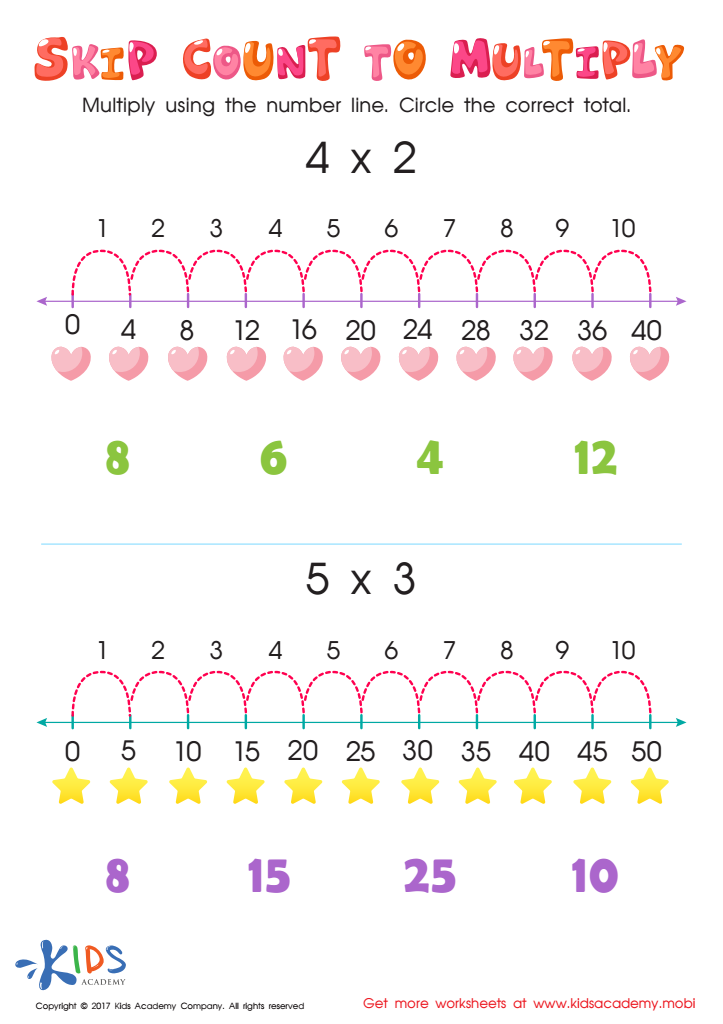
Skip Count Multiplication Worksheet



.jpg)
%20(1).jpg)



Mathematical reasoning and skip counting are foundational skills for young learners, typically between ages 4-8. Fostering these skills is essential as they lay the groundwork for more complex mathematical concepts. Skip counting helps enhance numerical fluency, allowing children to quickly and efficiently process numbers in groups, such as by twos, fives, or tens. This ability is crucial for understanding addition, subtraction, multiplication, and division—core components of later mathematical learning.
Additionally, skip counting aids in developing pattern recognition, which is a critical element of logical thinking. When children see and understand patterns, they can make predictions and solve problems more effectively. This not only bolsters their math skills but also enhances cognitive abilities such as memory, attention, and problem-solving.
Moreover, mastering skip counting and mathematical reasoning at an early age builds confidence and a positive attitude towards mathematics, reducing anxiety and fostering a love for learning. Children who are comfortable with these concepts are more likely to engage in and enjoy math-related activities, leading to better academic performance.
Therefore, parents and teachers should prioritize and support the development of mathematical reasoning and skip counting. These skills are not just academic tools; they are essential components of a child's overall intellectual growth and future success.








