Visual learning reinforcement Subtraction Worksheets for Ages 4-8
3 filtered results
-
From - To
Boost your child’s subtraction skills with our Visual Learning Reinforcement Worksheets, specially designed for ages 4-8. These engaging worksheets utilize vibrant visuals to make learning subtraction fun and effective. By incorporating colorful images and manipulatives, children can visually grasp the concept of taking away, fostering a stronger understanding that transcends traditional methods. Ideal for both classroom and home use, our worksheets support various learning styles, enabling your young learners to master subtraction through interactive and enjoyable practice. Help your child build a solid foundation in math while keeping them excited about learning! Download these educational resources today!
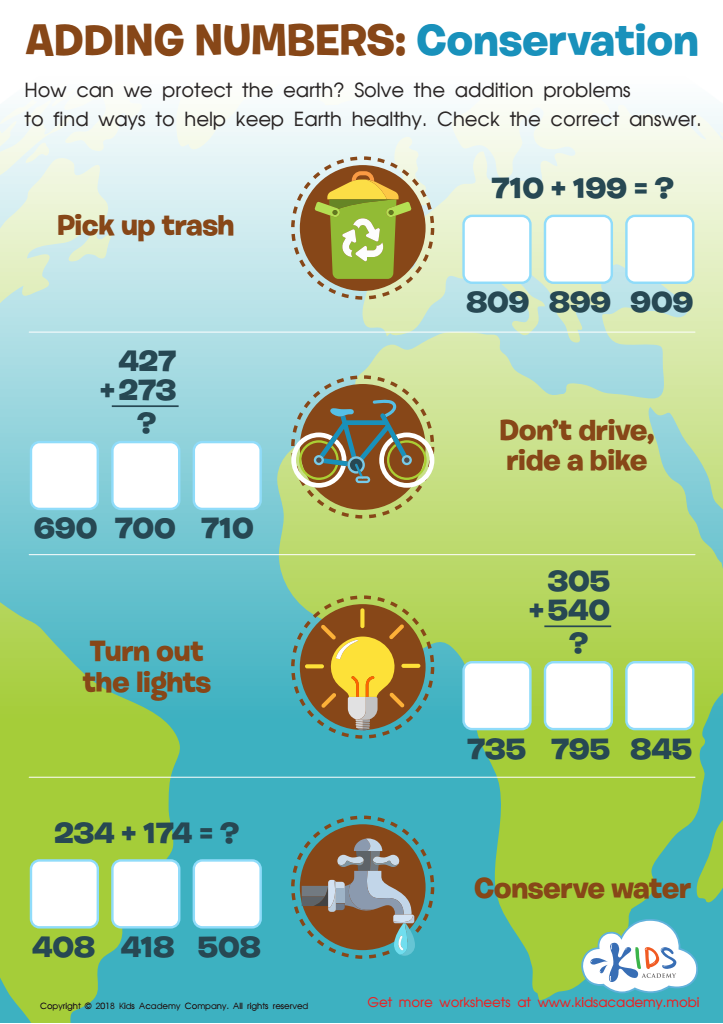
Adding Numbers: Conservation Worksheet
 Assign to My Students
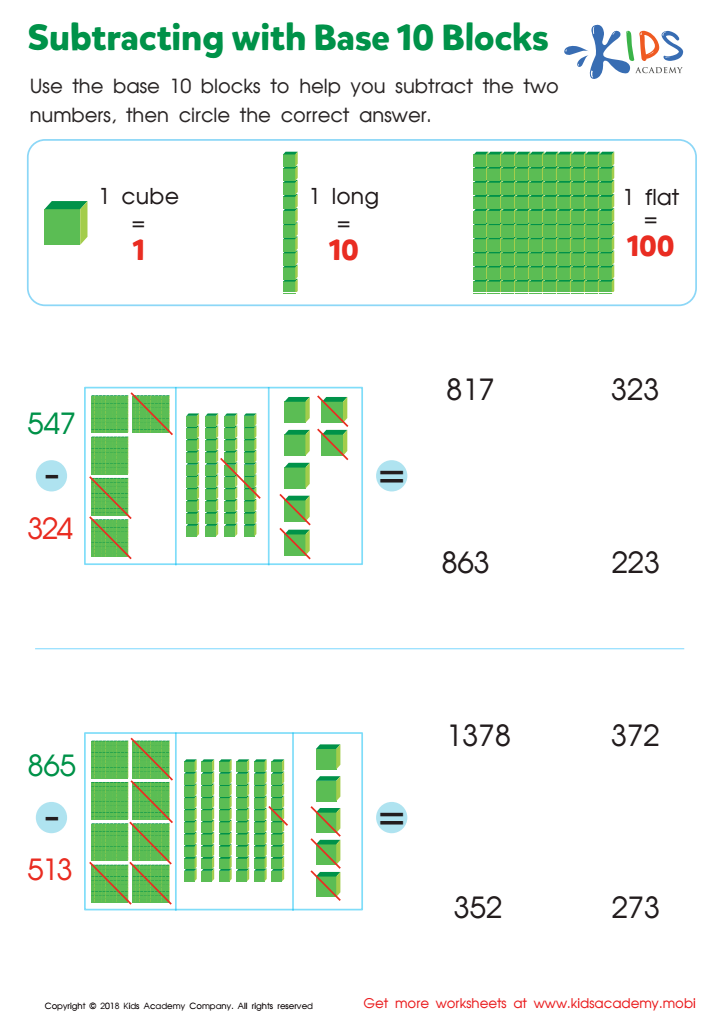
Subtracting with Base 10 Blocks Worksheet
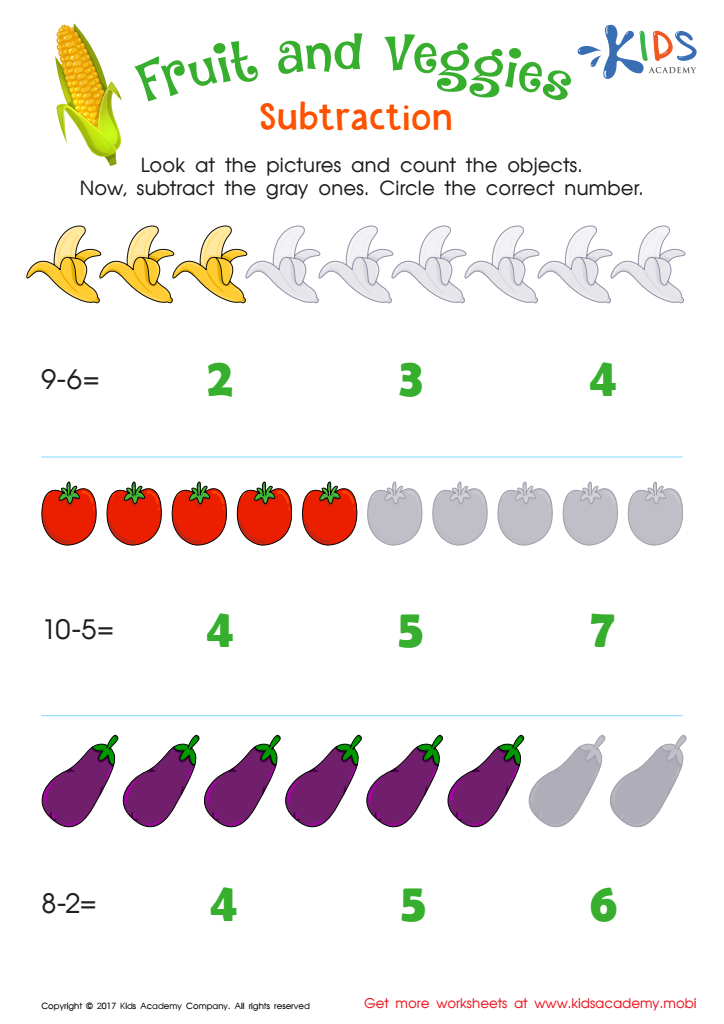
Fruit and Veggies Subtraction Worksheet








Visual learning reinforcement in subtraction for children aged 4-8 is crucial for several reasons. At this developmental stage, children are still refining their cognitive skills, and visual aids help translate abstract concepts into tangible understanding. When subtracting, using visual tools, such as counters, drawings, or number lines, enables kids to "see" the quantities being manipulated, fostering comprehension and retention.
These visual representations simplify complex ideas, minimizing frustration as children grasp the foundational principles of subtraction. Engaging with visuals also caters to various learning styles—some children are visual learners who thrive on seeing representations. It encourages exploration and promotes active participation, making learning interactive and enjoyable.
Furthermore, reinforcing subtraction visually builds confidence; as children can visually verify their answers, they feel more secure in their understanding. This confidence extends beyond mathematics, nurturing a growth mindset and encouraging persistence in tackling challenges. By integrating visual learning into subtraction, parents and teachers lay a vital foundation for future math skills, ensuring that students develop a clear and intuitive understanding of numbers and operations, which is essential for their ongoing academic success. Thus, visual learning serves as an effective bridge between simple counting and more complex mathematical concepts in later years.








