Understanding patterns Times Tables Worksheets for Ages 4-8
3 filtered results
-
From - To
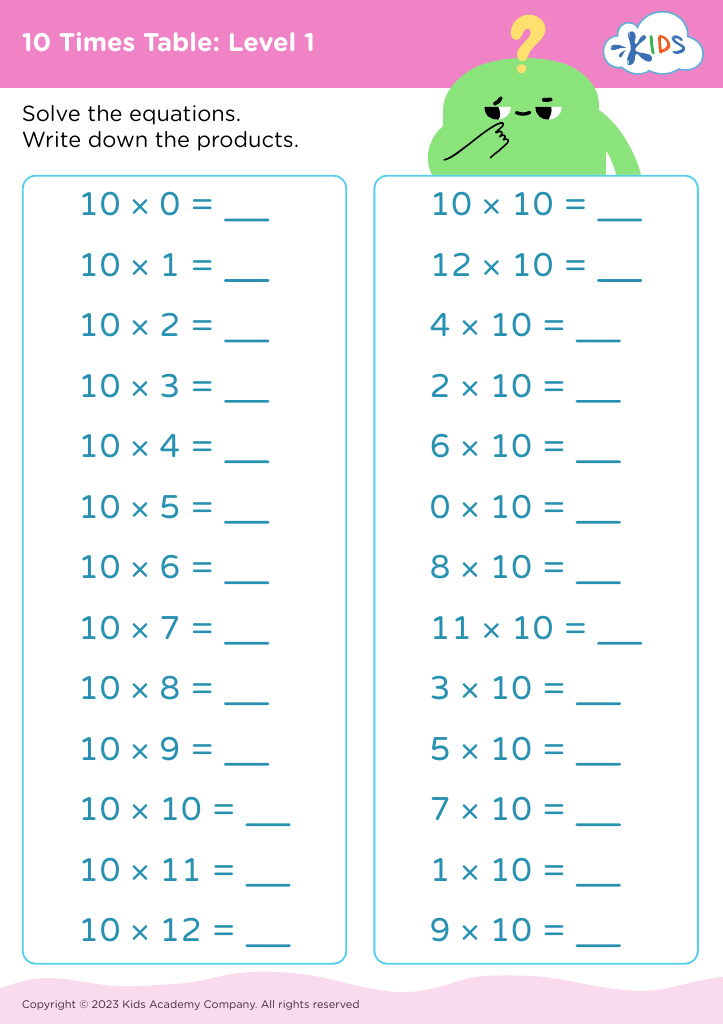
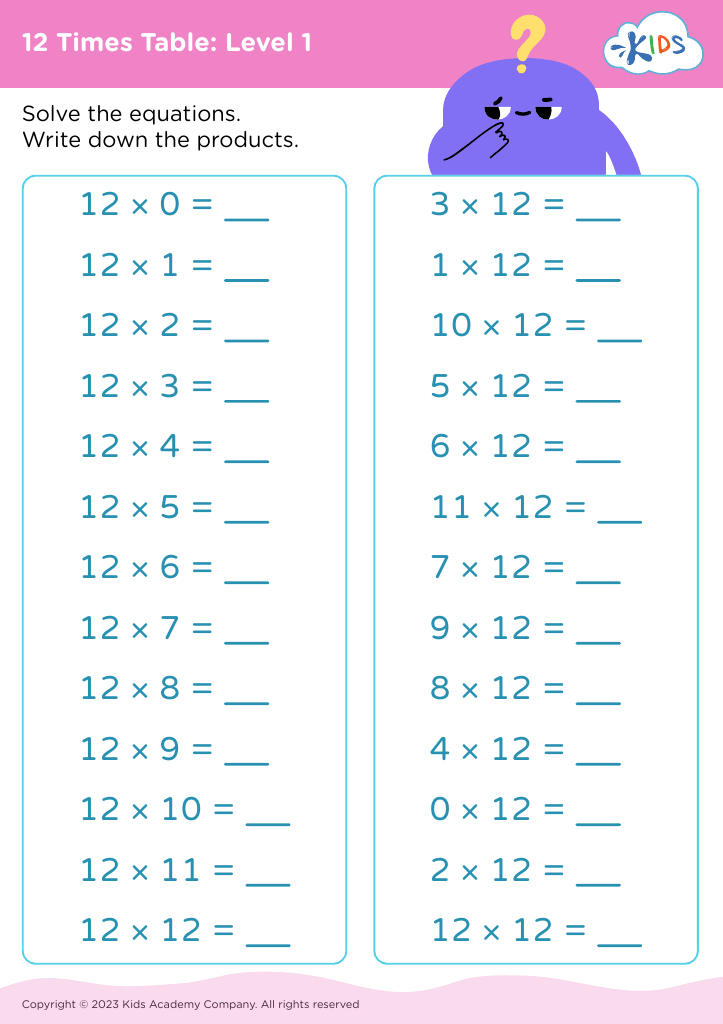
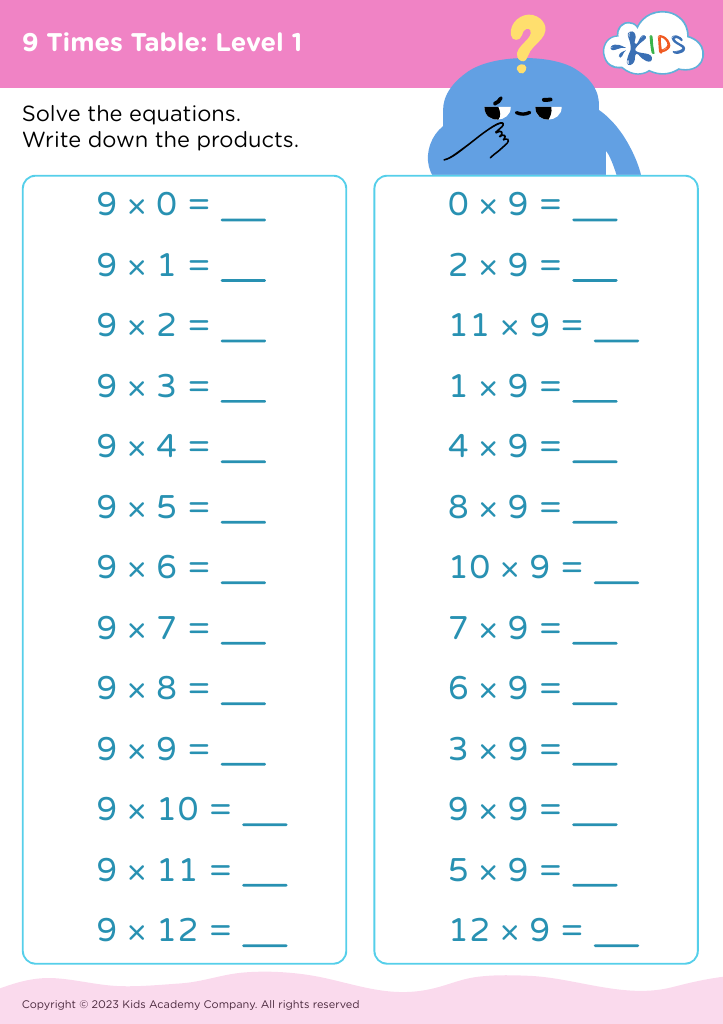
Discover "Understanding Patterns Times Tables Worksheets" for children aged 4-8, designed to enhance their math skills through engaging activities. These worksheets help young learners recognize the patterns inherent in times tables, building a solid foundation for multiplication. Our resources feature colorful, age-appropriate illustrations and interactive tasks that promote critical thinking and retention. By exploring visual patterns, children will not only grasp multiplication concepts but also develop their problem-solving abilities. Whether in the classroom or at home, these worksheets make learning fun and accessible. Download our expert-crafted worksheets today to support your child’s early mathematical journey!





Understanding patterns and times tables from an early age is crucial for children aged 4-8 as it lays the groundwork for future mathematical proficiency. First, recognizing patterns fosters critical thinking and problem-solving skills. When children identify similarities in numbers or sequences, they develop logical reasoning that helps them tackle more complex math concepts later on.
Secondly, times tables rely on the underlying concept of repeated addition, which is inherently linked to patterns. By teaching children to recognize patterns within the tables, they can memorize them more easily and understand the fundamental relationships between numbers. This comprehension aids in mental math skills and boosts confidence, making children more inclined to engage with math.
Moreover, early familiarity with these concepts supports a lifelong appreciation for mathematics, instilling a mindset that values logical thinking and diligence. As parents and teachers play a pivotal role in a child's education, emphasizing the importance of understanding patterns and times tables can enhance their educational journey. Ultimately, nurturing these skills at a young age prepares students for success in grade school and beyond, ensuring they have the foundation necessary to excel in math-intensive subjects in later years.








