Hand-eye Coordination Word Problems Worksheets for Ages 4-8
3 filtered results
-
From - To
Explore our engaging Hand-Eye Coordination Word Problems Worksheets designed for children ages 4-8! These worksheets combine fun math challenges with the essential skill of hand-eye coordination, helping young learners develop critical thinking alongside physical abilities. Each activity encourages children to solve vibrant, age-appropriate word problems, enhancing their comprehension and reasoning skills. As they tackle these interactive exercises, kids will also strengthen their coordination skills through targeted exercises. Perfect for classroom use or at-home learning, our worksheets offer an enjoyable way for children to build confidence in math while enhancing motor skills. Help your child learn and grow with our expertly crafted resources!
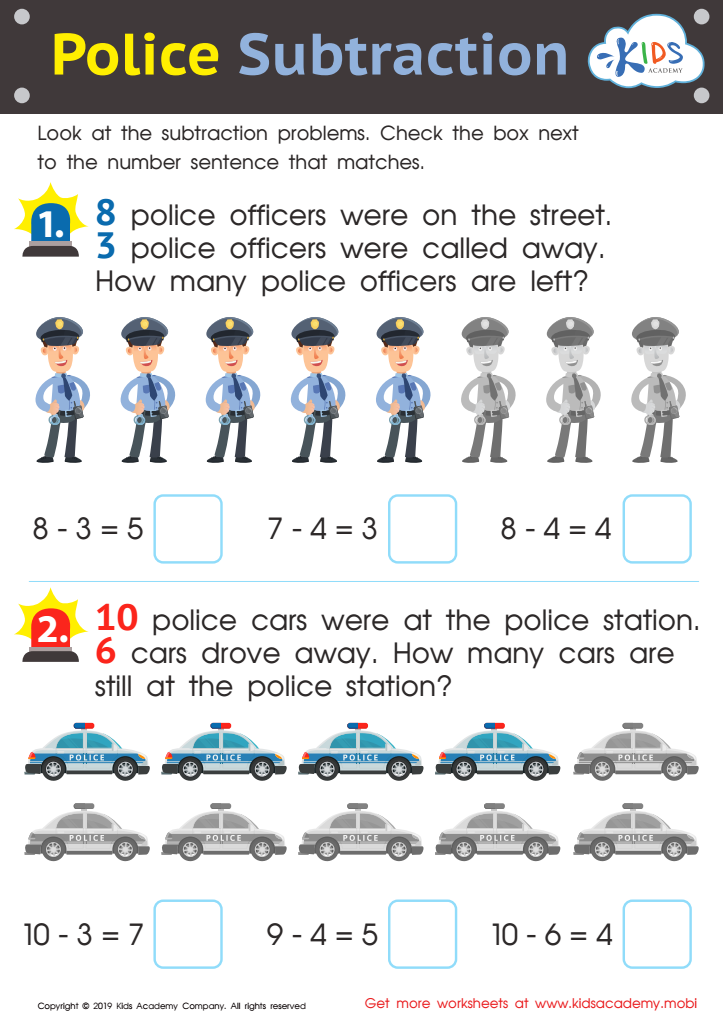
Police Subtraction Worksheet
 Assign to My Students
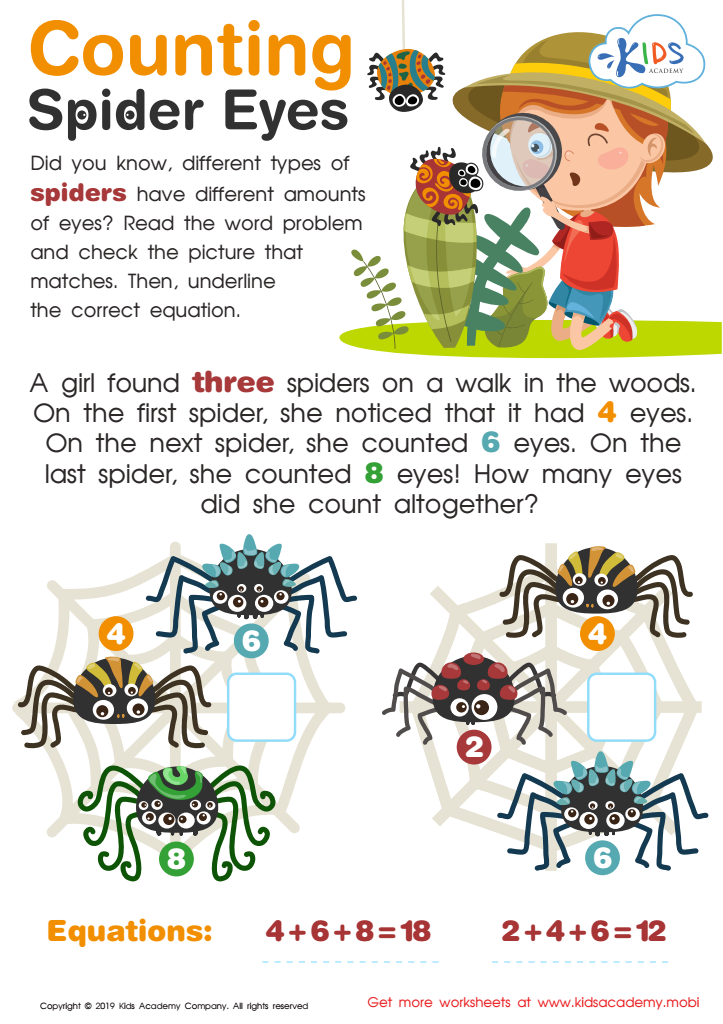
Counting Spider Eyes Worksheet
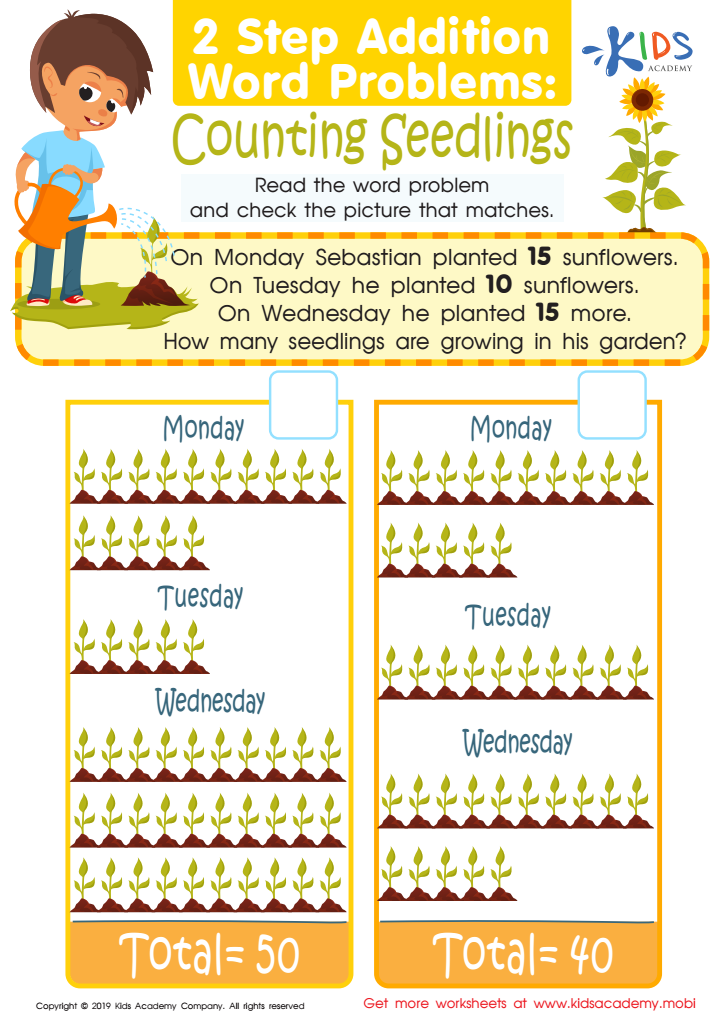
Counting Seedlings Worksheet








Hand-eye coordination is a foundational skill essential for various daily activities and academic success, particularly in children aged 4 to 8. For parents and teachers, fostering this skill through engaging activities like hand-eye coordination word problems can be highly beneficial. At this developmental stage, children are refining motor skills that directly impact their ability to perform tasks such as writing, drawing, and participating in sports.
Hand-eye coordination word problems can serve as multidimensional learning tools that merge cognitive challenges with physical actions. By engaging kids in these problem-solving activities, they not only work on their coordination but also hone their critical thinking skills. This combination enhances their overall development, enabling them to grasp important concepts in mathematics and language more effectively.
Furthermore, such activities can foster spatial awareness and improve attention spans, which are crucial in early learning environments. As children solve problems that require both mental and physical effort, they build confidence and resilience. Hence, incorporating hand-eye coordination word problems in early education will support holistic learning, encouraging children to be more active participants in their own education while preparing them for future academic challenges. Ultimately, this reinforces the role of parents and teachers in creating a nurturing and enriching learning experience.








