Problem-solving abilities Word Problems Worksheets for Ages 4-8
4 filtered results
-
From - To
Enhance your child's problem-solving skills with our engaging word problems worksheets designed for ages 4-8. These worksheets provide a fun and interactive way for young learners to develop critical thinking and math abilities. Each activity challenges kids to interpret real-world scenarios, fostering both comprehension and application of basic math concepts. With colorful illustrations and age-appropriate scenarios, children will be motivated to practice and improve their skills while discovering the joy of problem-solving. Whether at home or in the classroom, these worksheets are an essential resource for nurturing confident, capable young mathematicians. Start their journey to success today!
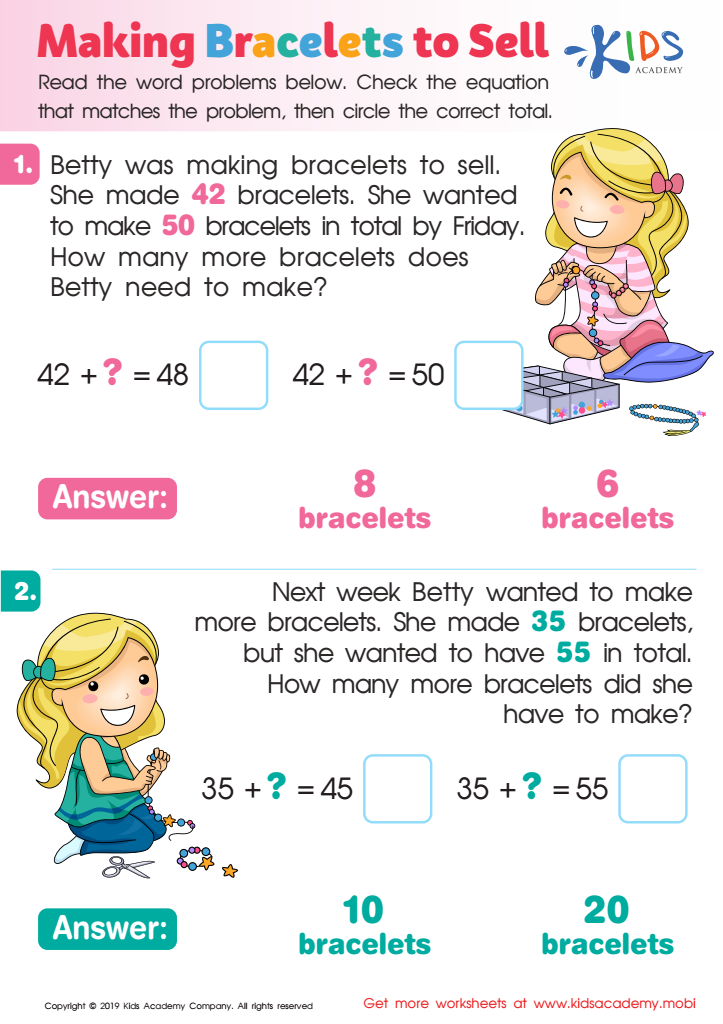
Making Bracelets to Sell Worksheet
 Assign to My Students
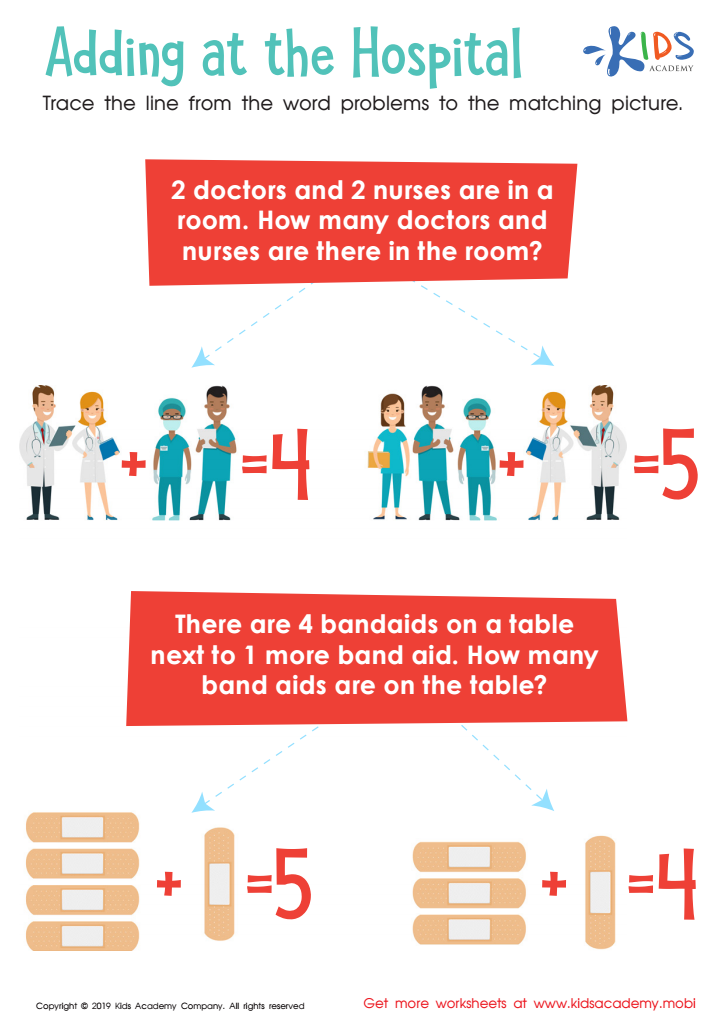
Adding at the Hospital Worksheet
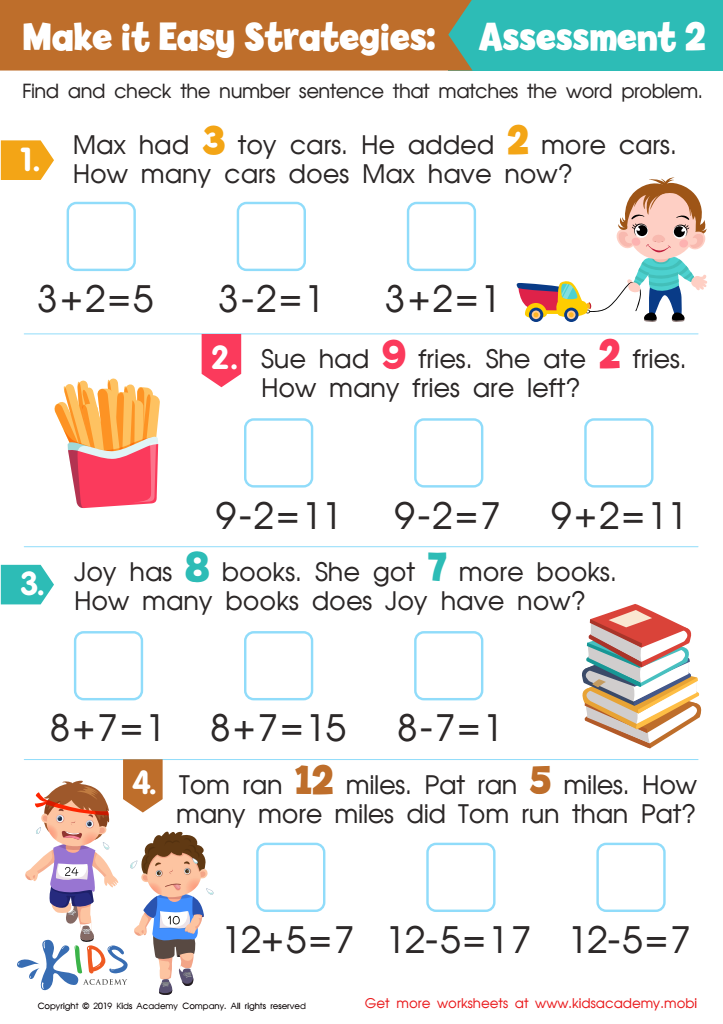
Make it Easy Strategies: Assessment 2 Worksheet
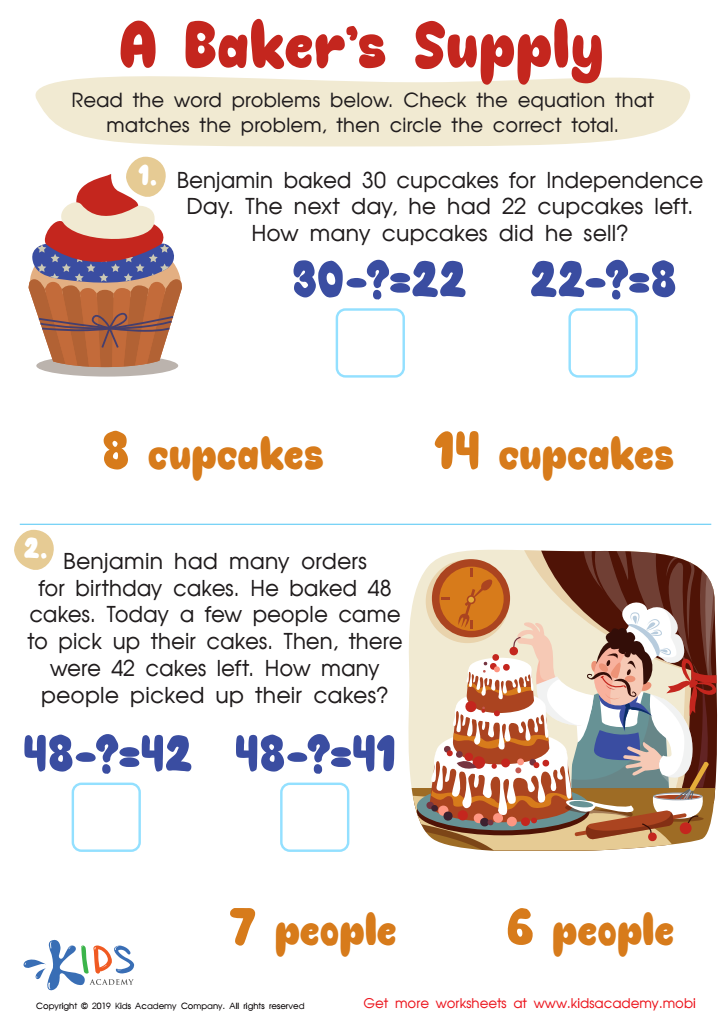
A Baker's Supply Worksheet








Problem-solving abilities, particularly through word problems, are essential for children aged 4-8. During these formative years, children's cognitive skills develop rapidly, and engaging them in word problems cultivates critical thinking, reasoning, and comprehension abilities. Word problems encourage children to interpret scenarios, break down information, and identify relevant details, which fosters a deeper understanding of mathematical concepts beyond rote memorization.
Moreover, developing problem-solving skills prepares young learners for real-life situations. When children grasp the application of math in everyday contexts—such as making purchases, cooking, or sharing items—they are more likely to view mathematics as an essential, relatable aspect of life rather than an isolated subject.
Additionally, exposure to word problems promotes language development and boosts literacy skills. Children learn to decode language and context while navigating mathematical concepts, leading to better overall academic performance.
Parents and teachers should recognize that enhancing problem-solving abilities through word problems builds resilience and perseverance. As children face challenges in these tasks, they learn to approach difficulties with strategies that can be applied beyond academics, fostering a lifelong love for learning and exploration. Encouraging these skills at an early age sets the foundation for future success in mathematics and critical thinking throughout their education.








