Improve vocabulary Building Vocabulary Worksheets for Ages 4-8
5 filtered results
-
From - To
Unlock the power of words with our Improve Vocabulary Building Worksheets, designed specifically for children ages 4-8. These engaging and colorful worksheets help early learners expand their vocabulary through interactive activities, games, and exercises. Our thoughtfully crafted resources encourage creativity and critical thinking while promoting reading and language skills. Each worksheet focuses on essential vocabulary building techniques to enhance comprehension and expression. Perfect for home or classroom use, these worksheets enrich learning experiences and make vocabulary building fun and exciting! Give your child the gift of words and watch their confidence soar as they communicate more effectively. Explore our collection today!
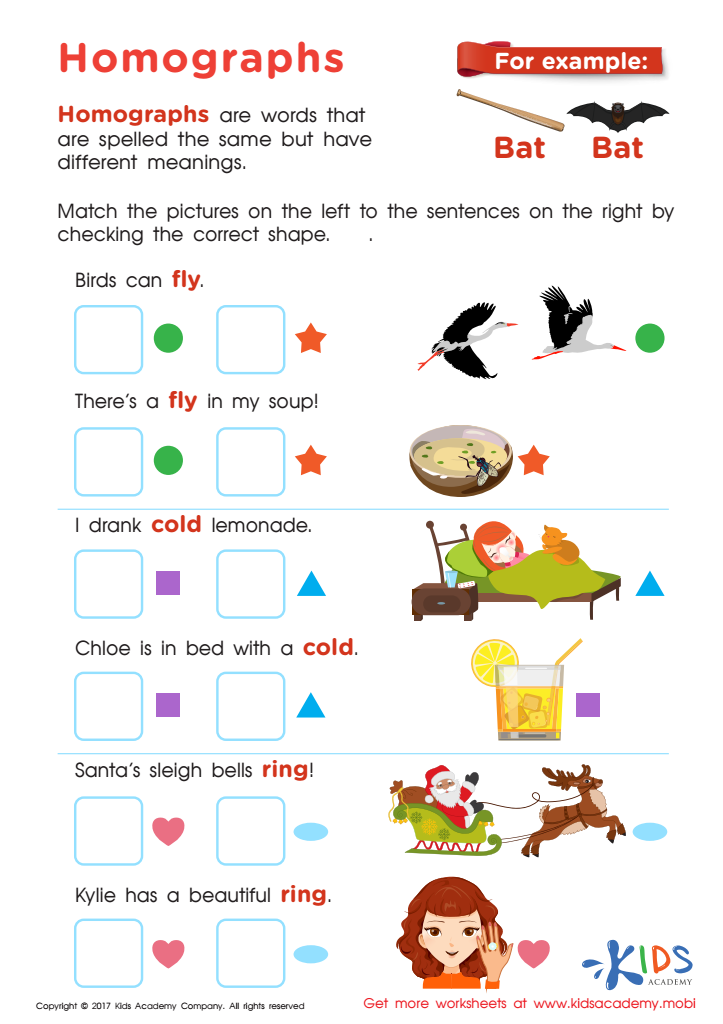
Homographs Free Printable Worksheet
 Assign to My Students











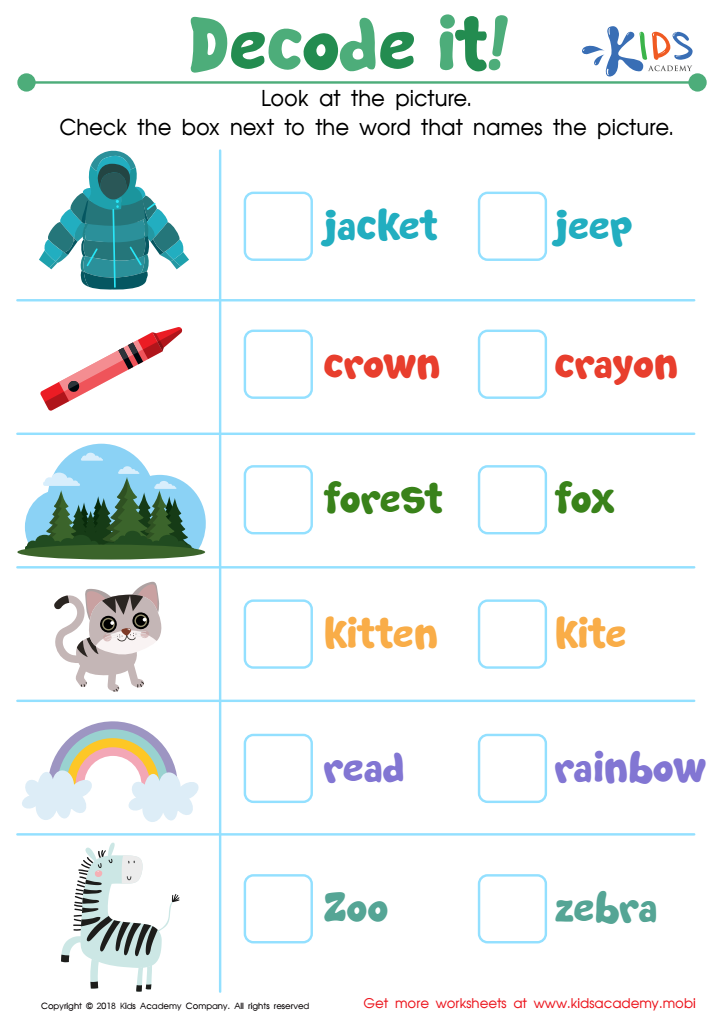
Reading: Decode It Worksheet
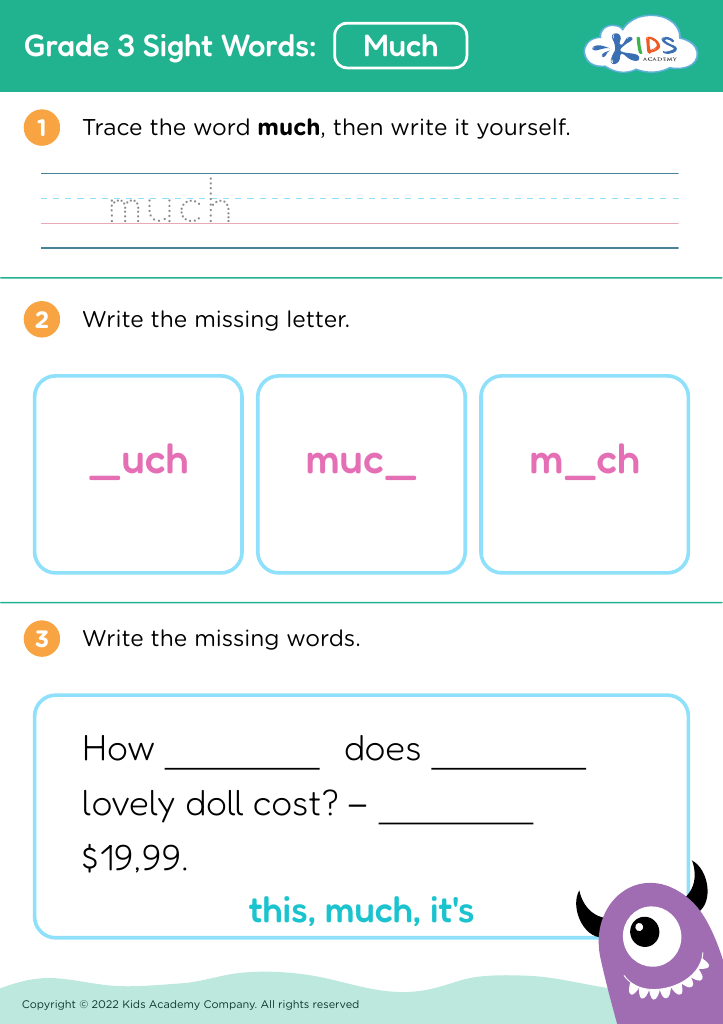
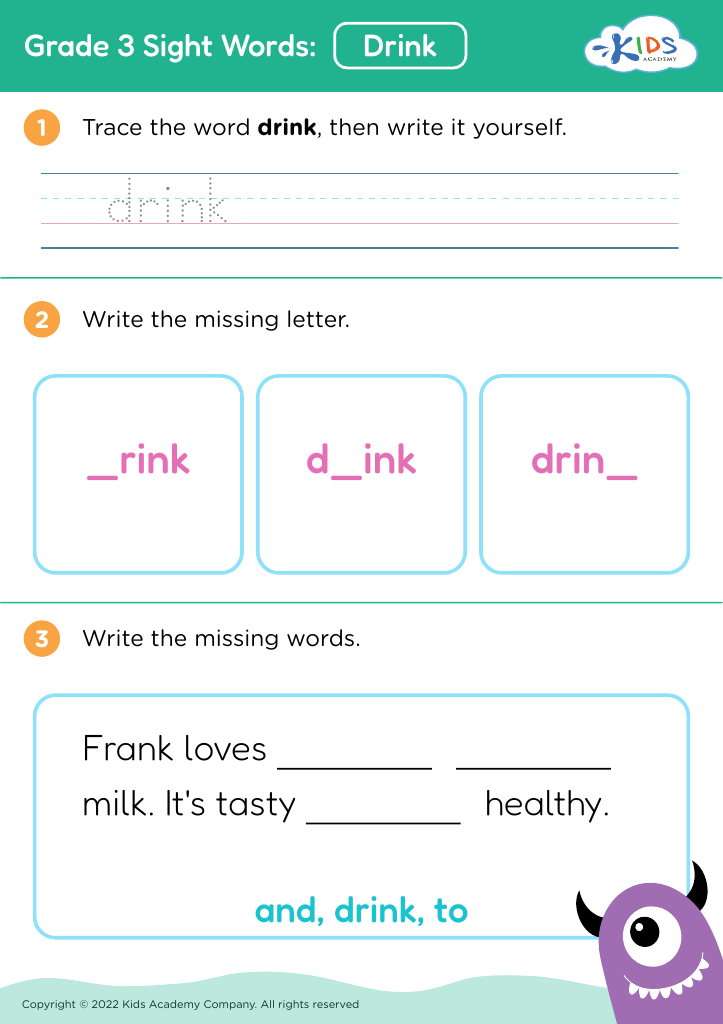
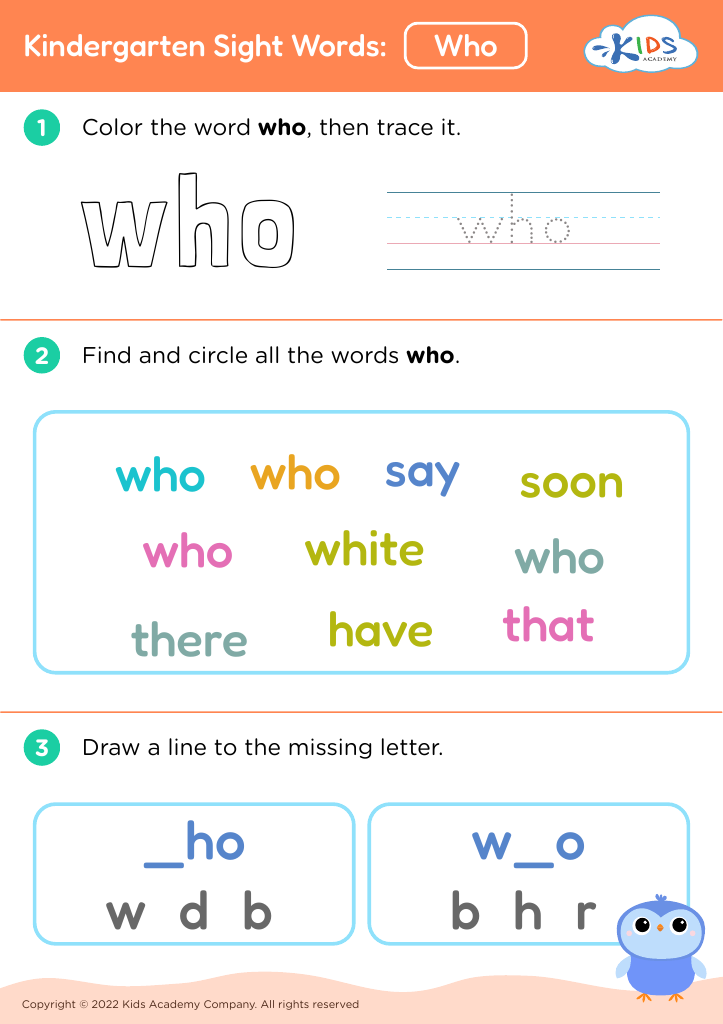


.jpg)





Building vocabulary is crucial for children aged 4-8 as it lays the foundation for successful communication and comprehension skills. During these formative years, children are rapidly learning to express themselves, understand spoken and written language, and engage with complex ideas. A robust vocabulary enhances their ability to articulate thoughts and feelings, fostering confidence in social interactions and academic settings.
Parents and teachers play a vital role in vocabulary development. Engaging children in rich dialogue, reading aloud, and discussing new words are effective strategies. Exposure to diverse vocabulary expands their understanding of different concepts, encourages critical thinking, and boosts literacy skills. This growth not only benefits academic performance but also equips children with the tools to navigate the world around them.
Moreover, a strong vocabulary has long-term implications. Research shows that a solid vocabulary in early childhood is linked to better reading outcomes and higher achievement later in life. By prioritizing vocabulary development, parents and teachers can empower children not just to succeed in school but also to communicate effectively and confidently in everyday life. Consequently, nurturing vocabulary at this young age is an investment in a child's future, offering broad benefits that extend well beyond the classroom.








