Moral lesson understanding Building Vocabulary Worksheets for Ages 4-8
3 filtered results
-
From - To
Enhance your child's vocabulary while imparting valuable moral lessons with our Building Vocabulary Worksheets for ages 4-8. Thoughtfully designed, these worksheets integrate age-appropriate words with important moral themes such as honesty, kindness, and respect. Through engaging activities, kids learn new words and phrases that broaden their understanding and appreciation of good behavior. Each worksheet is crafted to develop critical thinking, comprehension, and empathy, ensuring a well-rounded intellectual and moral growth. Perfect for both classroom settings and home learning, these resources make vocabulary building a meaningful and enjoyable journey. Explore our collection to support your child’s ethical and linguistic development today!
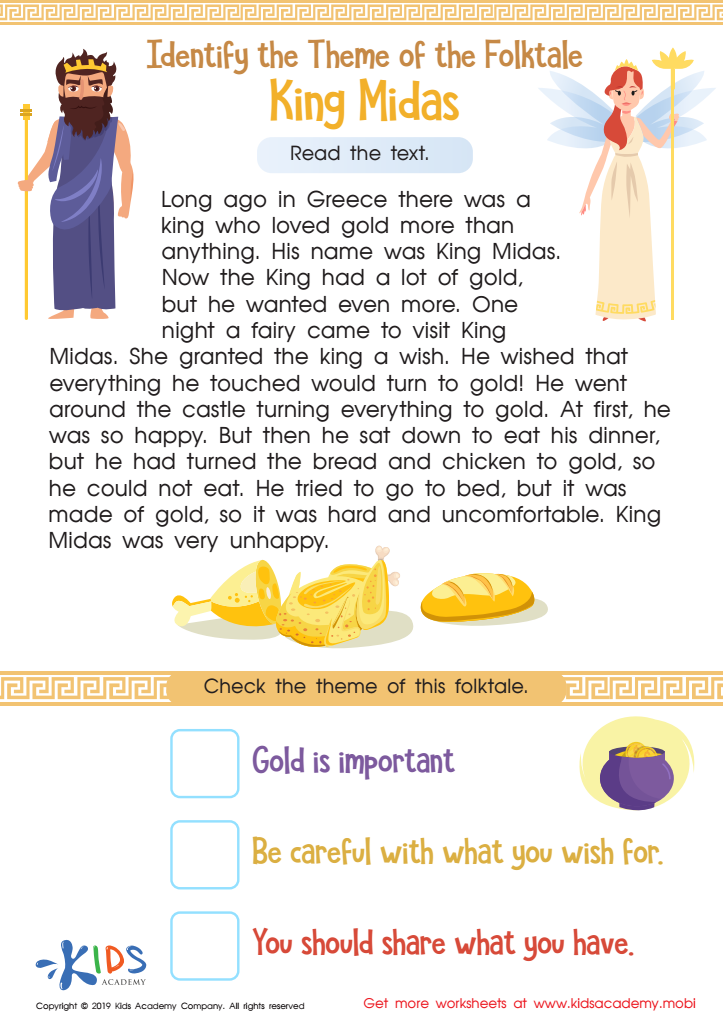
King Midas Worksheet
 Assign to My Students











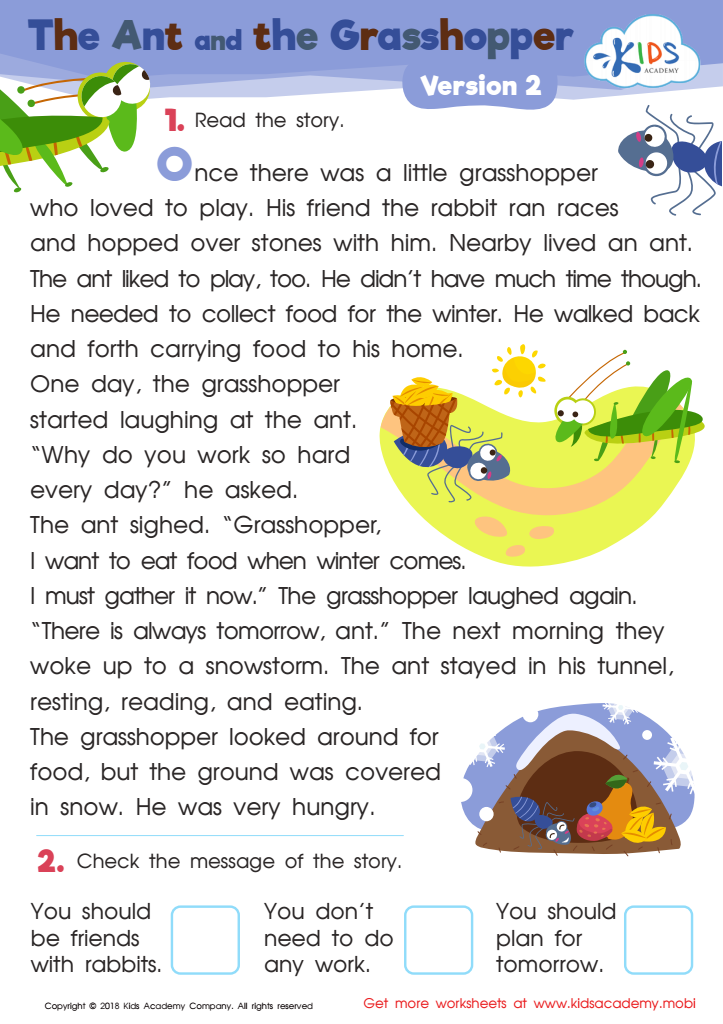
The Ant and The Grasshopper Version 2 Worksheet
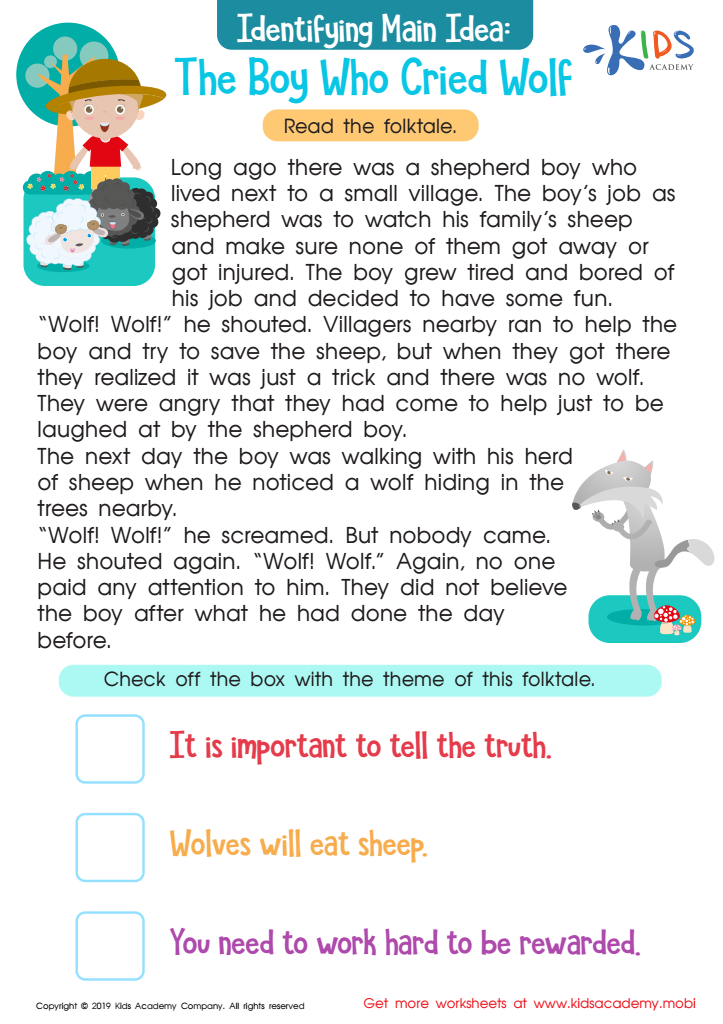
The Boy Who Cried Wolf Part 2 Worksheet








Understanding moral lessons and building vocabulary are crucial elements in early childhood education for children ages 4-8. Moral lessons offer foundational tools for developing empathy, honesty, and responsibility, shaping children into well-rounded individuals who can effectively interact in social environments. When children grasp concepts like sharing, kindness, and respect, they not only build positive relationships with peers but also form a strong moral compass that guides their future actions and decisions.
Building vocabulary is equally important as it enhances communication skills and encourages cognitive development. A robust vocabulary allows children to express themselves more clearly and understand others better, which is essential in both academic settings and everyday interactions. As children learn new words and concepts, they begin to think more critically and creatively, laying the groundwork for advanced reading and writing skills. This vocabulary growth also fosters a love for lifelong learning by making reading and exploration more enjoyable and accessible.
Together, understanding moral lessons and building vocabulary create a nurturing and intellectually stimulating environment. They boost self-confidence, encourage inquisitiveness, and promote critical thinking. By prioritizing these elements, parents and teachers can provide a holistic education that prepares children for the complexities of life and encourages them to become compassionate, articulate, and thoughtful individuals.








