Noun identification Building Vocabulary Worksheets for Ages 4-8
3 filtered results
-
From - To
Explore the joy of learning with our “Noun Identification Building Vocabulary Worksheets” designed for children ages 4-8. These engaging worksheets help young learners identify nouns through fun activities that spark creativity and reinforce vocabulary skills. Each worksheet features vibrant illustrations and simple exercises tailored to capture children's attention and make learning enjoyable. As children categorize items, fill in blanks, and solve puzzles, they will strengthen their understanding of nouns in everyday language. Perfect for both classroom settings and at-home practice, our resources aim to build a solid foundation in literacy and enhance vocabulary, preparing kids for future academic success.
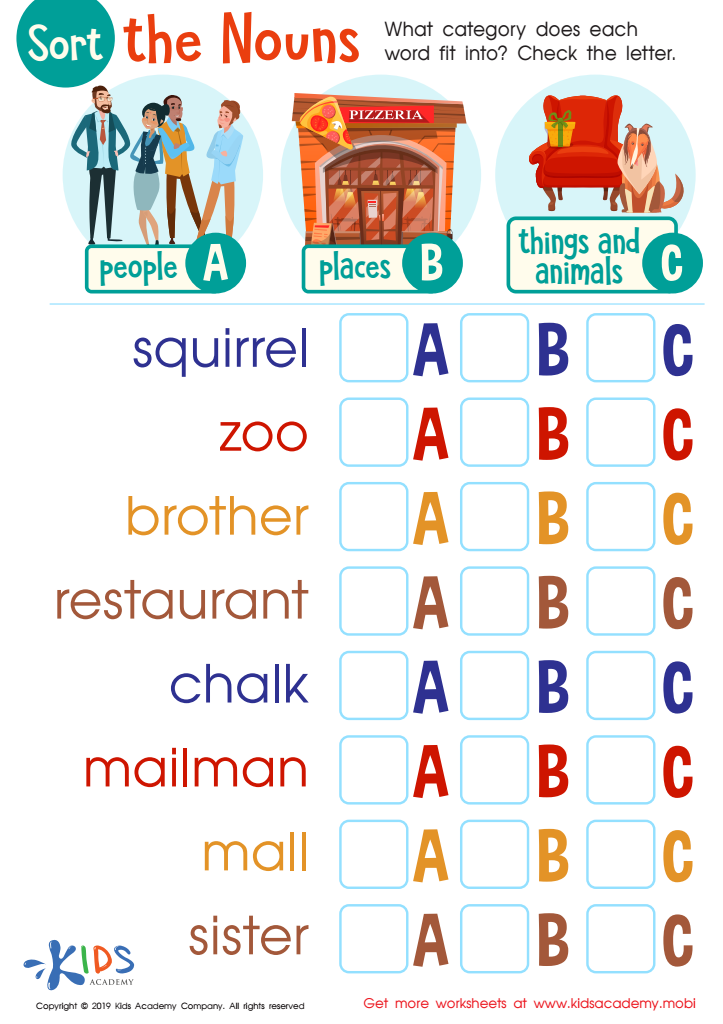
Sort the Nouns Worksheet
 Assign to My Students











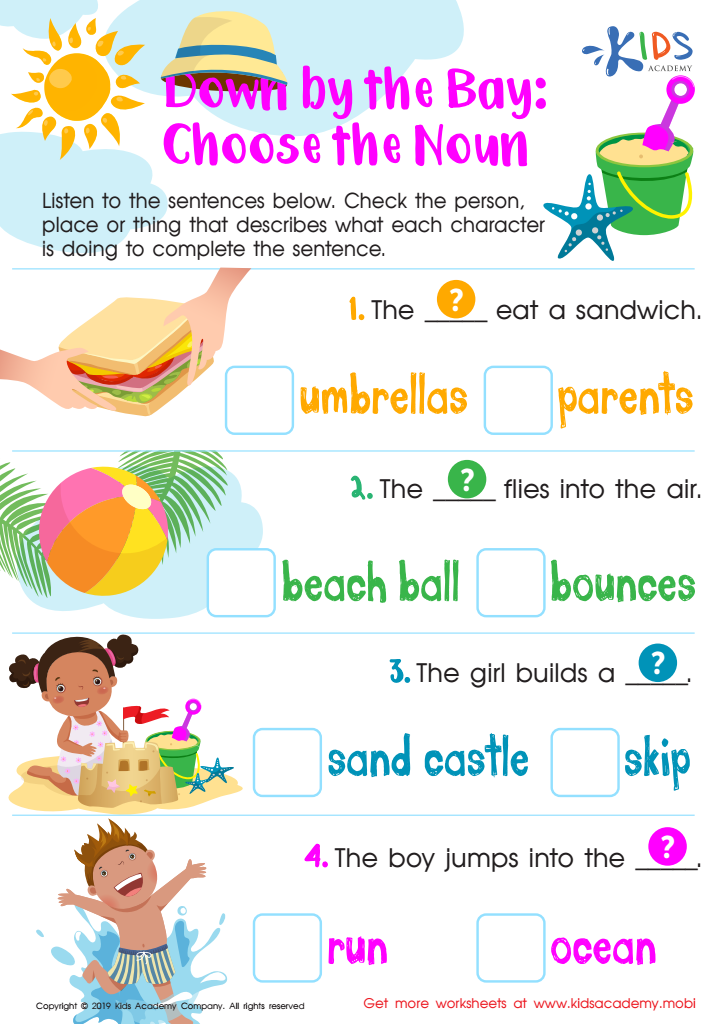
Down by the Bay: Choose the Noun Worksheet
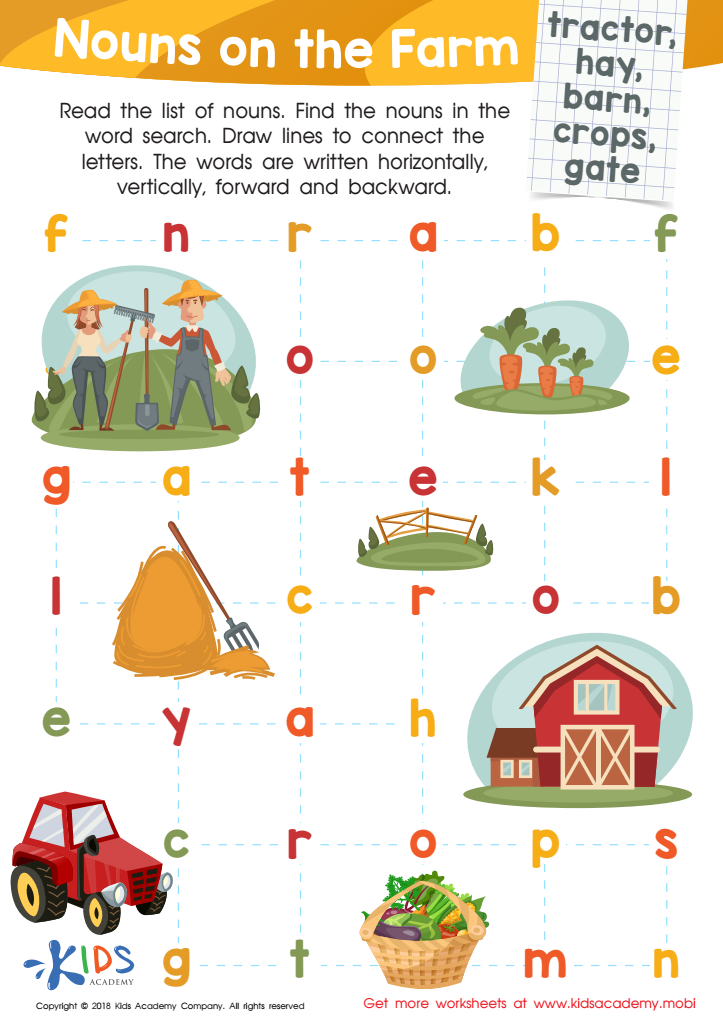
Nouns on the Farm Worksheet



.jpg)




Noun identification plays a crucial role in building vocabulary for children aged 4-8, and parents and teachers should prioritize this aspect of language development. At this age, children are rapidly expanding their linguistic abilities and making sense of the world around them. Recognizing and understanding nouns—names of people, places, and things—helps children to express their thoughts clearly and enhances their communication skills.
When children can identify nouns, they gain a foundation for constructing sentences, thereby improving their reading and writing capabilities. This understanding fosters literacy by enabling them to decode texts and comprehend meanings. Furthermore, a solid grasp of nouns can encourage imaginative play and storytelling, crucial for cognitive development and creativity.
Incorporating activities that involve noun identification, such as games, flashcards, and interactive storytelling, fosters an engaging learning environment. Parents and teachers can nurture curiosity by encouraging children to explore their surroundings and name objects, broadening their vocabulary naturally.
Ultimately, enhancing noun identification not only enriches children's language skills but also builds their confidence as communicators. By caring about vocabulary development, parents and teachers contribute significantly to children's overall academic success and interpersonal relationships, laying the groundwork for lifelong learning.








