Filters

33 filtered results

Clear all filters
Favorites
With answer key
Interactive

33 filtered results

Difficulty Level

Grade


Enhance your child's learning journey with our engaging "Number Recognition Building Vocabulary Worksheets" designed specifically for ages 4-8. These worksheets provide a fun and interactive way for young learners to identify and understand numbers while expanding their vocabulary. Through colorful activities and playful exercises, children will build essential early math skills and develop a strong foundation in number recognition. Our carefully crafted materials promote critical thinking and enhance language understanding, ensuring a well-rounded educational experience. Perfect for at-home practice or classroom use, these worksheets ignite curiosity and foster a love for learning in your child. Start their journey today!

Check out this FREE Trial Lesson on Building Vocabulary for age 4-8!

Context Clues

Favorites
With answer key
Interactive
  • 4-8
  • Number Recognition
  • Building Vocabulary
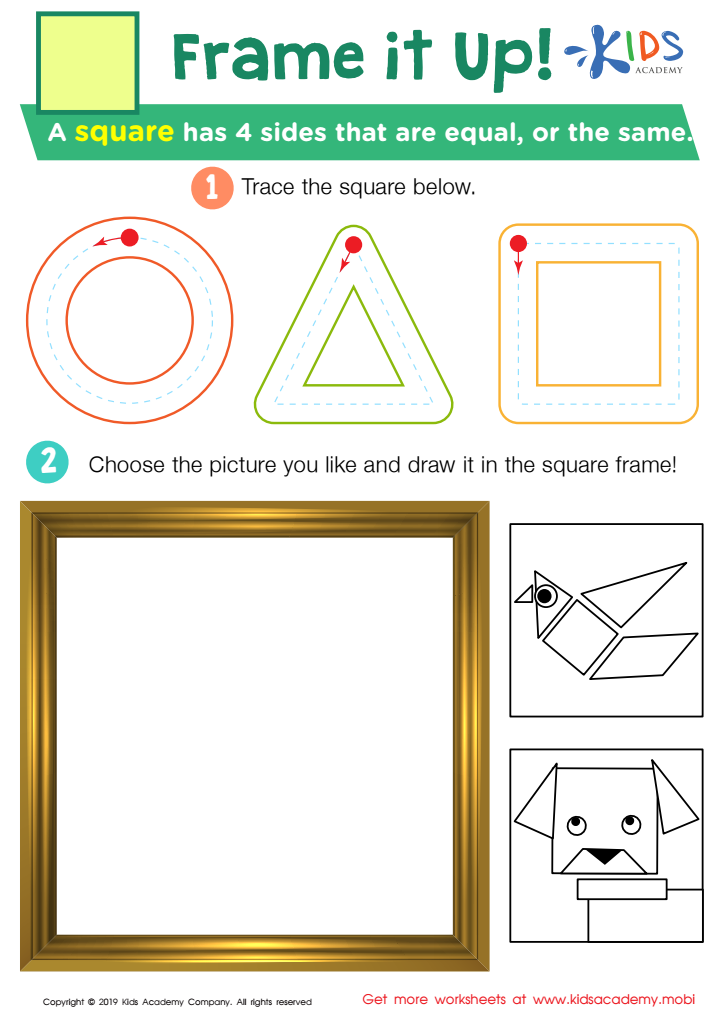
Frame it Up Worksheet

Frame it Up Worksheet

This worksheet helps kids learn the difference between squares and other shapes. It guides them to trace a square and draw a picture inside it. Examples of shapes-based drawings are included. Kids will have fun and clear up any confusion about squares.
Frame it Up Worksheet
Worksheet
Ten in the Bed: Vocabulary Worksheet

Ten in the Bed: Vocabulary Worksheet

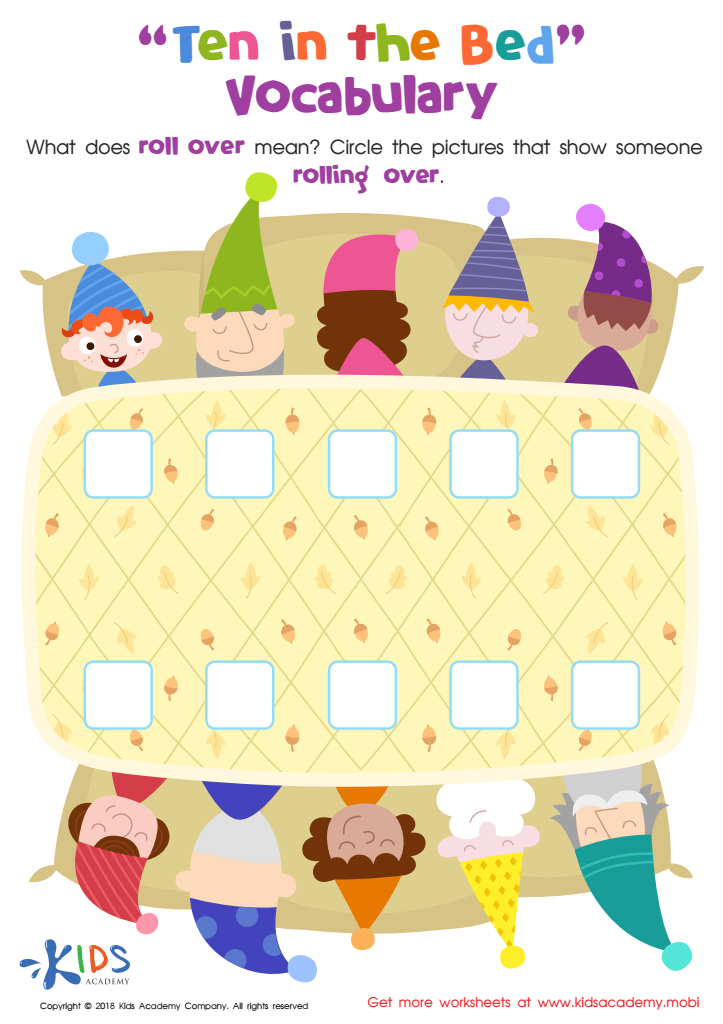
It's essential for emerging readers to be proficient in positional and directional words. This worksheet uses cheerful faces to help students identify who has "rolled over". Knowing these words is an essential part of reading and writing for pre-K and Kindergarteners. It also helps them to follow directions and use precise language.
Ten in the Bed: Vocabulary Worksheet
Worksheet
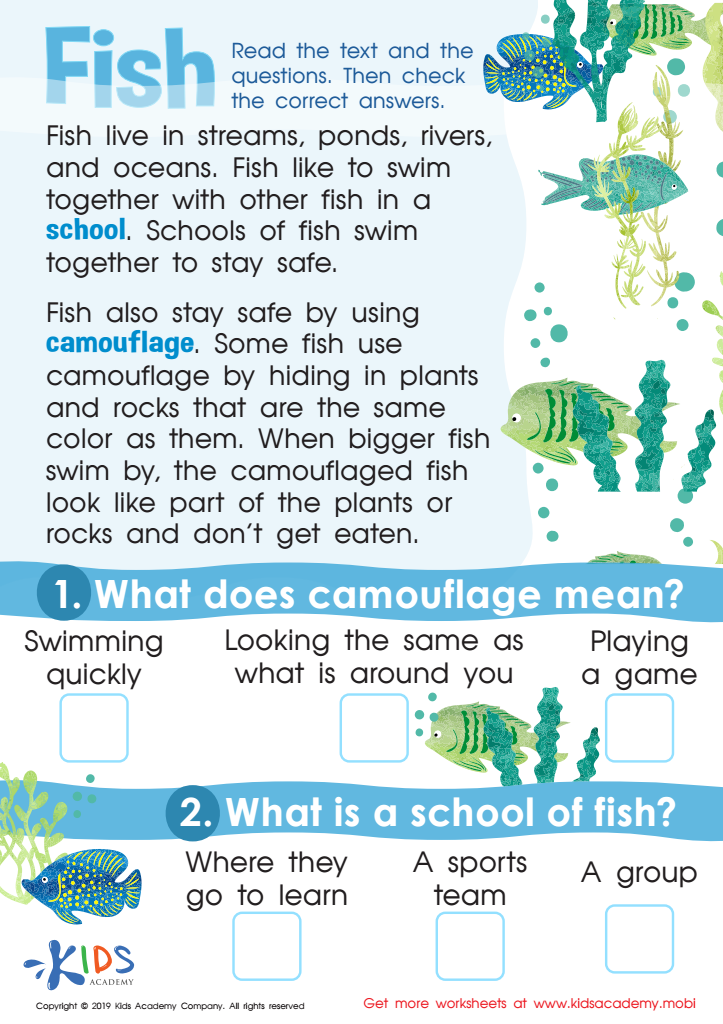
Fish Worksheet
Fish Worksheet

Fish Worksheet

Kids love learning about the creatures that live in water! This free PDF worksheet covers fish, teaching kids larger vocabulary and contextual reading comprehension. Questions prompt them to choose the right answer from multiple choices, just like in a classroom. It's a fun way to boost their reading skills and comprehension without them even realizing it!
Fish Worksheet
Worksheet
The Dog and His Bone Worksheet

The Dog and His Bone Worksheet

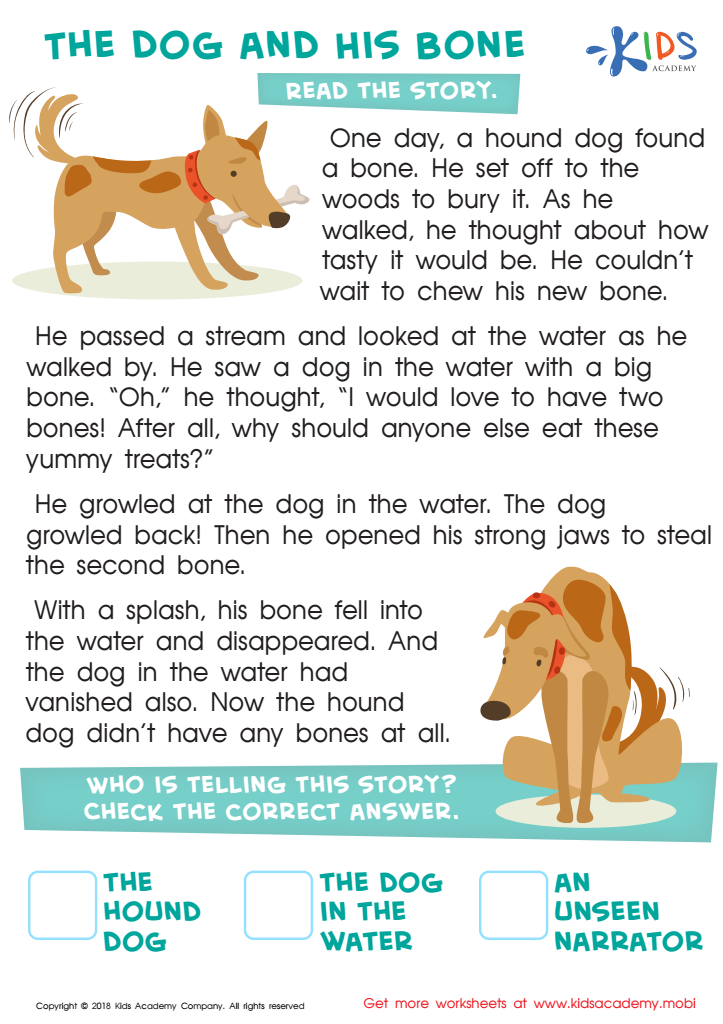
Read the story of The Dog and His Bone to your kids, making sure they take in the details. Ask them the questions in this worksheet and help them check the answers. Encourage them to think carefully.
The Dog and His Bone Worksheet
Worksheet
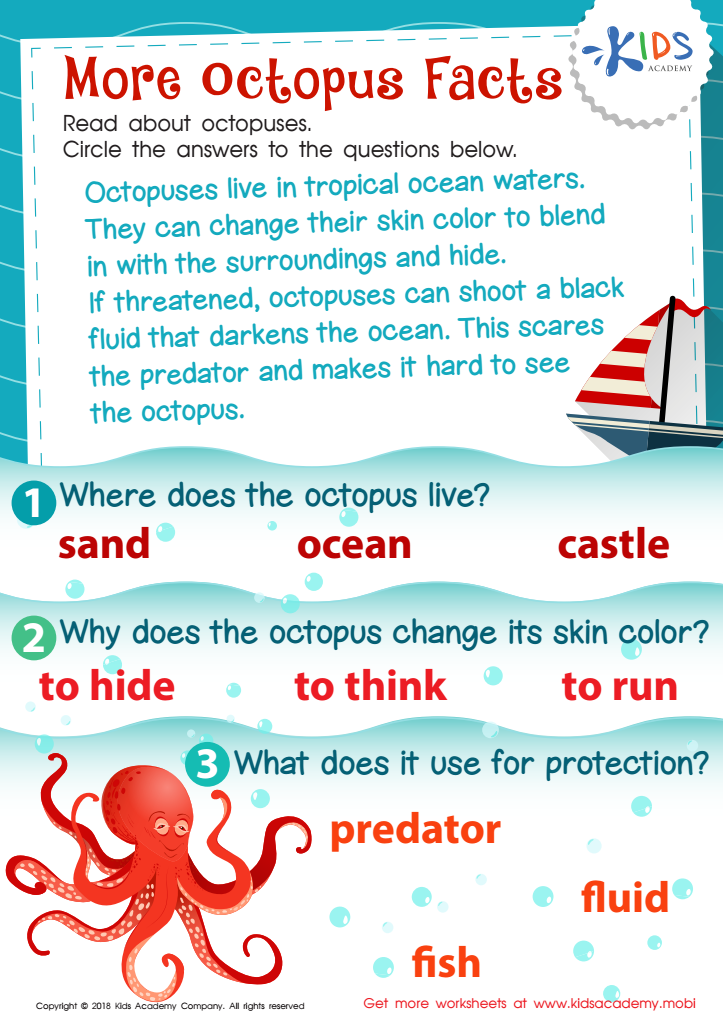
More Octopus Facts Worksheet

More Octopus Facts Worksheet

This worksheet will help your kids learn about the Octopus. Read the text carefully and have kids read with you. Now, ask them questions based on it and help them answer them by circling the right choices. Teaching your kids facts about animals will help them in the long run.
More Octopus Facts Worksheet
Worksheet
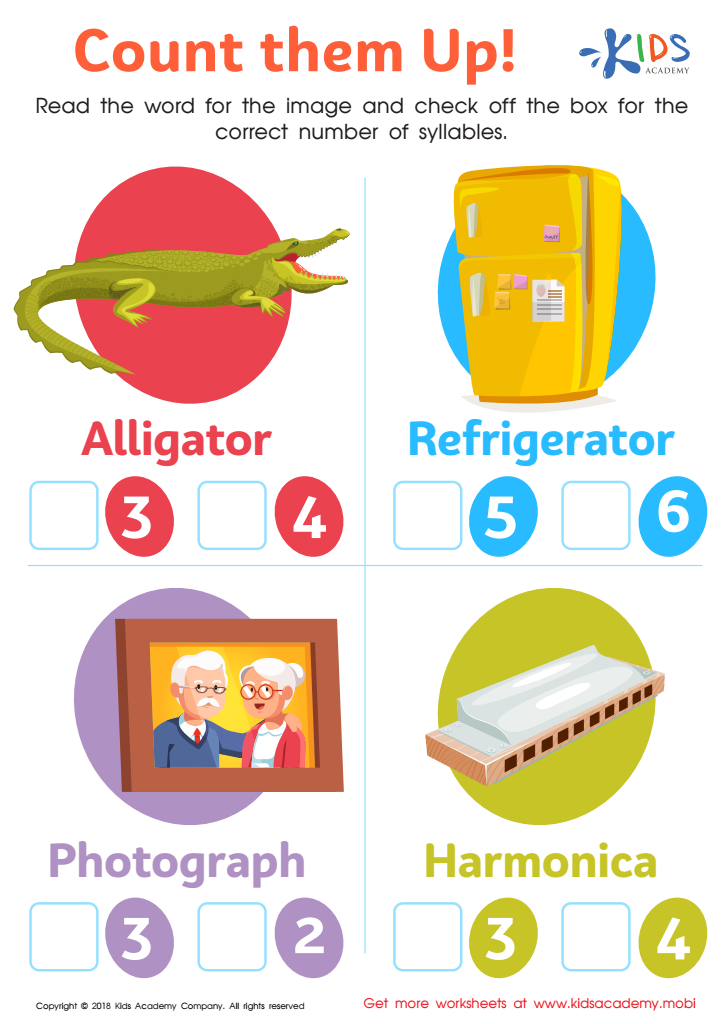
Count Them Up Worksheet

Count Them Up Worksheet

This worksheet has four colorful pictures. Ask your students to identify and name each image, then count the syllables in the word. Make them repeat the word after you, and check off the box with the correct number of syllables. Mastering the art of counting goes beyond numbers. Get your students counting syllables with this activity!
Count Them Up Worksheet
Worksheet
Pair Pears Worksheet
Pair Pears Worksheet
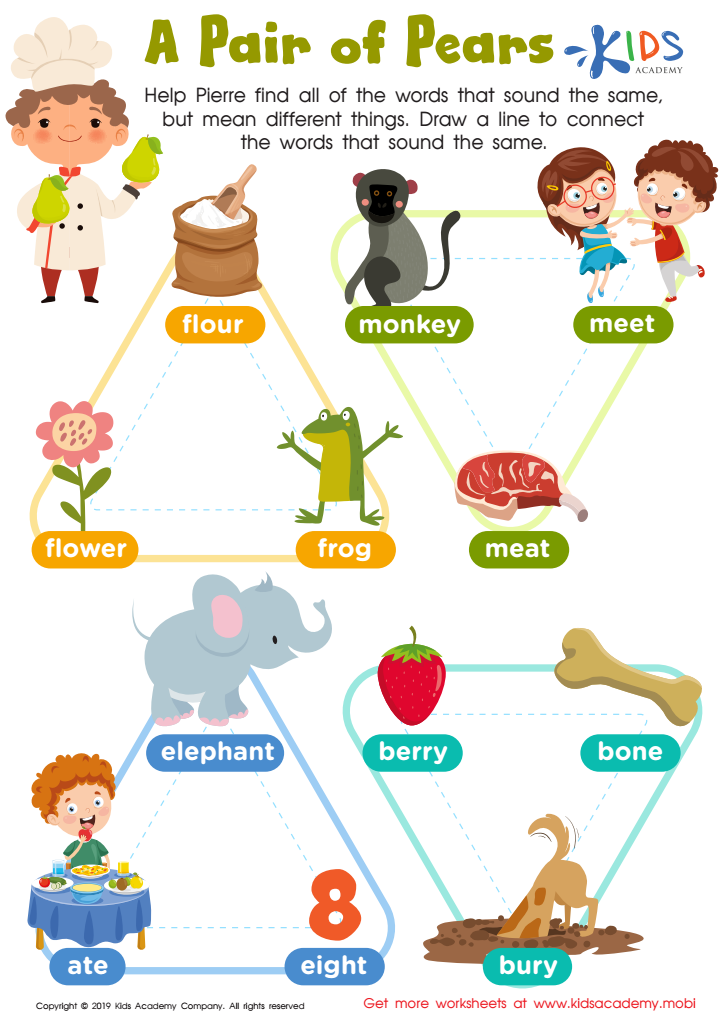
Young readers can have difficulty knowing when to use the right homophone. This free worksheet helps them use familiar imagery to understand better by connecting words that sound similar but are spelled and mean different things. Students will trace the lines to form a picture and have a reference image to differentiate between the different homophones.
Pair Pears Worksheet

Worksheet
Kindergarten Sight Words: Did

Kindergarten Sight Words: Did

Kindergarten Sight Words: Did
Worksheet
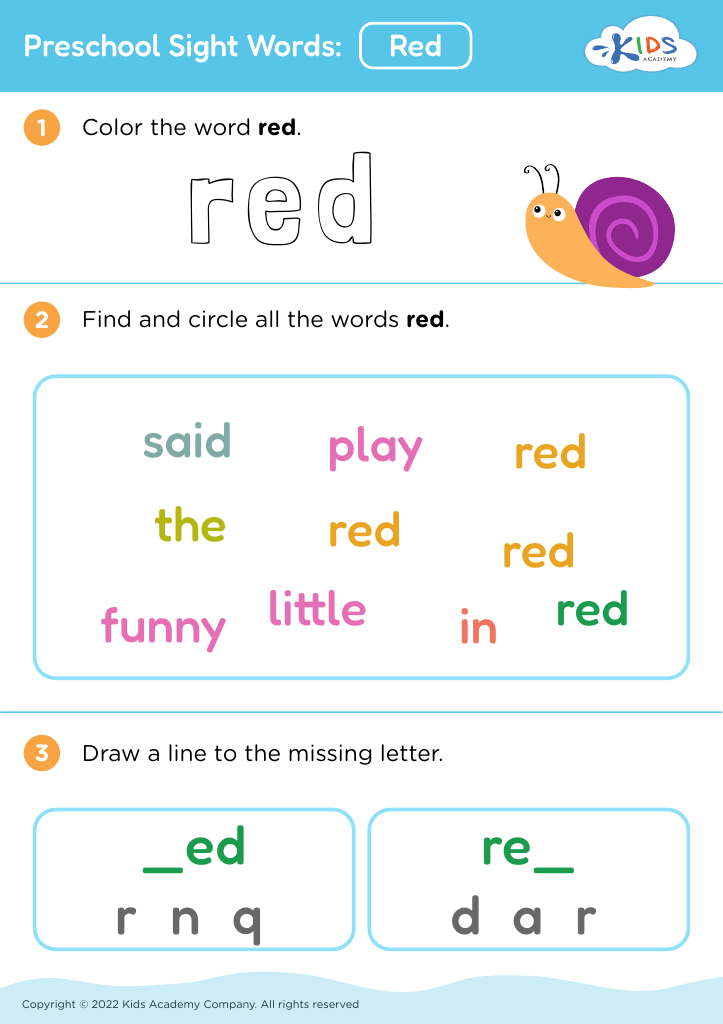
Preschool Sight Words: Red

Preschool Sight Words: Red

Preschool Sight Words: Red
Worksheet
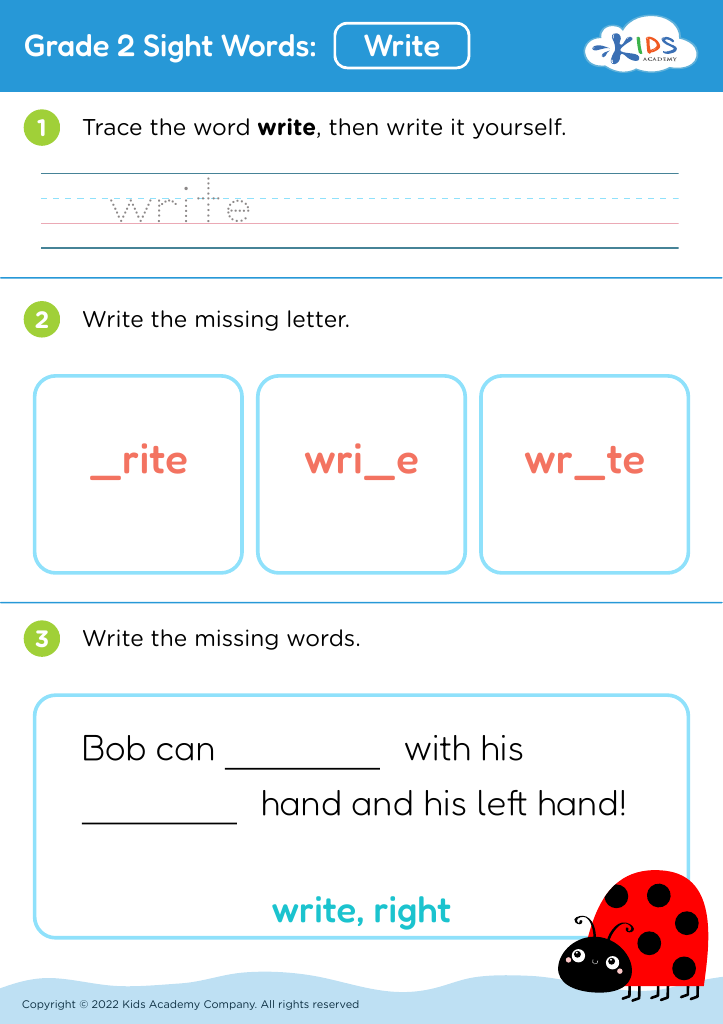
Grade 2 Sight Words: Write

Grade 2 Sight Words: Write

Grade 2 Sight Words: Write
Worksheet
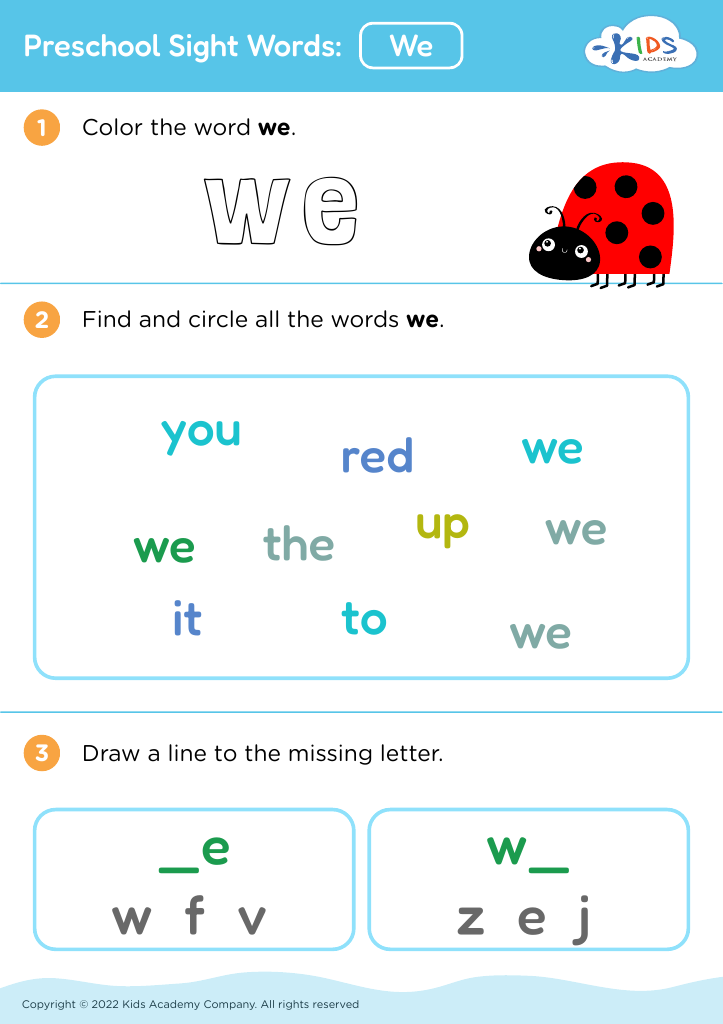
Preschool Sight Words: We

Preschool Sight Words: We

Preschool Sight Words: We
Worksheet
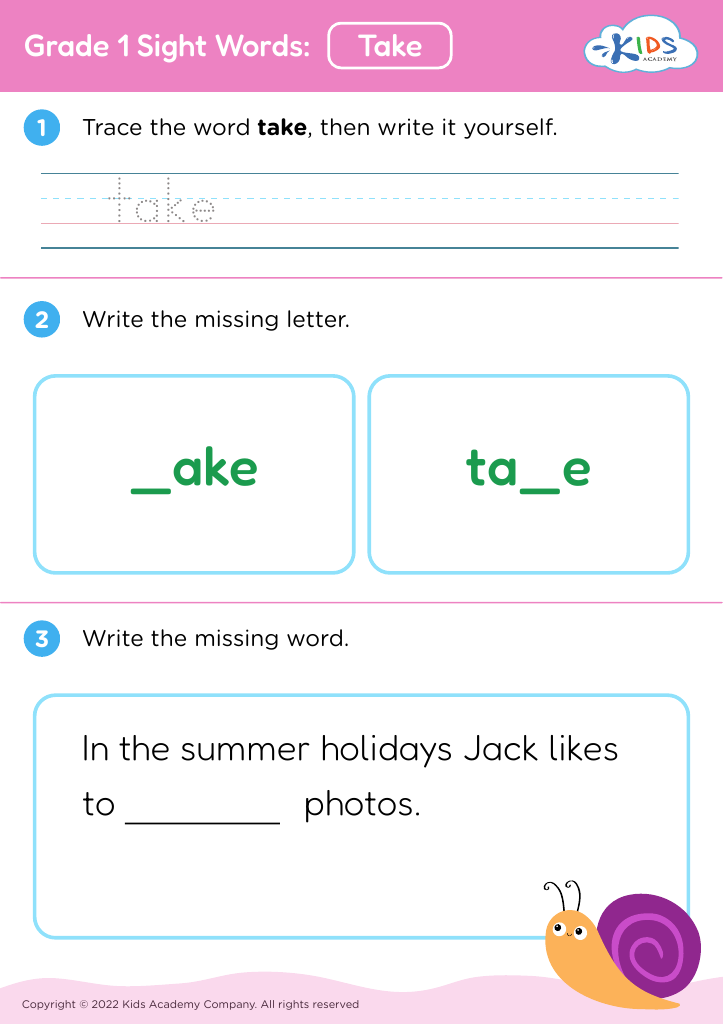
Grade 1 Sight Words: Take

Grade 1 Sight Words: Take

Grade 1 Sight Words: Take
Worksheet
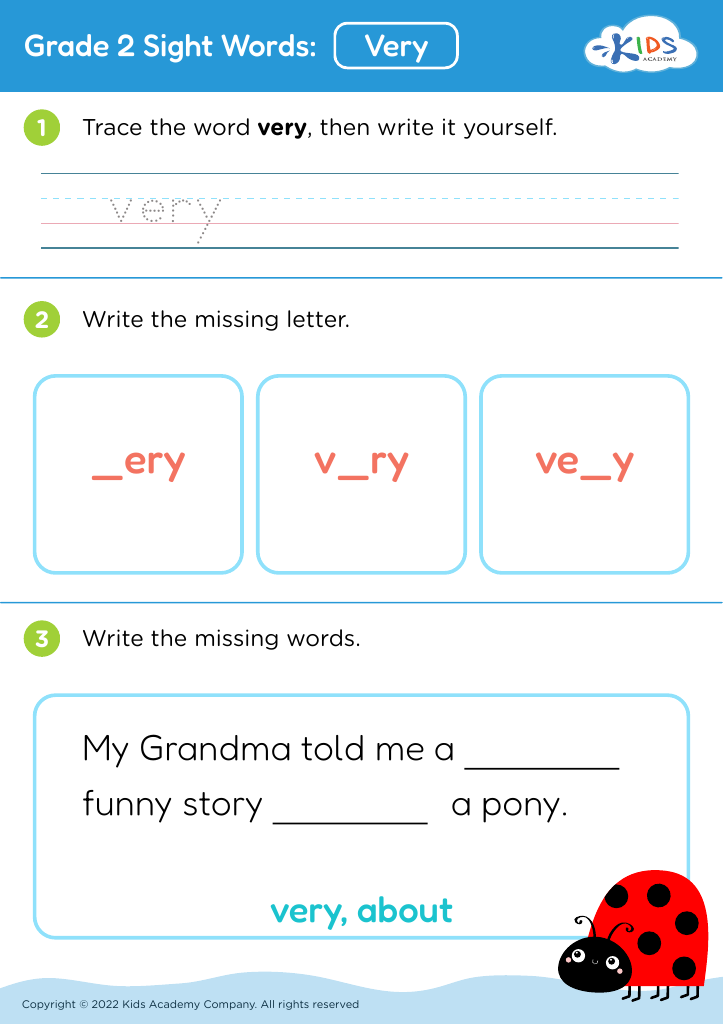
Grade 2 Sight Words: Very

Grade 2 Sight Words: Very

Grade 2 Sight Words: Very
Worksheet
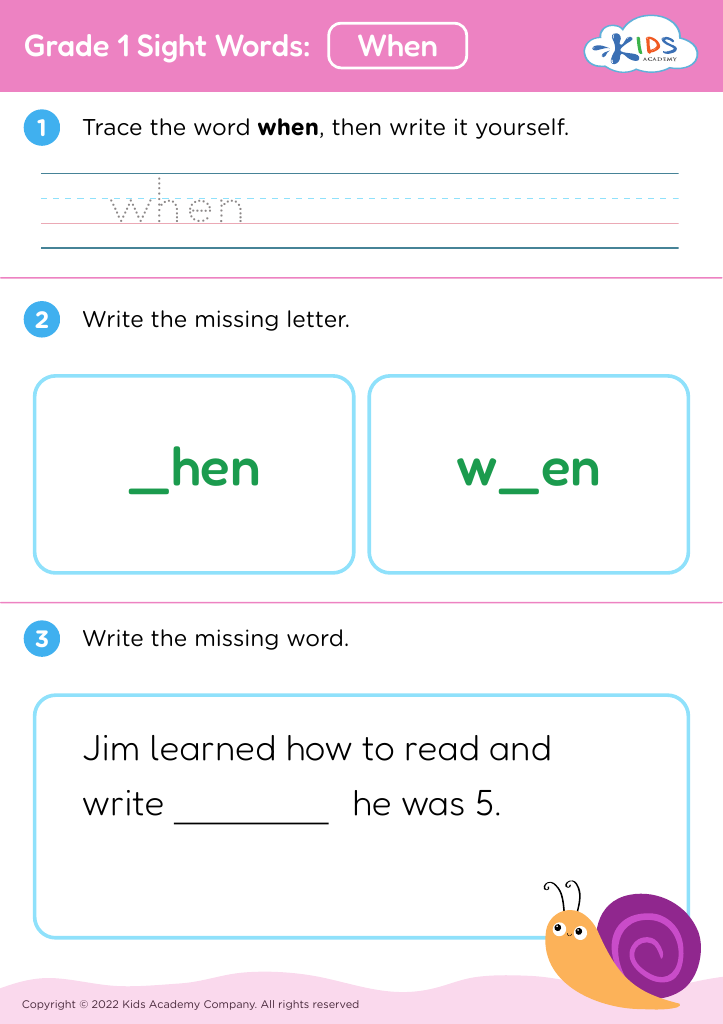
Grade 1 Sight Words: When

Grade 1 Sight Words: When

Grade 1 Sight Words: When
Worksheet
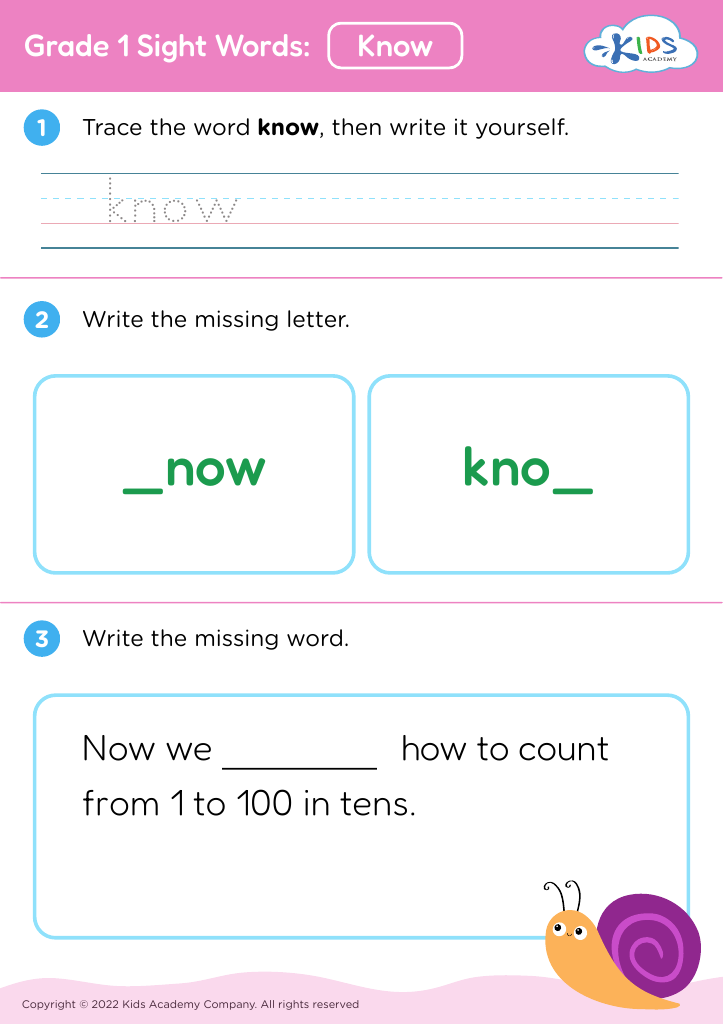
Grade 1 Sight Words: Know

Grade 1 Sight Words: Know

Grade 1 Sight Words: Know
Worksheet
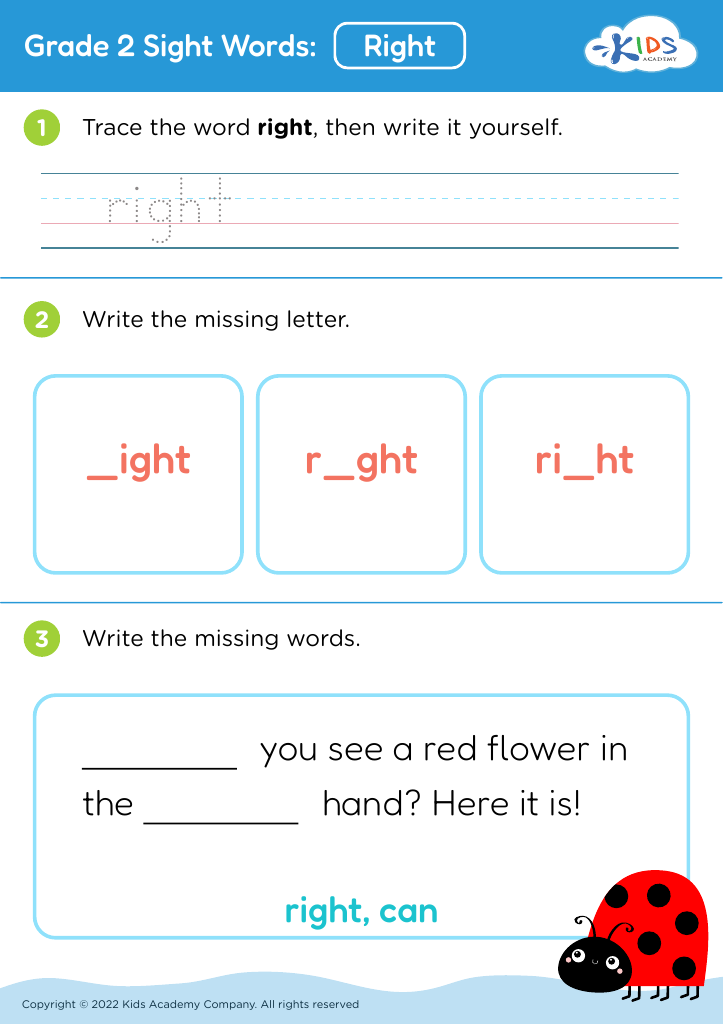
Grade 2 Sight Words: Right

Grade 2 Sight Words: Right

Grade 2 Sight Words: Right
Worksheet
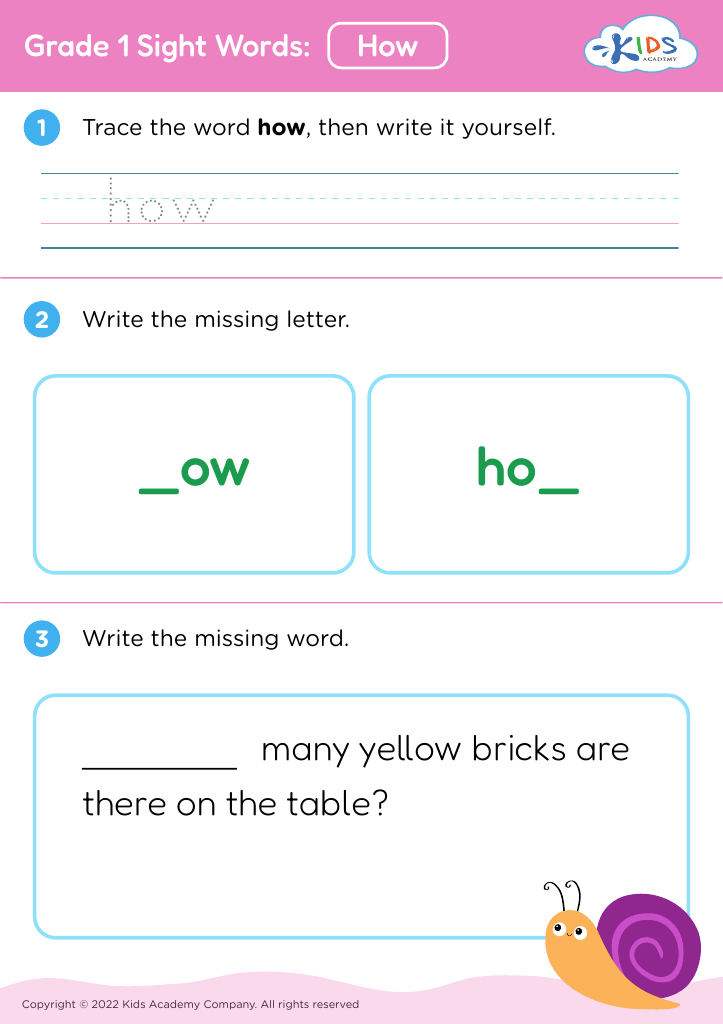
Grade 1 Sight Words: How

Grade 1 Sight Words: How

Grade 1 Sight Words: How
Worksheet
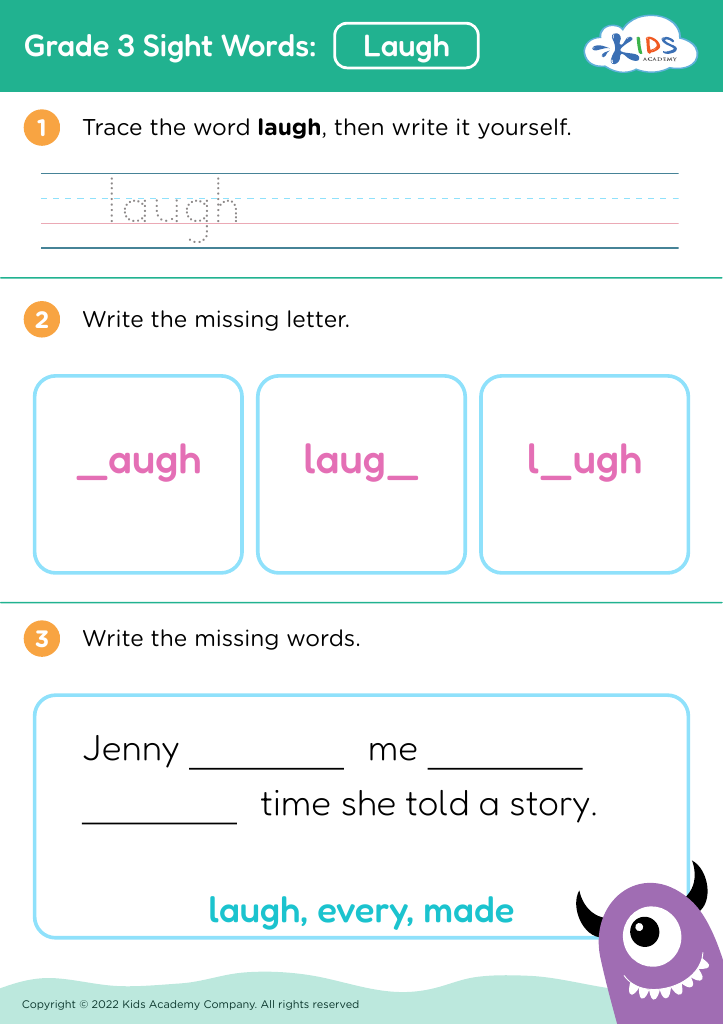
Grade 3 Sight Words: Laugh

Grade 3 Sight Words: Laugh

Grade 3 Sight Words: Laugh
Worksheet
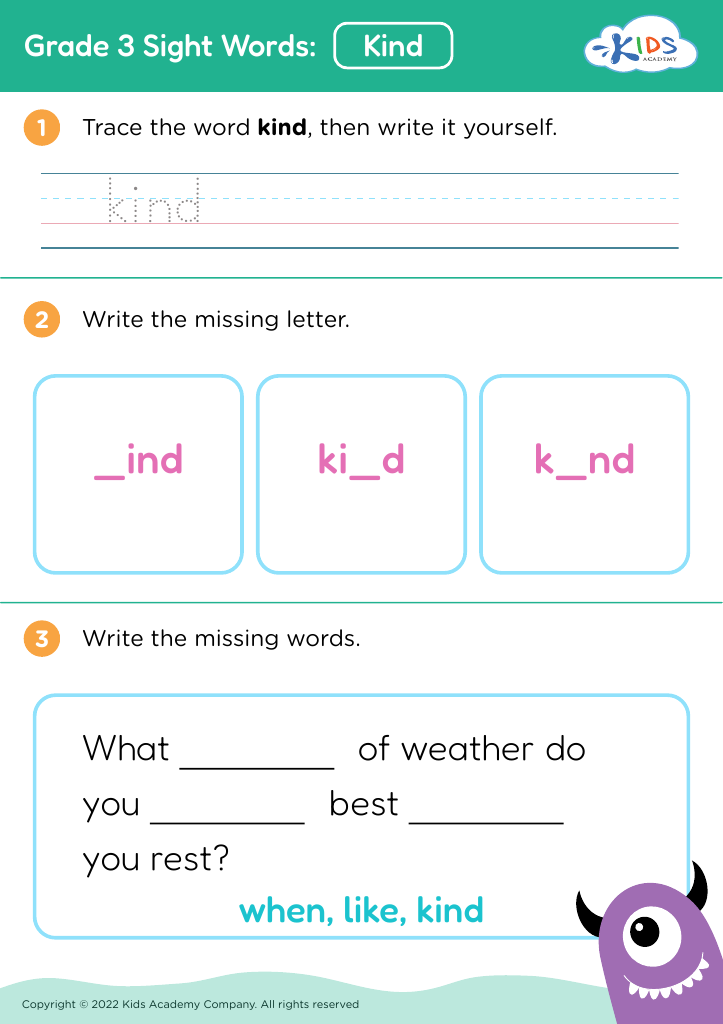
Grade 3 Sight Words: Kind

Grade 3 Sight Words: Kind

Grade 3 Sight Words: Kind
Worksheet
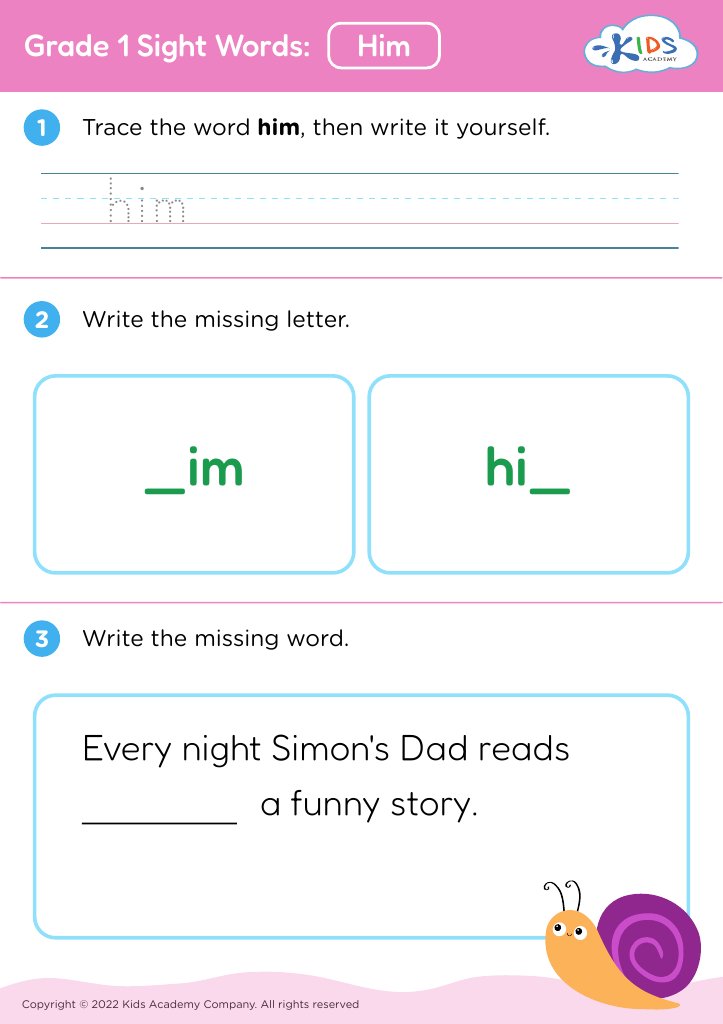
Grade 1 Sight Words: Him

Grade 1 Sight Words: Him

Grade 1 Sight Words: Him
Worksheet
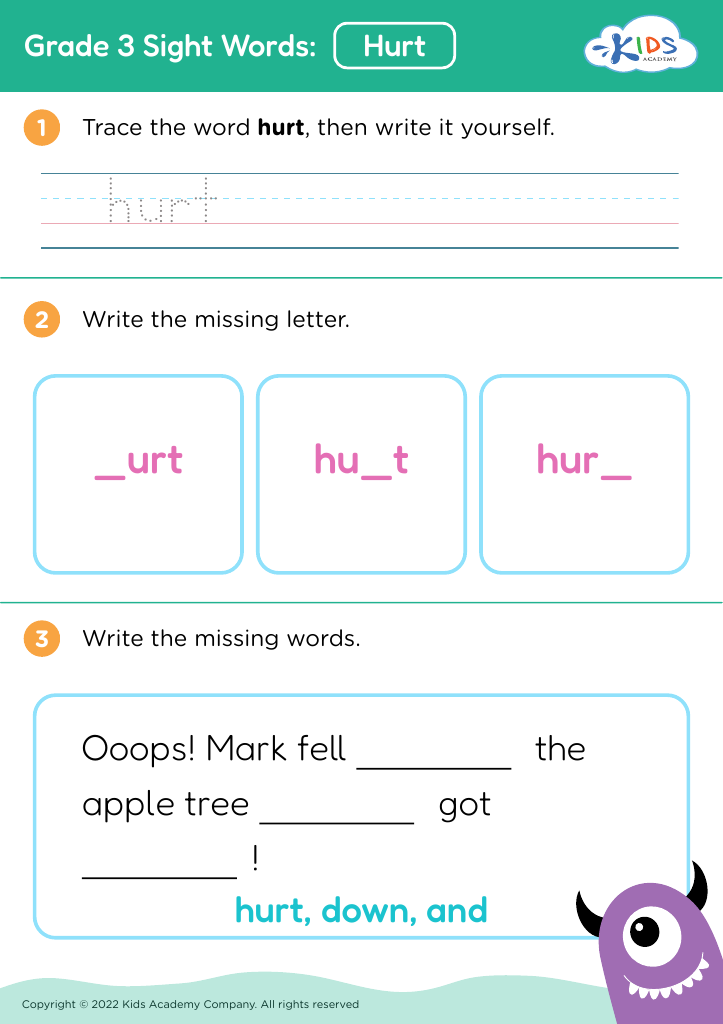
Grade 3 Sight Words: Hurt

Grade 3 Sight Words: Hurt

Grade 3 Sight Words: Hurt
Worksheet
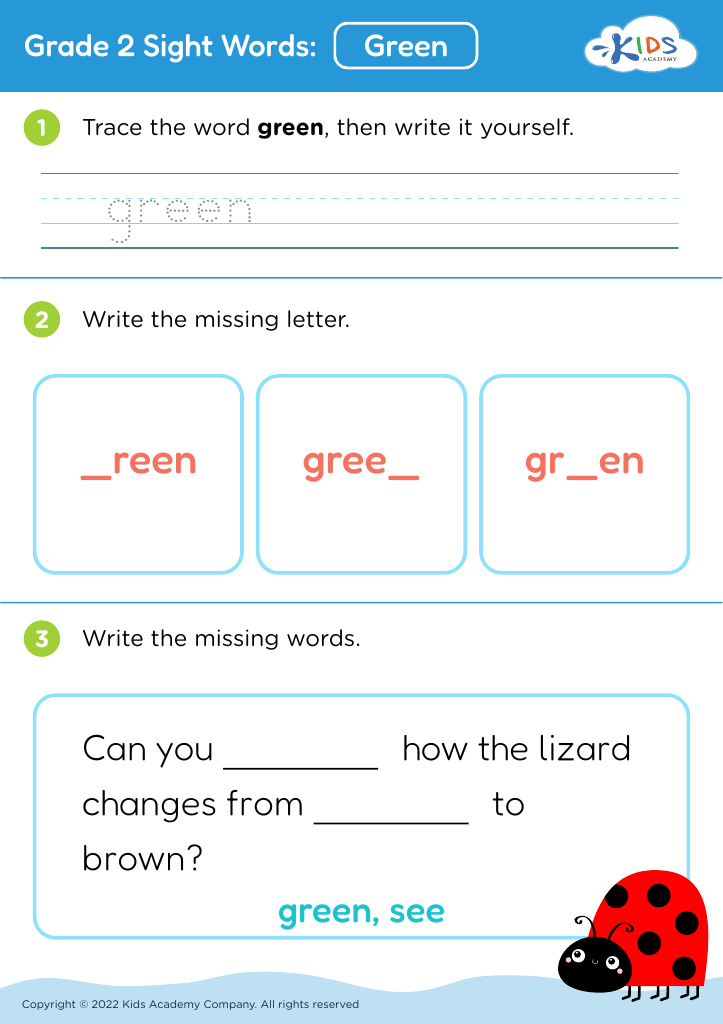
Grade 2 Sight Words: Green

Grade 2 Sight Words: Green

Grade 2 Sight Words: Green
Worksheet
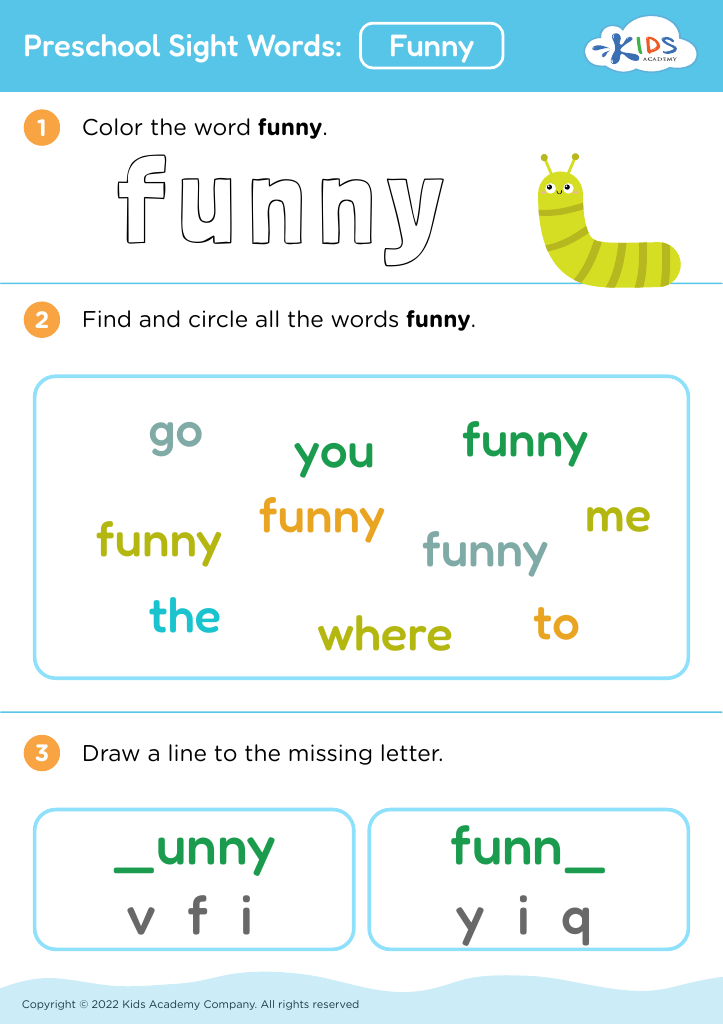
Preschool Sight Words: Funny

Preschool Sight Words: Funny

Preschool Sight Words: Funny
Worksheet
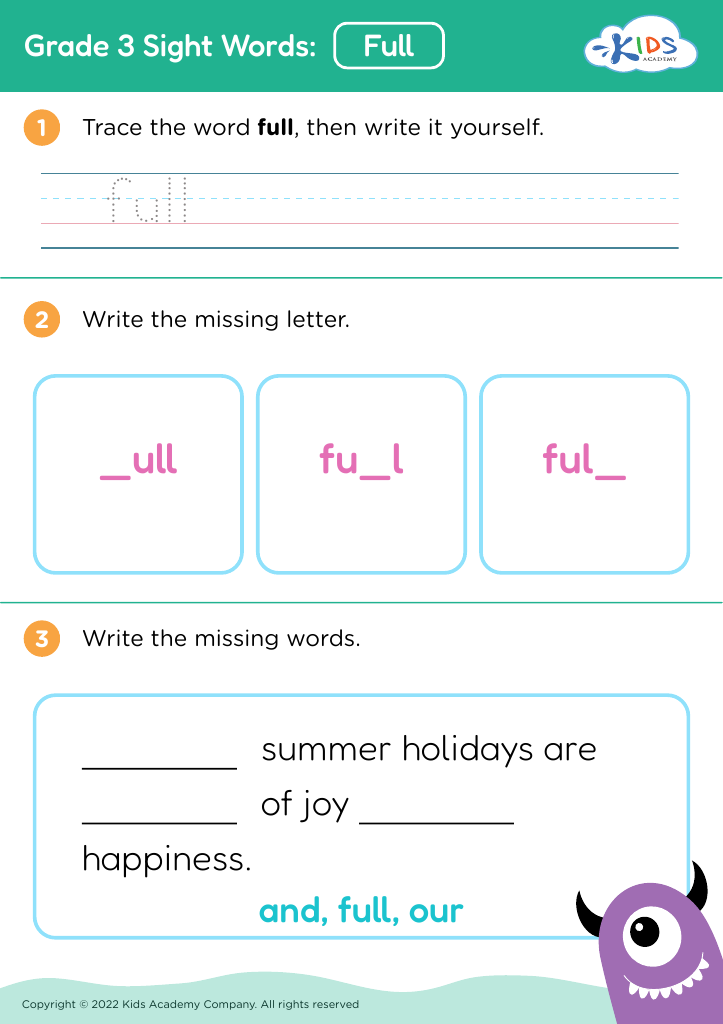
Grade 3 Sight Words: Full

Grade 3 Sight Words: Full

Grade 3 Sight Words: Full
Worksheet


Number recognition and vocabulary building are crucial for children aged 4-8 because they serve as foundational skills for future academic success. Recognizing numbers helps children understand basic math concepts, fostering their ability to perform simple calculations, understand quantities, and engage with real-world scenarios like counting objects or telling time. This skill also supports later learning in more complex mathematics, ensuring a fluid transition into higher education.

On the other hand, building vocabulary at this age enhances language development, communication skills, and cognitive growth. A robust vocabulary enables children to express themselves clearly, comprehend instructions, and engage in meaningful conversations. Moreover, strong language skills correlate with improved reading abilities, which are crucial for learning across all subjects.

When parents and teachers prioritize number recognition and vocabulary building, they set the stage for children to develop critical thinking and problem-solving skills. Encouraging interaction with both numbers and words in fun, engaging ways—such as through games, songs, and storytelling—can stimulate a love for learning. Overall, supporting these foundational skills during formative years can lead to increased confidence, curiosity, and a lifelong passion for learning in children.