
Reading practice Building Vocabulary Worksheets for Ages 4-8
4 filtered results
Difficulty Level
Grade
Age
-
From - To
Subject
Activity
Standards
Discover our engaging "Reading Practice Building Vocabulary Worksheets" designed for children aged 4-8. These worksheets aim to enhance vocabulary skills through fun and interactive activities tailored for young learners. Featuring colorful illustrations and age-appropriate tasks, children will explore new words, improve comprehension, and foster a love for reading. Our captivating exercises encourage creativity and critical thinking, setting a solid foundation for future literacy development. Ideal for both classroom and home use, these worksheets will help support your child's educational journey, making learning enjoyable and effective. Start building vocabulary skills today with our comprehensive resources designed for young readers!
Favorites
With answer key
Interactive
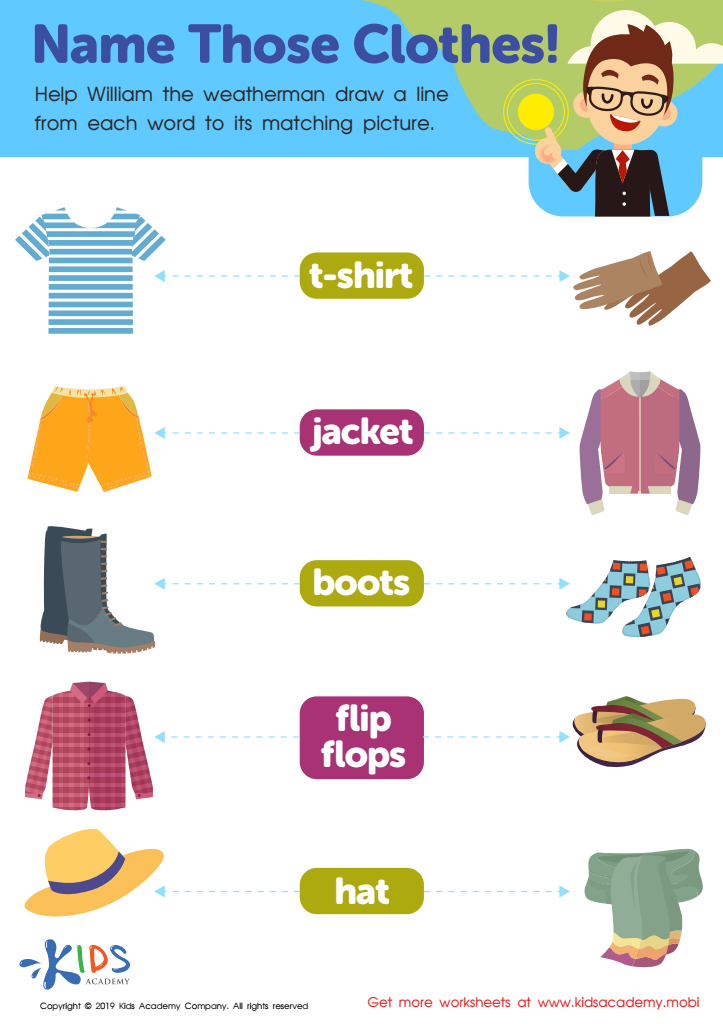
Name Those Clothes Worksheet
This worksheet will help your preschooler build their vocabulary, develop life-skills and work on fine motor skills. They'll analyze which clothing goes with the weatherman and match it to the word. It's a fun and interactive way to recognize high-frequency words.
Name Those Clothes Worksheet
Worksheet











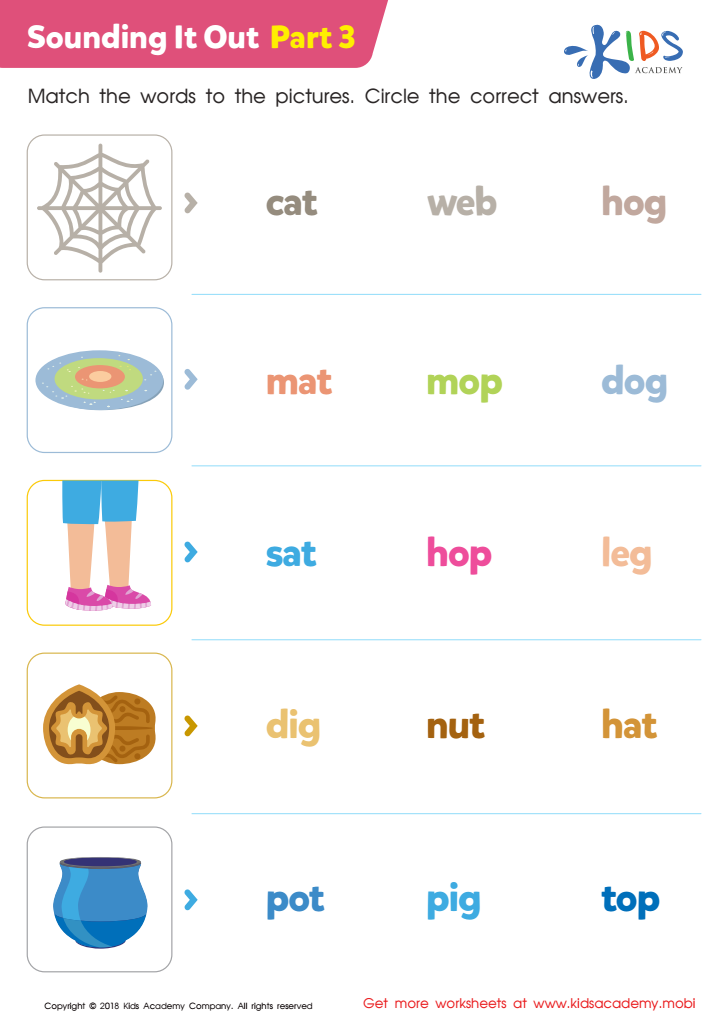
Sounding it Out: Part 3 Worksheet
Once Parts 1 and 2 are complete, this printable phonics worksheet will help kids take their reading skills to the next level! As they gain confidence, give them hints less often and direct their attention to three words in a row. Ask them to read and circle the correct word to complete!
Sounding it Out: Part 3 Worksheet
Worksheet
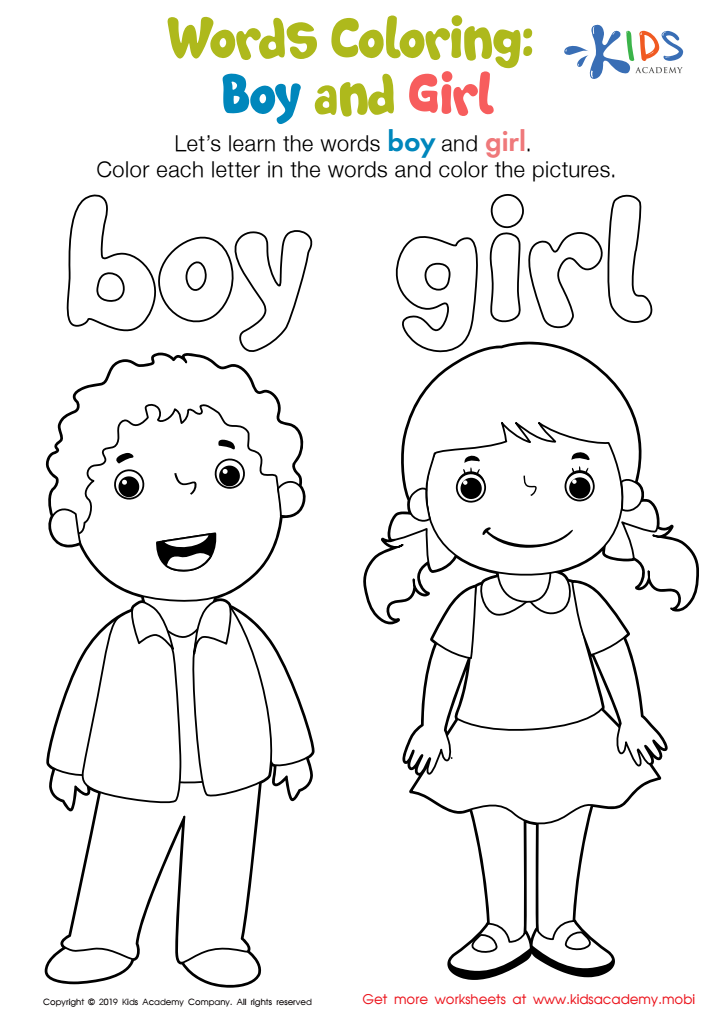
Boy and Girl Words Coloring Worksheet
Help your students build their sight word vocabulary! Early readers may not be able to sound out all words, so this worksheet teaches them to read two important sight words: boy and girl. They will color the letters and a picture of each, making it a fun and educational way to learn. Download the PDF now.
Download (PDF)
 Assign to My Students
Assign to My Students
Boy and Girl Words Coloring Worksheet
Worksheet
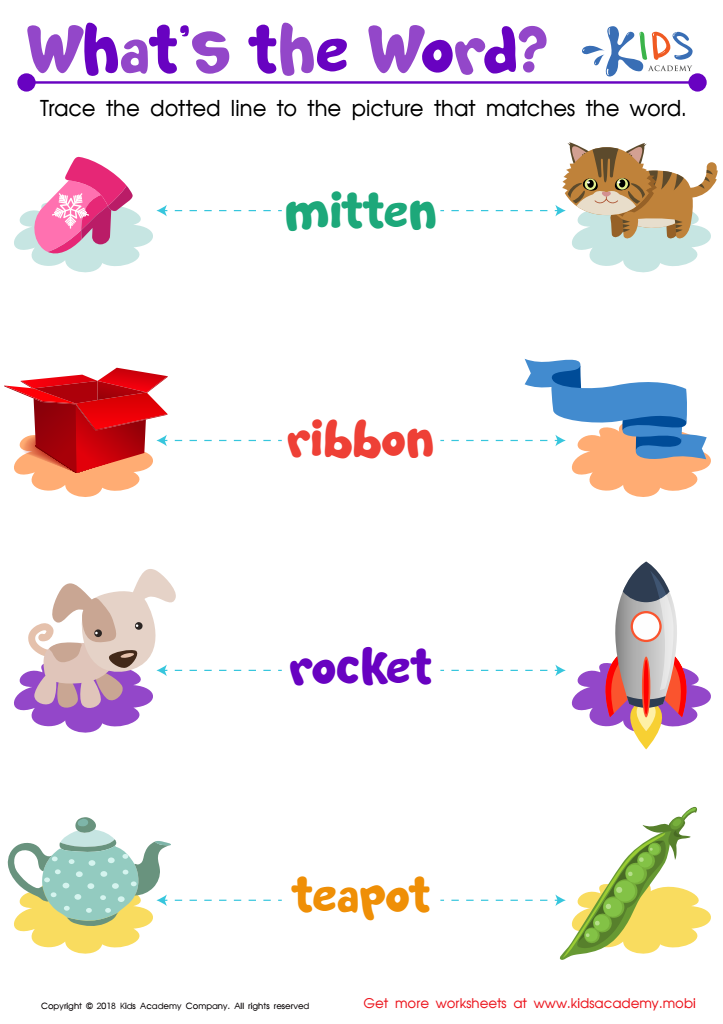
Reading: What's Word Worksheet
Teaching reading? This worksheet can help! Students read the word and draw a line to the picture for clues if needed. This will boost their vocabulary and fluency, increasing confidence and reading skills. Watch their progress as new words are added!
Reading: What's Word Worksheet
Worksheet
Join Kids Academy for Free
Who is primarily going to use this learning content?


.jpg)





Building vocabulary through consistent reading practice is crucial for children aged 4-8 for several reasons. First, a rich vocabulary enhances communication skills, enabling children to express their thoughts and feelings more effectively. As they learn new words through engaging stories, they not only acquire vocabulary but also develop comprehension skills, allowing them to understand and interpret complex information.
Secondly, reading fosters cognitive development. By introducing a variety of topics and contexts, reading broadens children’s perspectives and encourages critical thinking. When children encounter unfamiliar words, they learn to use context clues, enhancing their problem-solving abilities.
Moreover, vocabulary building is fundamental for academic success. Strong vocabulary skills are linked to better performance in reading and writing across all subjects, ultimately setting children up for future educational achievement. Also, a strong foundation in vocabulary can instill a love of learning and reading in children, promoting lifelong habits that encourage ongoing development.
In essence, investing in reading practice that builds vocabulary helps shape well-rounded, confident learners. Teachers and parents must collaborate in creating supportive environments where vocabulary enrichment becomes an enjoyable and integral part of a child's daily routine. This investment pays dividends in both their immediate enjoyment of learning and long-term academic journeys.








