Sight words recognition Building Vocabulary Worksheets for Ages 4-8
5 filtered results
-
From - To
Enhance your child's reading skills with our "Sight Words Recognition Building Vocabulary Worksheets," designed specifically for ages 4-8. These engaging and interactive worksheets help young learners master essential sight words, fostering vocabulary development and boosting reading confidence. Featuring colorful illustrations and age-appropriate activities, children will enjoy practicing word recognition through tracing, matching, and fill-in-the-blank exercises. Perfect for homeschoolers and classroom settings alike, these worksheets encourage a love for reading and provide foundational skills critical for literacy success. Download and discover fun ways to empower your child as they embark on their reading journey!
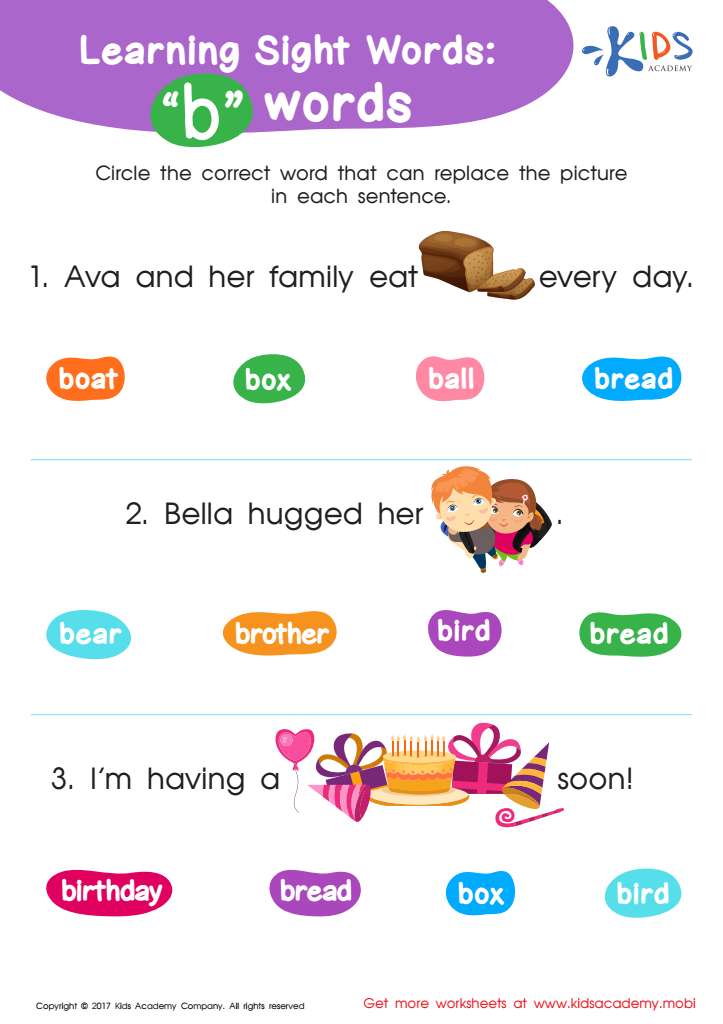
Sight Words Free Worksheet – B Words
 Assign to My Students











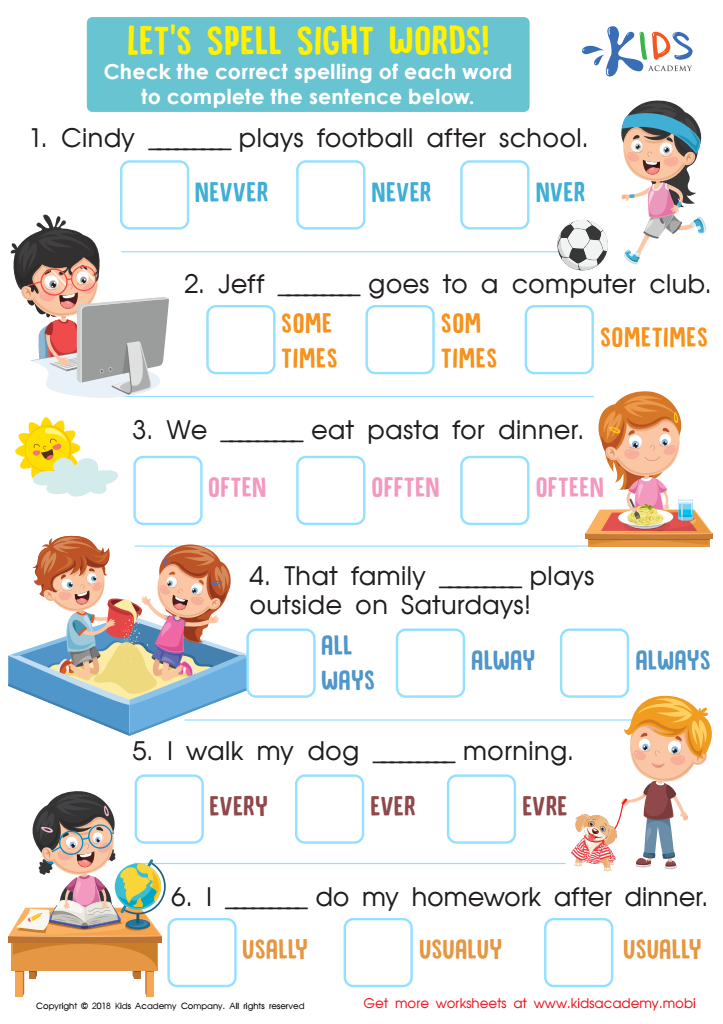
Let's Spell Sight Words Worksheet
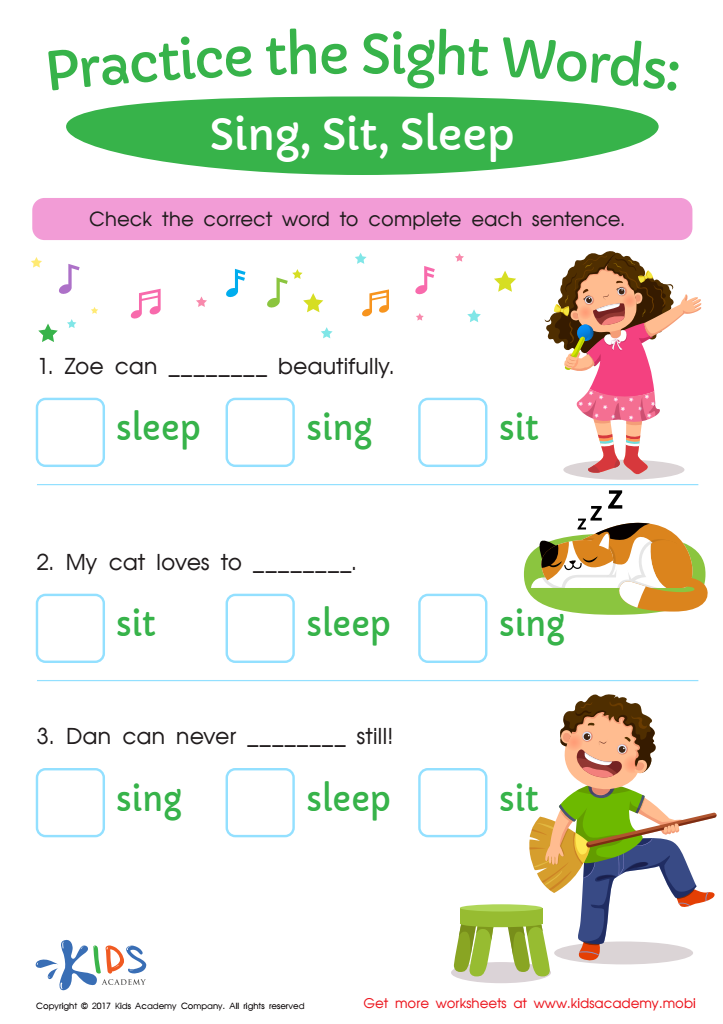
Sing, Sit, Sleep Sight Words Worksheet
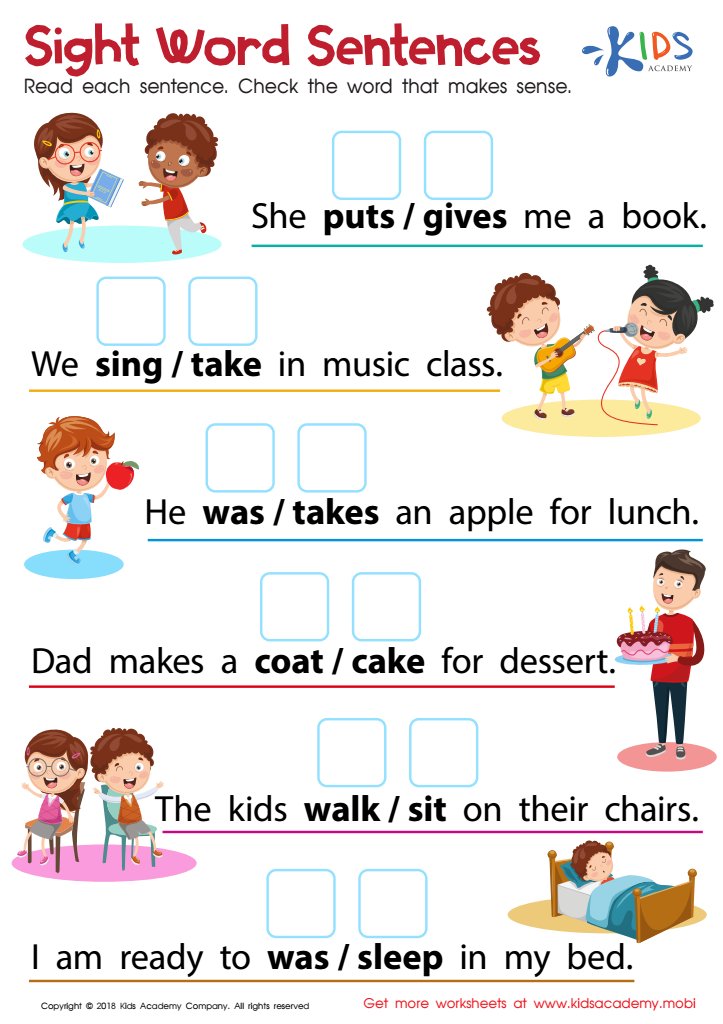
Sight Words Sentences Worksheet
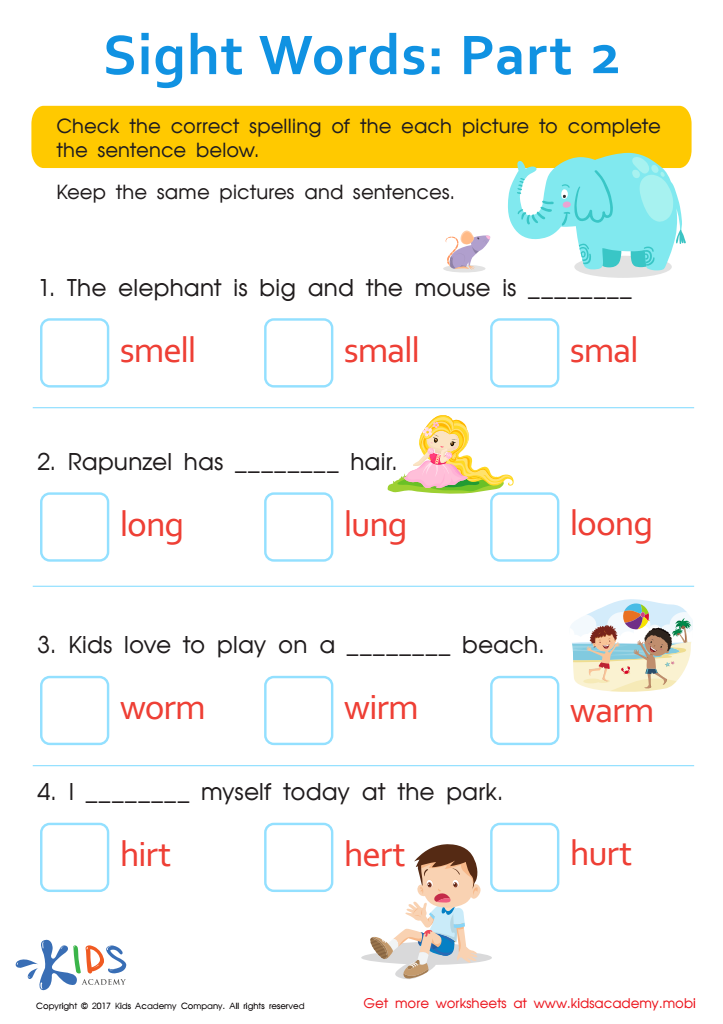
Sight Words Worksheet







Sight word recognition and vocabulary building are crucial for children aged 4-8 as they lay the foundation for reading and overall literacy development. Sight words are commonly used words that young readers are encouraged to recognize instantly without sounding them out. This skill enhances fluency and comprehension, allowing children to focus on understanding the content rather than decoding every word.
When children recognize sight words, they can read more smoothly and gain confidence, fostering a positive attitude towards reading. Additionally, building a strong vocabulary during these formative years equips children with the language tools needed to express themselves, understand their surroundings, and engage in conversations. A rich vocabulary not only enhances reading skills but also supports academic success across subjects as children progress in their education.
Involving parents and teachers in this process is essential. They can create stimulating reading environments filled with books, engage children in conversation, and utilize games and activities that encourage sight word practice. By prioritizing sight word recognition and vocabulary building, adults can help cultivate a love for reading while ensuring that children develop vital literacy skills necessary for their future learning and communication.








