Sound Association Building Vocabulary Worksheets for Ages 4-8
4 filtered results
-
From - To
Enhance your child's vocabulary and phonics skills with our engaging Sound Association Building Vocabulary Worksheets, designed for ages 4-8. These fun, interactive worksheets help young learners connect sounds with words, aiding in language development and reading readiness. Perfect for early learners, each activity focuses on sound recognition, matching sounds to letters and words, and improving listening skills. Our expertly crafted exercises make learning enjoyable and effective, promoting confidence in reading and speaking. Ideal for home or classroom use, these worksheets lay a solid foundation for literacy, ensuring your child develops strong language skills from an early age.
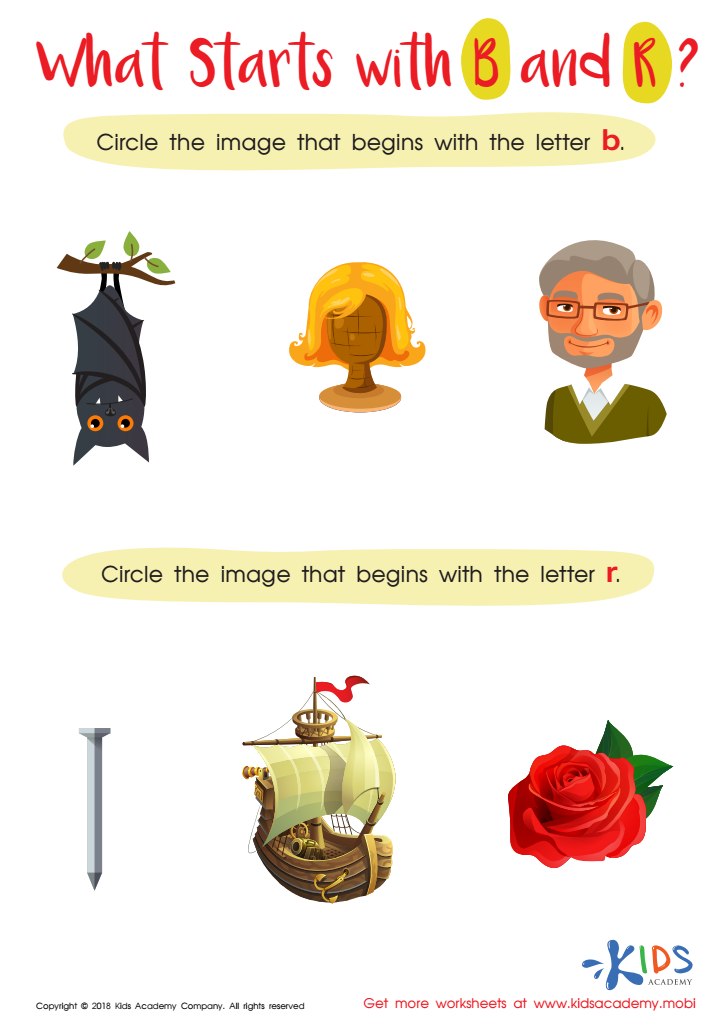
What Starts with B and R? Worksheet
 Assign to My Students











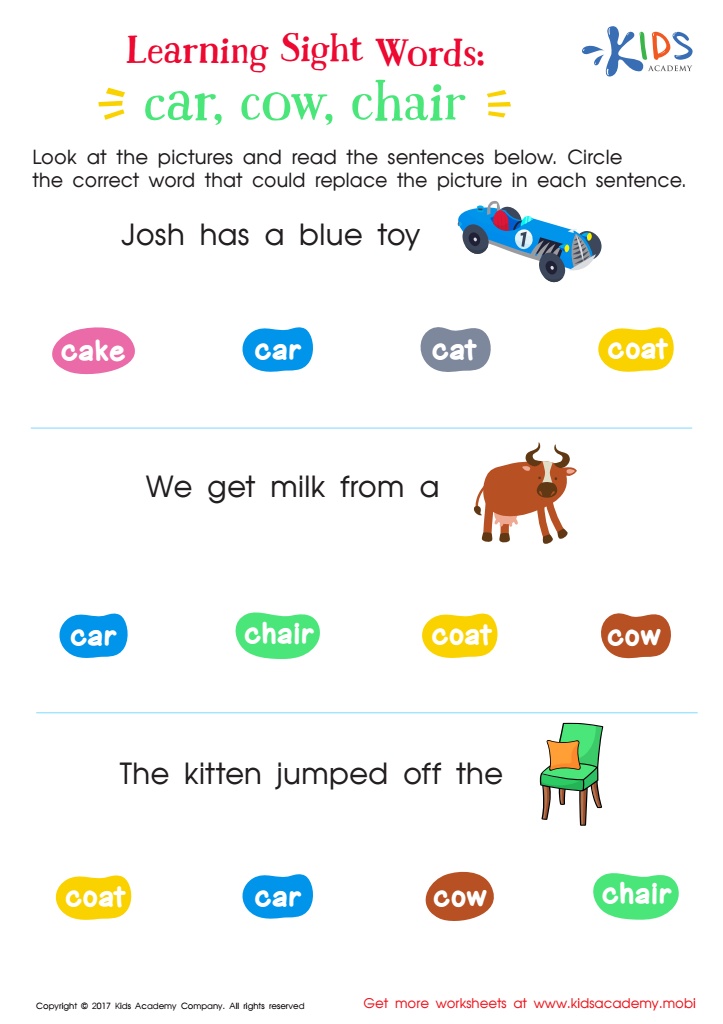
Car, Cow, Chair Worksheet Sight Words Worksheet
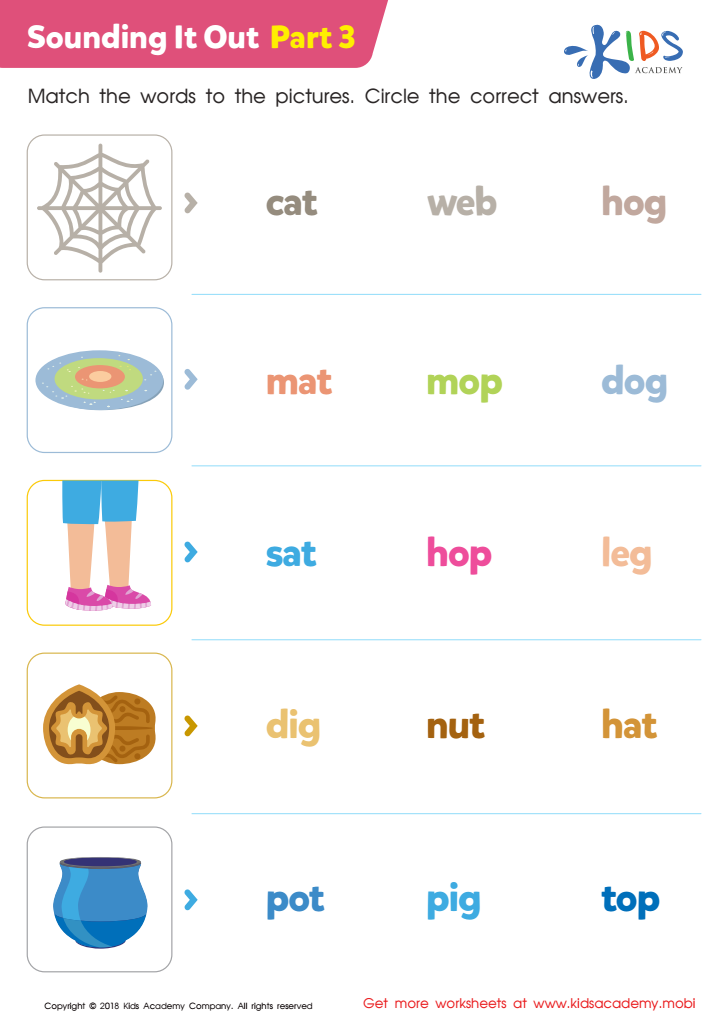
Sounding it Out: Part 3 Worksheet
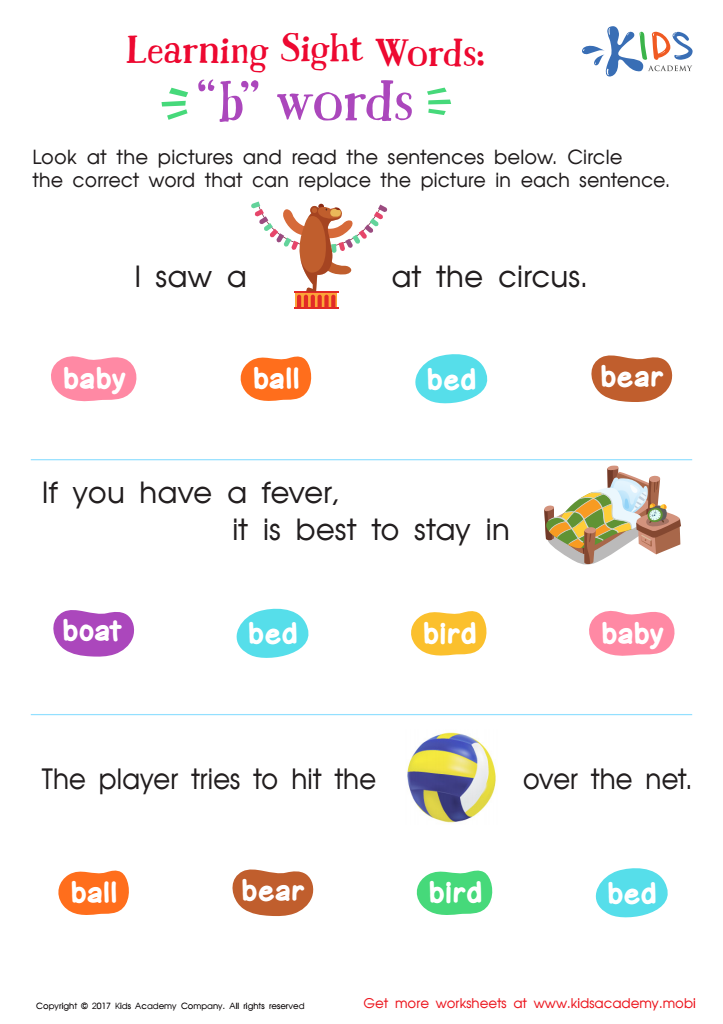
"B" Words Printable Sight Words Worksheet







Sound Association Building Vocabulary is crucial for children aged 4-8 because it forms the cornerstone for effective communication and literacy development. This critical period is when children’s brains are highly receptive to learning and language acquisition. By associating sounds with words, children can improve phonemic awareness, which is the ability to hear, identify, and manipulate phonemes. Phonemic awareness is fundamental for reading proficiency, as it helps children decode words and understand their structure.
Additionally, sound associations enable children to expand their vocabulary by linking new words with familiar sounds, making it easier to remember and use them in the appropriate context. This enrichment of vocabulary equips children with the tools to express themselves more clearly and imaginatively, significantly boosting their confidence.
For parents and teachers, promoting sound association can be as simple as engaging children in rhyming games, reading aloud, and interactive storytime. These activities not only make learning enjoyable but also foster a love for reading. Increased vocabulary and reading proficiency from a young age set the stage for academic success across subjects, social interaction, and lifelong learning. Therefore, investing time in sound association and vocabulary building is essential for children’s overall educational trajectory and personal growth.








