
Story analysis Building Vocabulary Worksheets for Ages 4-8
4 filtered results
Difficulty Level
Grade
Age
-
From - To
Subject
Activity
Standards
Enhance young learners’ vocabulary with our engaging Story Analysis Building Vocabulary Worksheets designed specifically for children aged 4-8. These innovative resources encourage kids to delve into storytelling, fostering a deeper understanding of narratives while expanding their word banks. Each worksheet features fun exercises that challenge students to identify key elements of stories, such as characters, settings, and plot points. Through interactive prompts and colorful illustrations, children sharpen their analytical skills and discover the beauty of language in a playful manner. Perfect for classroom or home use, these worksheets provide an effective way to inspire learning and creativity in early readers.
Favorites
With answer key
Interactive
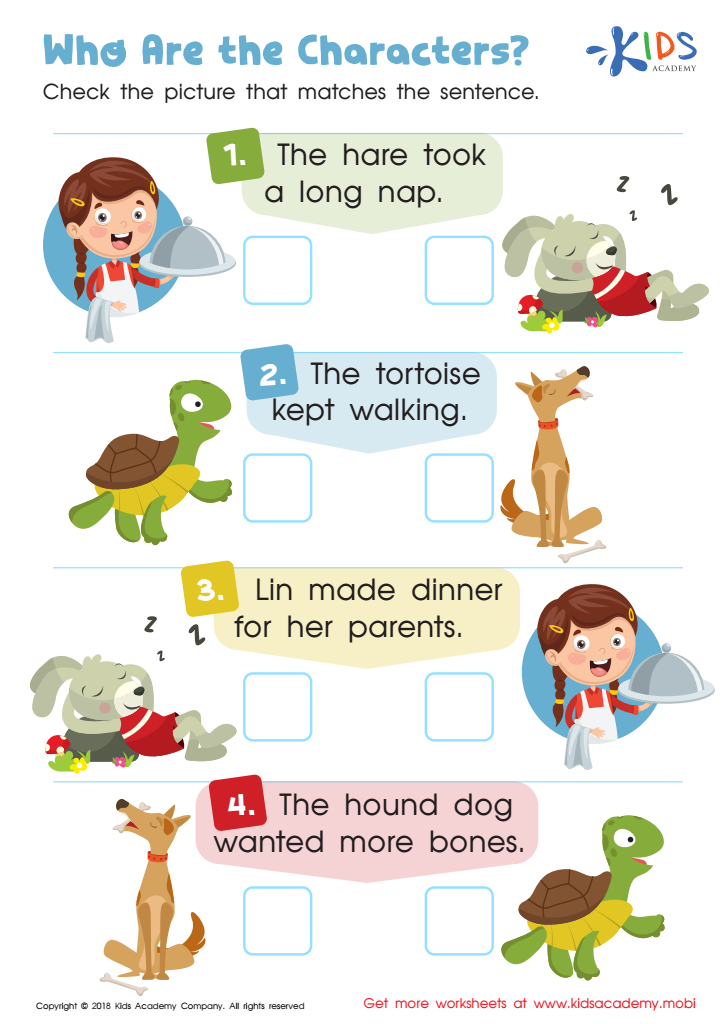
Who Are The Characters Worksheet
This worksheet tests your child's reading skills. Read each sentence out loud with them, then ask which of the two pictures match it. Help them check, then repeat this for the other sentences.
 Assign to My Students
Who Are The Characters Worksheet
Worksheet











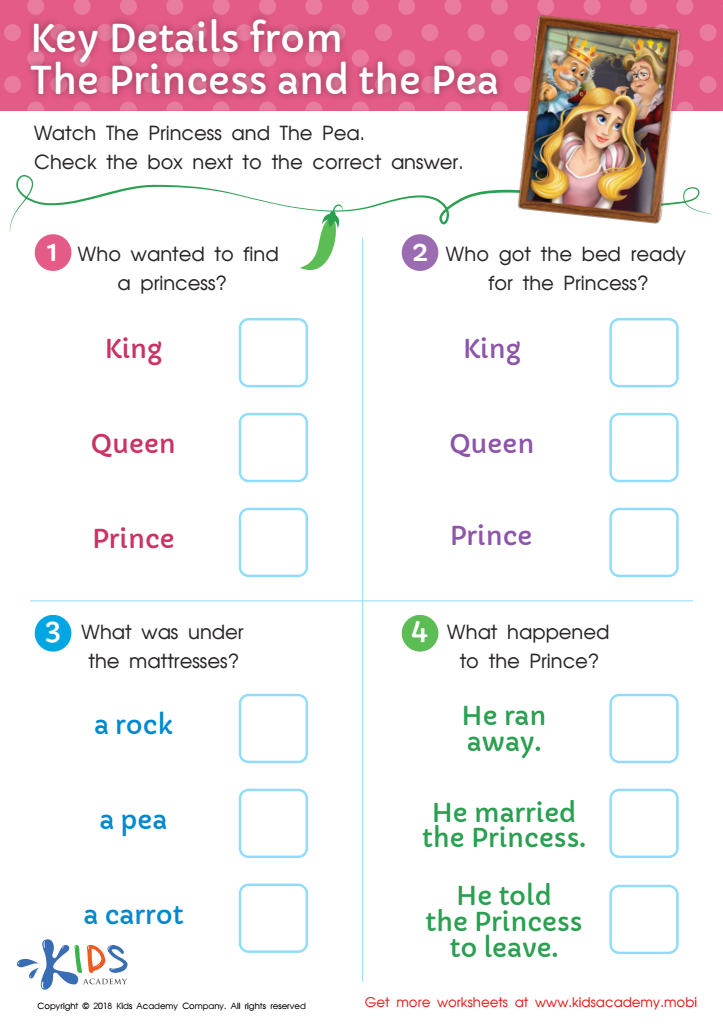
Key Details from the Princess and the Pea Worksheet
After reading The Princess and the Pea, ask your students questions to assess their comprehension of the story. Check their knowledge of key details. This printable can be used to help evaluate their understanding. Encouraging the recall of story events helps build important reading skills.
Key Details from the Princess and the Pea Worksheet
Worksheet
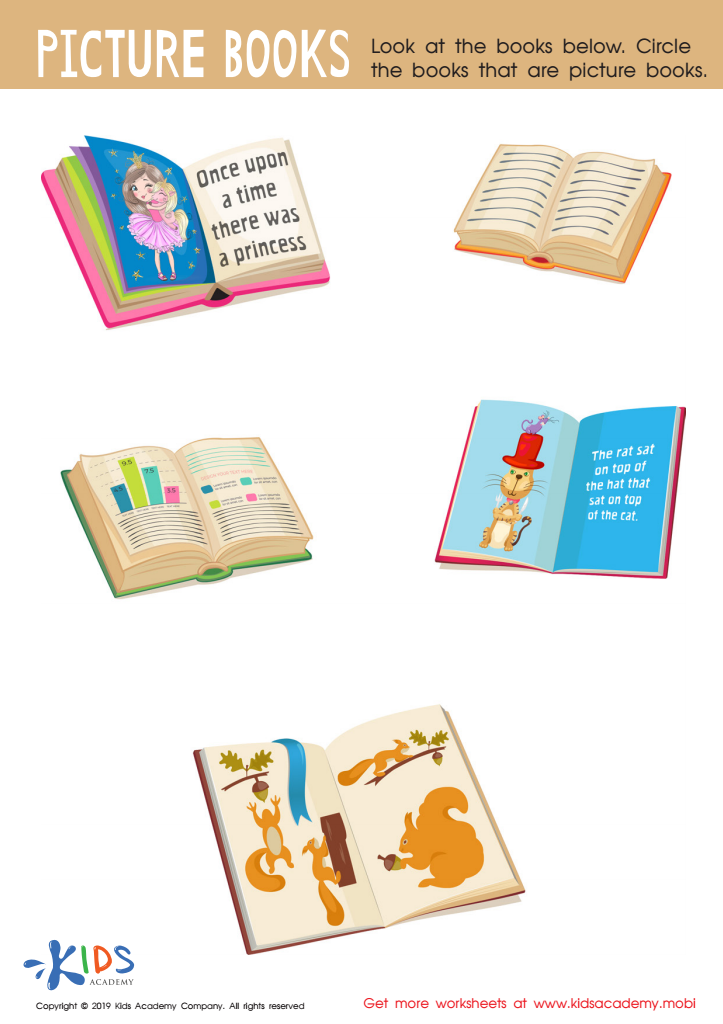
Picture Books Worksheet
Kids will love this exercise! Get their imaginations going with five colorful picture books. Ask them to circle the books that are picture books and have them enjoy the exciting stories, along with the colorful images. Reading can become that much more enjoyable!
Picture Books Worksheet
Worksheet
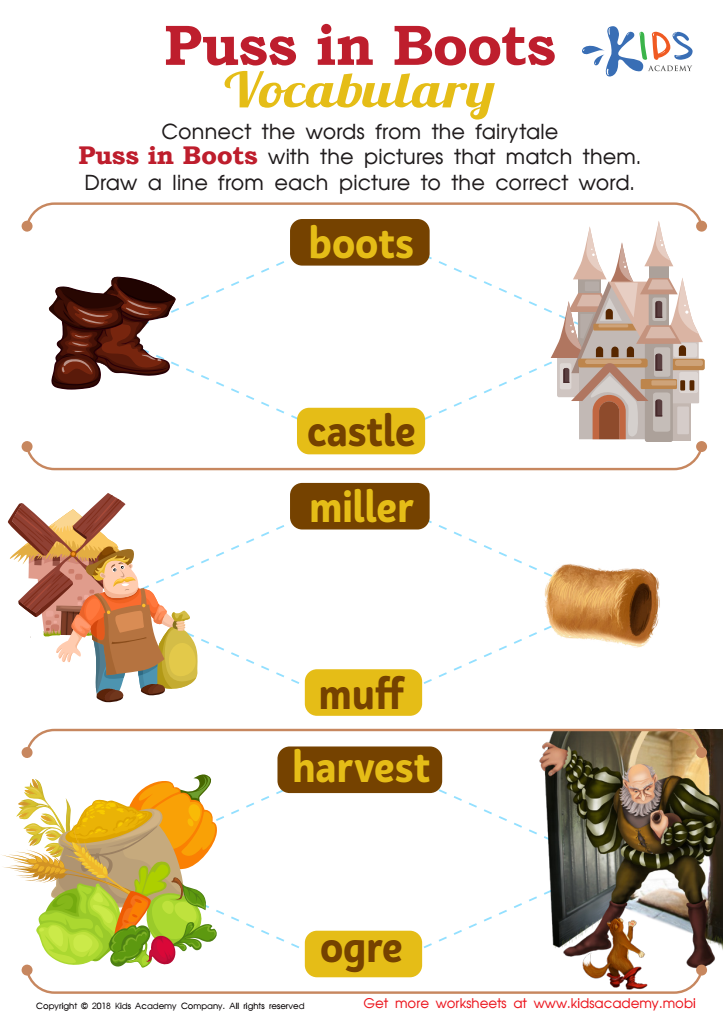
Puss in Boots Vocabulary Worksheet
Let your kids enjoy story-telling while learning at the same time. Help them learn from the fairytale, Puss in Boots, by connecting words from the worksheet with the matching pictures. Ask them to draw a line between each picture and corresponding word to build their vocabulary.
Puss in Boots Vocabulary Worksheet
Worksheet
Join Kids Academy for Free
Who is primarily going to use this learning content?








Story analysis and vocabulary building are crucial components of early childhood education, particularly for children aged 4 to 8. During these formative years, children are developing foundational literacy skills that will affect their future academic success and communication abilities.
First, story analysis fosters critical thinking. When children engage with stories, they learn to identify key elements such as characters, settings, and plots, enhancing their comprehension and analytical skills. Parents and teachers guide discussions about themes and messages, encouraging kids to articulate their thoughts and feelings, thus boosting their expressive language abilities.
Second, building vocabulary is essential for linguistic development. A rich vocabulary allows children to better understand and engage with the world around them. When children are exposed to diverse words within stories, they can expand their comprehension and become more articulate speakers and writers.
Additionally, vocabulary enhancement is linked to improved reading skills. The more words children understand, the more they can decode text, paving the way for greater academic achievement.
In summary, parents and teachers who prioritize story analysis and vocabulary building contribute significantly to children's cognitive and language development, equipping them with the skills necessary for lifelong learning and effective communication.








