
Understanding context Building Vocabulary Worksheets for Ages 4-8
4 filtered results
Difficulty Level
Grade
Age
-
From - To
Subject
Activity
Standards
Explore our "Understanding Context: Building Vocabulary Worksheets for Ages 4-8" designed to enhance your child's language skills through engaging activities. These worksheets help young learners decipher meanings of words based on surrounding text, fostering critical thinking and comprehension skills. With age-appropriate, colorful illustrations and relatable themes, children will enjoy interactive exercises that boost their vocabulary and contextual understanding. Ideal for home or classroom use, our resources empower educators and parents to support early literacy development in a fun and effective way. Unlock the power of language and watch your child grow into a confident reader with our thoughtfully crafted worksheets!
Favorites
With answer key
Interactive
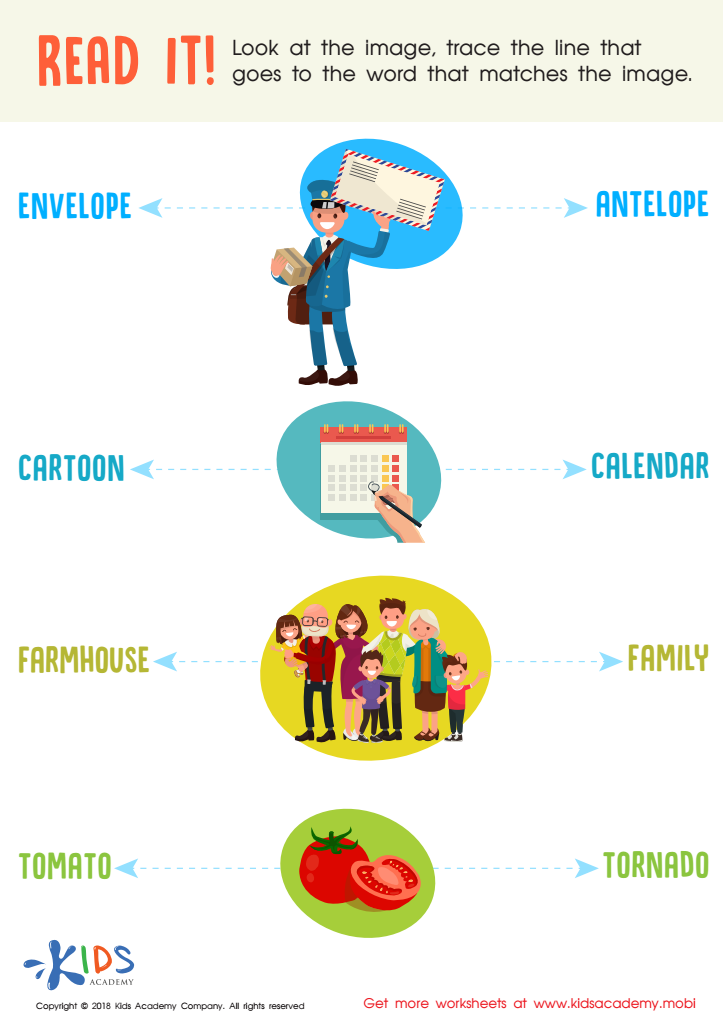
Read It! Worksheet
Point to each image on this worksheet, asking your child what it is. Read the 2 options then help your child trace the line to the correct word. It'll keep them engaged and provide visual stimulation.
 Assign to My Students
Read It! Worksheet
Worksheet











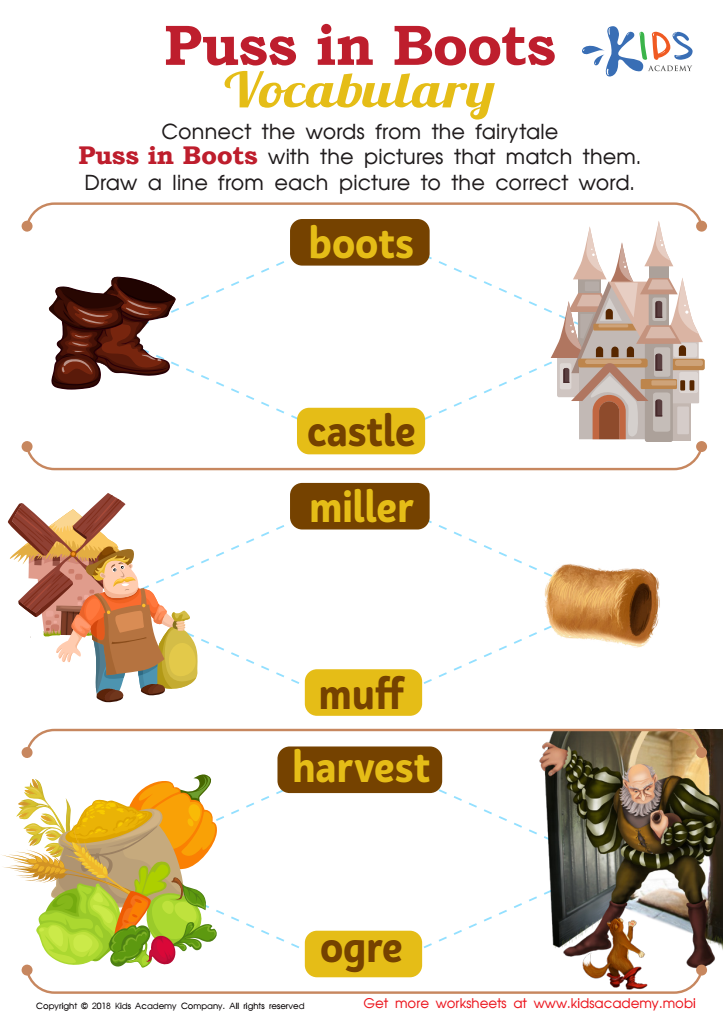
Puss in Boots Vocabulary Worksheet
Let your kids enjoy story-telling while learning at the same time. Help them learn from the fairytale, Puss in Boots, by connecting words from the worksheet with the matching pictures. Ask them to draw a line between each picture and corresponding word to build their vocabulary.
Puss in Boots Vocabulary Worksheet
Worksheet
Join Kids Academy for Free
Who is primarily going to use this learning content?


.jpg)





Understanding context and building vocabulary are crucial components of literacy development for children aged 4-8. At this age, children are not simply memorizing words; they are learning how language is used in different situations. When parents and teachers prioritize context, children can comprehend the nuances and meanings of words based on the situation, enhancing their overall understanding. This builds their critical thinking and reading comprehension skills, which are vital for academic success.
Furthermore, a rich vocabulary equips children with the tools to express themselves more effectively. With a diverse vocabulary, children can articulate their thoughts, feelings, and ideas more clearly, promoting better communication skills. This is not only essential for academic purposes but also helps foster social interactions and relationships with peers and adults.
Parents and teachers can nurture vocabulary by engaging children in conversations, reading a variety of books, and encouraging questions to expand their linguistic repertoire. Activities like storytelling, word games, and real-world connections to different words provide practical applications in context. When parents and teachers actively engage with children in vocabulary development, they lay the foundation for lifelong learning, critical thinking, and effective communication, which are all essential skills in today’s world.








