Understanding habitats Building Vocabulary Worksheets for Ages 4-8
3 filtered results
-
From - To
Discover an engaging way to introduce young learners to various habitats with our "Understanding Habitats Building Vocabulary Worksheets for Ages 4-8." These printable worksheets are designed to boost reading and vocabulary skills while fostering a love for nature and science. Children will explore diverse environments—forests, oceans, deserts, and more—through fun activities and vibrant illustrations. Perfect for home or classroom use, these worksheets help children expand their vocabulary, understand ecological concepts, and develop critical thinking. Ideal for ages 4-8, these resources make learning about the natural world an exciting adventure. Start exploring today!
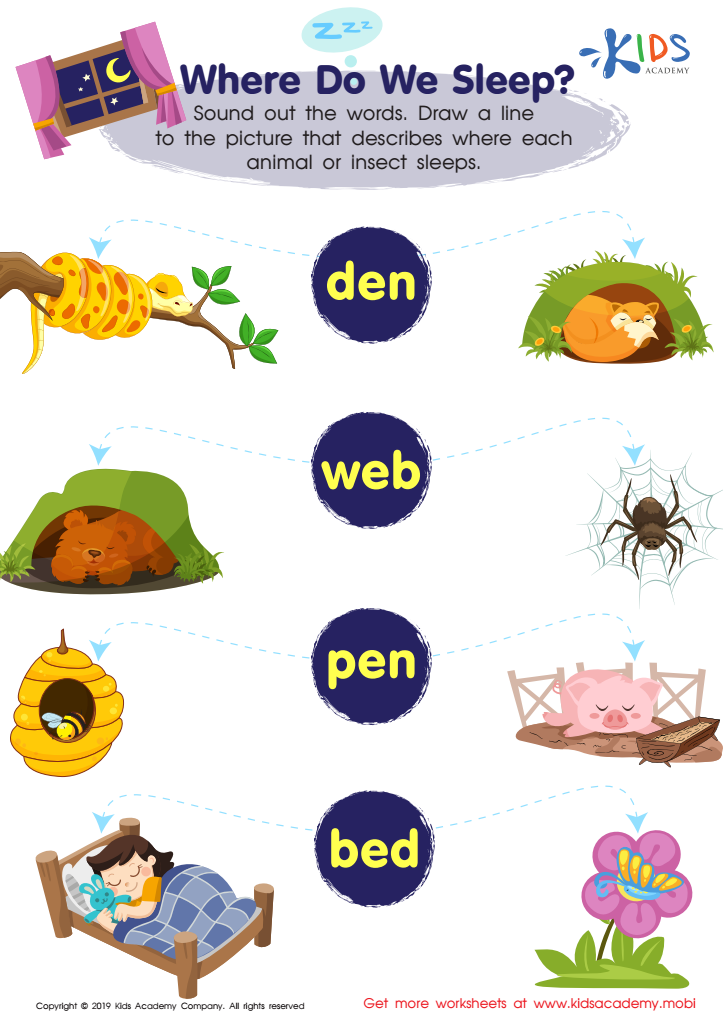
Where Do We Sleep Worksheet
 Assign to My Students











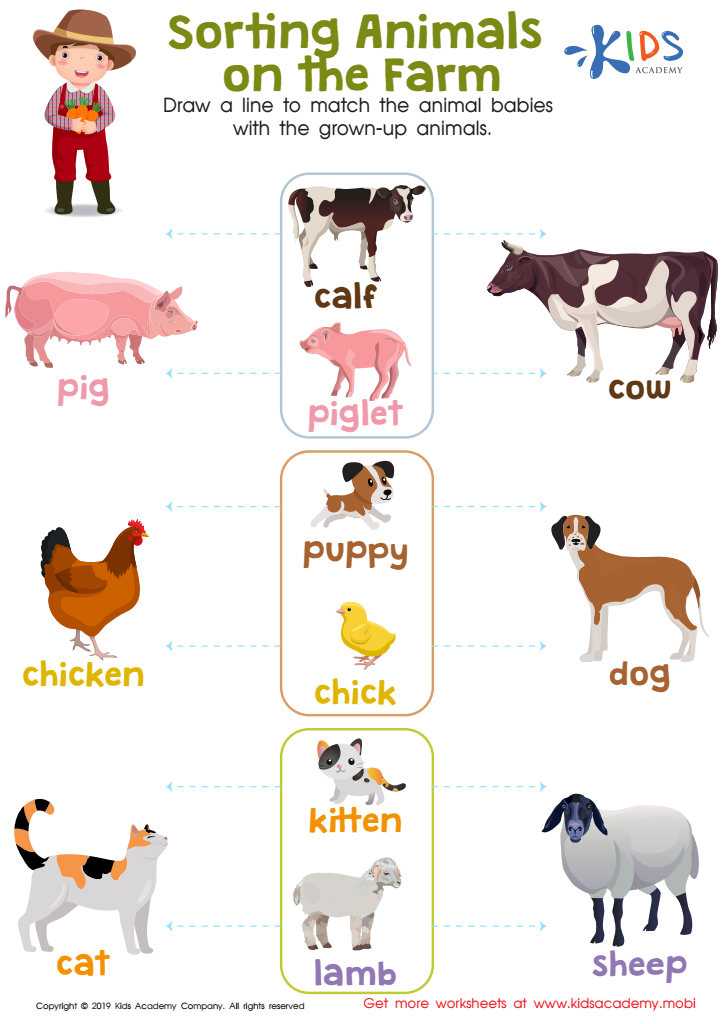
Sorting Animals on the Farm Worksheet
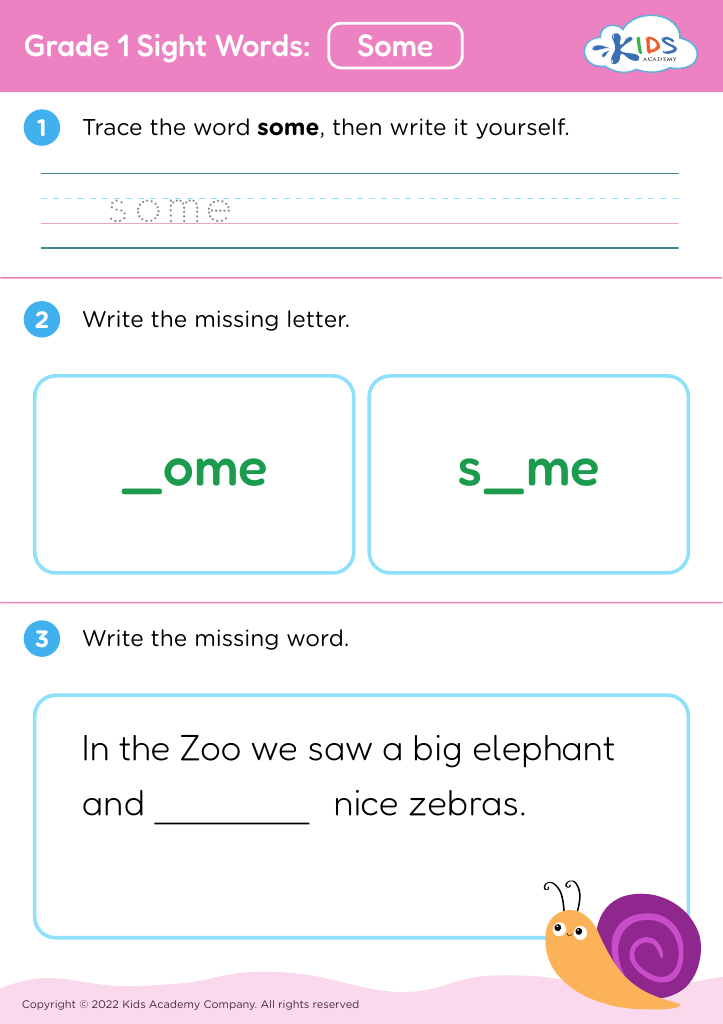





.jpg)
.jpg)

Understanding habitats and building vocabulary are both crucial for children ages 4-8, as these early years are foundational for cognitive and language development.
Studying habitats fosters a sense of curiosity and respect for the natural world. It introduces children to different environments like forests, oceans, and deserts, making them aware of the diversity of life and the interdependence between living organisms and their surroundings. This awareness can inspire a lifelong interest in the sciences and environmental stewardship, fundamental for future educational and career pursuits.
Building vocabulary related to these topics is equally important. It enables children to describe, question, and share their experiences accurately, which enhances their communication skills. A rich vocabulary allows children to think more complexly and express their ideas more clearly. Moreover, learning specific terms related to habitats, like “ecosystem,” “species,” and “climate,” not only boosts language skills but also facilitates a deeper understanding of the subject matter.
For parents and teachers, integrating these learning elements is a dual-pronged approach. It nurtures intellectual growth and lays down a robust foundation for future academic success. Indeed, a child who is keen on exploring and equipped with the right words to express their curiosity is far more likely to succeed in a progressively complex world.








