Visual interpretation Building Vocabulary Worksheets for Ages 4-8
3 filtered results
-
From - To
Enhance your child's vocabulary with our Visual Interpretation Building Vocabulary Worksheets designed for ages 4-8. These engaging, printable resources incorporate fun visuals to help young learners connect words with images, fostering comprehension and retention. Each worksheet targets key concepts through interactive activities that promote critical thinking and creativity. As children practice identifying and interpreting images, they build essential language skills in an enjoyable way. Perfect for classroom use or home learning, our worksheets ensure that vocabulary-building is not only educational but also delightful. Dive into a world of words and visuals, and watch your child's language skills flourish!
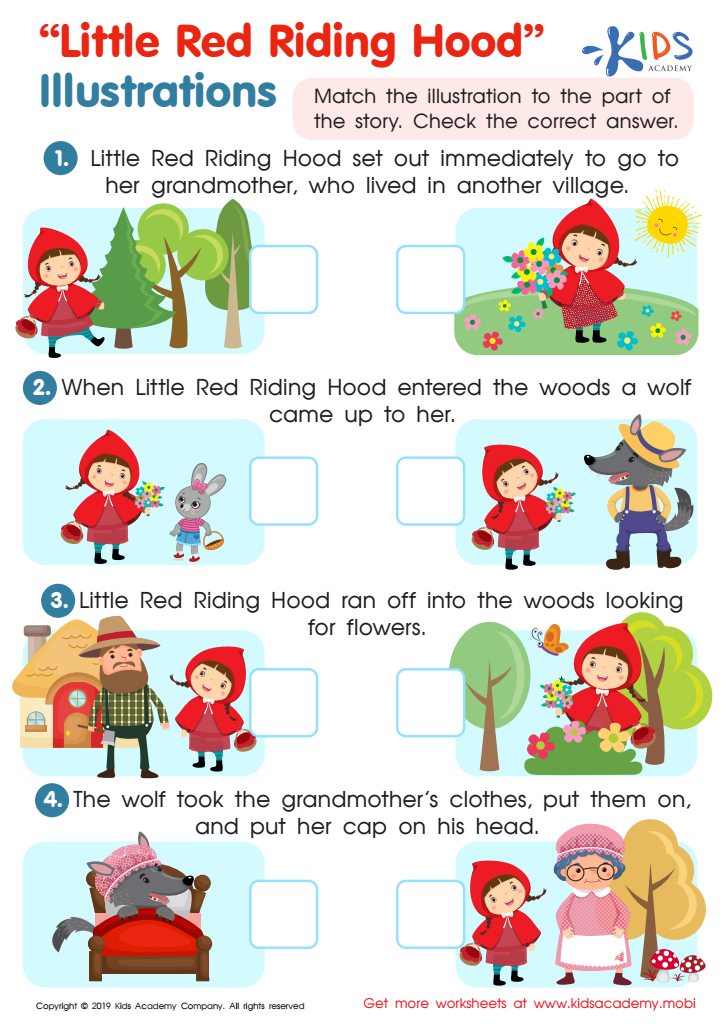
Little Red Riding Hood: Illustrations Worksheet
 Assign to My Students











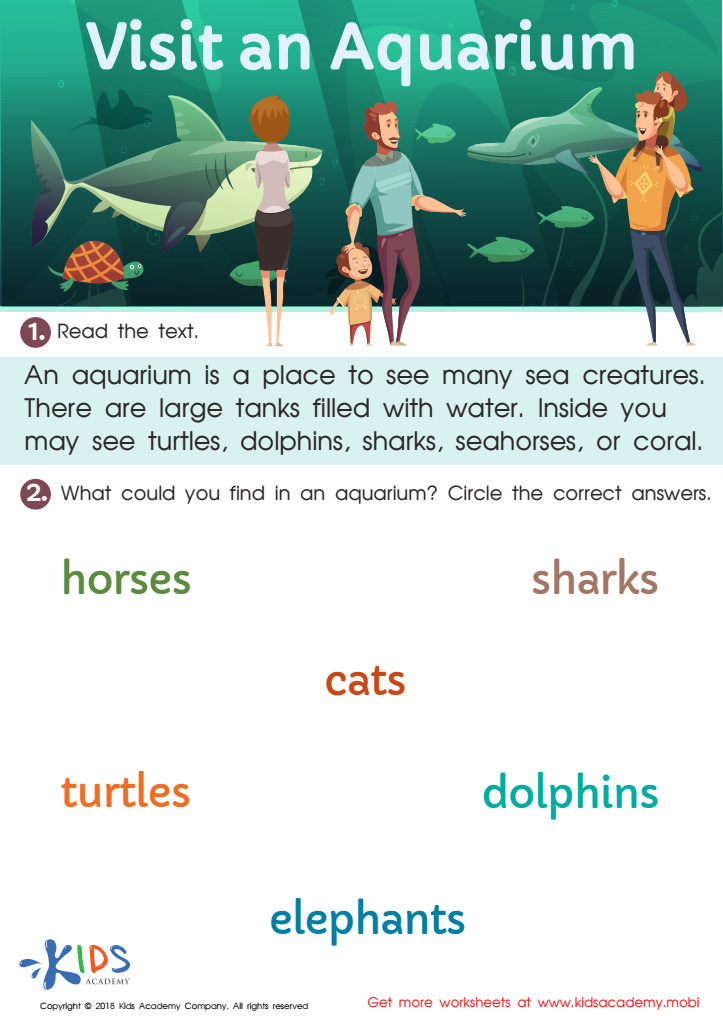
Visit an Aquarium Worksheet
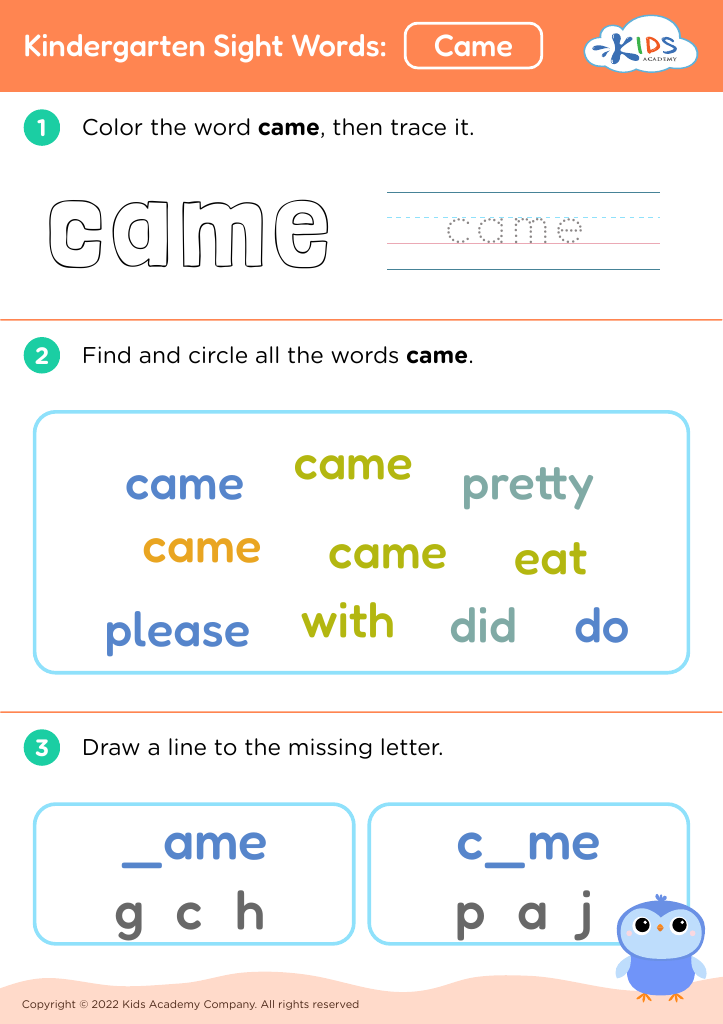



.jpg)




Visual interpretation and vocabulary building are crucial for children ages 4-8, forming a foundational aspect of their cognitive and language development. Young children are naturally drawn to visuals, which serve as tools for understanding concepts, emotions, and narratives. By utilizing images in stories or lessons, children learn to make connections between visuals and words, which enhances comprehension and retention.
For parents and teachers, fostering these skills nurtures critical thinking, as children decipher images and find meaning in context. This process enriches their vocabulary through exposure to new terms associated with the visuals they encounter. Engaging activities like storytelling with illustrations, drawing with descriptive language, or using educational games that incorporate visuals, help establish a rich language environment.
Moreover, visual learning complements different learning styles, reaching children who may struggle with traditional text-based approaches. By prioritizing visual interpretation and vocabulary building, caregivers can support children in expressing ideas, expanding their speech, and developing social skills. Ultimately, these early experiences lay the groundwork for future literacy, academic success, and effective communication, empowering children to thrive both in school and in everyday life.








