Answering questions Reading Fiction Worksheets for Ages 4-8
3 filtered results
-
From - To
Discover our engaging Answering Questions Reading Fiction Worksheets, designed especially for children aged 4-8. These worksheets not only foster a love for reading but also enhance comprehension and critical thinking skills. Each exercise encourages young readers to explore stories, understand characters, and respond to various questions. With colorful illustrations and age-appropriate content, our worksheets make reading fun and educational. Ideal for use at home or in the classroom, these tools support early literacy and pave the way for lifelong learning. Spark curiosity and build confidence in your child with our expertly crafted reading worksheets.
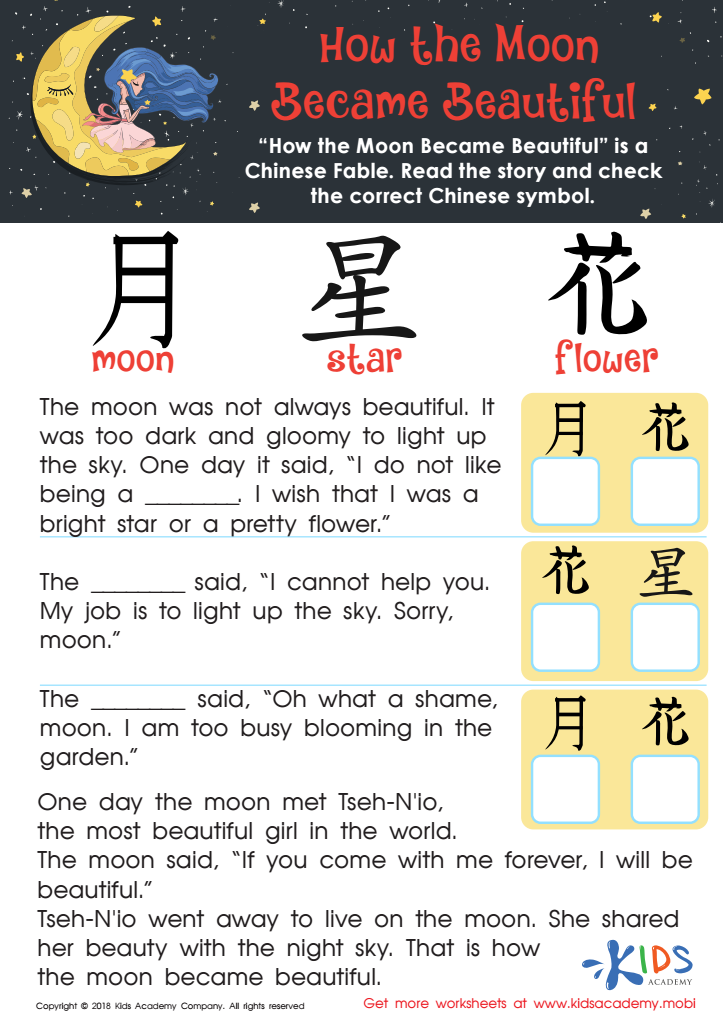
How the Moon Became Beautiful Worksheet
 Assign to My Students
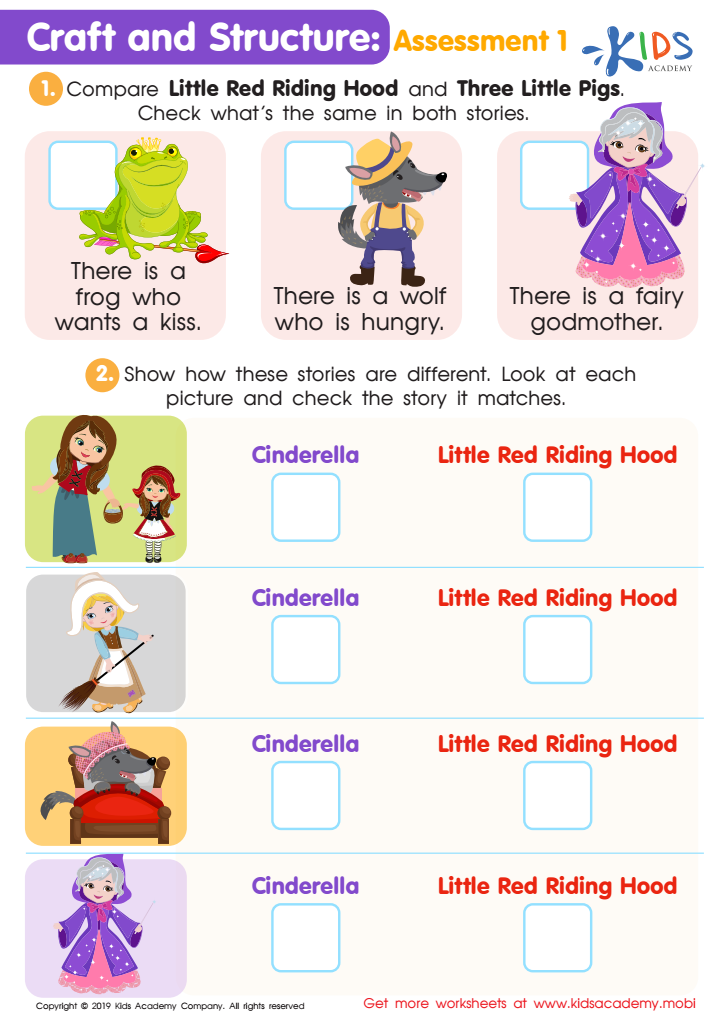
Craft and Structure: Assessment 1 Worksheet
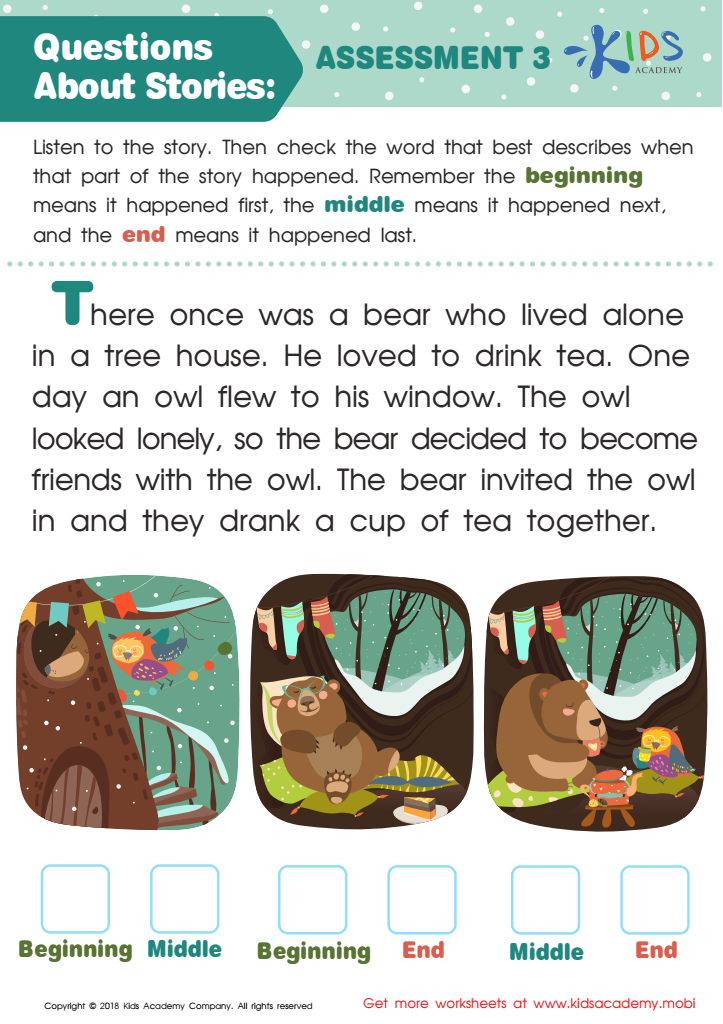
Questions About Stories: Assessment 3 Worksheet







.jpg)
Answering questions while reading fiction with children ages 4-8 is a crucial aspect of developing their cognitive and emotional skills. At this young age, children's brains are rapidly developing, and engaging with stories helps build their language, comprehension, and critical thinking abilities. When parents or teachers ask questions about a story, they encourage children to think more deeply about what they are reading, identify key details, and make connections to their own lives and experiences.
Additionally, discussing fiction nurtures a love for reading and an appreciation for literature. This sets a foundation for lifelong learning and curiosity. When children see that their thoughts and questions about a story are valued, it boosts their confidence and eagerness to share their ideas, fostering strong communication skills.
Moreover, fiction introduces them to different perspectives and cultures, enhancing their empathy and understanding of the world around them. It engages their imagination and inspires creativity, which is vital for problem-solving and intellectual exploration.
In summary, taking the time to answer questions and discuss fiction with young children forms the core of their educational and personal growth. It is an investment in their ability to think critically, connect emotionally, and develop a passion for reading that can benefit them throughout their lives.








