Critical thinking skills Reading Fiction Worksheets for Ages 4-8
4 filtered results
-
From - To
Unlock your child's potential with our "Critical Thinking Skills Reading Fiction Worksheets for Ages 4-8." At Kids Academy, we believe in nurturing young minds through engaging and educational content. Our worksheets are meticulously crafted to develop critical thinking by encouraging children to make predictions, draw conclusions, and analyze characters and plots. Perfect for early readers, these fun, age-appropriate activities stimulate imagination while honing important comprehension skills. Empower your child to become a thoughtful, inquisitive reader with our expertly designed resources that make learning a delightful adventure. Explore now and set a strong foundation for lifelong critical thinking!
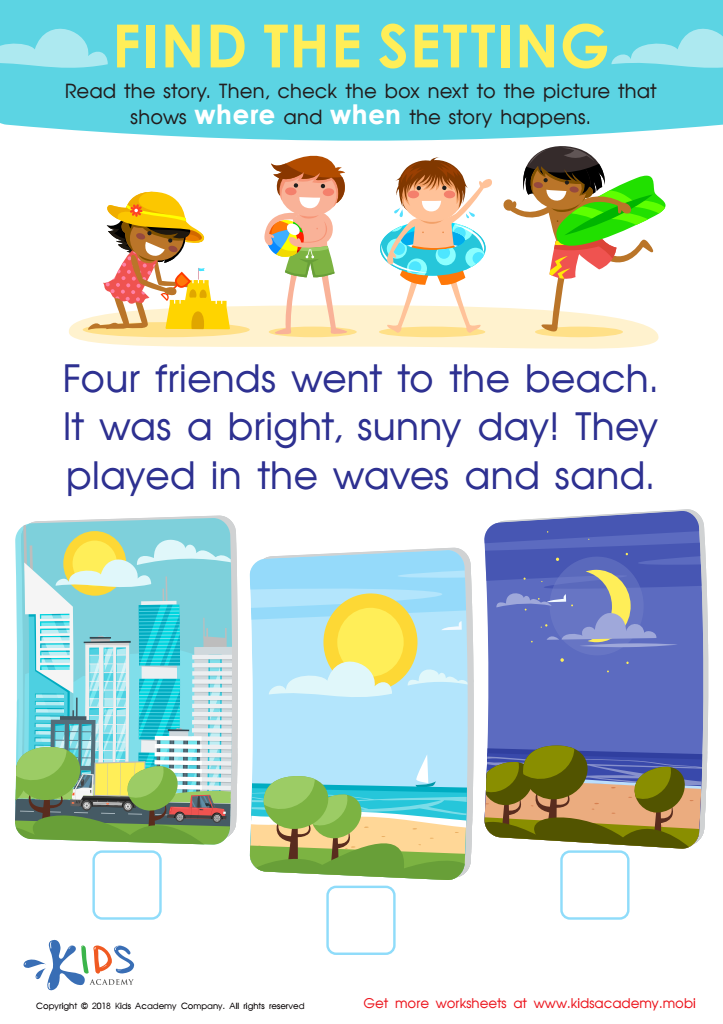
Find the Setting Worksheet
 Assign to My Students
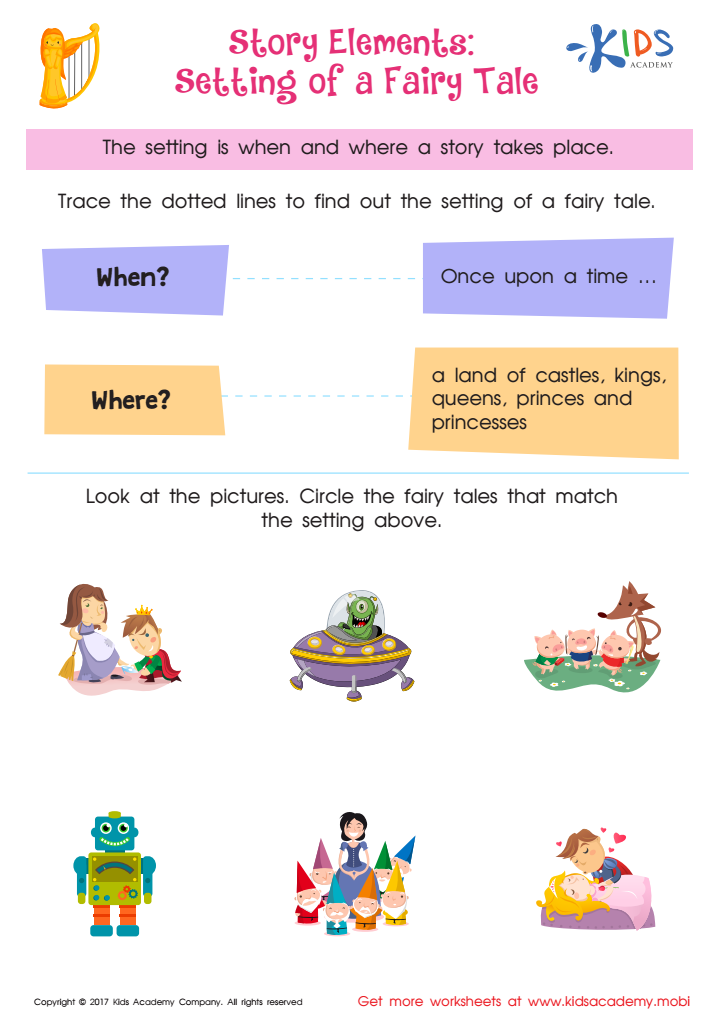
Story Elements: Setting of a Fairy Tale Printable
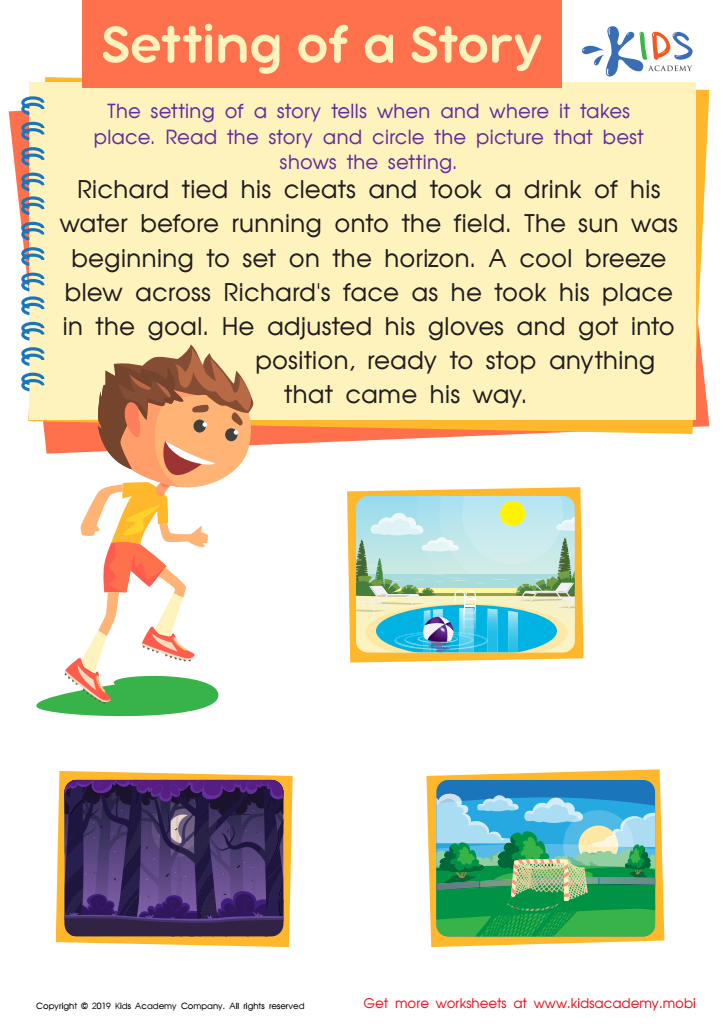
Setting of a Story Worksheet
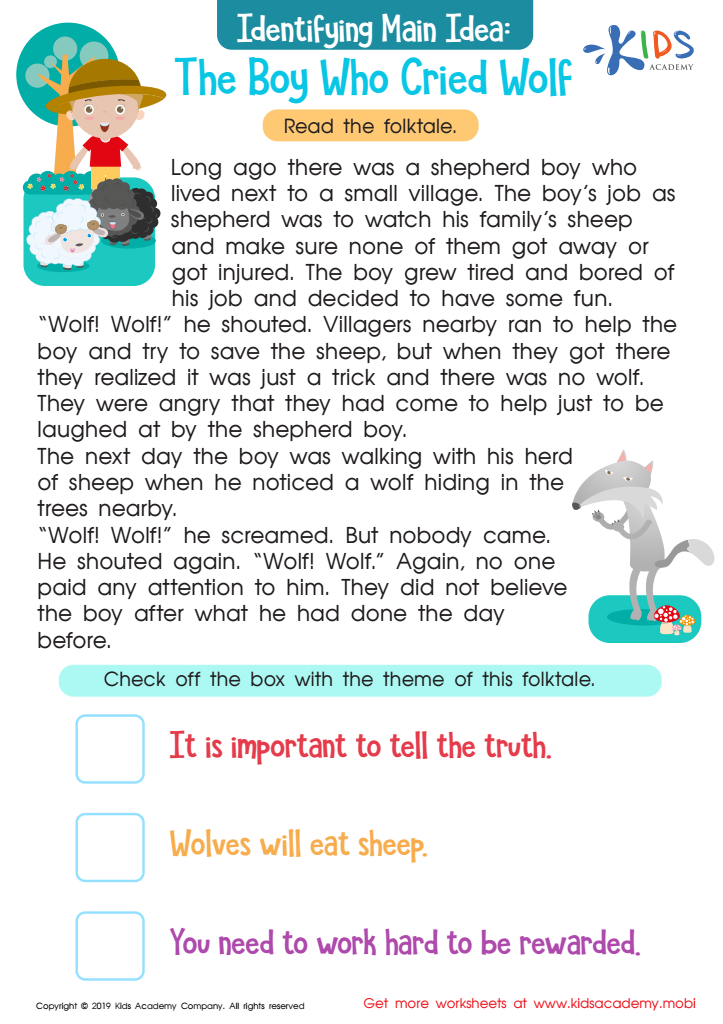
The Boy Who Cried Wolf Part 2 Worksheet







Cultivating critical thinking skills through reading fiction is immensely valuable for children aged 4-8. At this formative stage, young minds are highly impressionable and eager to explore the world around them. Fictional stories offer a safe, imaginative environment for this exploration while serving as a platform for teaching critical analysis.
Firstly, fiction fosters empathy and perspective-taking. When children read about characters from diverse backgrounds facing various challenges, they're invited to view situations from multiple viewpoints. This nurtures emotional intelligence, a key component of critical thinking.
Secondly, engaging with fiction enhances problem-solving abilities. As characters navigate obstacles and make decisions, young readers learn to anticipate outcomes and contemplate alternative scenarios. These thought processes directly translate into stronger reasoning and decision-making skills in real-life situations.
Moreover, vocabulary and language development are accentuated through fiction. Exposure to new words and sentence structures in context leads to better communication skills and more precise, articulate thinking.
Through discussions about plots, characters, and settings, children practice articulation which helps them conceptualize abstract ideas—a foundational critical thinking skill. Parents and teachers play a crucial role in guiding these discussions, asking probing questions, and encouraging curiosity.
Ultimately, prioritizing critical thinking skills through fiction prepares young children for life's complexities, making them more effective learners and empathetic individuals.








