Rhyme recognition Reading Fiction Worksheets for Ages 4-8
3 filtered results
-
From - To
Enhance your child's early reading skills with our Rhyme Recognition Reading Fiction Worksheets, designed specifically for ages 4-8. These engaging and interactive worksheets help young learners identify and create rhymes, fostering literacy development through fun storytelling. Each worksheet features vibrant illustrations and age-appropriate fiction texts that encourage creativity and comprehension. By using these resources, children will strengthen their phonemic awareness, making reading enjoyable and memorable. Ideal for home or classroom activities, our worksheets support a love for language while providing essential skills for lifelong learning. Unlock your child's potential and make reading a delightful adventure today!
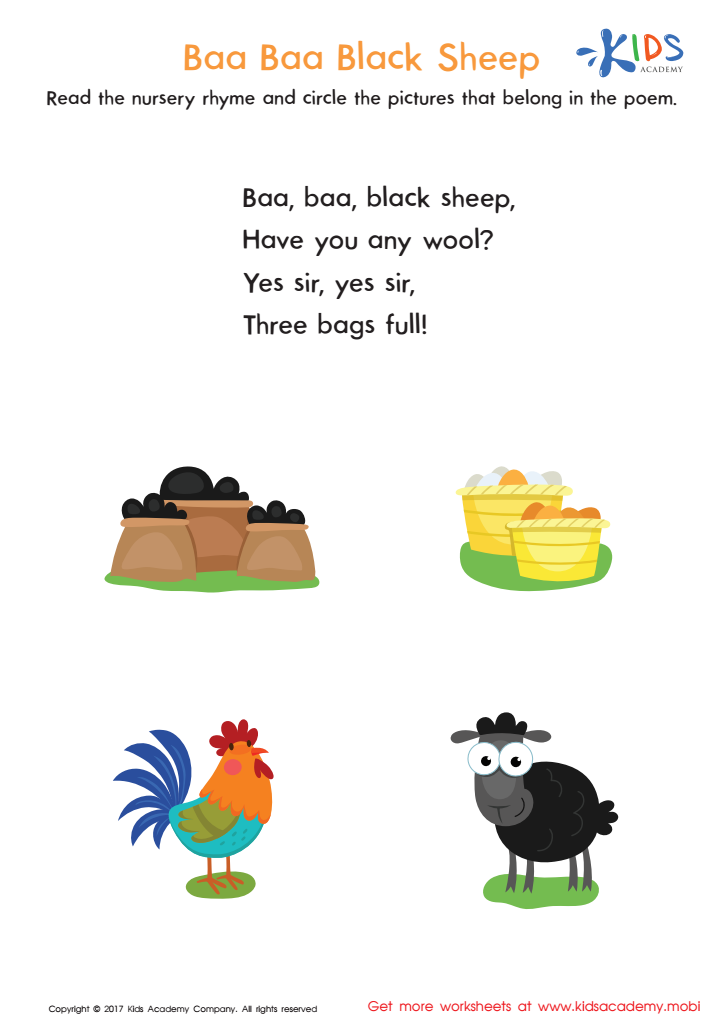
Baa Baa Black Sheep Printable
 Assign to My Students
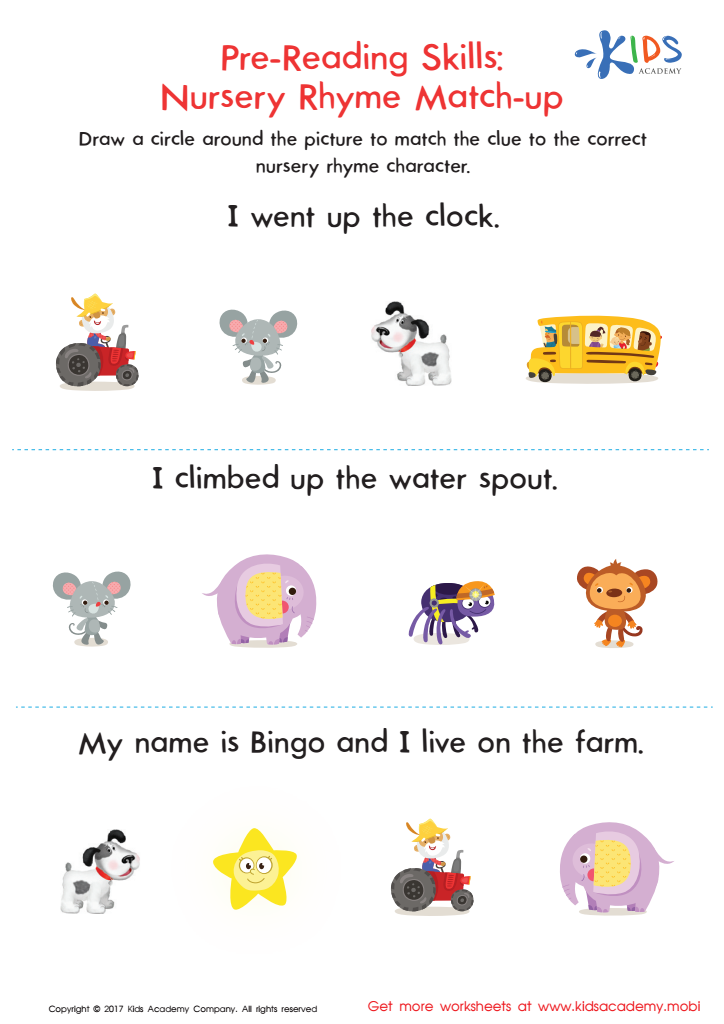
Nursery Rhyme Match–Up Worksheet
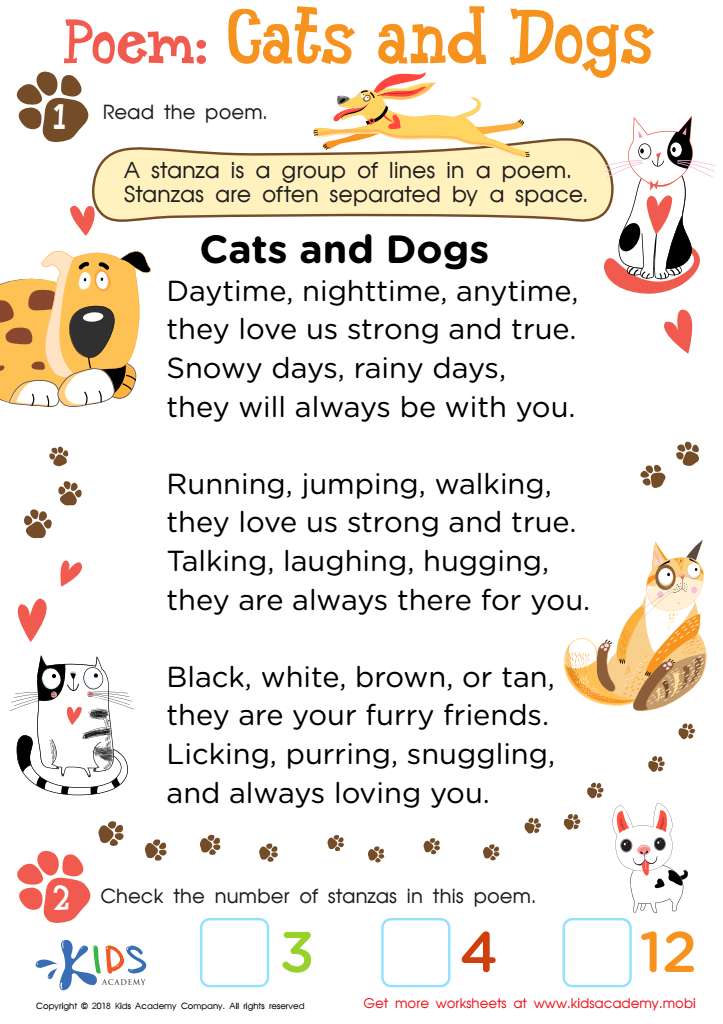
Poem: Cats and Dogs Worksheet







.jpg)
Rhyme recognition plays a crucial role in the early literacy development of children ages 4-8. For parents and teachers, understanding its importance can greatly enhance reading readiness and overall language skills. Rhyme recognition helps children develop phonological awareness, which is the ability to recognize and manipulate the sounds in words. This skill is foundational for later reading and writing abilities, as it supports sound-letter association and decoding skills.
Engaging with rhyming books, songs, and poetry not only makes reading enjoyable for young learners but also fosters cognitive development. The repetitive and melodic nature of rhymes enhances memory and retention, allowing children to internalize language patterns and understand word structures more easily.
Additionally, exposure to rhymes encourages vocabulary expansion and comprehension, as children are more likely to explore the meanings of new words in a fun context.
As they identify and generate rhymes, children also develop critical thinking and creative skills. Overall, emphasizing rhyme recognition in early education enriches children's literacy experiences, nurtures a love for reading, and sets a solid foundation for their future academic success. Parents and teachers play a vital role in facilitating this rich and engaging environment.








