Understanding Sequences Reading Fiction Worksheets for Ages 4-8
3 filtered results
-
From - To
Enhance your child's reading skills with our "Understanding Sequences Reading Fiction Worksheets" designed for ages 4-8. These engaging worksheets help young learners grasp the essential skill of sequencing events in stories, which is crucial for comprehension. Featuring colorful illustrations and relatable narratives, each worksheet challenges kids to arrange story elements in the correct order, encouraging critical thinking and reinforcing their understanding of plot structure. Perfect for homeschooling or classroom settings, our fun and educational materials make learning sequences enjoyable. Dive into the world of fiction while developing essential literacy skills with these delightful worksheets!
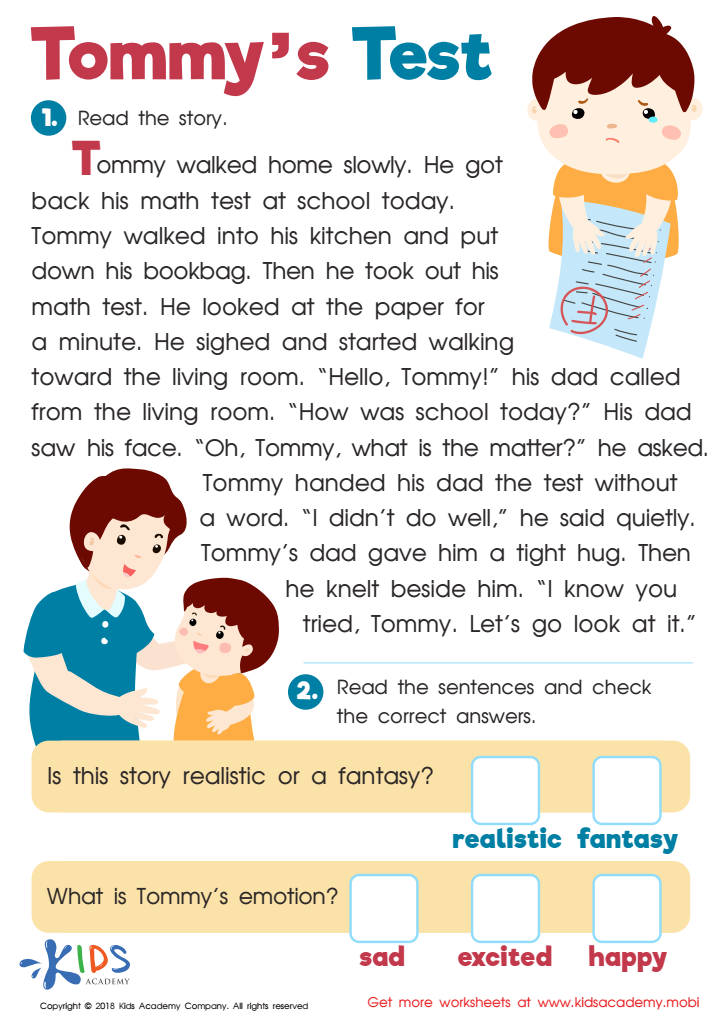
Tommys Test Worksheet
 Assign to My Students
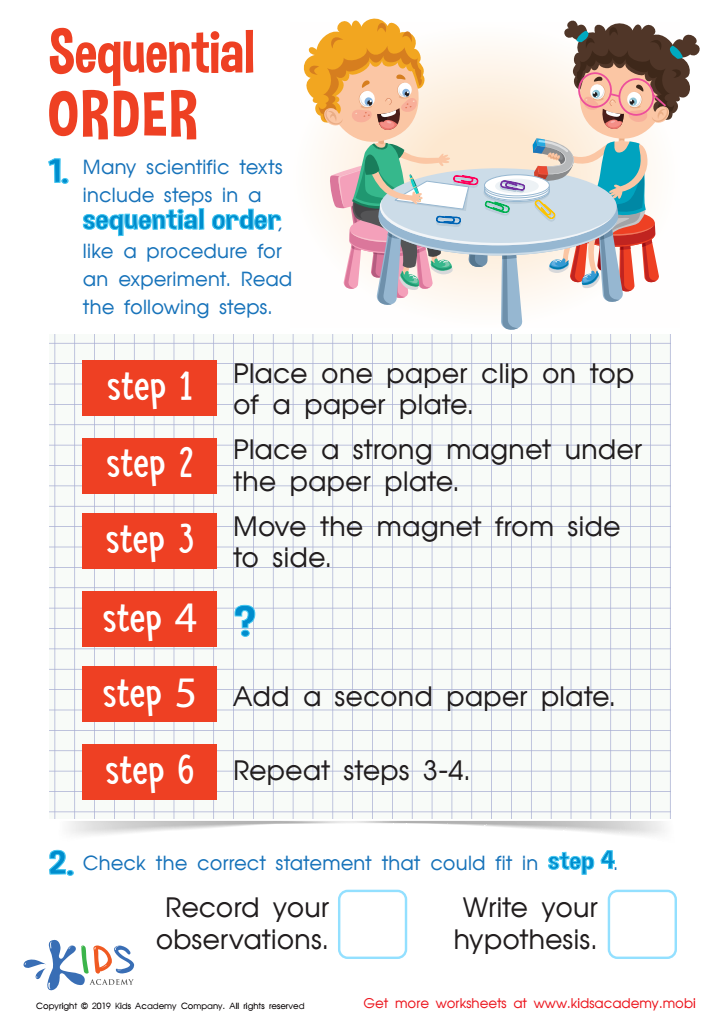
Sequencential Order Worksheet
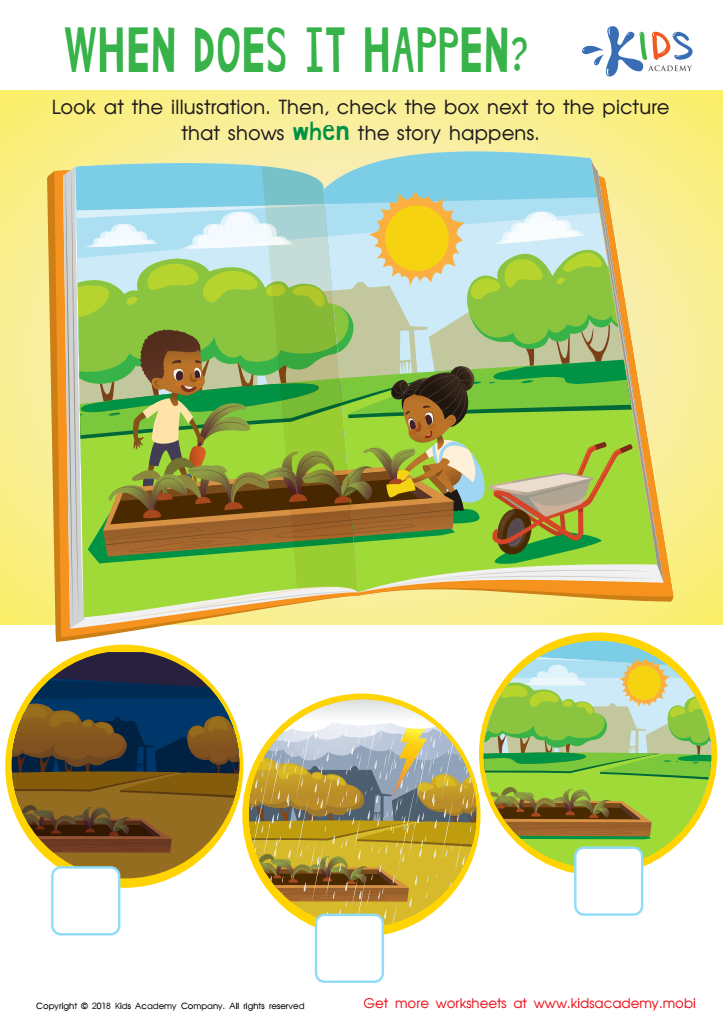
When Does It Happen? Worksheet








Understanding sequences in reading fiction is crucial for children aged 4-8, as it lays the foundation for their comprehension and critical thinking skills. When parents and teachers emphasize sequencing, they help children learn the importance of the order of events in stories. This skill fosters better understanding and retention of the plot, enhancing their ability to predict outcomes and draw connections between events.
Moreover, recognizing sequences aids in developing a child’s narrative skills. It encourages them to recount stories and their experiences in a logical manner, promoting effective communication. Additionally, mastering sequence comprehension prepares children for more complex reading challenges as they progress in their education. It nurtures their ability to identify main ideas, understand character motivations, and contextualize situations.
Furthermore, exploring sequences in fiction engages the imagination, allowing children to think more creatively about story construction. This can enhance their writing skills and boost their overall engagement with literacy. Ultimately, strong sequence understanding contributes to a lifelong loving relationship with reading, making it essential for parents and teachers to prioritize this aspect of literacy development during these formative years. Investing time in teaching sequence comprehension can lead to successful learners and confident readers.








