
Reading practice Reading Non-Fiction Worksheets for Ages 4-8
4 filtered results
Difficulty Level
Grade
Age
-
From - To
Subject
Activity
Standards
Enhance your child's reading skills with our engaging Reading Non-Fiction Worksheets, designed specifically for ages 4-8. These printable resources provide a fun and interactive way for young learners to explore a variety of real-world topics through age-appropriate texts. Each worksheet focuses on key skills such as comprehension, vocabulary building, and critical thinking. By guiding children through the wonders of non-fiction, we foster a love for reading and learning about the world around them. Perfect for home or classroom use, our worksheets support early literacy development while keeping children entertained. Start nurturing your child's reading journey today!
Favorites
With answer key
Interactive
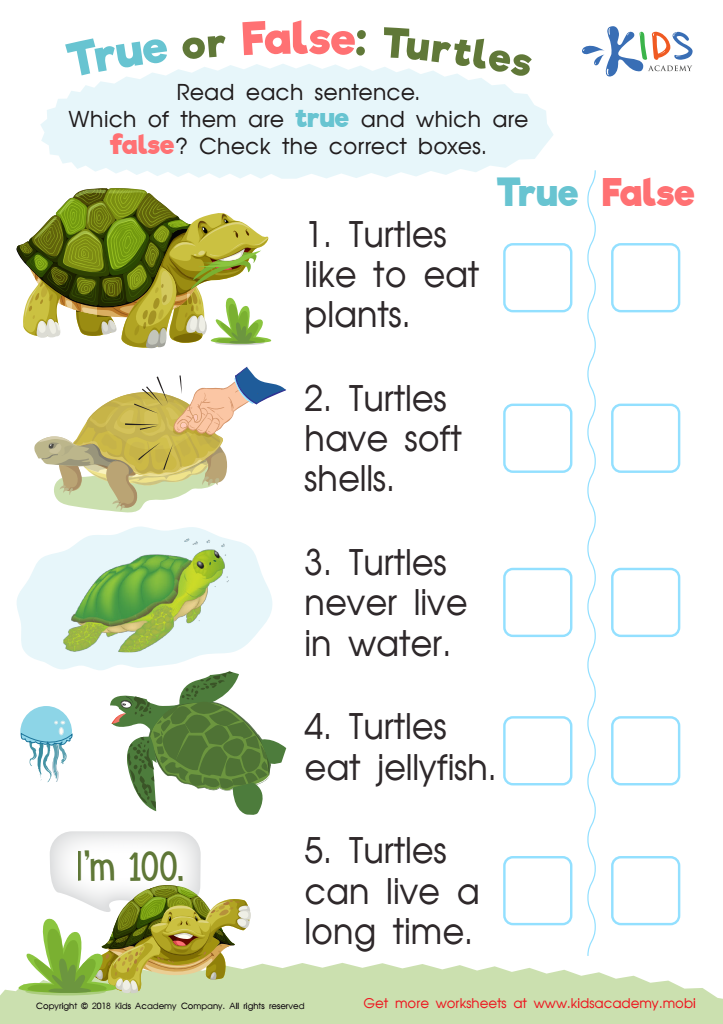
True or False: Turtles Worksheet
Print this free downloadable worksheet to strengthen your child's reading comprehension. Assist them to read each sentence and recall facts about turtles. Check true or false for each statement to verify their knowledge. Perfect for early learners!
 Assign to My Students
True or False: Turtles Worksheet
Worksheet
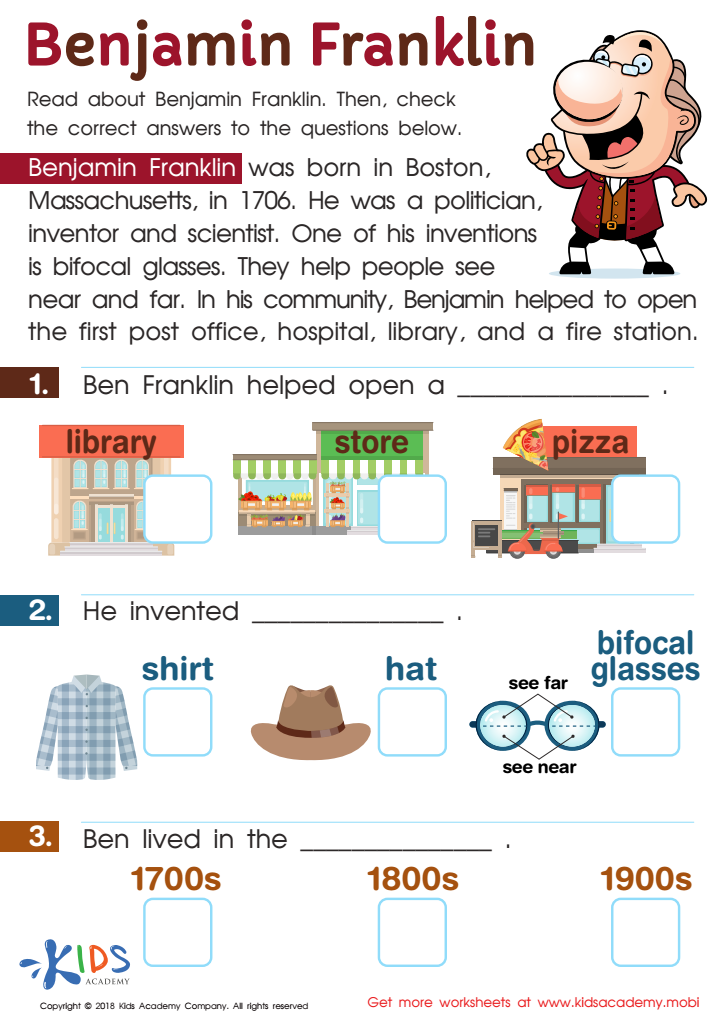
Benjamin Franklin Worksheet
Introduce your kids to one of history's most important figures - Benjamin Franklin! Tell them all about his remarkable contributions to the world and then use this worksheet to teach them even more. Read the text to them and check their answers against the questions afterwards.
Benjamin Franklin Worksheet
Worksheet
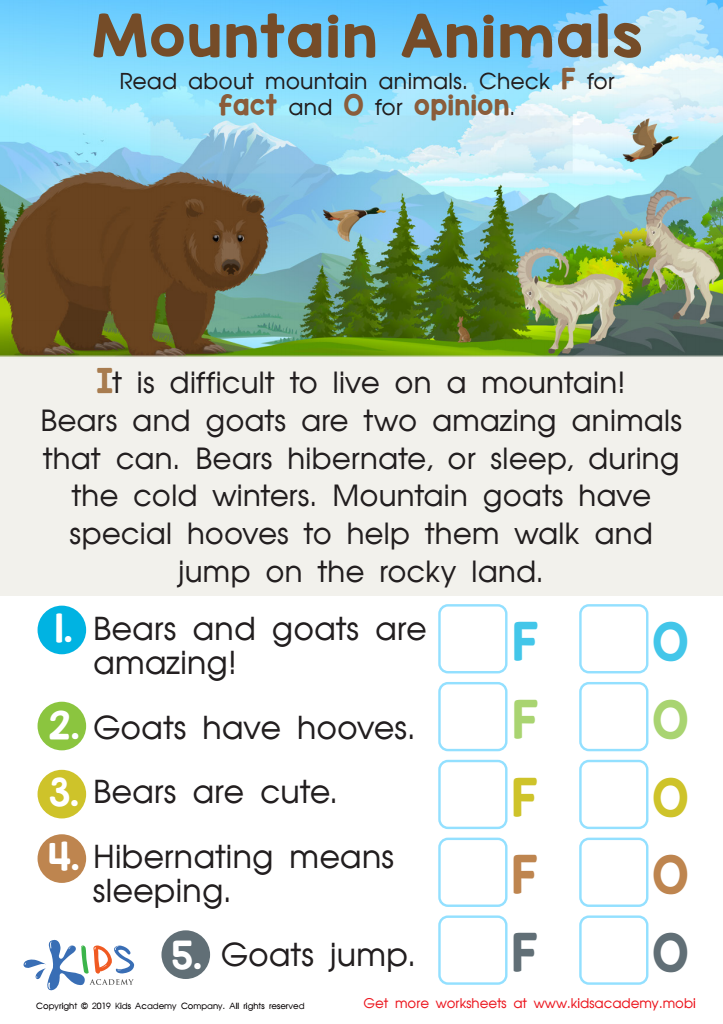
Mountain Animals Worksheet
Is mountain wildlife amazing? Fact or fiction? Help your child sharpen critical-thinking skills with this engaging worksheet. Featuring a fun nonfiction passage about animals like bears and goats, your child will read through the text and identify each statement as fact or fiction. Perfect for boosting reading comprehension and analytical abilities!
Mountain Animals Worksheet
Worksheet
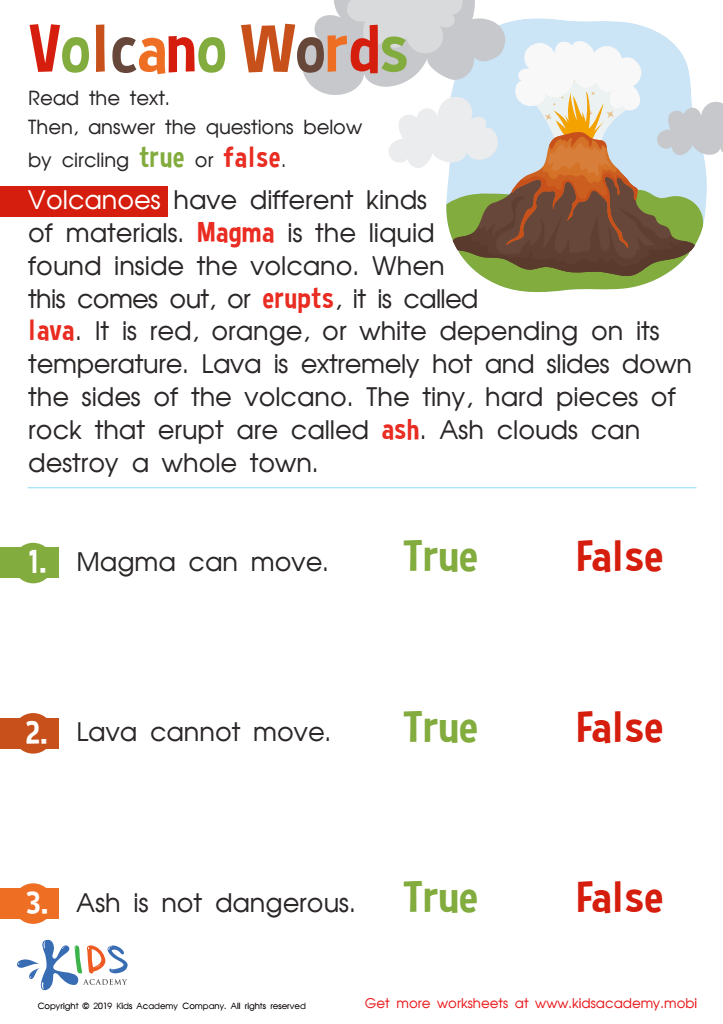
Volcano Words Worksheet
This worksheet helps kids focus and improve their reading comprehension skills. Start by reading a passage about volcanos and noting the bolded red words. Then answer true/false statements below, double-checking in the text if needed.
Volcano Words Worksheet
Worksheet
Join Kids Academy for Free
Who is primarily going to use this learning content?







Reading non-fiction is crucial for children aged 4-8, as it fosters a deep understanding of the world around them. First and foremost, reading non-fiction helps to build foundational literacy skills, improving vocabulary and comprehension. Kids engage with real-world topics—such as nature, animals, science, and history—expanding their knowledge base. This not only makes reading a more interactive experience but also nurtures curiosity and critical thinking.
Additionally, exposure to varied texts allows children to learn how to identify key information, differentiate fact from opinion, and analyze content. It teaches them important research skills at an early age, empowering them to ask questions, seek answers, and develop their inquiries.
Moreover, reading non-fiction supports social-emotional growth by encouraging empathy and understanding of diverse cultures, situations, and concepts such as family roles, historical events, and environmental issues. Parents and teachers who emphasize reading non-fiction can cultivate a well-rounded reader, better preparing them for academic and real-life challenges.
Ultimately, investing time in reading non-fiction with children ages 4-8 creates an enriched educational experience, laying a strong foundation for lifelong learning and a passion for discovery. Engaging with these texts is a valuable part of a child's development that should not be overlooked.








