Improving reading skills Sight Words Worksheets for Ages 4-8
4 filtered results
-
From - To
Our "Improving Reading Skills Sight Words Worksheets for Ages 4-8" offer an engaging and effective way to boost your child's reading abilities. These worksheets are designed specifically for early learners, providing a strong foundation in essential sight words. Through fun and interactive activities, your child will enhance their vocabulary, reading fluency, and comprehension. Perfect for children aged 4 to 8, these worksheets cater to different learning styles and can be used both at home and in the classroom. Give your child the tools they need to succeed in reading with our expertly crafted sight word resources!
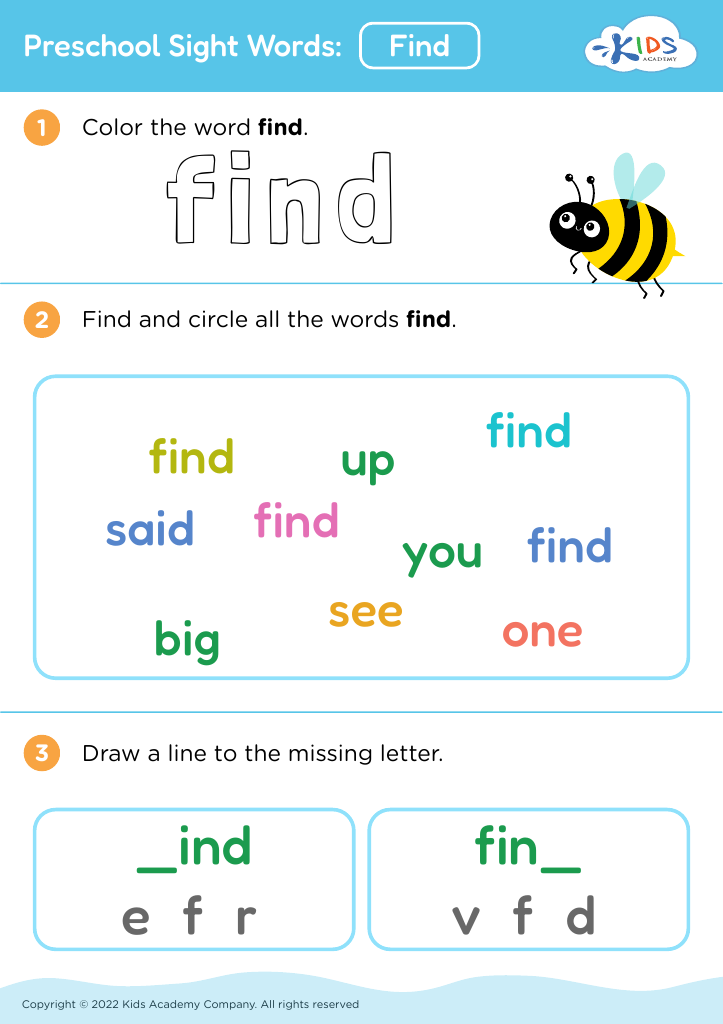





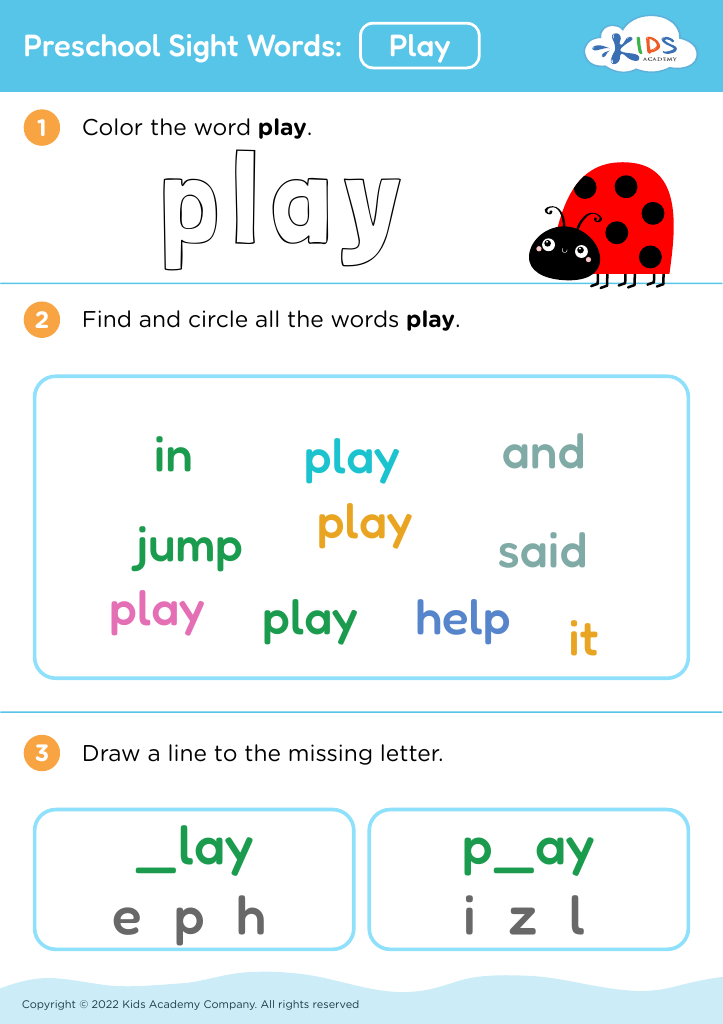
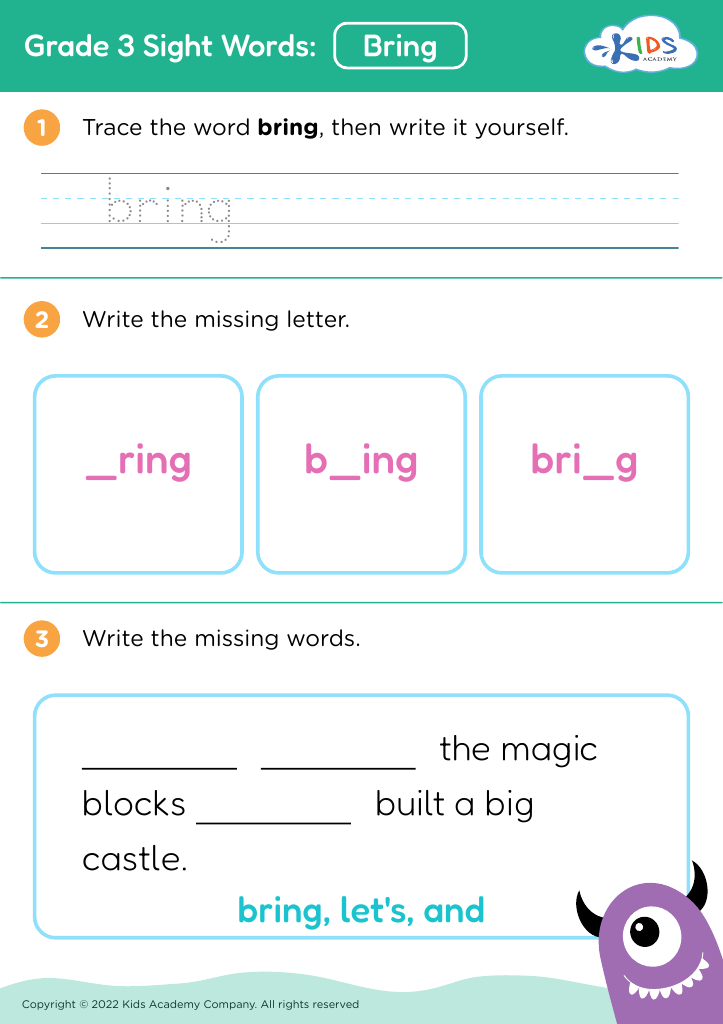
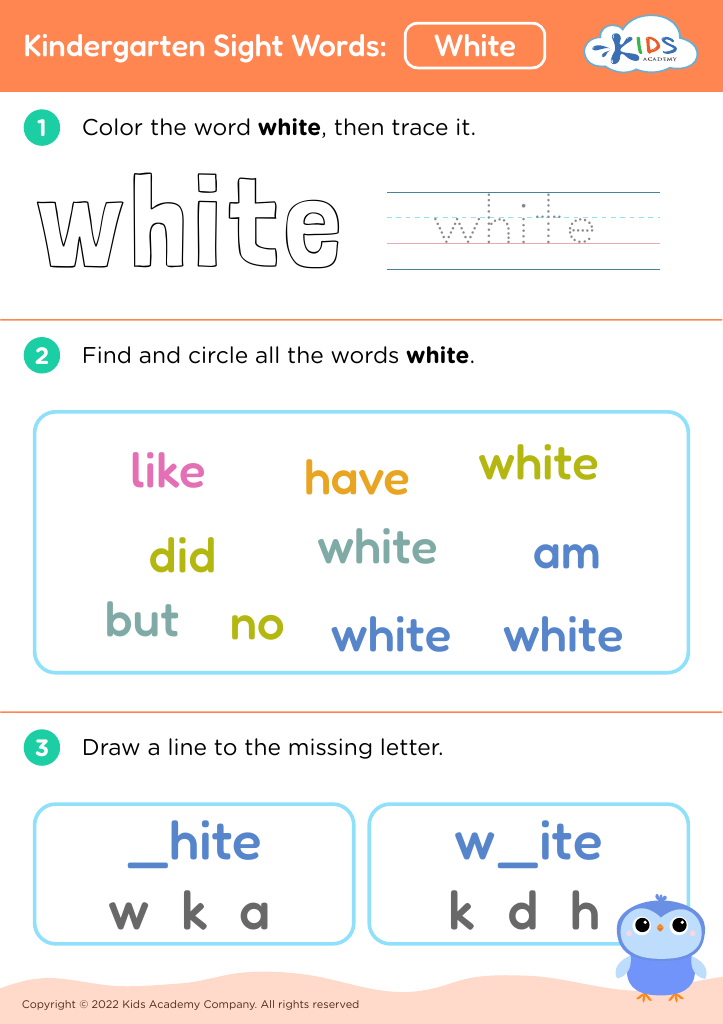








Improving reading skills through sight words for children aged 4-8 is foundational for their literacy development, and therefore, parents and teachers should prioritize it. Sight words are commonly used words that children are encouraged to recognize without having to sound them out. Since these words frequently appear in written texts, knowing them by sight helps children read more fluently, efficiently, and with greater comprehension.
At these early ages, many children are beginning their educational journeys and establishing crucial literacy skills. Mastering sight words enables them to navigate simple texts confidently, making the learning process smoother and more enjoyable. The confidence boost that children get from being able to recognize sight words seamlessly encourages a positive attitude toward reading, which is critical for their long-term educational success.
Additionally, reading fluency achieved through sight word mastery enhances cognitive development, language skills, and encourages curiosity and imagination. It lays a robust foundation upon which more complex reading and writing skills can be built. When parents and teachers proactively support the development of sight word recognition, they are not only improving immediate reading abilities but are also shaping a future generation of proficient readers, equipping children with the skills necessary for academic and personal growth.