Understanding food chains Animals Worksheets for Ages 4-8
3 filtered results
-
From - To
Explore the fascinating world of food chains with our engaging "Understanding Food Chains Animals Worksheets" designed for children ages 4-8. These printable resources help young learners discover the interconnectedness of nature and the importance of various animal roles within ecosystems. Through interactive activities and vibrant illustrations, kids will identify producers, consumers, and decomposers, enhancing their comprehension of food networks. These worksheets make learning about science enjoyable while fostering critical thinking and creativity. Perfect for both classroom use and at-home learning, our materials provide a fun way for kids to grasp essential concepts about animals and their habitats. Dive into the adventure of food chains today!
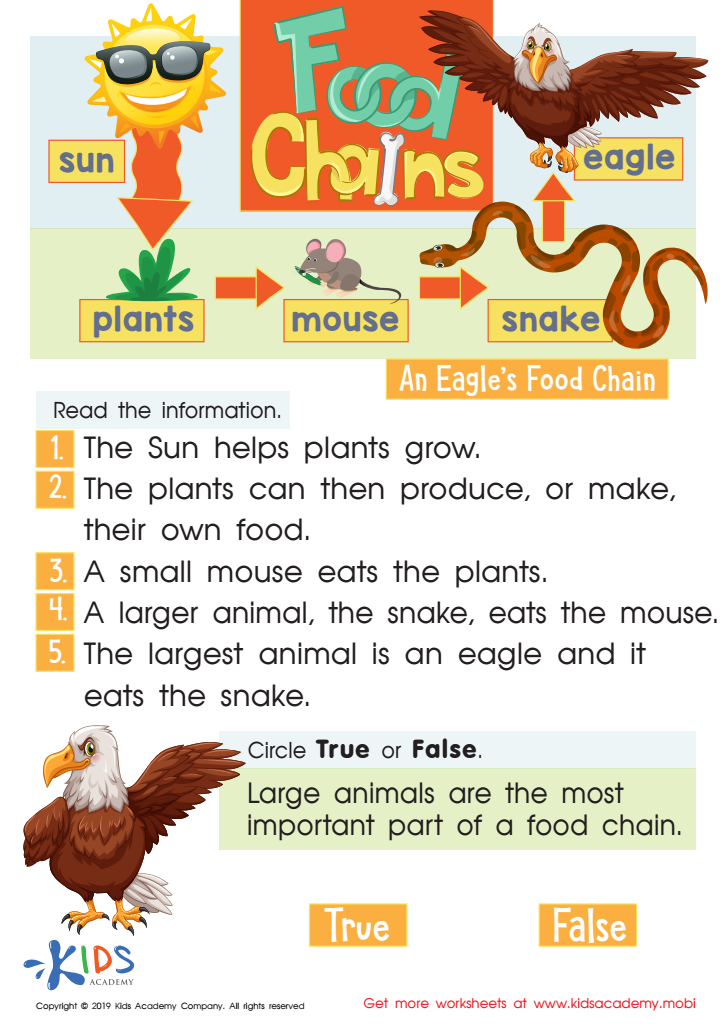
Food Chains Worksheet
 Assign to My Students
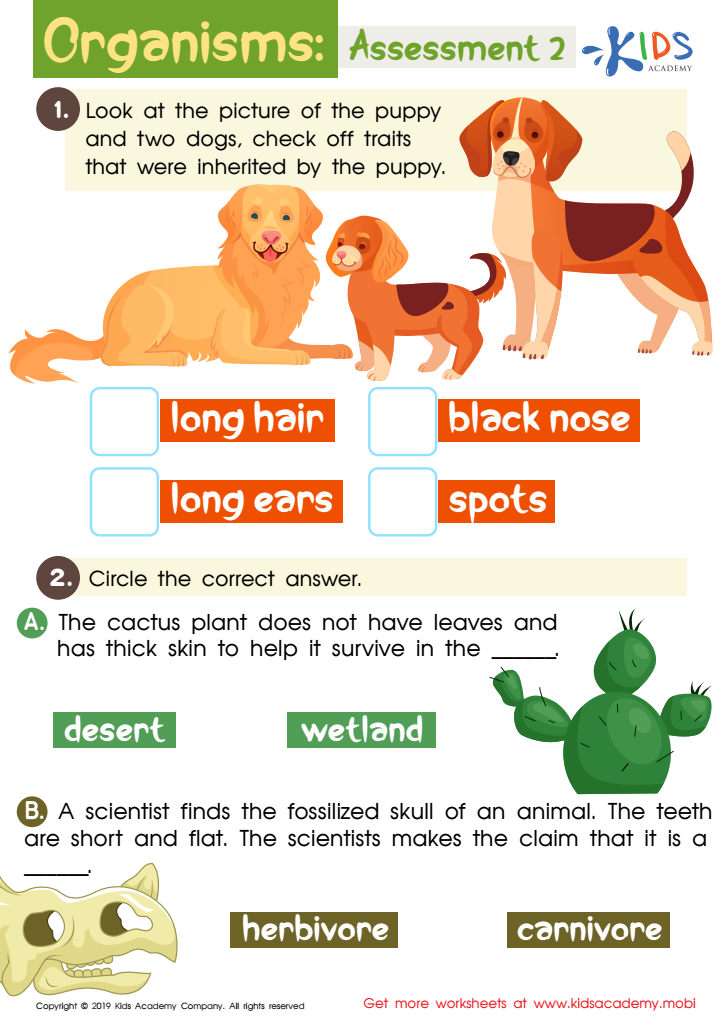
Organisms: Assessment 2 Worksheet
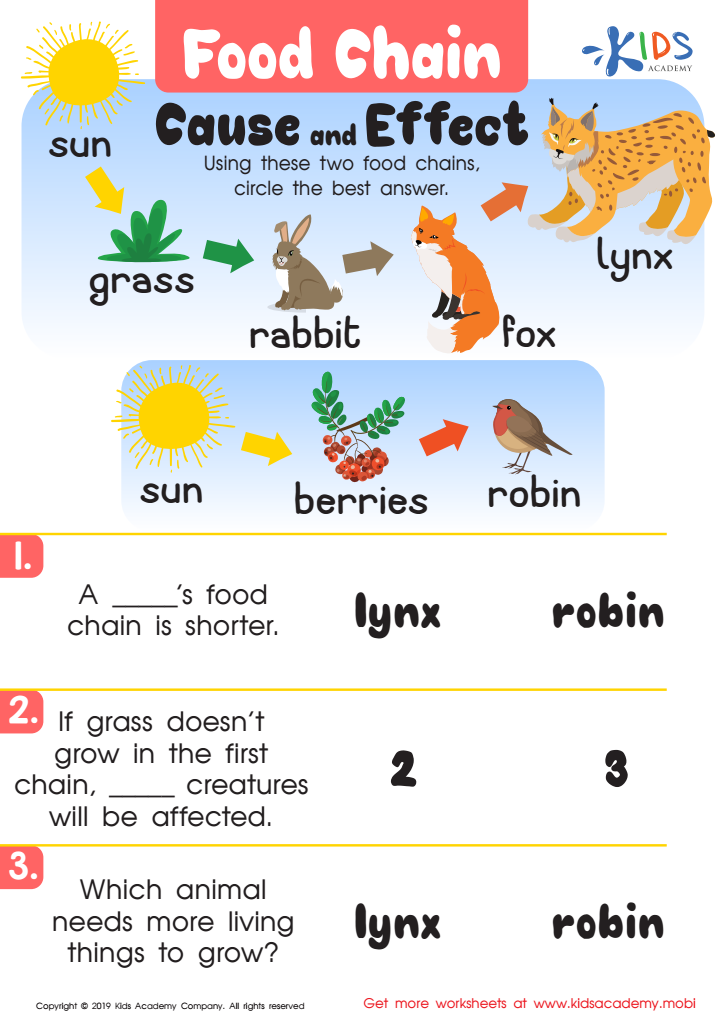
Food Chain Cause Worksheet








Understanding food chains is essential for children aged 4-8, as it lays the foundation for their comprehension of ecosystems and the interconnectedness of life. For parents and teachers, this knowledge fosters curiosity about nature and promotes critical thinking skills. When children learn about how animals and plants are linked through food chains, they grasp the concept that all living things depend on each other for survival. This foundational understanding cultivates respect for wildlife and encourages responsible environmental stewardship.
Moreover, learning about food chains cultivates awareness of healthy eating habits. By understanding where their food comes from—plants, herbivores, and carnivores—children develop a broader perspective on nutrition and appreciation for various foods.
Engaging children with interactive lessons, such as activities that illustrate food chains using visuals or hands-on experiences, can deepen their understanding and retention. It promotes inquiry-based learning and collaboration, building communication skills.
Ultimately, fostering an understanding of food chains not only enriches children's education but also instills essential values, encouraging them to be informed citizens and advocates for the environment as they grow. This awareness supports their academic journey and contributes to their development as empathetic and responsible individuals.








