Categorization skills World Around Us Worksheets for Ages 4-8
3 filtered results
-
From - To
Discover the "Categorization Skills: World Around Us Worksheets" designed for children ages 4-8. These engaging worksheets help young learners develop their ability to classify objects, recognize similarities and differences, and enhance their critical thinking skills. Explore a variety of fun activities that encourage your child to sort items based on color, shape, size, and usage, all while relating to the world around them. Perfect for both home and classroom settings, these worksheets promote creativity and independent thinking. Equip your child with essential skills for academic success and a deeper understanding of their environment with these interactive and educational resources!
 Assign to My Students
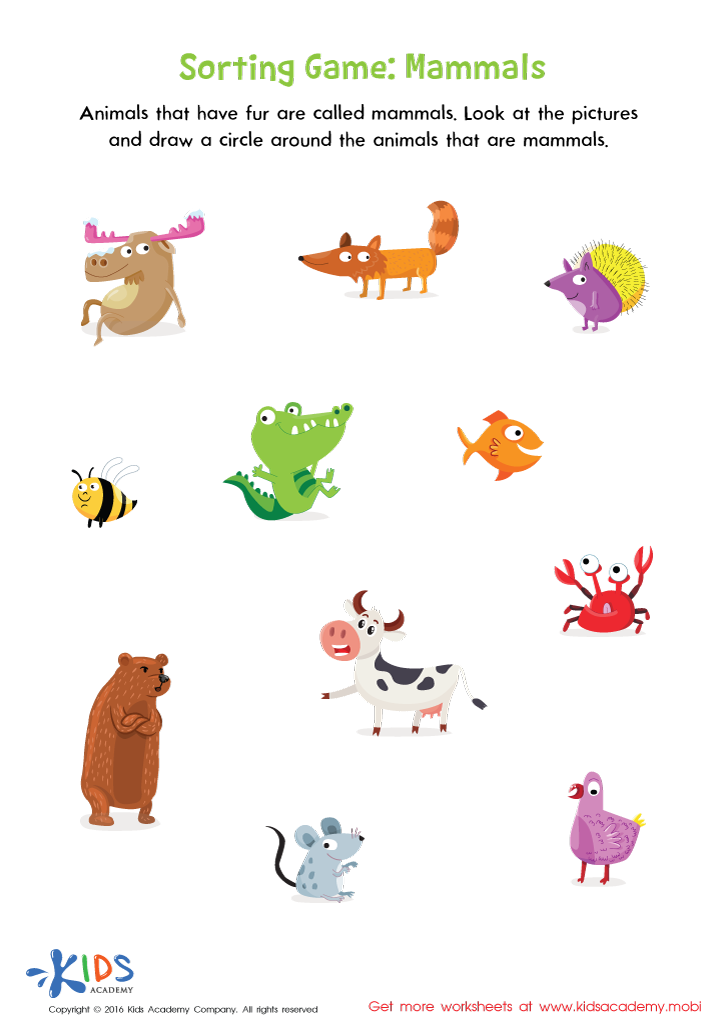
Mammals Sorting Worksheet
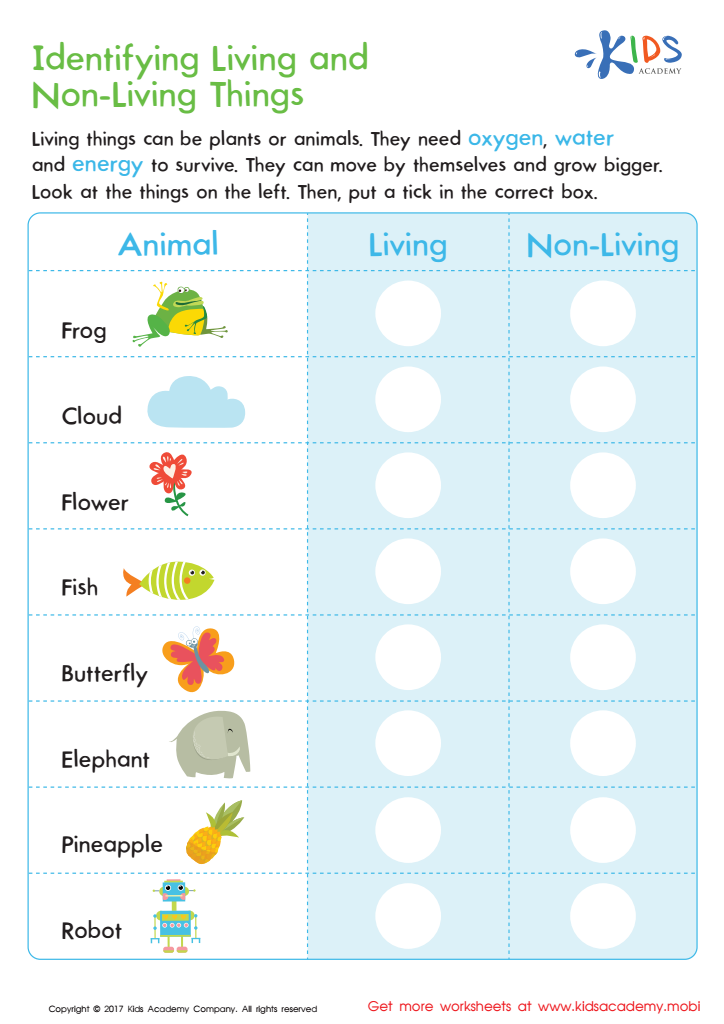
Identifying Living or Non–living Worksheet





.jpg)
Categorization skills are essential for children aged 4-8, as they lay a foundational framework for understanding the world around them. When parents and teachers foster these skills, they enhance cognitive development, enabling kids to classify objects, animals, and ideas based on similarities and differences. This ability not only improves critical thinking but also boosts problem-solving capabilities.
Moreover, categorization aids in language development. As children learn to group items—like fruits, animals, or vehicles—they expand their vocabulary and enhance their communication skills. By talking about characteristics and grouping, they also learn abstract thinking, which is crucial for academic readiness.
Additionally, categorization promotes social skills. Children learn to recognize social cues and categorize behaviors, which supports empathy and cooperation. For instance, understanding emotions helps them discern how to respond to their peers appropriately.
Fostering categorization skills in the "World Around Us" also enhances children’s ability to make connections between concepts—an essential skill for lifelong learning. In essence, when parents and teachers prioritize these skills, they are equipping children with vital tools for cognitive, social, and emotional growth, preparing them for a future of learning and interaction.