Cursive handwriting practice Alphabet Worksheets for Ages 4-9
4 filtered results
-
From - To
Embark on a journey of creativity and skill-building with our engaging Cursive Handwriting Practice Alphabet Worksheets, designed specifically for children ages 4-9. These worksheets provide a fun and interactive way for young learners to master their cursive handwriting while developing fine motor skills and enhancing their letter formation. With a variety of exercises that cater to different learning levels, kids can trace, practice, and perfect each letter. Perfect for homeschooling or classroom settings, our resources encourage independent learning and boost confidence in writing. Help your child discover the beauty of cursive writing with these comprehensive, printable practice sheets!
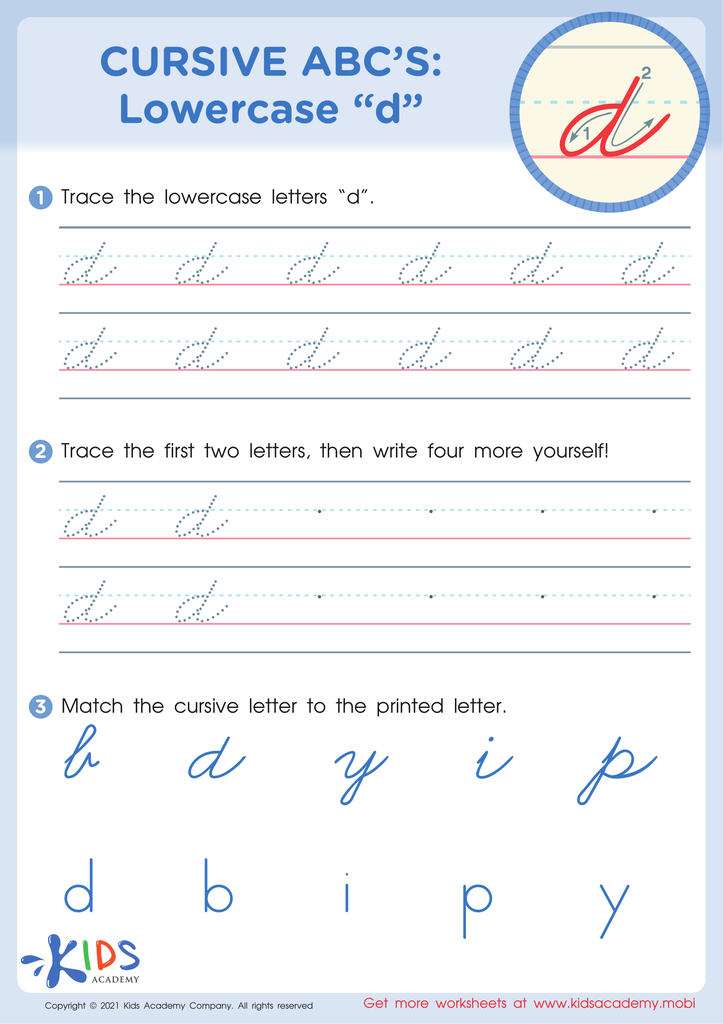
Cursive ABCs: Lowercase d
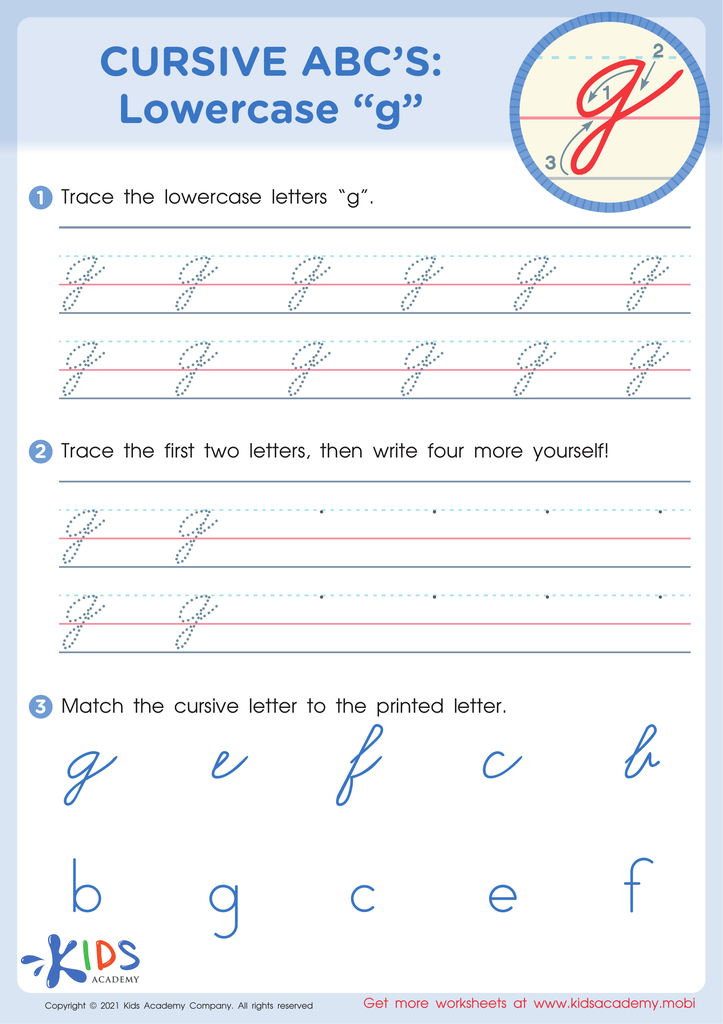
Cursive ABCs: Lowercase g
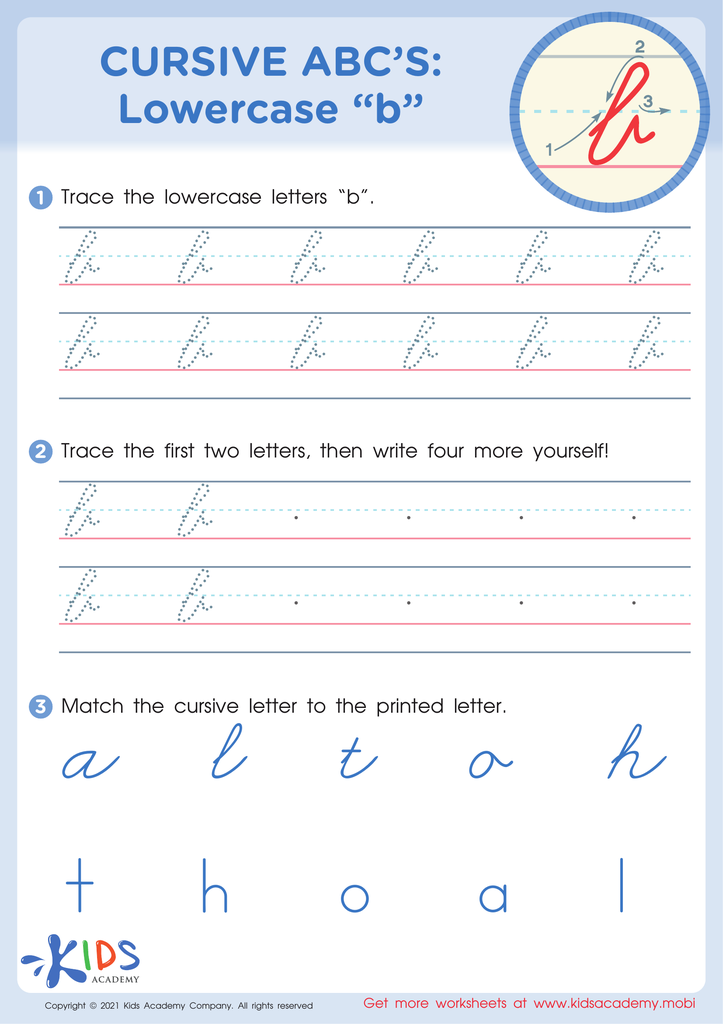
Cursive ABCs: Lowercase b
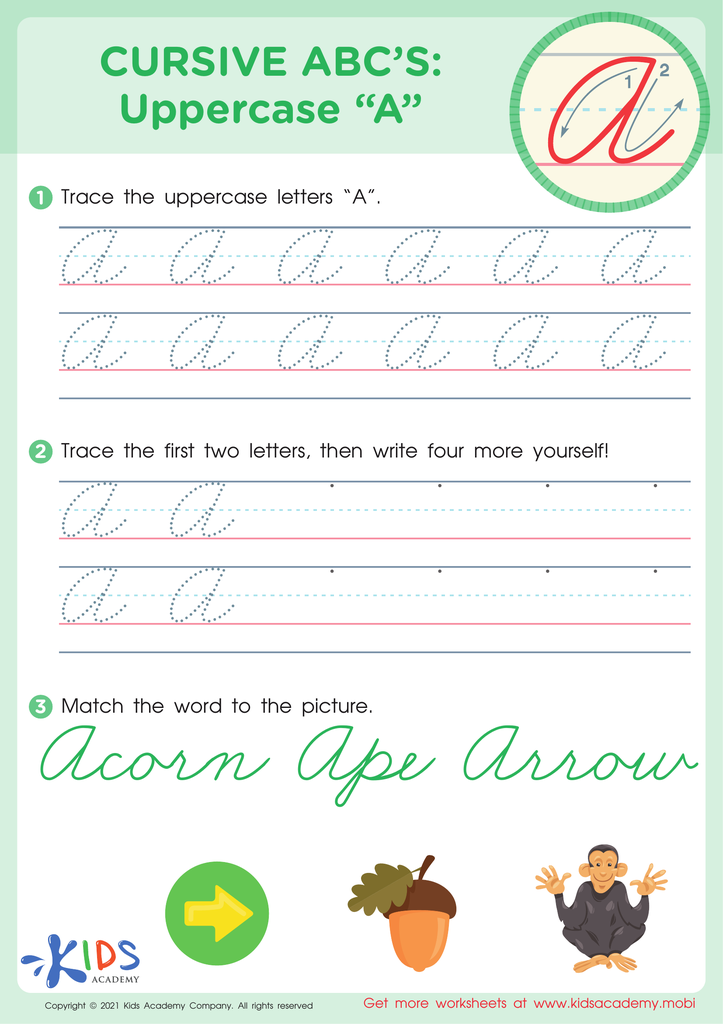
Cursive ABCs: Uppercase A







Cursive handwriting practice for children ages 4-9 is crucial for several reasons. Firstly, it enhances fine motor skills as kids learn to control their hand movements, fostering coordination and dexterity. This foundational skill will benefit them in other areas, such as playing instruments or participating in sports.
Secondly, cursive writing promotes cognitive development. Studies suggest that writing in cursive stimulates brain activity related to learning and memory, helping children process information more effectively. Additionally, it fosters creativity as students develop their unique writing styles and can express themselves more freely.
Furthermore, cursive handwriting is often encouraged in academic settings. By learning early, children develop fluency in writing, allowing them to take notes or complete assignments more efficiently as they progress in school. This skill also helps in preserving personal expression in a world increasingly dominated by digital text.
Lastly, practicing cursive can improve reading skills. As kids become better at forming letters, they also begin to recognize cursive letters in literature and they're less likely to struggle with reading older documents or literature where cursive was the standard.
In summary, cursive handwriting practice is a valuable educational tool that supports a child's fine motor skills, cognitive growth, academic success, and appreciation for traditional forms of communication.







