Filters

28 filtered results

Clear all filters
Favorites
With answer key
Interactive

28 filtered results

Difficulty Level

Grade


Check out this FREE Trial Lesson on Alphabet for age 4-9!

D

Favorites
With answer key
Interactive
  • 4-9
  • Hand-eye Coordination
  • Alphabet
Long and Short E Worksheet

Long and Short E Worksheet

This fun printout makes learning phonics enjoyable for Grade 3 students. Get them to read the words “tree” and “bed” to recognize the different sounds of the letter “E”. After hearing the words they can color the words and the pictures to understand differences between long and short vowels.
Download (PDF)
Assign to My Students
Long and Short E Worksheet
Worksheet
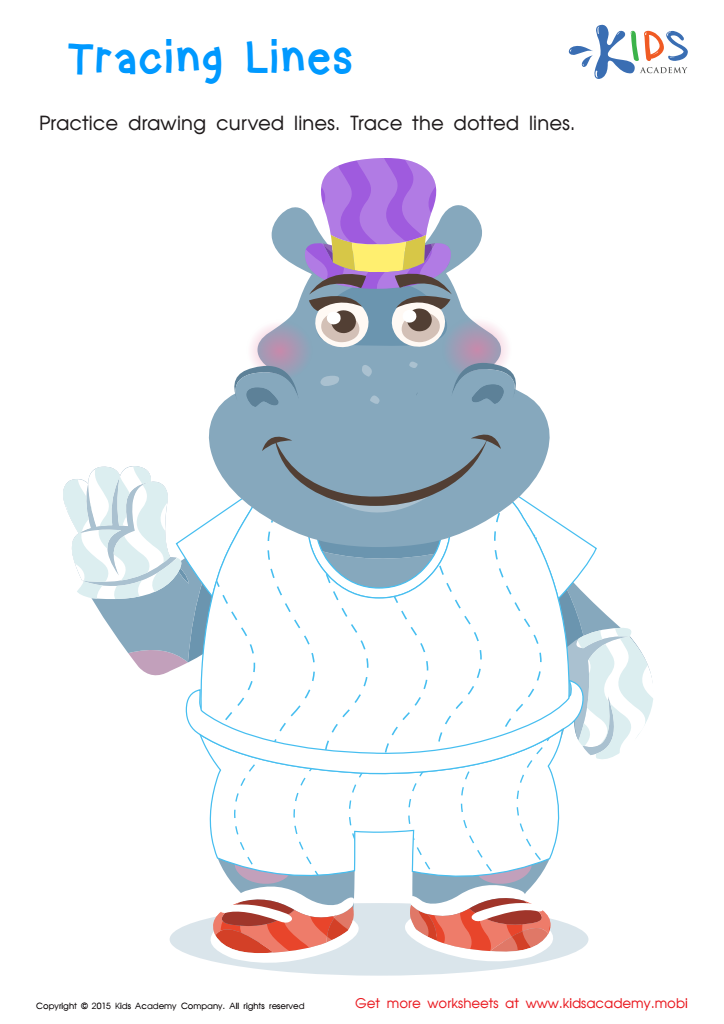
Tracing lines worksheet pdf

Tracing Lines Worksheet

Help your child nurture their writing and drawing skills with this cute tracing lines PDF worksheet. It improves pencil grip and hand-to-eye coordination, a key step in learning to write. Have fun and watch your child's confidence grow!
Tracing Lines Worksheet
Worksheet
letter d worksheets
letter d worksheets

Letter D Tracing Page

Trace and write capital and lowercase letter "D" with our free printable alphabet worksheet! Be careful not to mix up "b" and "d" - just look at the ducks and write their first letter. The dolphin wants to join the fun too - do you like dolphins? Get more fun worksheets and activities at Kids Academy!
Letter D Tracing Page
Worksheet
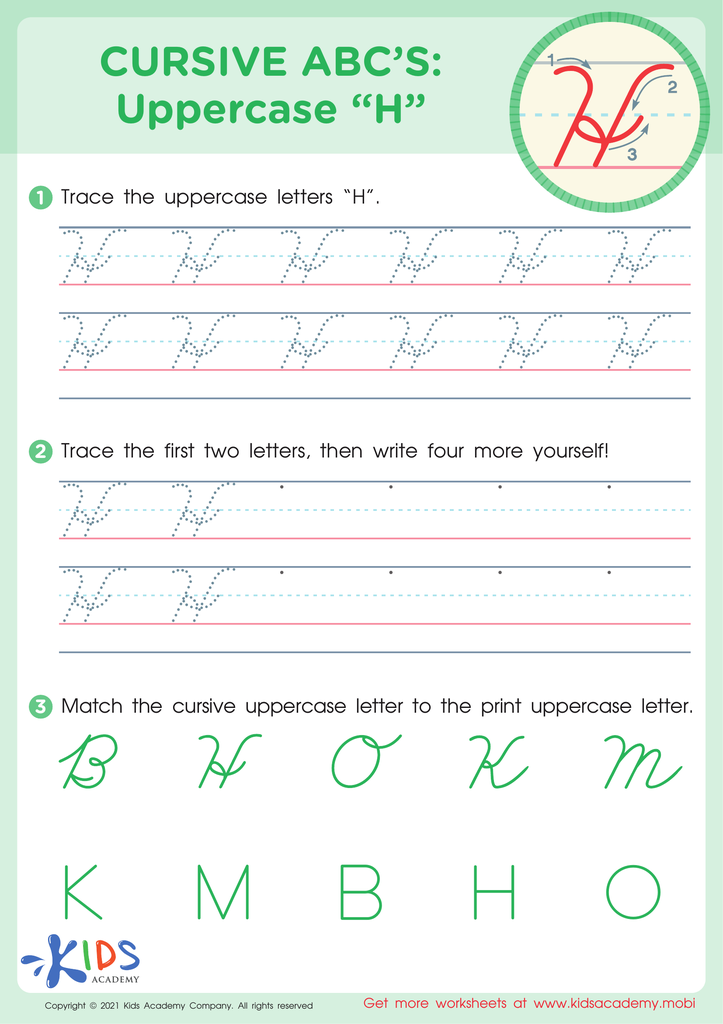
Cursive ABCs: Uppercase H

Cursive ABCs: Uppercase H

Have your child recite the alphabet and give you words beginning with H. This tracing sheet is perfect to help them improve their handwriting. Guide their hands as they trace the uppercase H, then have them practise writing it alone. At the bottom is an exercise to check their letter recognition.
Cursive ABCs: Uppercase H
Worksheet


Hand-eye coordination is a crucial developmental skill that forms the foundation for various academic and everyday tasks. For children aged 4-9, incorporating hand-eye coordination exercises, such as those associated with learning the alphabet, can enhance their cognitive and motor skills. Parents and teachers should prioritize this area because it directly impacts a child's ability to write, draw, and perform tasks that require precision and control.

During these formative years, children develop fine motor skills that are essential for handwriting and other academic activities. Activities that combine hand-eye coordination with learning the alphabet, like tracing letters or playing letter recognition games, can engage young learners while building these vital connections. As they learn to associate letters with movements, their language skills and comprehension improve.

Additionally, developing hand-eye coordination fosters independence and confidence. Children who can effectively control their movements gain the ability to tackle more complex tasks on their own, promoting self-esteem. Overall, investing time in hand-eye coordination alphabet activities can yield significant benefits for children's overall development and learning, setting the stage for successful academic experiences in the future.