
Letter identification Alphabet Worksheets for Ages 4-9
4 filtered results
Difficulty Level
Grade
Age
-
From - To
Subject
Activity
Standards
Discover our engaging Letter Identification Alphabet Worksheets designed specifically for children ages 4-9. These fun, printable activities foster essential literacy skills by helping young learners recognize and differentiate letters in both uppercase and lowercase forms. Each worksheet includes vibrant illustrations and interactive exercises that keep kids motivated and excited about learning. Ideal for home or classroom use, our resources support diverse learning styles while building confidence in reading and writing. Equip your child with a strong foundation in literacy with our carefully crafted worksheets, promoting letter recognition in a playful, effective manner. Start making learning fun today!
Favorites
With answer key
Interactive
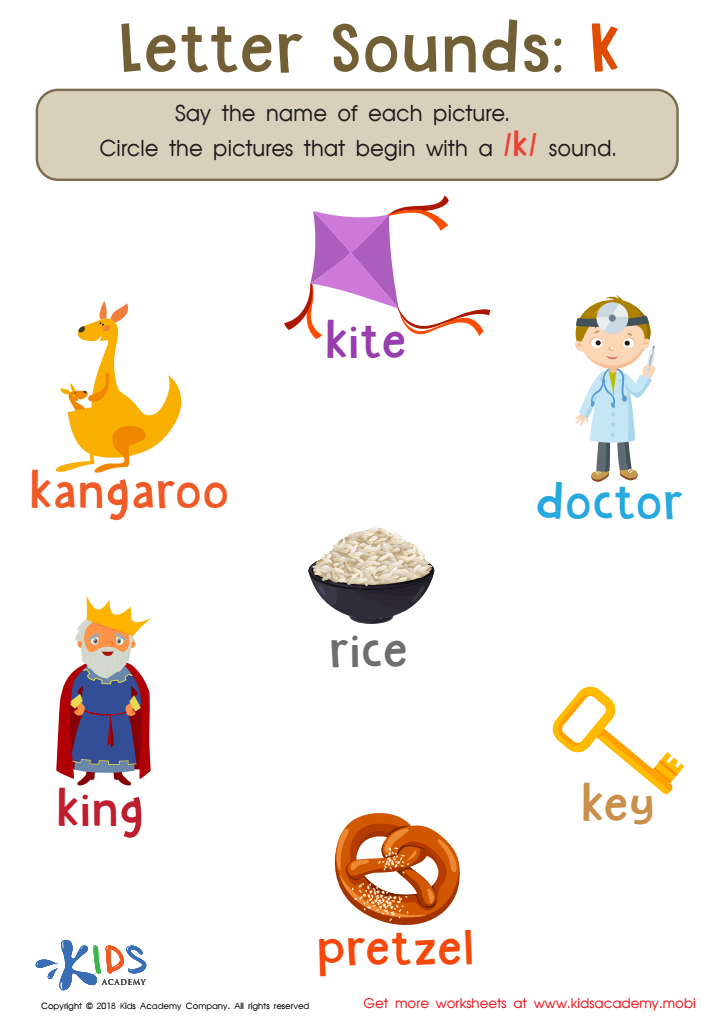
Letter K Sounds Worksheet
Help your child practice phonics with Kids Academy's illustrated worksheet! Have them look at the pictures, read the words and say them aloud. Only circle those that start with a hard 'K' sound. Perfect for preschoolers and kindergarteners! Plus, they'll learn the silent K used in a few words.
 Assign to My Students
Letter K Sounds Worksheet
Worksheet
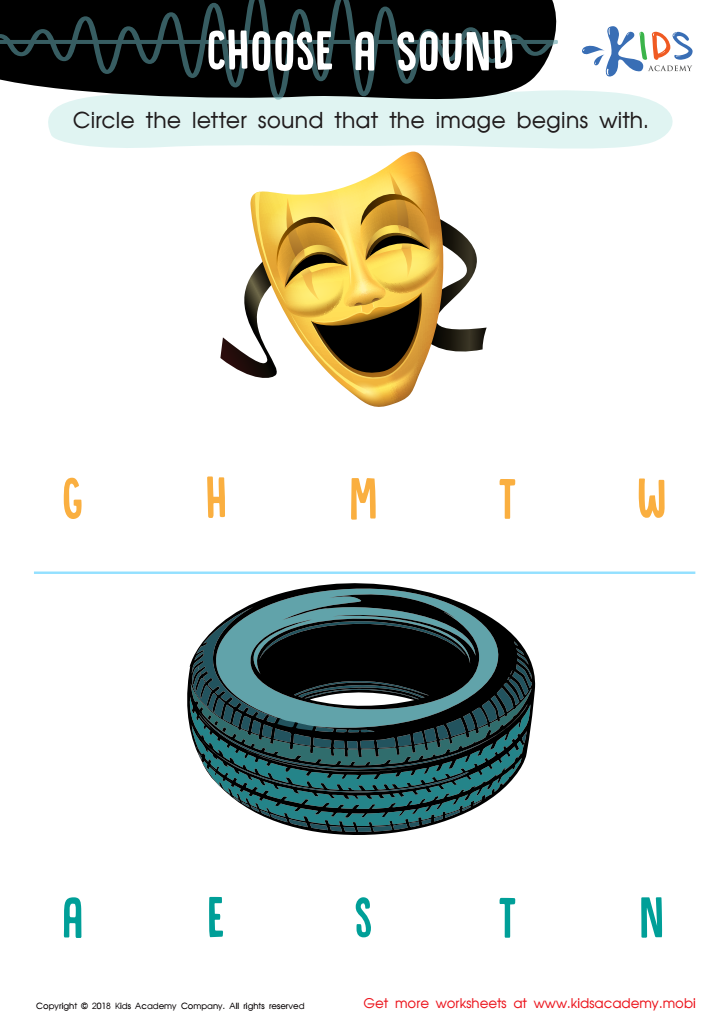
Choose a Sound Worksheet
Help your child hone pre-reading skills with this colorful worksheet! They'll practice tracing letter sounds, develop phoneme awareness, and gain confidence. Plus, it's a fun way to work on their fine motor skills.
Choose a Sound Worksheet
Worksheet
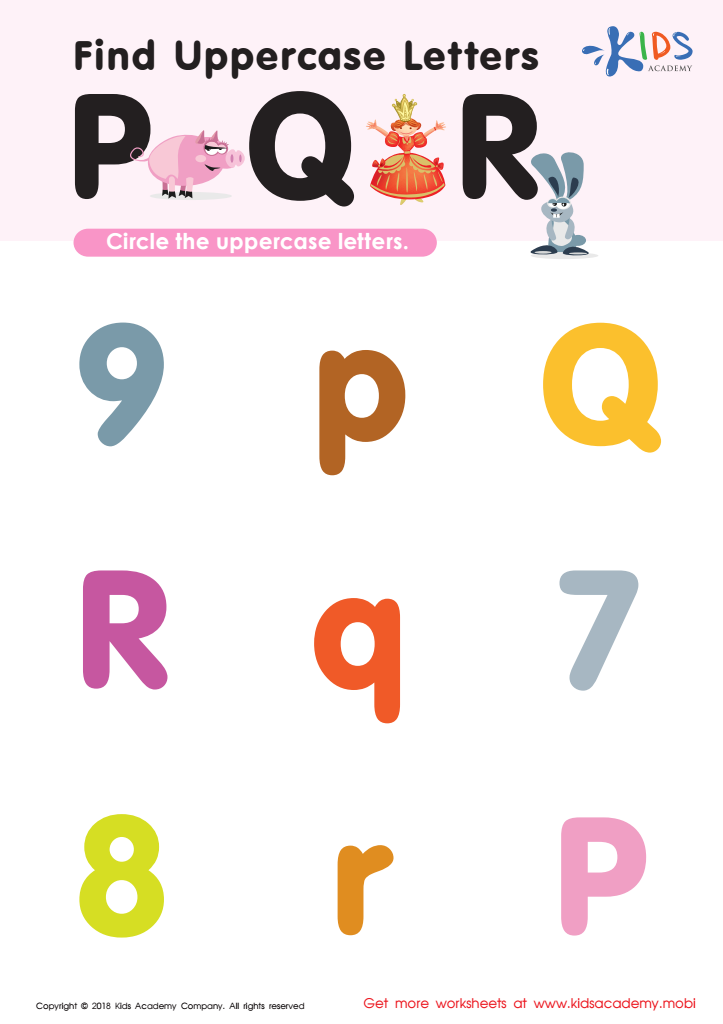
Find Uppercase Letters P, Q, and R Worksheet
Kids learn best when they can make connections. This free printable worksheet guides kids to solve the puzzle using the example letters P, Q, and R, supported by graphics and colors. Point out the page is pink, like the pig (which starts with P!) and solve by finding and circling the uppercase letters – be careful of the numbers!
Find Uppercase Letters P, Q, and R Worksheet
Worksheet
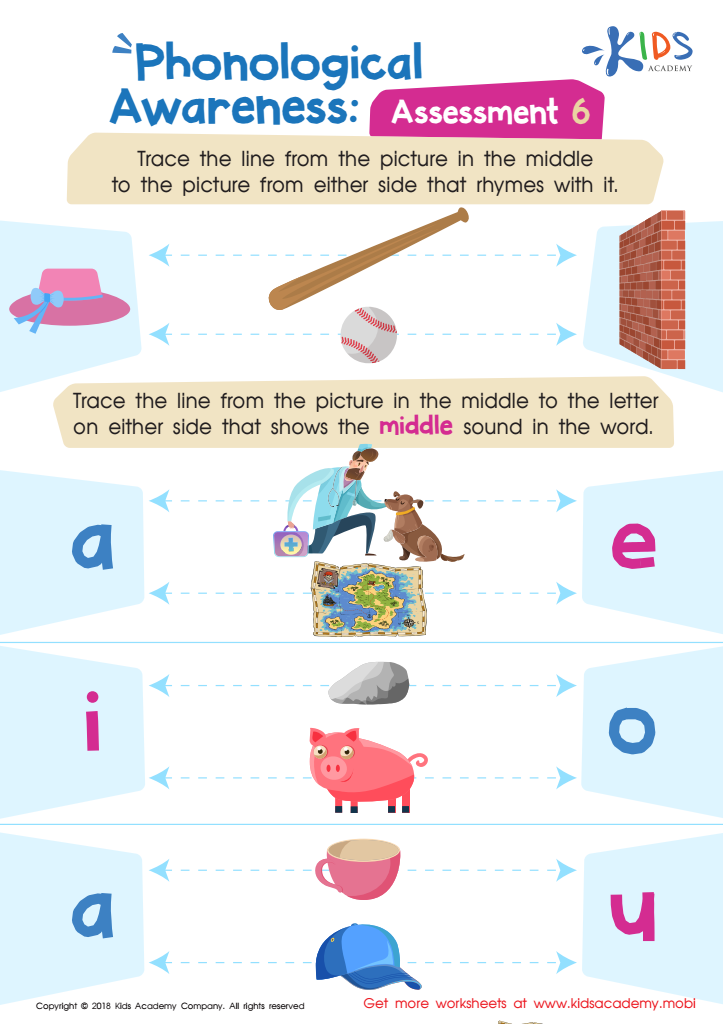
Phonological Awareness: Assessment 6 Worksheet
Check your child's ability to recognize middle word sounds using this free worksheet. Help them learn phonics by practicing with rhyming. Trace the line from the image to its rhyming match then encourage them to name each image aloud to identify which letter matches the sound. It's a great way to assess letter and sound recognition.
Phonological Awareness: Assessment 6 Worksheet
Worksheet
Join Kids Academy for Free
Who is primarily going to use this learning content?








Letter identification is crucial for children aged 4-9 as it serves as the foundational building block for literacy skills. At this developmental stage, children are typically beginning to recognize and understand the alphabet, which is essential for reading and writing.
Firstly, knowing letter names and sounds enhances phonetic awareness, allowing children to decode words effectively. This skill is vital for early reading success, helping children to eventually comprehend texts independently. Furthermore, familiarity with letters aids in developing spelling skills, reinforcing their understanding of language structure.
Parents and teachers play a significant role in supporting letter identification. Engaging children through fun, interactive activities—like phonics games and letter scavenger hunts—can spark their interest and make learning enjoyable. By fostering a love for letters early on, educators and caregivers can encourage a lifelong passion for reading.
Also, letter identification supports cognitive development by enhancing memory and concentration. As children learn to identify and articulate letters, they boost their language skills and confidence.
In summary, prioritizing letter identification for ages 4-9 is essential as it lays the groundwork for literacy, supports cognitive skills, and helps cultivate a relationship with reading that can benefit children throughout their lives.







