Rhyming skills Alphabet Worksheets for Ages 4-9
5 filtered results
-
From - To
Discover our engaging Rhyming Skills Alphabet Worksheets designed for children ages 4-9! These printable activities introduce young learners to the joy of rhymes while reinforcing their understanding of the alphabet. With colorful illustrations and fun exercises, children will develop phonemic awareness, vocabulary, and critical listening skills as they explore the sounds and patterns of words. Our worksheets are perfect for home or classroom use, making learning enjoyable and interactive. Encourage your child’s love for language with this essential resource that combines education and creativity. Let the adventure with rhymes and letters begin! Explore our collection today!
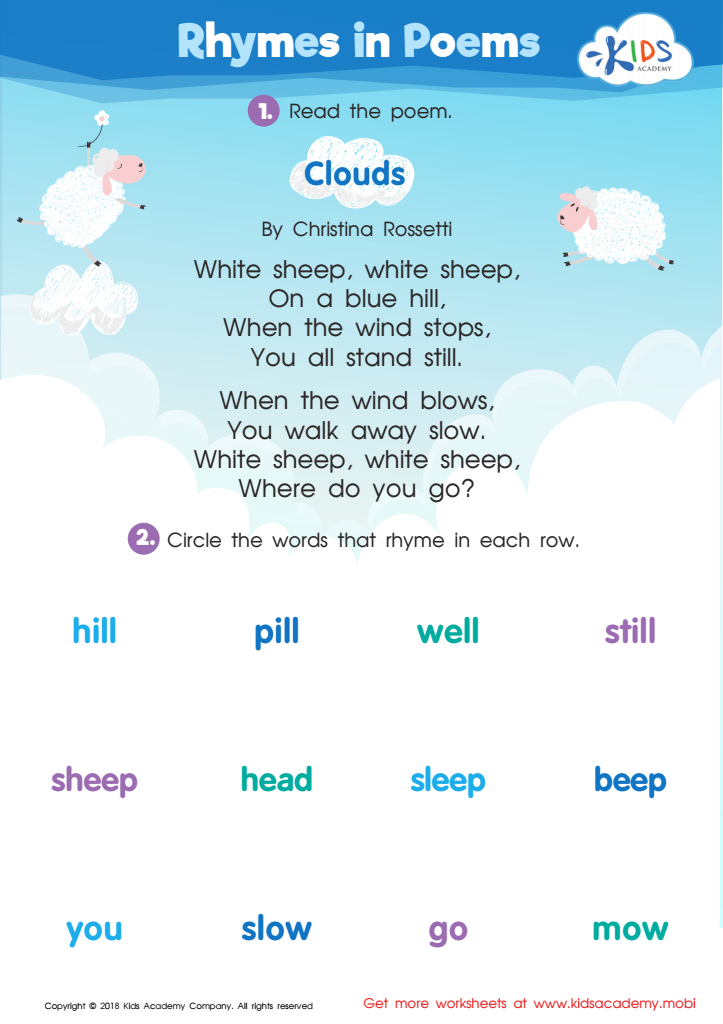
Rhymes in Poems Worksheet
 Assign to My Students
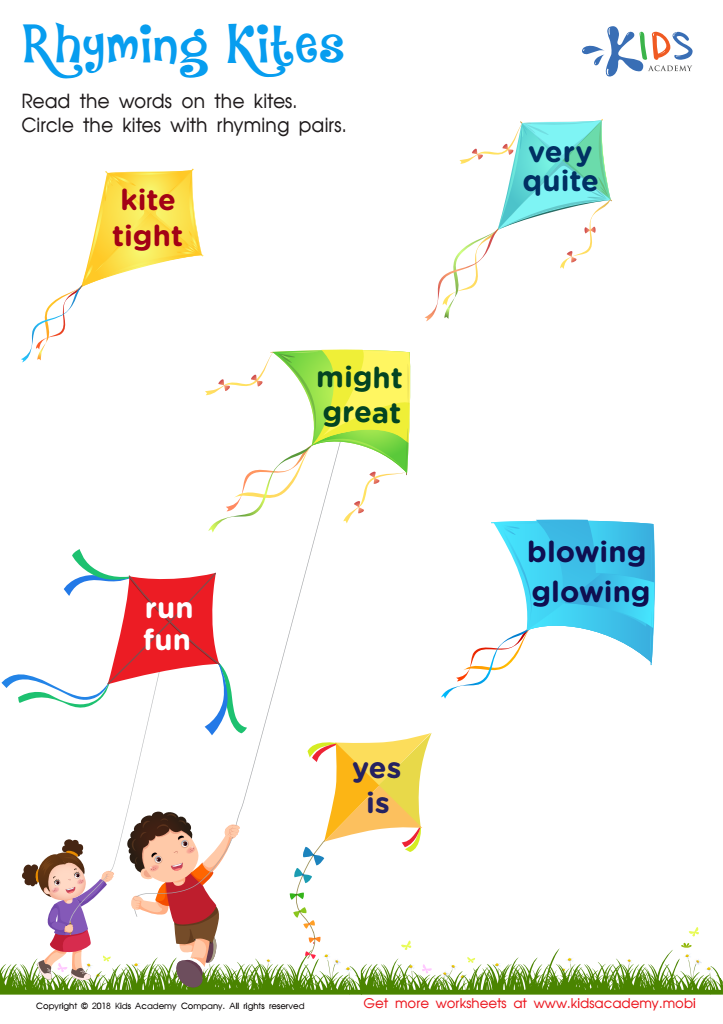
Rhyming Kites Worksheet
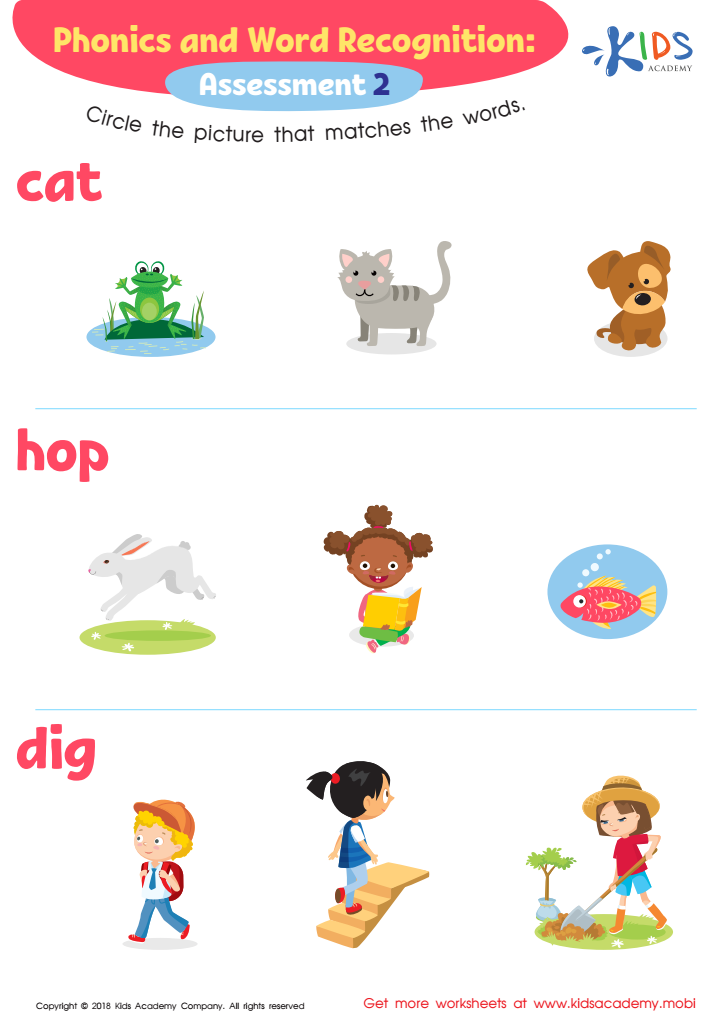
Phonological Awareness: Assessment 2 ELA Worksheet
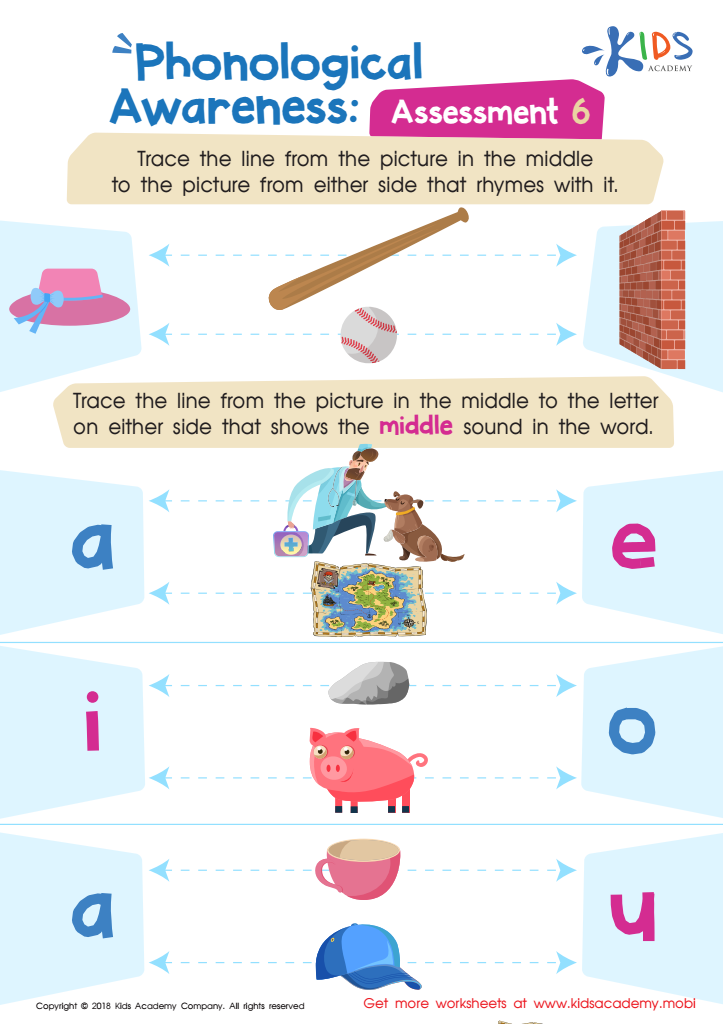
Phonological Awareness: Assessment 6 Worksheet
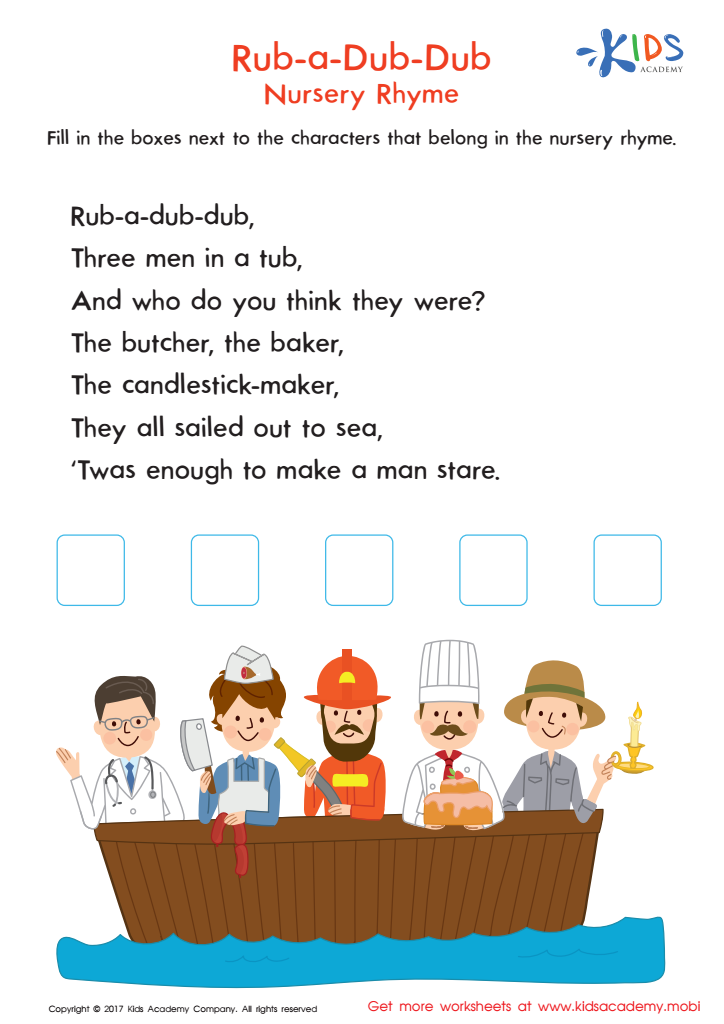
Rub a Dub Dub Printable







Rhyming skills are a crucial component of early literacy development for children aged 4 to 9. Parents and teachers should care about fostering these skills because they support foundational language abilities essential for reading and writing. Rhyming enhances phonemic awareness, which is the ability to recognize and manipulate language sounds. This awareness is critical as it helps children decode words more easily and understand the relationship between letters and sounds.
Furthermore, engaging in rhyming activities can lead to increased vocabulary and comprehension skills. When children learn to recognize and produce rhyming words, they expand their linguistic repertoire and develop a deeper understanding of word structures. This can make learning more enjoyable and engaging, as rhymes often come with playful rhythms and melodies that capture children's attention.
Additionally, rhyming fosters critical thinking and creativity, skills that are beneficial not just in literacy but across various subjects. Activities like shared reading, singing songs, and participating in rhyming games can reinforce these skills while building positive relationships through shared experiences.
Overall, prioritizing rhyming skills is a practical, effective way to prepare young learners for future academic success while cultivating a love for language and learning from an early age.







