Letter recognition Letter D Worksheets for Ages 4-9
3 filtered results
-
From - To
Unlock the joy of learning with our "Letter Recognition Letter D Worksheets for Ages 4-9"! Tailored to young learners, these engaging and educational worksheets focus on familiarizing children with the shape, sound, and usage of the letter D. Each activity is designed to enhance early literacy by blending fun exercises with essential letter recognition skills. From tracing and writing to coloring and matching, these worksheets offer a comprehensive approach to mastering the letter D. Perfect for parents and teachers alike, our worksheets provide a strong foundation for reading and writing. Explore and make learning an adventure today!
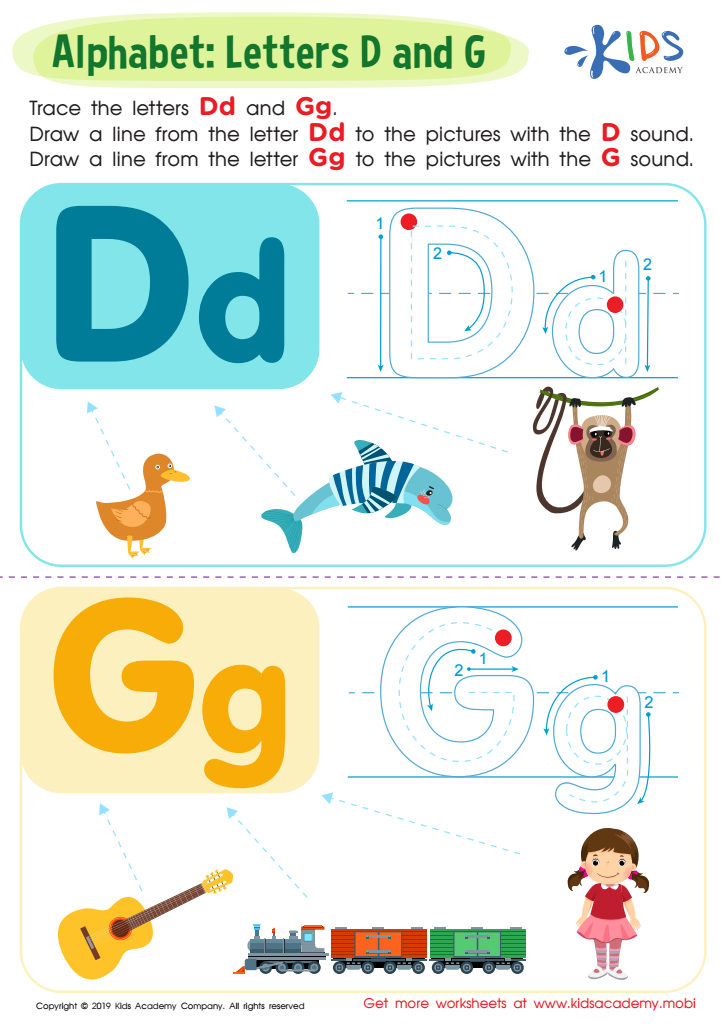
Letter D and G Tracing Worksheet
 Assign to My Students
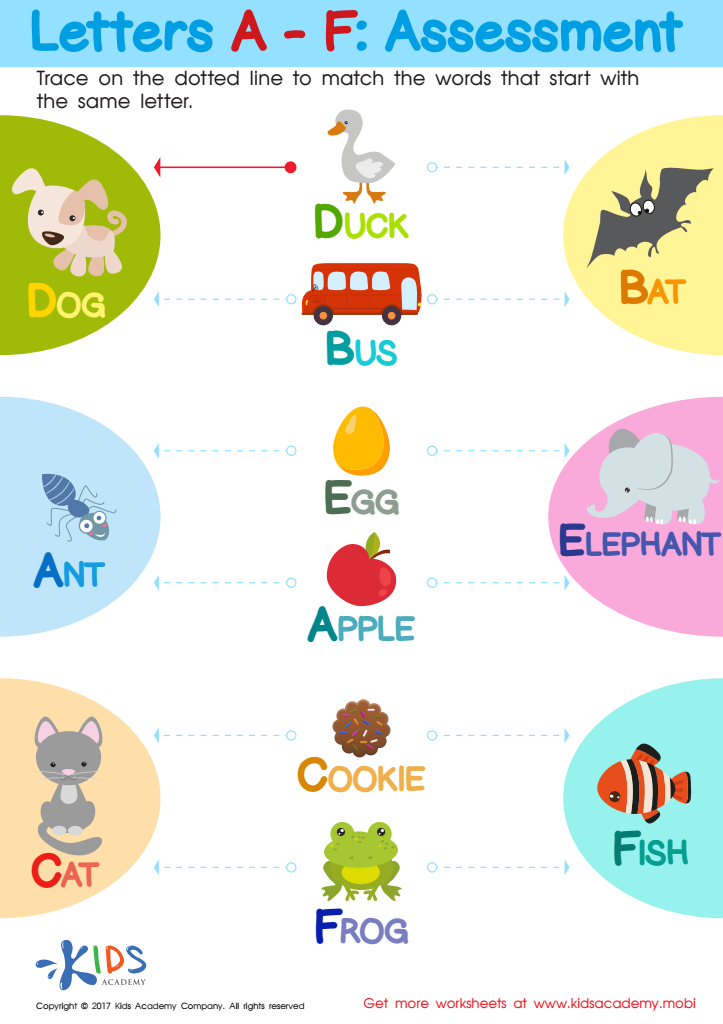
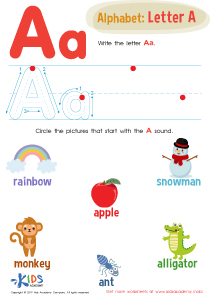
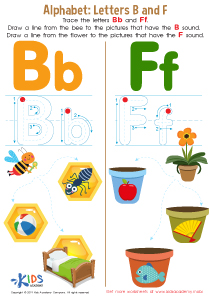
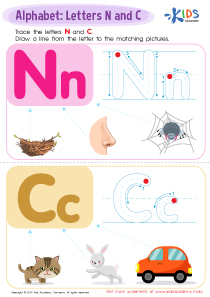
Letters A - F Worksheet

Letter D Tracing Page






Letter recognition is a fundamental milestone in a child's journey to literacy. For children ages 4-9, becoming familiar with the letter "D" and its sound plays a crucial role in their language development. Recognizing individual letters like "D" is foundational for developing their reading and writing skills. When children can identify the letter "D", they not only learn to distinguish its shape and sound but also gain confidence in deciphering other letters.
Understanding and recognizing the "D" sound helps build phonemic awareness, which is essential for decoding words while reading. For example, knowing that "D" makes the /d/ sound enables children to approach words like "dog," "doctor," and "lady" with confidence, improving their comprehension and vocabulary. Additionally, being able to write the letter "D" helps refine fine motor skills, reinforcing the brain's connection between the physical process of writing and the learning of language.
Moreover, recognizing letters like "D" sets the stage for more complex skills such as phonics, spelling, and grammatical understanding. As children become proficient in identifying letters, they develop the ability to sound out unfamiliar words, facilitating a smoother transition to fluent reading. Overall, emphasizing letter recognition like the letter "D" is crucial for building a strong literacy foundation in young learners, setting them up for academic success.