Letter recognition Letter M Worksheets for Ages 4-9
3 filtered results
-
From - To
Welcome to our "Letter Recognition Letter M Worksheets for Ages 4-9"! These engaging and interactive worksheets are designed to help young learners master the letter M. Through a variety of fun activities, children can explore letter identification, tracing, and sound recognition, paving the way for early literacy skills. Our worksheets feature colorful illustrations and creative exercises that capture children's interest, making learning enjoyable. Ideal for parents, teachers, and homeschooling, these resources support skill development for ages 4-9. Download and print our worksheets to create a fun learning experience that helps kids become confident in recognizing and using the letter M!
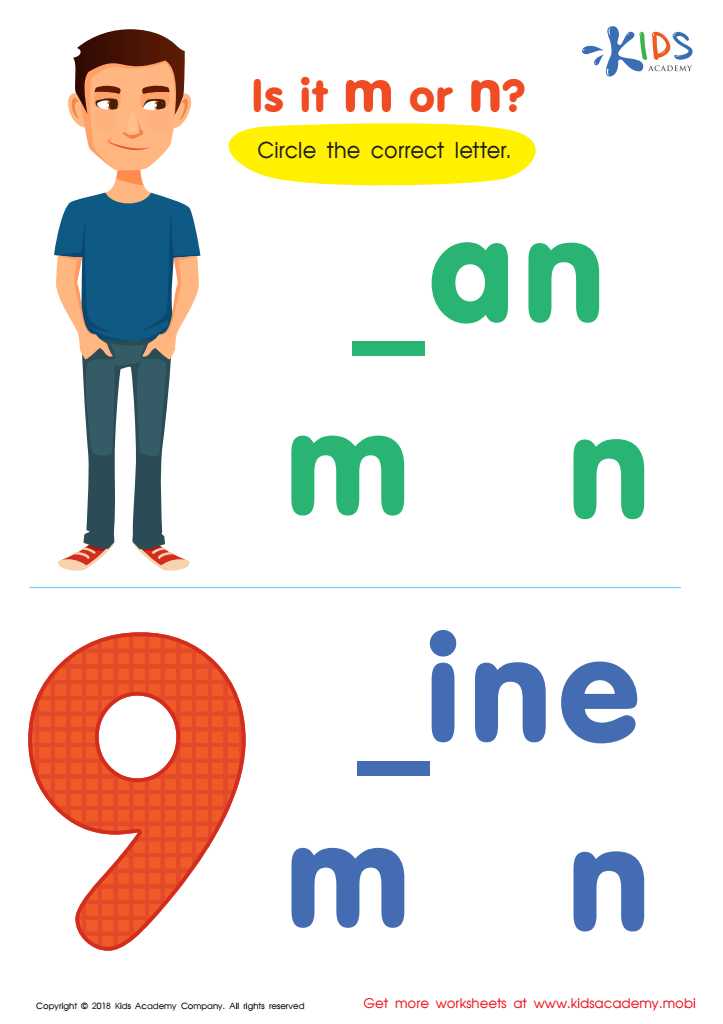
Is It m or n? Worksheet
 Assign to My Students
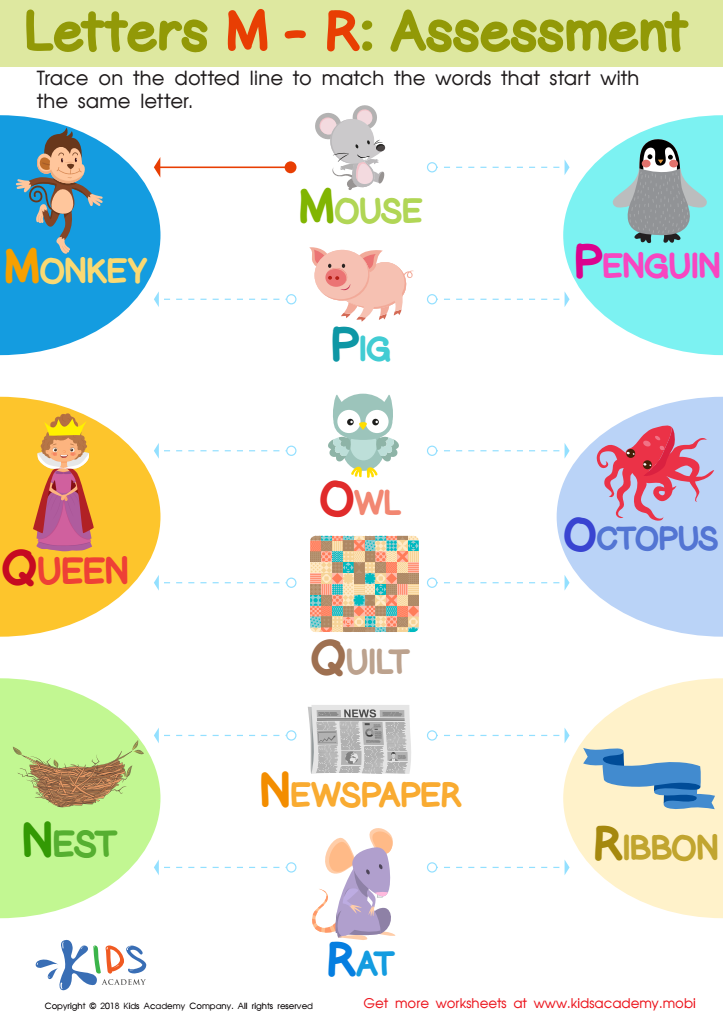
Letters M-R Tracing Worksheet
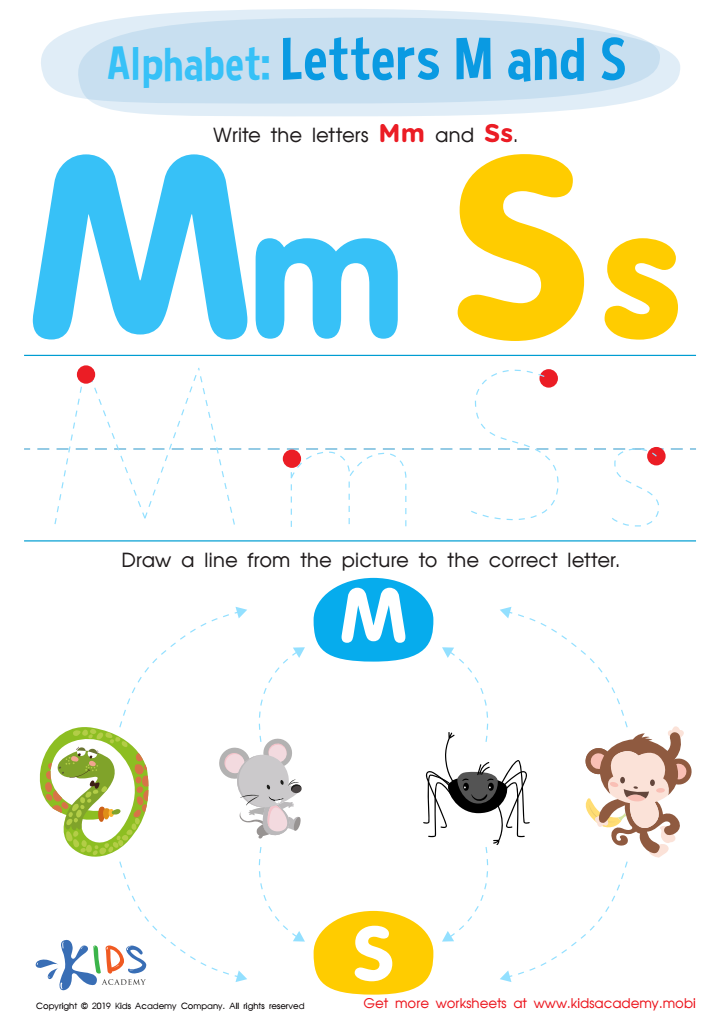
Letters M and S Tracing Worksheet






Letter recognition is a crucial foundational skill for children aged 4-9, as it directly impacts their reading and writing abilities. Specifically, recognizing the letter "M" is significant for several reasons. First, "M" is one of the most common letters in the English language and appears in many words that young learners encounter daily, such as "man," "mom," and "mountain." Fostering letter recognition at this stage helps children develop phonemic awareness, which is essential for sounding out words and improving vocabulary.
Parents and teachers should also consider that letter recognition enhances cognitive skills and memory. Learning to identify letters fosters critical thinking and memory recall, benefiting overall academic success. Additionally, mastering the letter "M" helps with fine motor skills, as children practice writing the letter in various formats—be it through tracing, using manipulatives, or typing.
Moreover, recognizing the letter "M" and its corresponding sounds can boost a child's confidence and enjoyment in literacy activities. Encouraging these early steps in language development sets the foundation for a lifelong love of reading and learning. Providing support, resources, and engaging activities around this letter can lead to significant growth in early literacy competencies, making it essential for parents and educators to take an active role in letter recognition.