Lowercase letter writing Letter Recognition Worksheets for Ages 4-9
3 filtered results
-
From - To
Our "Lowercase Letter Writing Letter Recognition Worksheets for Ages 4-9" provide young learners with the perfect foundation for mastering the alphabet. These engaging worksheets are designed to encourage children to practice writing lowercase letters while reinforcing their recognition. With fun activities and appealing visuals, our worksheets help children aged 4-9 develop fine motor skills, improve handwriting, and increase their confidence in reading and writing. Perfect for both classroom and home use, these tools support early literacy and make learning an enjoyable experience. Help your child or students embark on an exciting journey to alphabet mastery today!
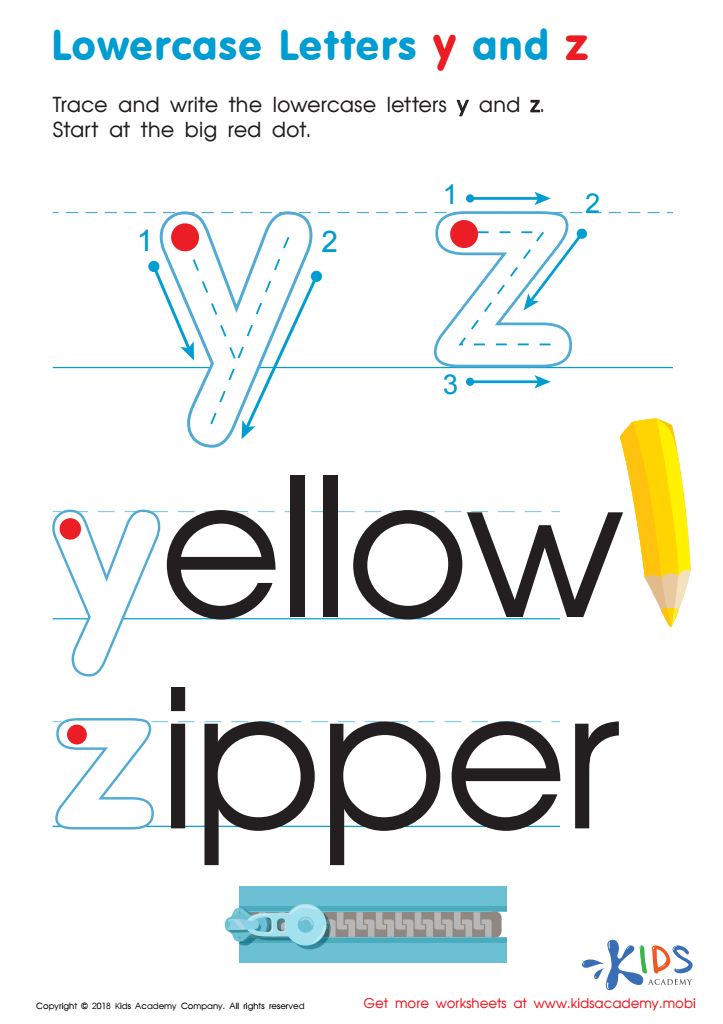
Lowercase Letters y z Worksheet
 Assign to My Students
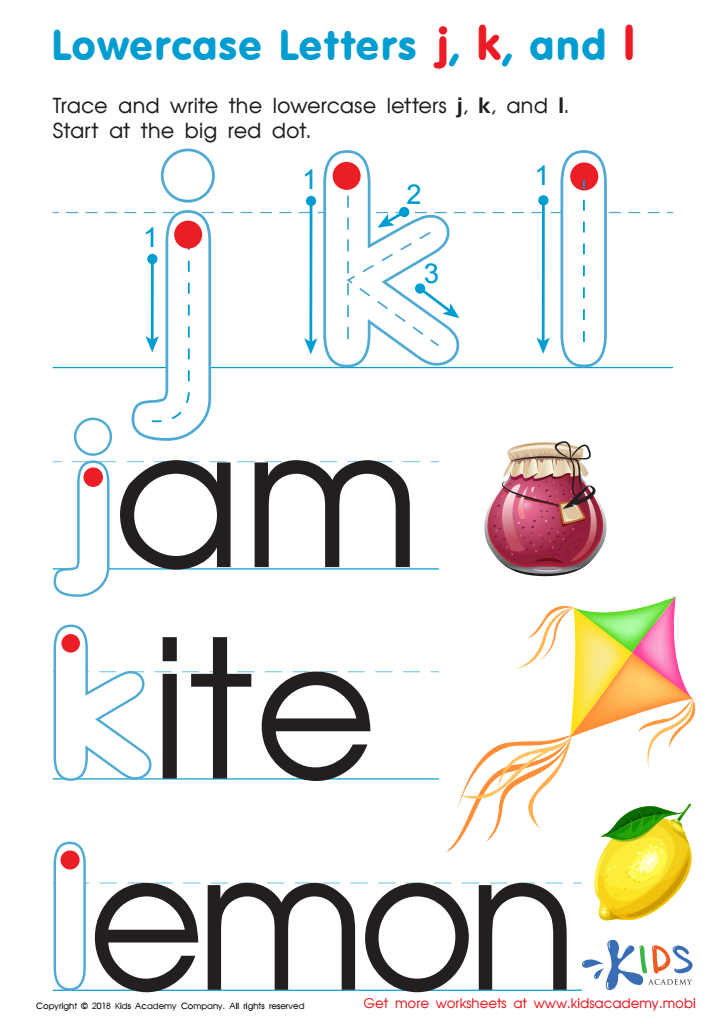
Lowercase Letters j k l Worksheet

Lowercase Letters m n o Worksheet








Developing proficiency in lowercase letter writing and recognition is crucial for young learners aged 4-9, as it forms the bedrock of early literacy and academic success. Research indicates that a significant portion of reading and writing involves lowercase letters, making their mastery essential for efficient and effective learning. When children can effortlessly identify and write lowercase letters, they develop phonemic awareness, which is the ability to associate sounds with corresponding letter shapes. This skill is fundamental for decoding words and improves reading fluency.
Moreover, as children become familiar with lowercase letters, they gain confidence to engage in writing activities. Writing plays a crucial role in reinforcing fine motor skills, cognitive development, and self-expression. It serves as a medium for children to record their thoughts, organize information, and demonstrate comprehension.
Investing in early literacy skills has lifelong implications. Proficient readers and writers are more likely to succeed academically, have higher self-esteem, and exhibit stronger communication skills. Parents and teachers should prioritize lowercase letter recognition and writing exercises through fun, interactive activities like tracing, matching games, and reading exercises. These foundational skills facilitate a smoother transition into later, more complex literacy tasks, setting children on a path toward educational and personal success.







