
Phonics practice Letter Recognition Worksheets for Ages 4-9
5 filtered results
Difficulty Level
Grade
Age
-
From - To
Subject
Activity
Standards
Enhance early reading skills with our Phonics Practice Letter Recognition Worksheets, designed for ages 4-9. These engaging and educational worksheets help children recognize, identify, and sound out letters in a fun, interactive way. Fostering essential phonics skills, each sheet combines visually appealing graphics and simple activities to strengthen letter-sound relationships. Our worksheets support various learning styles and are ideal for use both in classrooms and at home. Encourage your child's literacy journey and build a solid foundation for reading success with Kids Academy’s expertly crafted phonics and letter recognition exercises. Start your child’s adventure in reading today!
Favorites
With answer key
Interactive
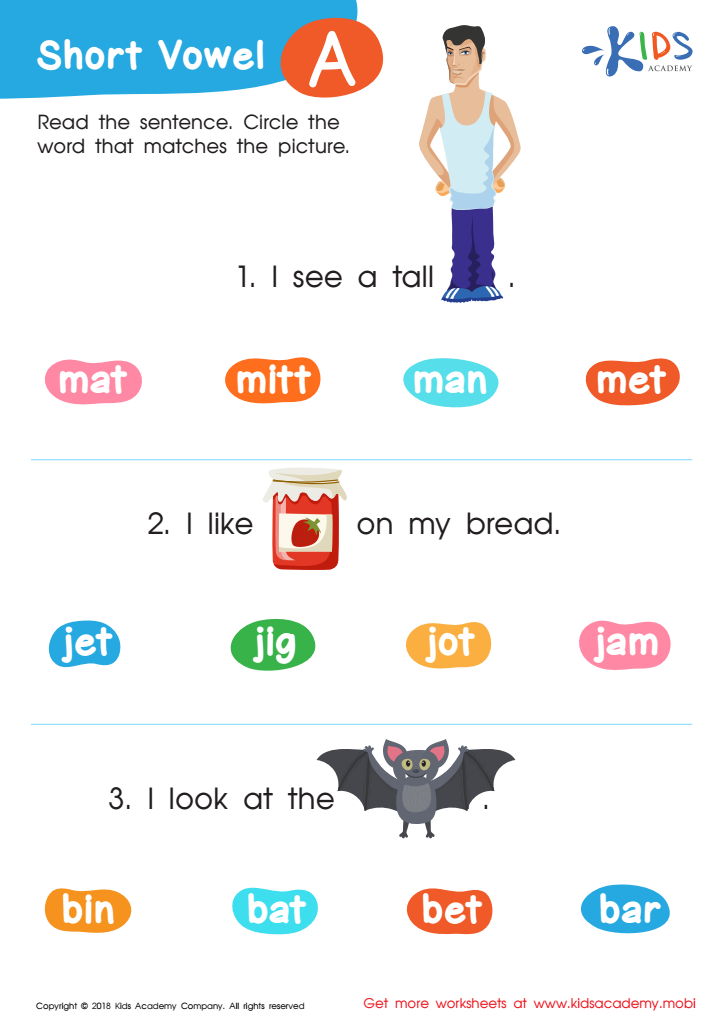
Short Vowel /a/ Worksheet
This free PDF helps new readers use sight words and pictures to read basic sentences. Then, they use accompanying word choices to find the correct word with the short a vowel sound. A key early reading skill, discriminating between short vowel sounds can be tricky in monosyllabic words, so use this PDF to help your reader reinforce it.
Short Vowel /a/ Worksheet
Worksheet
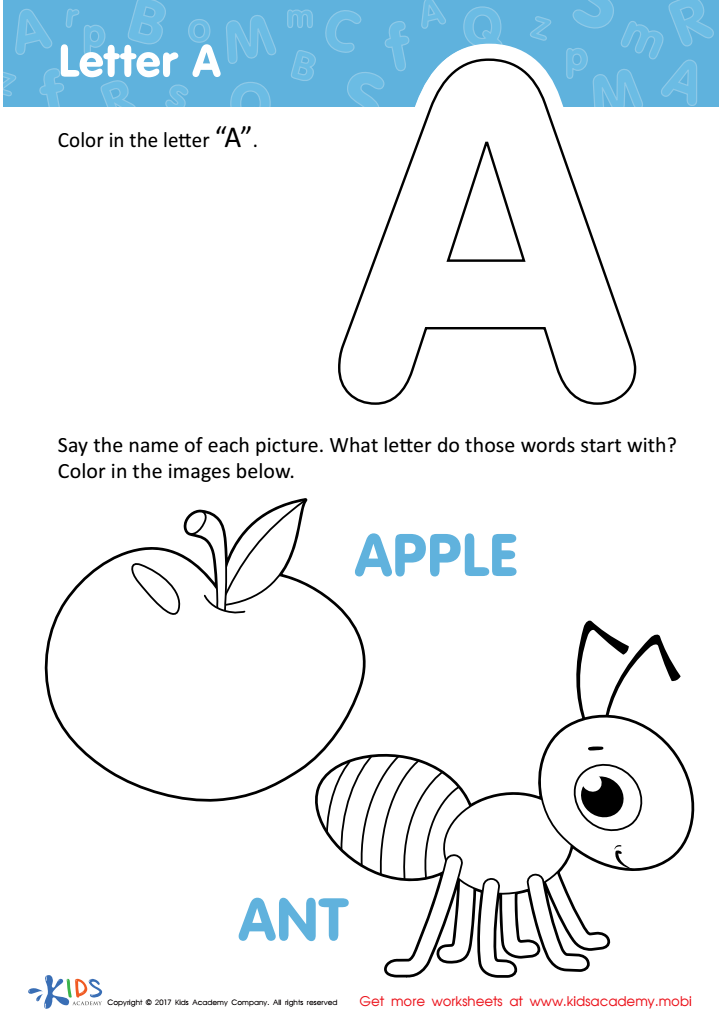
Letter A Coloring Sheet
This letter "A" coloring page is great for introducing kids to the alphabet! Let them exercise their creativity while they learn to recognize letters and sounds - it's a fun and easy way to help them get started.
Download (PDF)
 Assign to My Students
Assign to My Students
Letter A Coloring Sheet
Worksheet
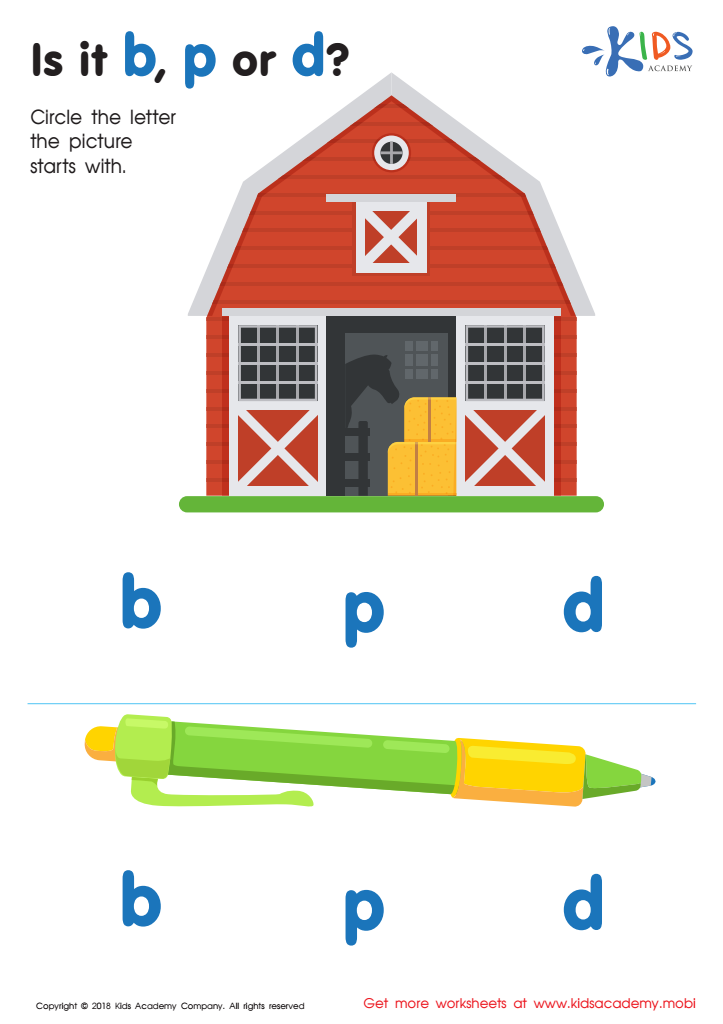
Is it b, p or d? Worksheet
Test your child's identification skills with this worksheet. They must identify the image and then circle the letter it begins with: 'b', 'p', or 'd' (e.g. an image of the sun would mean they circle 's').
Is it b, p or d? Worksheet
Worksheet
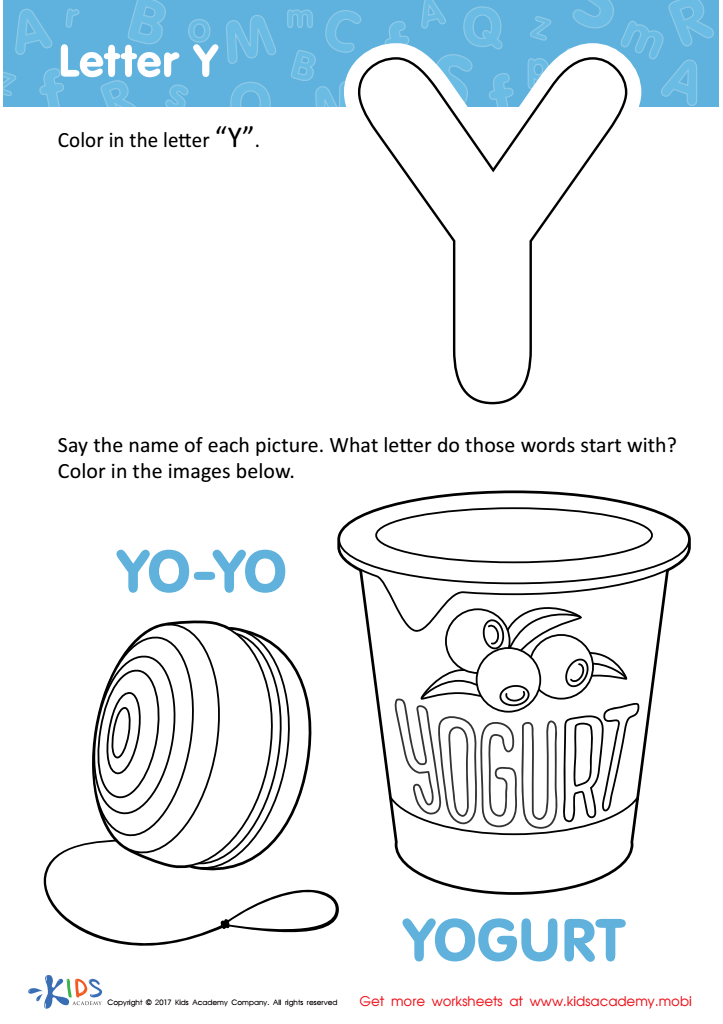
Letter Y Coloring Sheet
Let's celebrate letter "Y"! Here's a fun coloring page that'll help your child learn this end-of-the alphabet letter. It's packed with familiar objects that'll help build their art and literacy skills. So let's say "Yay"!
Download (PDF)
Assign to My Students
Assign to My Students
Letter Y Coloring Sheet
Worksheet
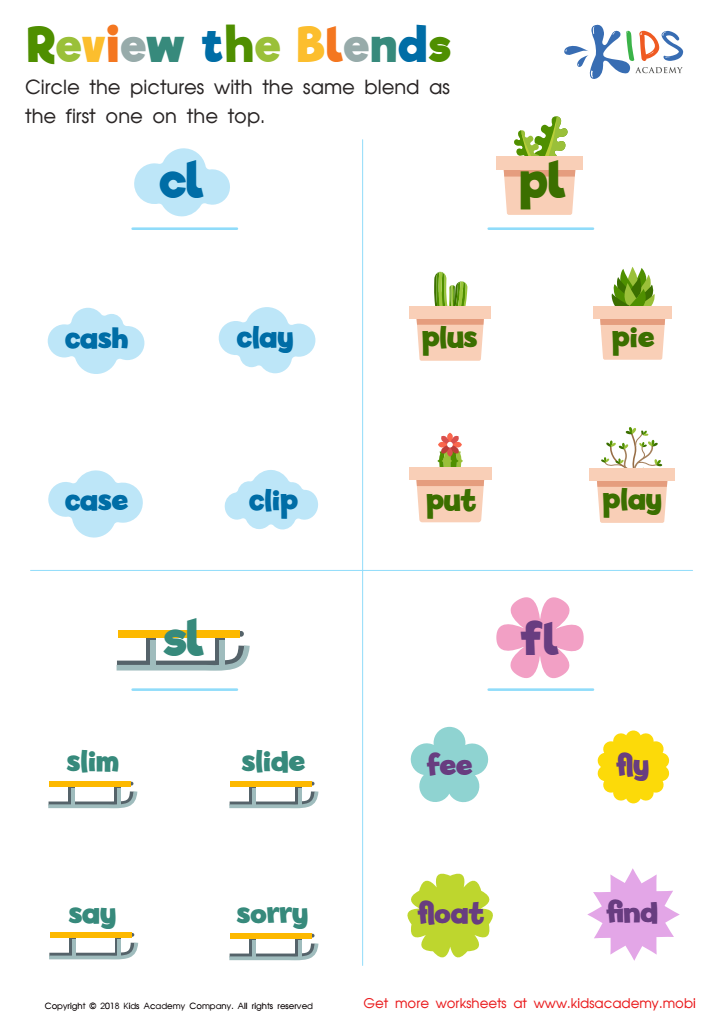
Review the Blends Worksheet
Consonant blends are two or three consonants that make a sound when pronounced together. L-blends like cl, bl, sl, fl and 3-letter blends like str, slp are common. This phonics worksheet helps early readers identify words containing two letter L-blends. Students must circle the words then read them aloud.
Review the Blends Worksheet
Worksheet
Join Kids Academy for Free
Who is primarily going to use this learning content?








Phonics practice and letter recognition are foundational building blocks for reading and literacy development in young children, typically ages 4-9. At this crucial early age, children are developing the basic skills that will underpin their academic success throughout their education. Phonics practice teaches children the relationships between letters and sounds, enabling them to decode words while reading. This skill is critical because effective decoding is directly linked to fluent reading and comprehension.
Letter recognition, meanwhile, helps children identify and name letters quickly and accurately. Recognizing letters on sight allows children to progress from understanding individual letters to blending them into words, which is essential for both reading and writing. These skills not only support reading development but also boost children's confidence and enjoyments, fostering a positive attitude towards learning.
Additionally, early proficiency in phonics and letter recognition can detect potential learning difficulties, enabling timely interventions. Resources like interactive games, flashcards, and activities can make practice engaging and enjoyable, making learning more effective. Investing in these foundational skills pays off substantially, setting children up for academic success, nurturing lifelong readers, and effective communicators. Therefore, both parents and teachers should prioritize and support phonics and letter recognition practice during these formative years.







