Vowel Recognition Letter Recognition Worksheets for Ages 4-9
5 filtered results
-
From - To
Discover engaging "Vowel Recognition Letter Recognition Worksheets for Ages 4-9" designed to enhance your child's reading skills. Perfect for early learners, these worksheets combine fun and educational activities to help children identify and understand vowels. Through colorful exercises, kids will improve their letter recognition and phonemic awareness, crucial for developing strong reading foundations. Tailored for ages 4-9, these worksheets are ideal for both classroom and at-home practice. Foster your child’s love for learning with our expertly crafted resources at Kids Academy, promoting confidence and literacy skills in young readers. Explore and download now!
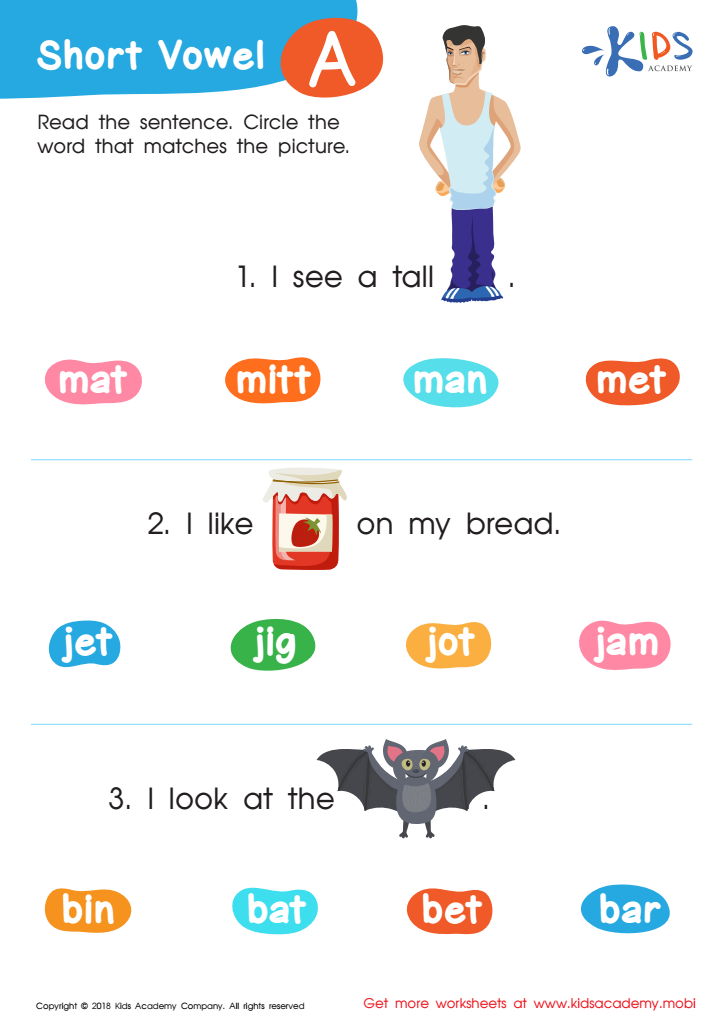
Short Vowel /a/ Worksheet
 Assign to My Students
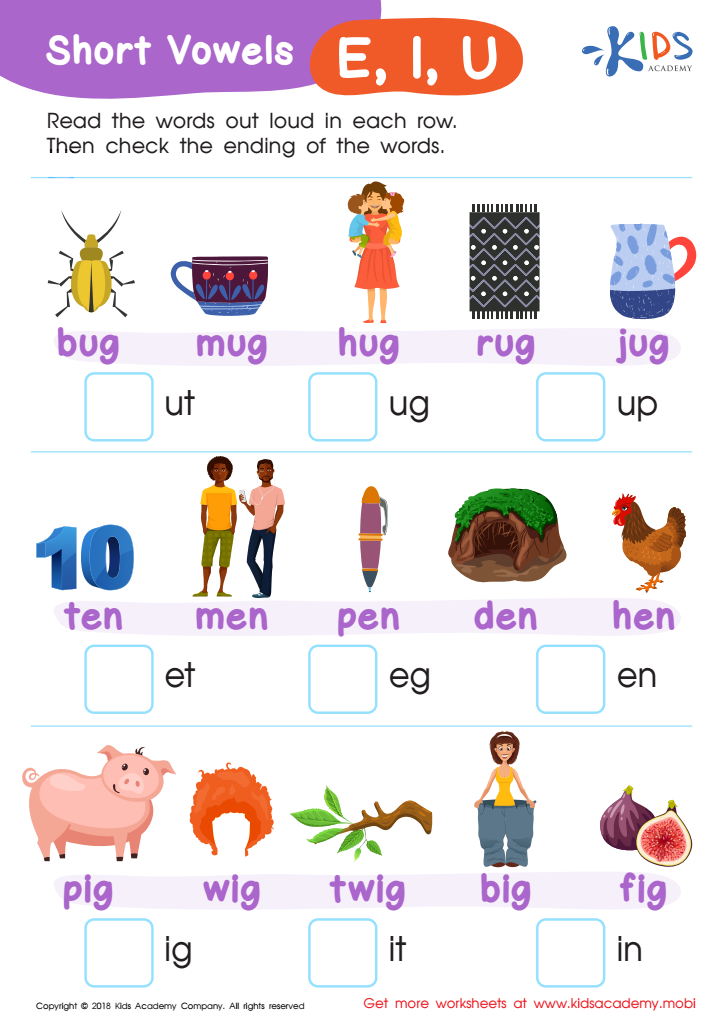
Short Vowels /e/, /i/, and /u/ Worksheet
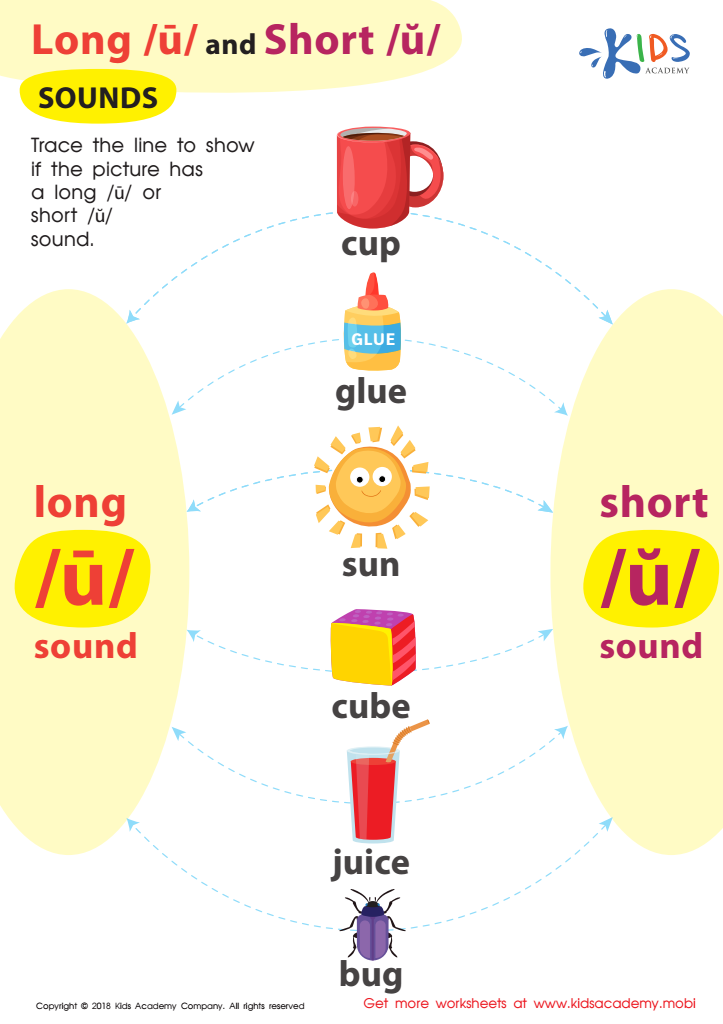
Reading: Long U and Short U Sounds Worksheet
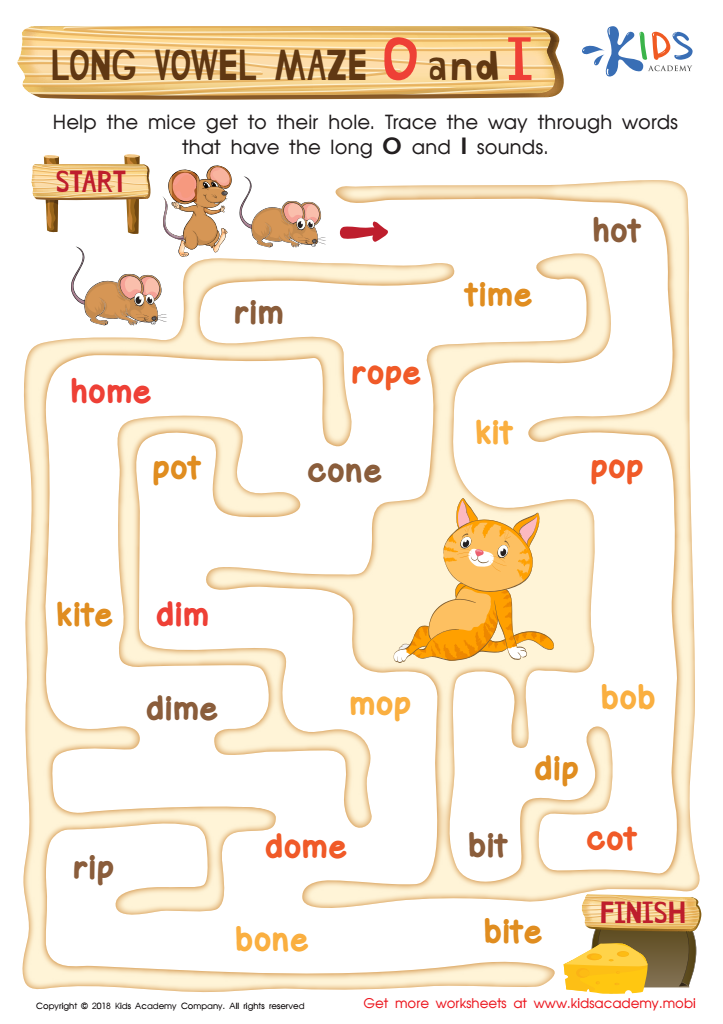
Long Vowel Maze /o/ and /i/ Worksheet
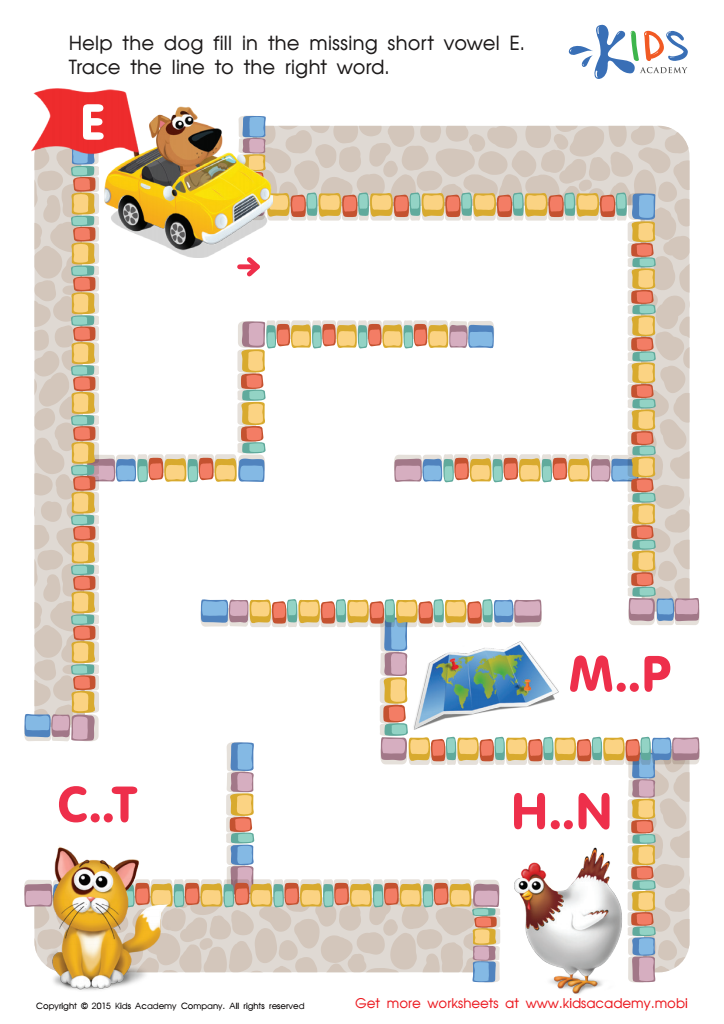
Short Vowel Sound E Worksheet








Vowel and letter recognition form the foundation of early literacy, making them crucial skills for children aged 4-9. During this developmental stage, children are highly receptive to learning, and acquiring these foundational skills sets the stage for their future academic success.
Firstly, vowel recognition is essential because vowels are the building blocks of language. They enable fluidity in speech and reading, forming the core sounds in words. By recognizing vowels, children can better understand word structures and improve their phonemic awareness, which is the ability to hear, identify, and manipulate individual sounds in words. This skill is pivotal for developing reading fluency and comprehension.
Letter recognition is equally important, as it is the first step in the process of learning to read and write. Recognizing letters and understanding their associated sounds allows children to decode words, facilitating the transition from spoken language to written symbols. It also encourages children to experiment with writing, helping them communicate their thoughts and ideas effectively.
Moreover, proficiency in these skills boosts confidence and fosters a sense of achievement, motivating continued learning. Educators and parents play a vital role in nurturing these skills through engaging activities, games, and consistent practice, thereby laying a strong educational foundation and promoting lifelong literacy.







