
Word Recognition Letter Recognition Worksheets for Ages 4-9
3 filtered results
Difficulty Level
Grade
Age
-
From - To
Subject
Activity
Standards
Explore our engaging Word Recognition and Letter Recognition worksheets, designed for children ages 4-9! These interactive and colorful resources help young learners identify letters, improve reading skills, and enhance vocabulary. Each worksheet is tailored to develop essential literacy skills while making learning fun. Perfect for home or classroom use, our worksheets incorporate a variety of activities including matching letters, tracing, and connecting words to images. Empower your child with foundational reading abilities that will support their educational journey. Start building essential literacy skills today with our carefully crafted worksheets, and watch your child flourish in their love for words and letters!
Favorites
With answer key
Interactive
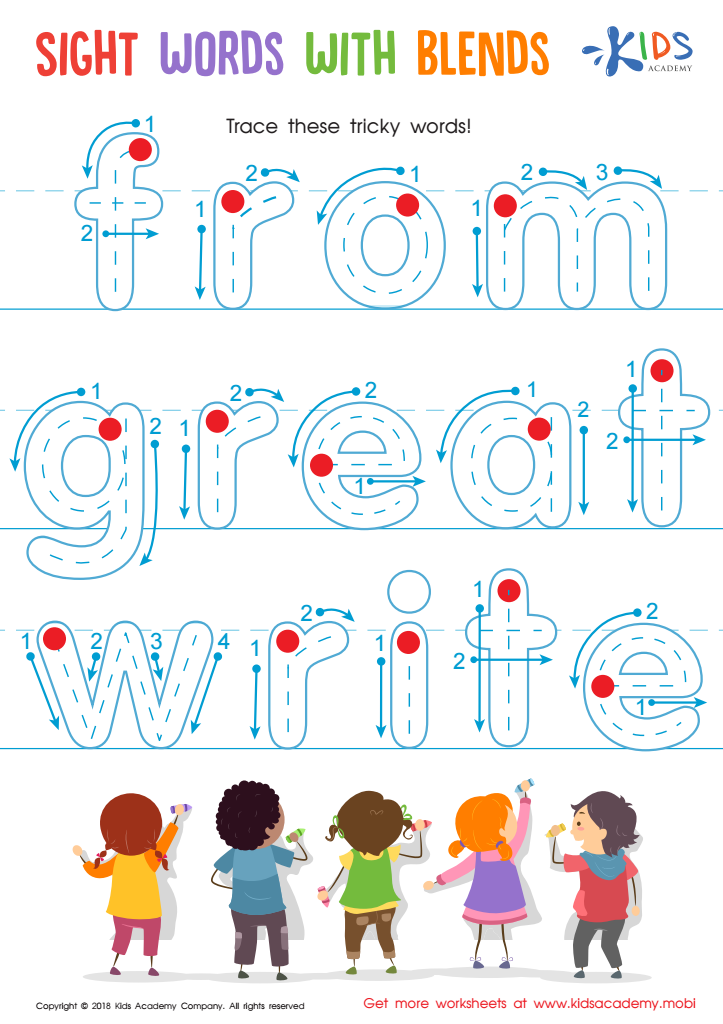
Sight Words with Blends Worksheet
This free PDF lets your children trace and write sight words with tricky blends. The guide numbers help them start from the top, building fine motor skills and enhancing sight word vocab. It's a great way to give your kids a solid foundation for reading!
 Assign to My Students
Sight Words with Blends Worksheet
Worksheet
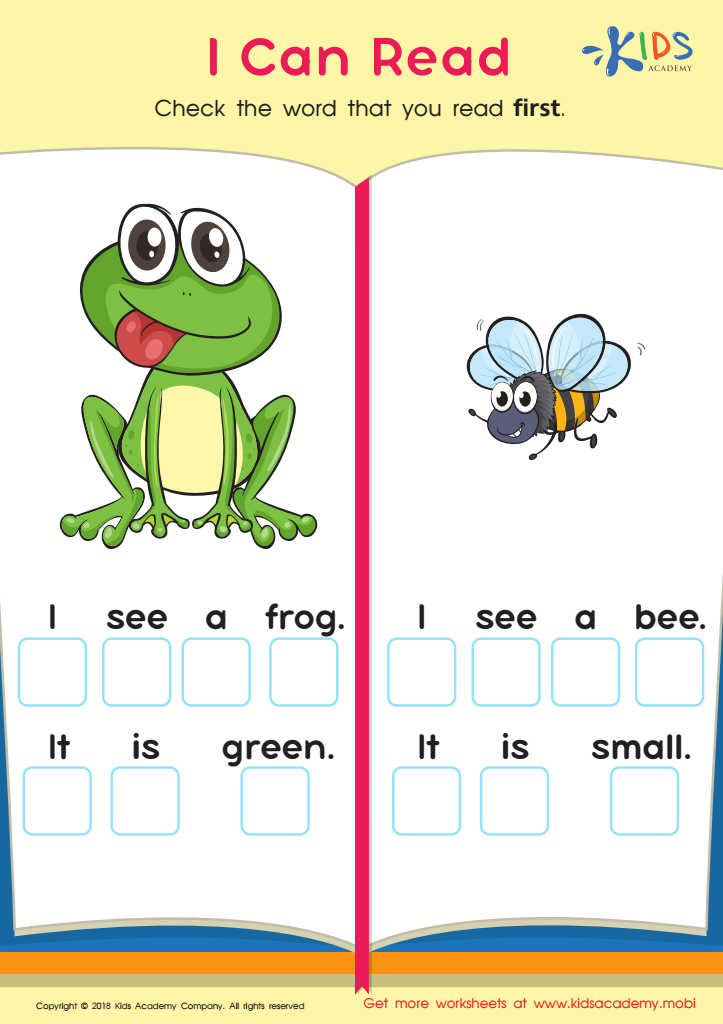
I Can Read Worksheet
Test your child's reading skills with this fun worksheet. See how well they know one-letter, two-letter, and five-letter words. Ask your little one to read the sentences and tick the word they identify first. It's a great way to track their progress and help them become more confident readers.
I Can Read Worksheet
Worksheet
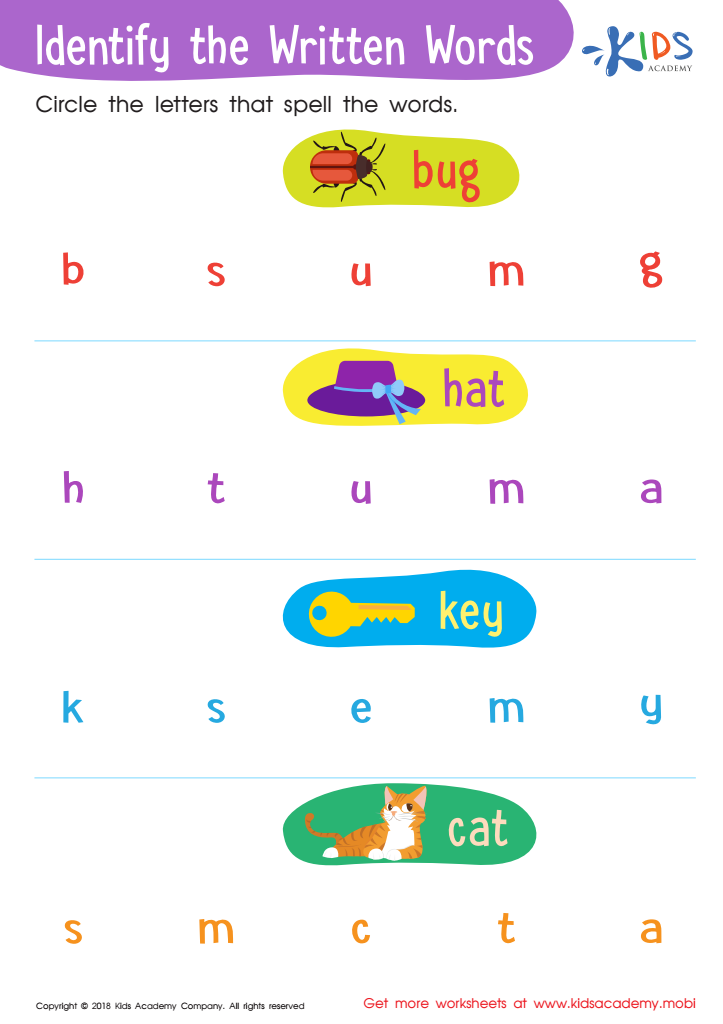
Identify the Written Words Worksheet
Have your students identify the objects on the printout, then spell the words. If they already know how to spell, this exercise should be easy. Help them circle the correct letters from the set to spell out the words. This is a great way to reinforce reading and spelling skills. Max 80 words.
Identify the Written Words Worksheet
Worksheet
Join Kids Academy for Free
Who is primarily going to use this learning content?








Word and letter recognition are foundational skills crucial for children aged 4-9 as they embark on their literacy journey. Mastering these skills not only enhances reading abilities but also boosts overall academic performance. When children can quickly recognize letters and words, they develop fluency, which fosters a love for reading and encourages them to explore new texts.
For parents and teachers, emphasizing letter recognition means empowering children with the tools to decode words and understand their meanings, leading to improved comprehension skills. Early exposure facilitates vocabulary expansion, which is essential for effective communication. Moreover, these skills are directly linked to higher achievement in school subjects that rely heavily on reading, such as science and social studies.
Additionally, supporting letter and word recognition strengthens children's confidence in literacy tasks, making them more likely to engage in classroom discussions and collaborative activities. With engaged readers, educators can cultivate a more positive and enriching learning environment.
Addressing word and letter recognition also promotes critical thinking and problem-solving abilities as children learn to make connections between sounds and letters, laying a strong foundation for lifelong learning. By prioritizing these skills, parents and teachers can significantly influence children's academic futures and overall enjoyment of learning.







