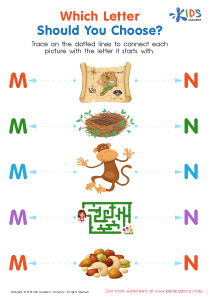
Alphabet familiarity Lowercase/Small Letters Worksheets for Ages 4-9
3 filtered results
-
From - To
Enhance your child's literacy skills with our Alphabet Familiarity Lowercase/Small Letters Worksheets, designed for ages 4 to 9. These engaging and interactive worksheets provide fun activities to help young learners recognize, trace, and write lowercase letters effectively. Each worksheet is tailored to develop fine motor skills and boost confidence in letter identification, making learning enjoyable. As children progress, they will gain familiarity with the alphabet, laying a solid foundation for reading and writing. Perfect for home or classroom use, our resources make it easy for educators and parents to support early literacy development with playful and educational activities.
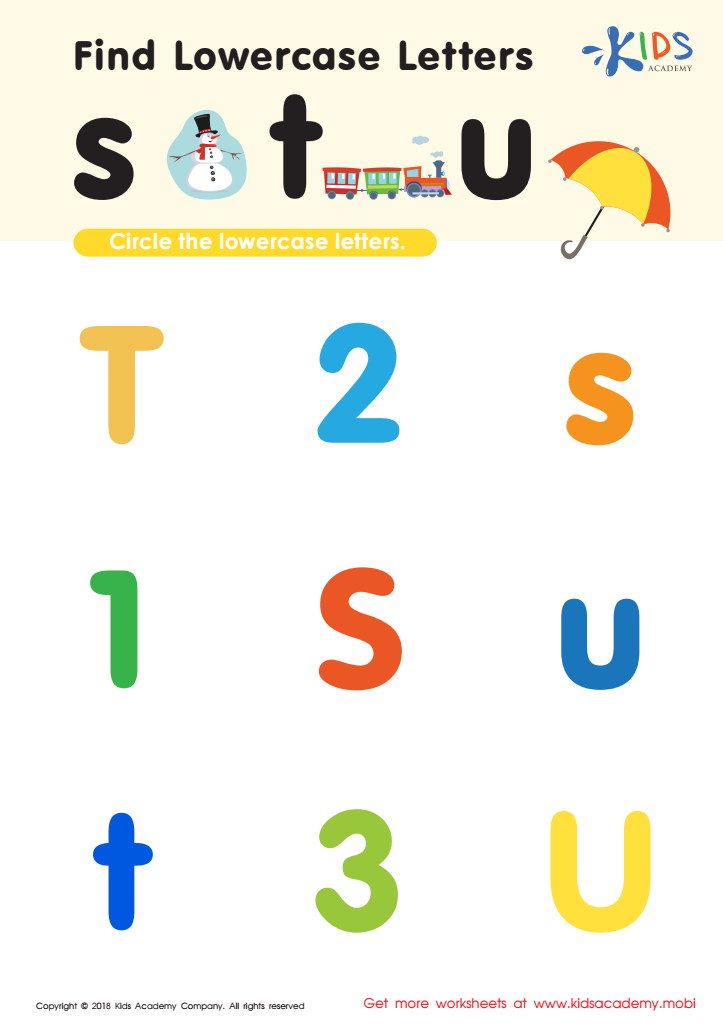
Find lowercase Letters s t u Worksheet
 Assign to My Students
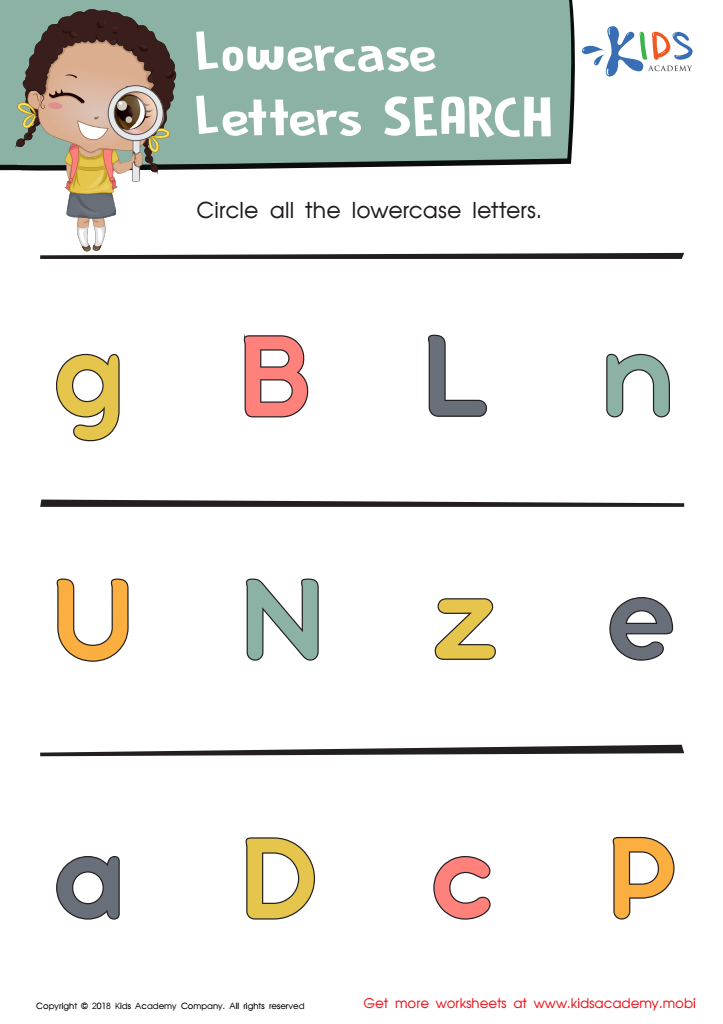
Lowercase Letters Search: Assessment Worksheet
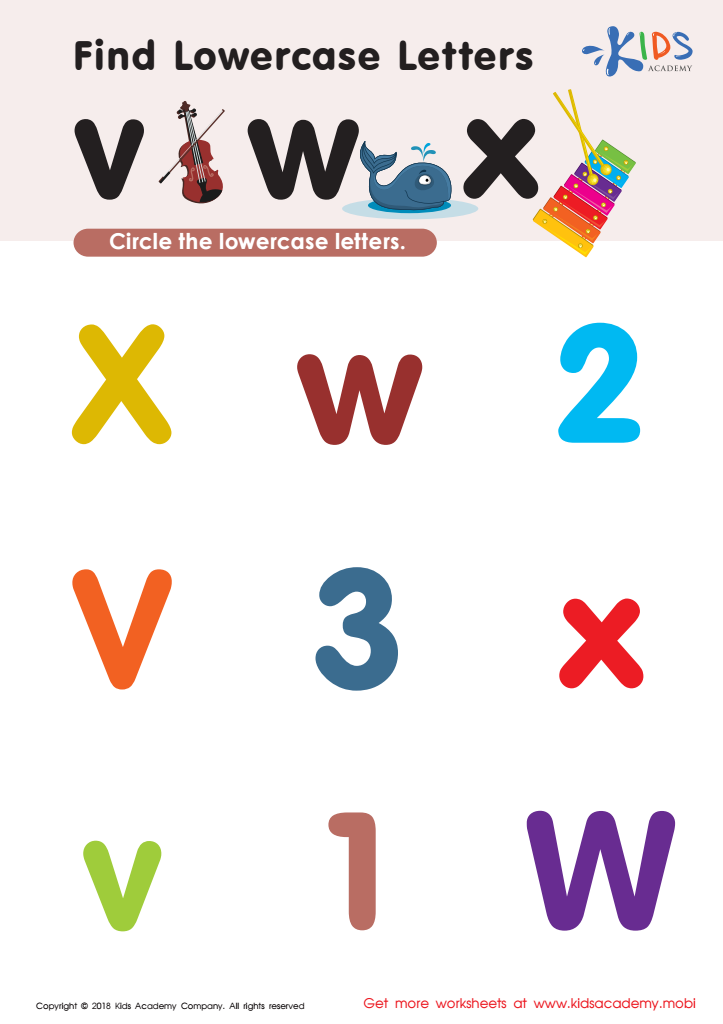
Find Lowercase Letters v w x Worksheet


Alphabet familiarity, particularly with lowercase letters, is crucial for children aged 4-9 as it lays the foundation for their reading and writing skills. Early exposure to lowercase letters helps children recognize and differentiate letters in a context similar to that found in books and everyday writing. Unlike uppercase letters, lowercase letters are more frequently used in texts, so understanding them enables better comprehension and engagement with reading materials.
Additionally, familiarity with lowercase letters enhances children's phonemic awareness, which is vital for developing spelling and reading fluency. As children begin to write, knowing how to correctly form and use lowercase letters will improve their writing legibility and expression.
Encouraging children to play with letters through games or creative activities fosters a positive relationship with language, making learning enjoyable. For teachers and parents, supporting alphabet familiarity means providing a solid foundation for literacy skills that influence not only academic success but also effective communication in social contexts.
Ultimately, prioritizing lowercase letter recognition builds confidence and encourages a lifelong love of reading and writing, crucial for a child’s overall development. By investing in this important area of learning, adults play a significant role in shaping children’s literacy journey.