Rhyming skills development Rhyming Worksheets for Ages 4-9
4 filtered results
-
From - To
Boost your child’s literacy skills with our engaging Rhyming Worksheets, specially designed for ages 4-9. These worksheets focus on developing crucial rhyming skills that lay the foundation for reading and writing. Fun and interactive exercises help children recognize and produce rhyming words, sharpening their phonemic awareness. Whether used at school or home, our printable worksheets make learning enjoyable and effective. Perfect for early grade teachers and parents, these resources ensure your young learners stay entertained while mastering essential rhyming skills. Explore a variety of activities to foster your child’s love for language and boost their confidence in literacy.
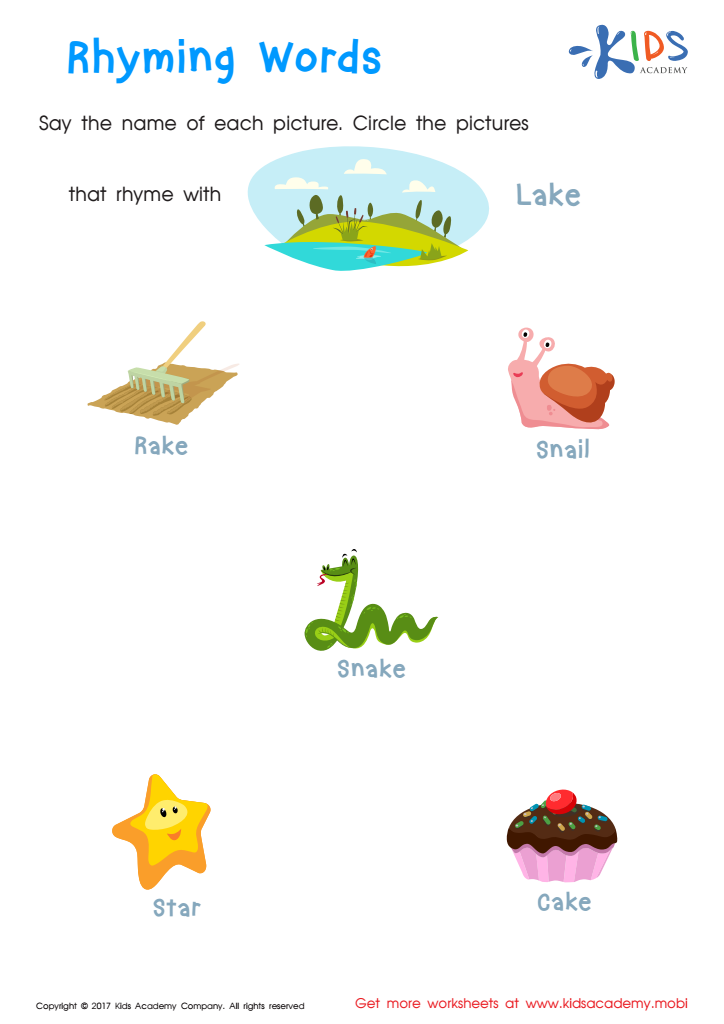
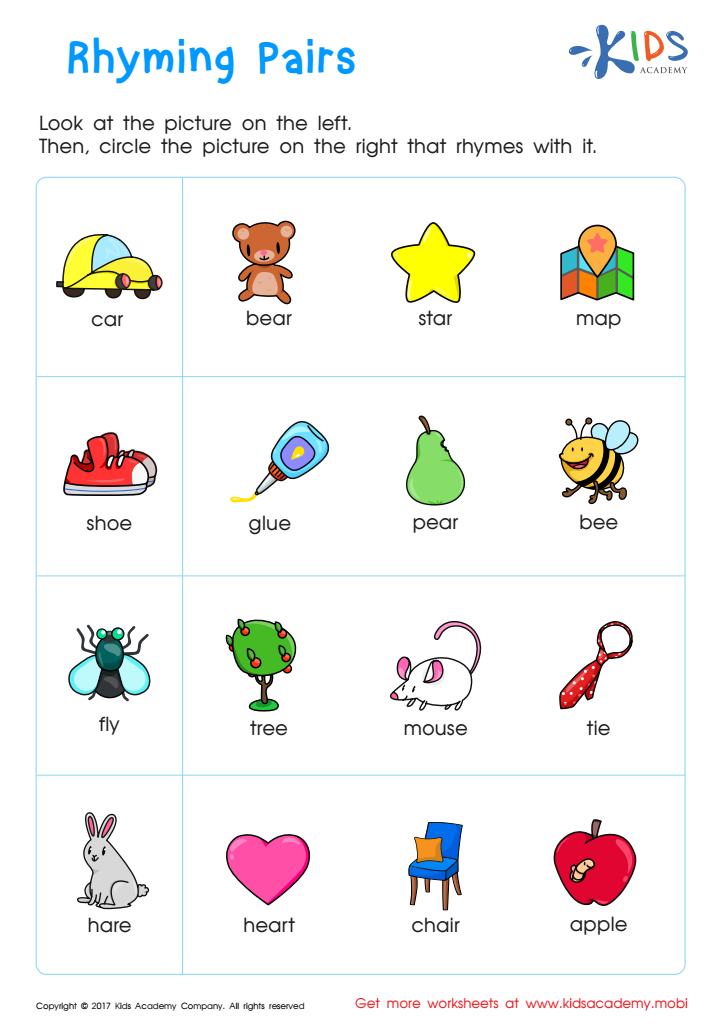
Rhyming Words Rhyming Worksheet
 Assign to My Students
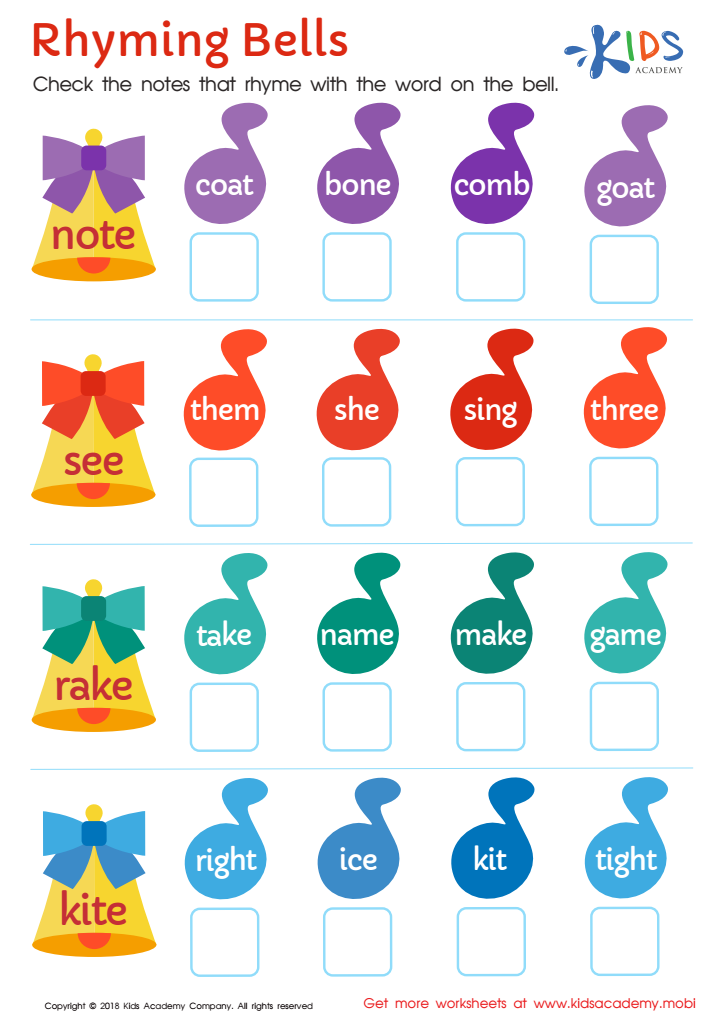
Rhyming Bells Worksheet
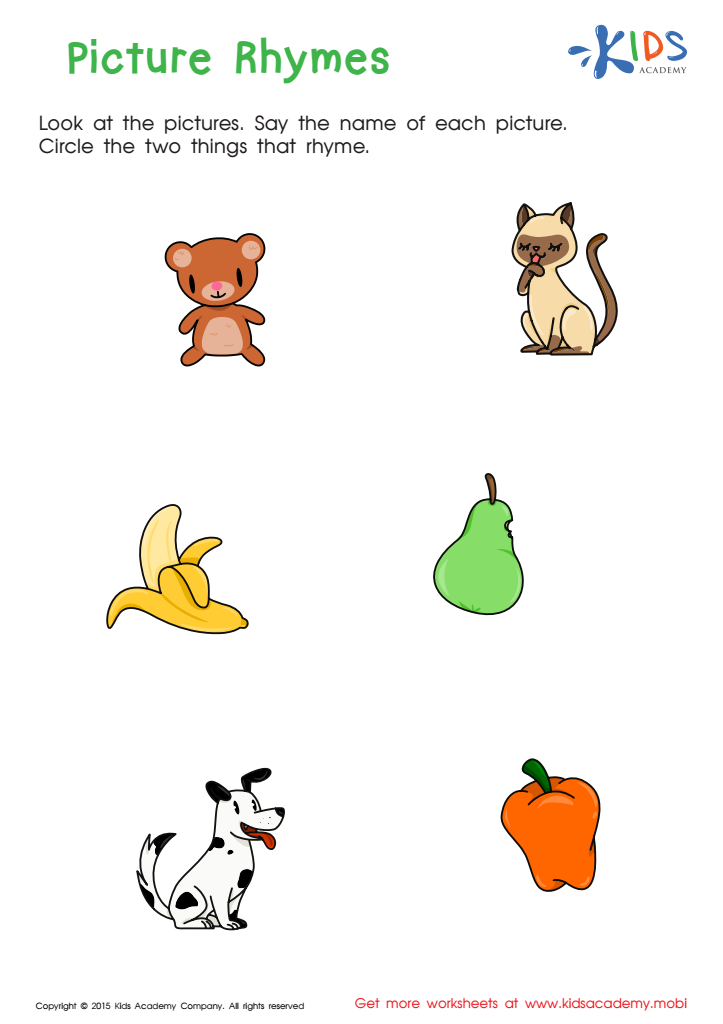
First Words: Picture Rhymes Worksheet







Rhyming skills are crucial for children ages 4-9 as they serve as a foundational component of early literacy and language development. Firstly, recognizing and producing rhymes enhances phonemic awareness, which is the ability to hear and manipulate individual sounds in words. This skill is directly linked to reading success, as it helps children break down words into smaller, more manageable sounds – a key strategy for decoding new words.
Furthermore, engaging with rhymes enriches vocabulary. By interacting with a variety of rhyming words, children naturally expand their word bank. Rhyming also encourages prediction skills, as children begin to anticipate language patterns and sequences, sharpening their cognitive abilities.
Rhyming fosters memory and recall, given that rhymed information is often easier to remember. This mnemonic quality aids not only in learning words but also in recalling instructions, nursery rhymes, and songs, making the learning process more enjoyable and effective.
Additionally, rhyming enhances fluency. It provides a rhythm and repetitive structure that can improve a child's speaking, reading, and even writing skills. Children who engage in rhyming activities are likely to become more confident speakers and writers.
Ultimately, strong rhyming skills lay the groundwork for a smooth and successful journey into more complex literacy and language tasks, making it an essential focus for parents and teachers.