Alphabet understanding Upper & Lowercase Letters Worksheets for Ages 4-9
3 filtered results
-
From - To
Boost your child’s literacy skills with our "Alphabet Understanding Upper & Lowercase Letters Worksheets for Ages 4-9". Designed to help kids recognize, differentiate, and match upper and lowercase letters, these engaging worksheets are perfect for preschoolers to early elementary students. Each worksheet offers fun and interactive activities that enhance letter recognition, writing skills, and phonics understanding. Parents and teachers can use these resources to support reading readiness, build foundational language skills, and instill a love for learning. These worksheets are a valuable addition to any educational program aiming to strengthen alphabet knowledge in young learners.
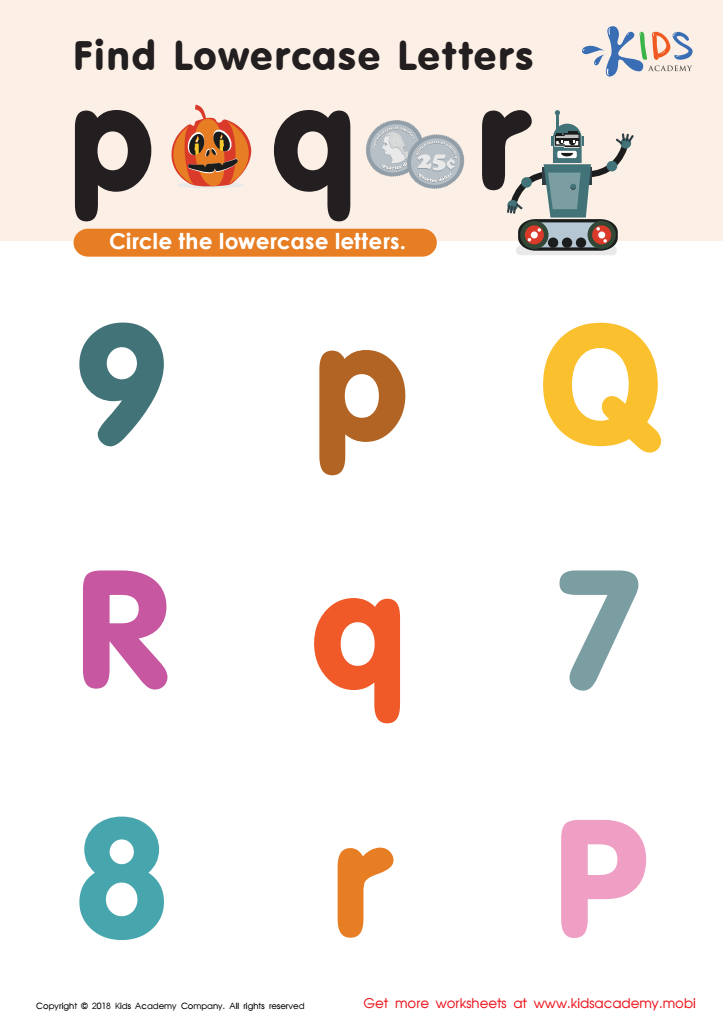
Find lowercase Letters p q r Worksheet
 Assign to My Students

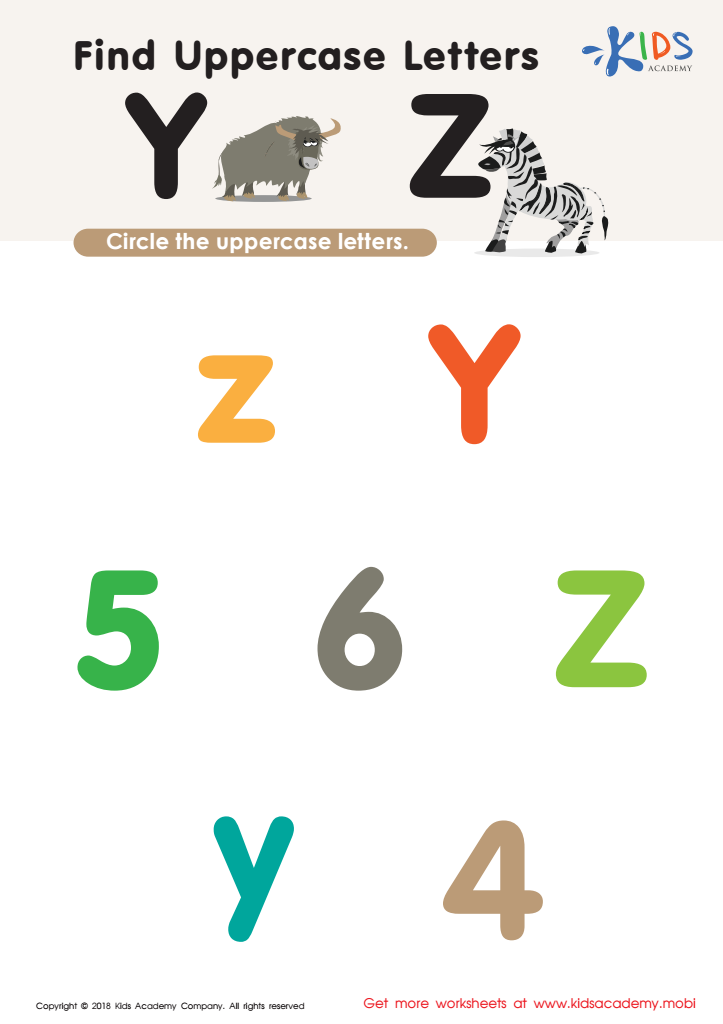
Find Uppercase Letters Y Z Worksheet

Find lowercase letters a b c Worksheet






Understanding both uppercase and lowercase letters is a critical milestone for children aged 4-9, as it lays the foundation for their literacy and communication skills. Alphabet recognition helps children make the connection between spoken and written language, an essential skill for reading and comprehension. Both uppercase and lowercase letters have unique visual characteristics, and familiarity with both is necessary for accurate recognition and proper reading fluency.
Uppercase letters are often used at the beginning of sentences and for proper nouns, making them essential for grammar and meaning in written texts. Lowercase letters, on the other hand, comprise the majority of any text, making their recognition vital for understanding the entirety of written material. Learning both forms helps children become versatile readers and writers who can navigate various textual formats with ease.
Moreover, differentiating between uppercase and lowercase letters aids in developing fine motor skills necessary for writing. Practicing writing both forms helps strengthen hand-eye coordination and prepares children for more advanced writing tasks.
In a broader sense, proficiency with the alphabet boosts cognitive development, supports pattern recognition, and builds a foundation for future educational success. By focusing on this area, parents and teachers can provide children with tools they need to thrive in an academically demanding world.







