Letter-sound association Upper & Lowercase Letters Worksheets for Ages 4-9
3 filtered results
-
From - To
Discover our engaging "Letter-Sound Association Upper & Lowercase Letters Worksheets" designed for children ages 4-9! These interactive worksheets foster early literacy skills by helping young learners connect letters with their corresponding sounds. Covering both uppercase and lowercase letters, the activities encourage recognition and reinforce phonemic awareness through fun and engaging exercises. Ideal for homeschooling or classroom use, our worksheets provide a structured yet playful approach to mastering the alphabet. With vibrant illustrations and clear instructions, children will enjoy developing their reading skills as they practice letter-sound associations. Equip your child with essential foundational skills for a successful learning journey!
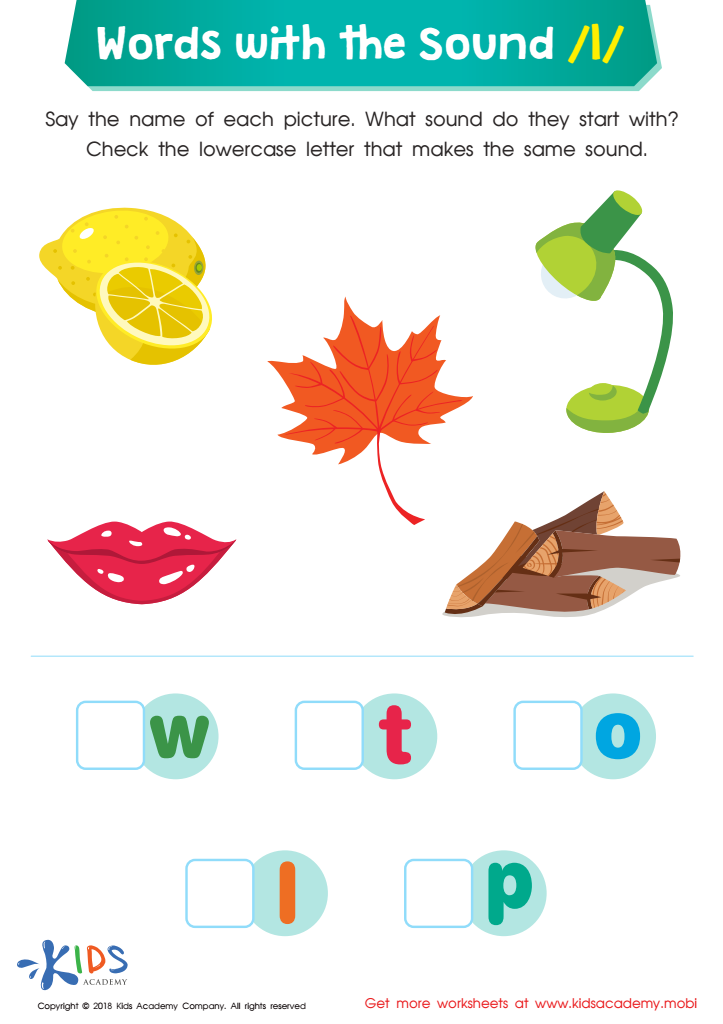
Words with Sound L Reading Worksheet
 Assign to My Students

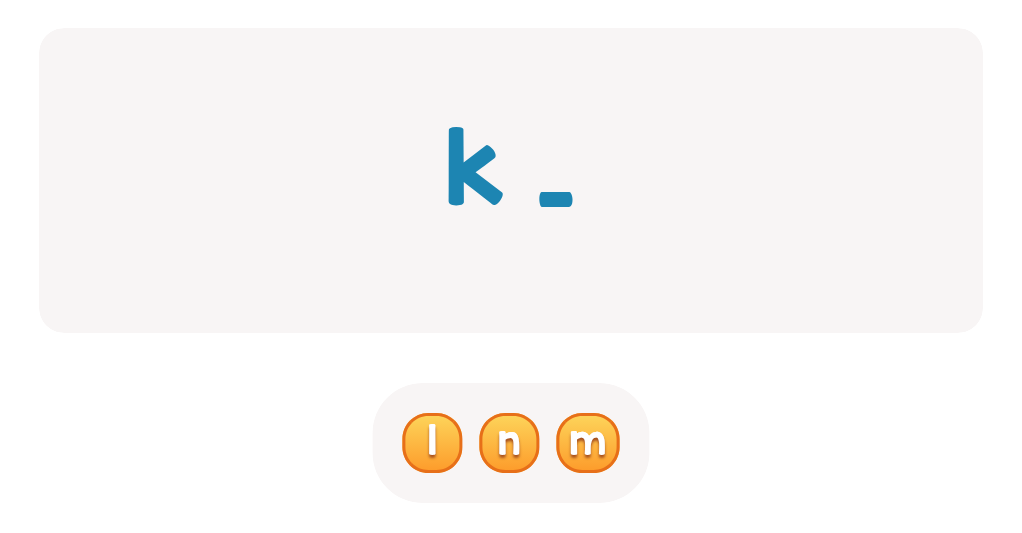
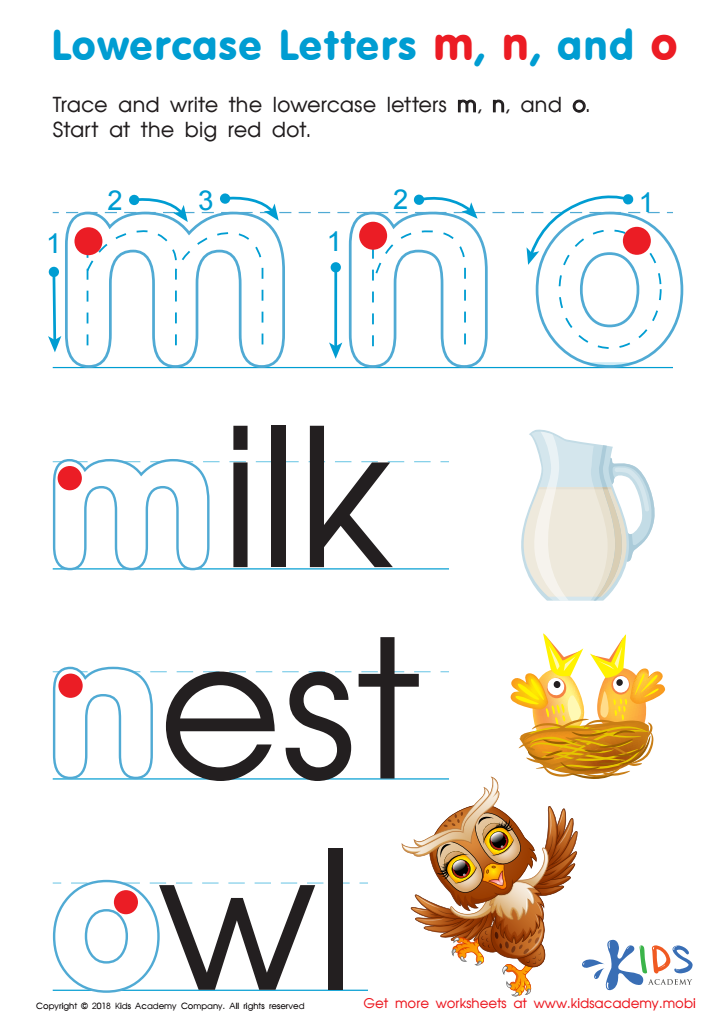
Lowercase Letters m n o Worksheet
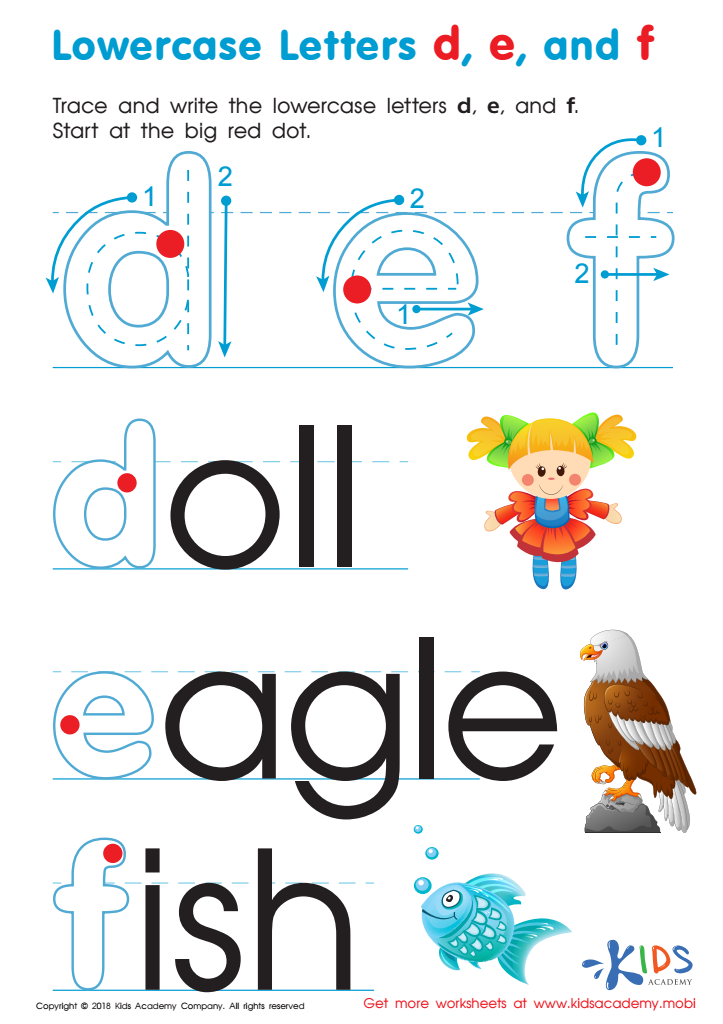
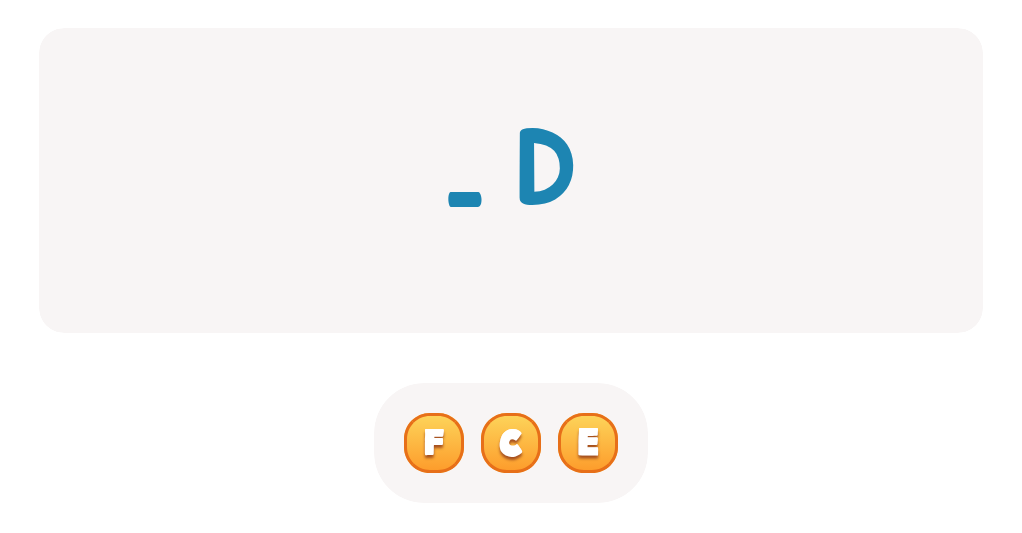
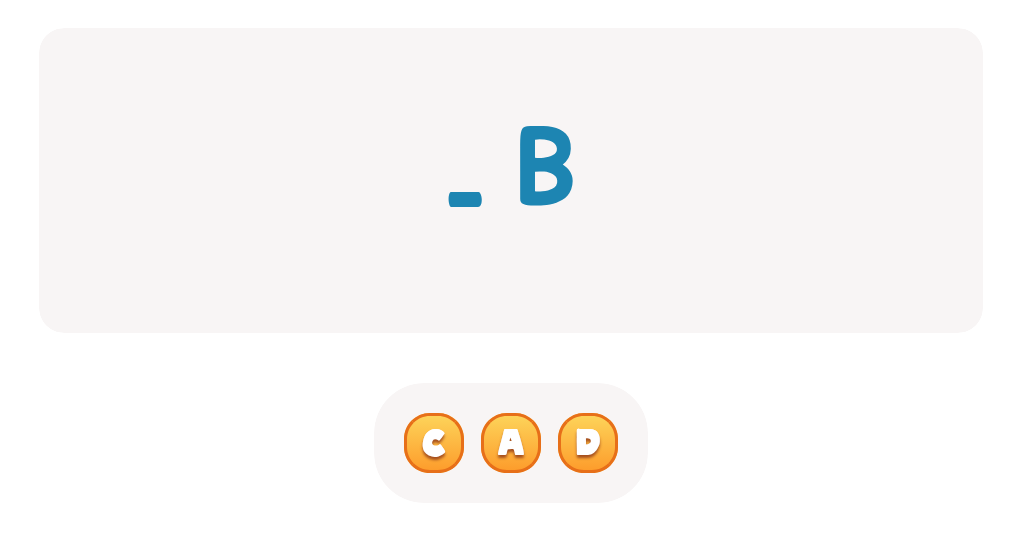
Lowercase Letters d e f Worksheet






Understanding letter-sound associations is crucial for children aged 4-9, as it lays the foundation for literacy and effective communication. As early grade teachers or parents, emphasizing uppercase and lowercase letter recognition can significantly enhance phonetic awareness, which is vital for reading and writing skills development.
When children learn to associate letters with their corresponding sounds, they develop the ability to decode words, facilitating independent reading. Recognizing both uppercase and lowercase letters ensures that children can navigate different texts confidently since these letters serve different purposes in written language. For instance, uppercase letters often signify the beginning of sentences or proper nouns, while lowercase letters are much more prevalent in texts.
Moreover, supporting children in mastering these associations fosters self-esteem and motivation to explore written language, making the learning process enjoyable. Engaging in playful activities involving letter-sound games, songs, and interactive reading can reinforce these concepts ending in better literacy outcomes.
Ultimately, investing attention in letter-sound associations not only enhances reading proficiency but also equips children with essential communication skills they will rely on throughout their educational journey and beyond, encouraging a lifelong love for learning. Parents and teachers play a crucial role in guiding this fundamental aspect of literacy development.







