Letter Tracing Practice Upper & Lowercase Letters Worksheets for Ages 4-9
3 filtered results
-
From - To
Enhance your child's literacy skills with our engaging Letter Tracing Practice worksheets, designed for ages 4-9! This collection features a variety of fun and interactive activities that focus on both uppercase and lowercase letters. Each worksheet is thoughtfully crafted to help young learners develop their handwriting proficiency while reinforcing letter recognition and phonics skills. Ideal for home or classroom use, these worksheets make learning enjoyable and effective. Watch your child build confidence as they trace, write, and master the alphabet with ease. Start their educational journey today with our colorful and captivating tracing worksheets!
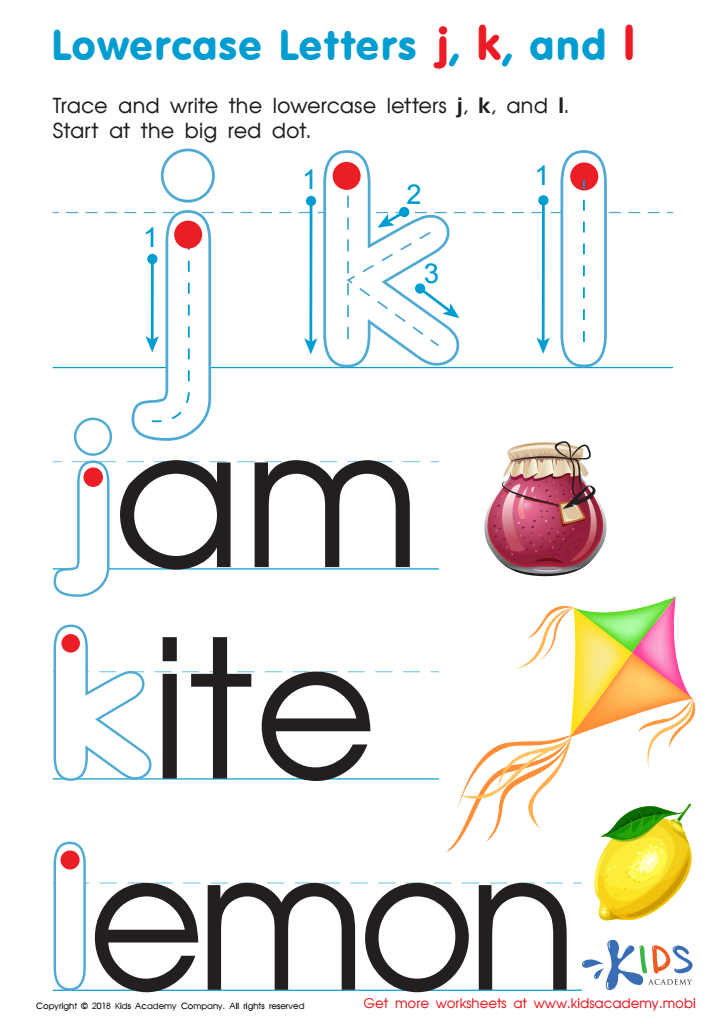
Lowercase Letters j k l Worksheet
 Assign to My Students



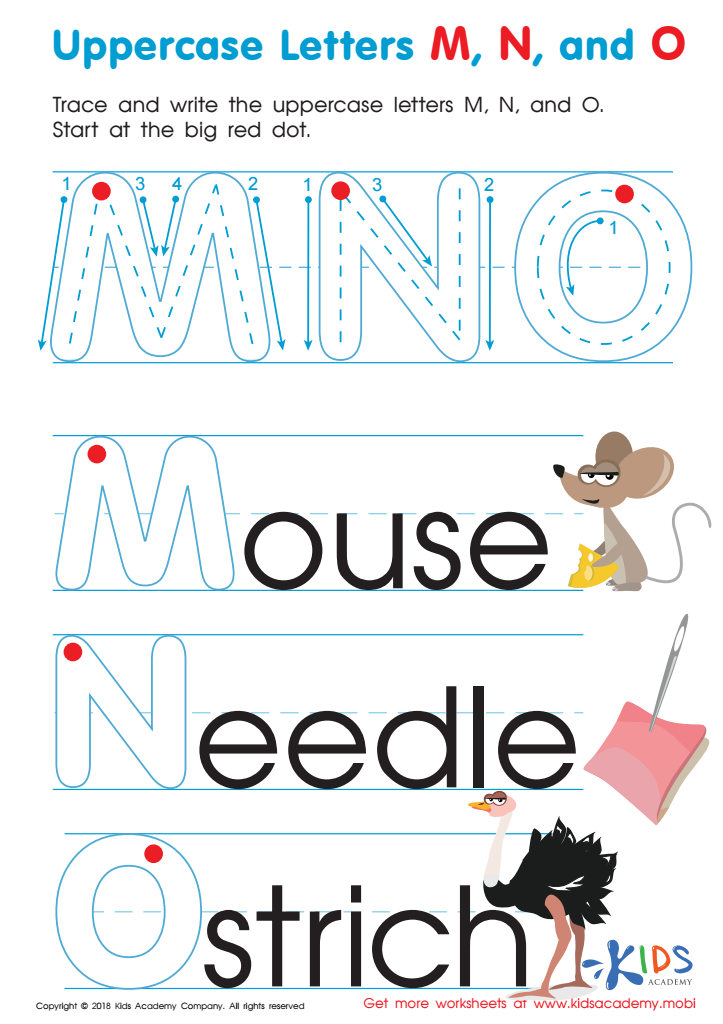
Uppercase Letters M, N, and O Worksheet
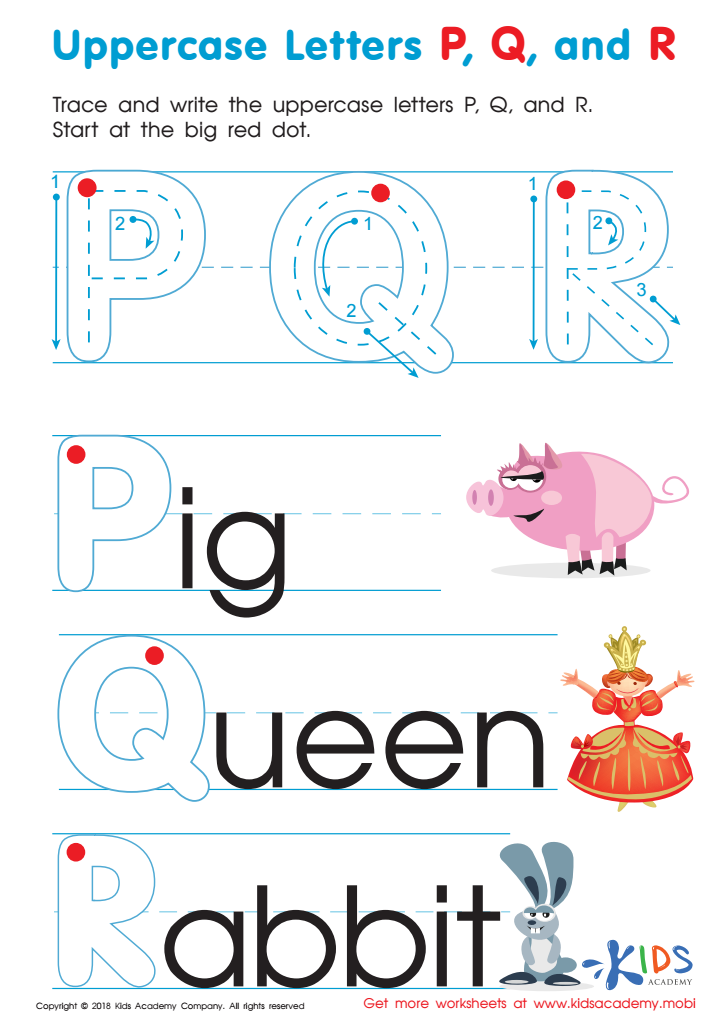
Uppercase Letters P, Q, and R Worksheet






Letter tracing practice is crucial for children aged 4-9 as it lays the foundation for effective reading and writing skills. At this age, children are developing fine motor skills, which are essential for grasping writing instruments. Engaging in tracing activities allows them to practice the movements necessary for forming letters accurately, improving hand-eye coordination and dexterity.
Moreover, letter recognition is a vital early literacy component. By tracing both uppercase and lowercase letters, children learn to differentiate between letters while simultaneously reinforcing their sounds. This dual approach enhances their phonemic awareness, making it easier for them to progress to reading and spelling.
In addition, tracing letters fosters focus and concentration. The repetitive nature of this practice helps instill discipline and encourages a growth mindset, as children learn that improvement comes with practice. For parents, integrating letter tracing into daily routines can create opportunities for bonding and learning together, making it a nurturing experience.
Teachers can utilize letter tracing as a therapeutic tool, benefiting children with various learning styles. Overall, letter tracing is a significant step towards building a child's confidence and proficiency in literacy, setting the stage for lifelong learning. Thus, both parents and teachers should prioritize this practice in early education settings.







