Lowercase letter writing Upper & Lowercase Letters Worksheets for Ages 4-9
3 filtered results
-
From - To
Explore our engaging Lowercase Letter Writing Worksheets designed for children aged 4-9. These fun, interactive resources help young learners master the art of forming lowercase letters with ease. Our carefully crafted worksheets offer colorful illustrations and simple instructions, making learning enjoyable and effective. By practicing with various activities, your child will develop crucial fine motor skills while enhancing their handwriting proficiency. Perfect for use at home or in the classroom, our worksheets create a strong foundation for literacy skills. Help your child gain confidence as they practice writing lowercase letters, turning writing into a delightful adventure!
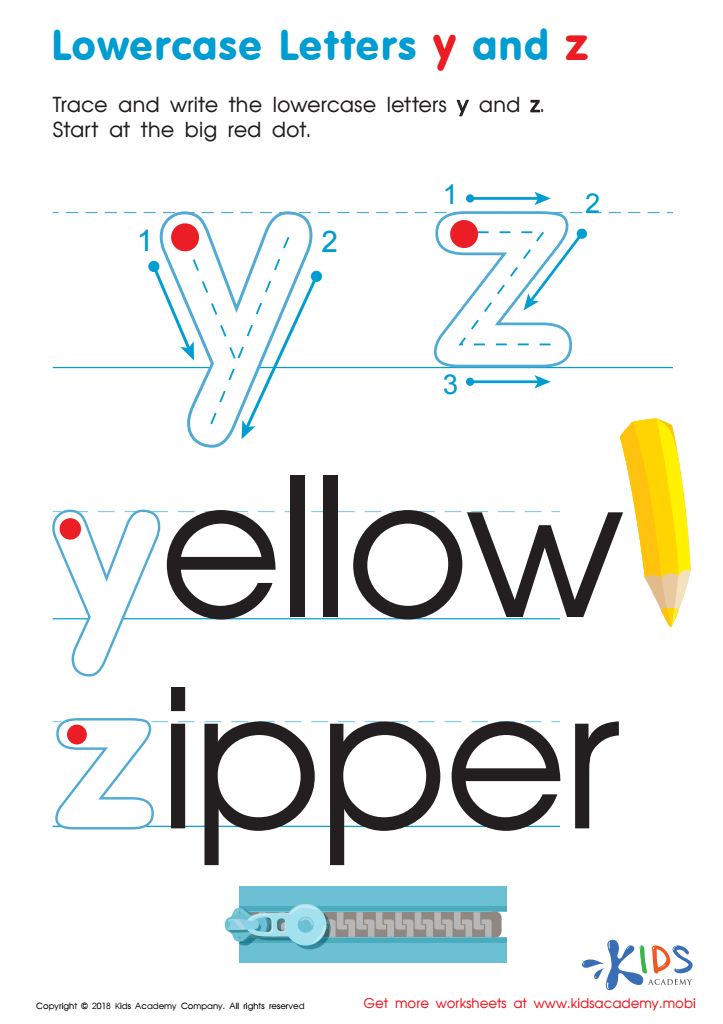
Lowercase Letters y z Worksheet
 Assign to My Students

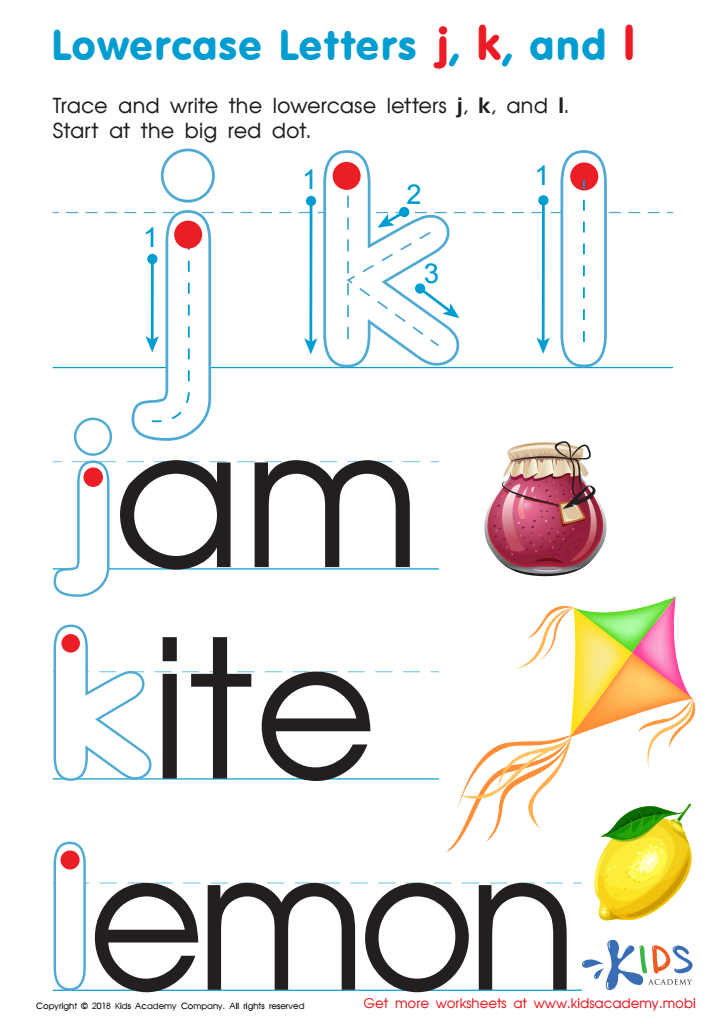
Lowercase Letters j k l Worksheet
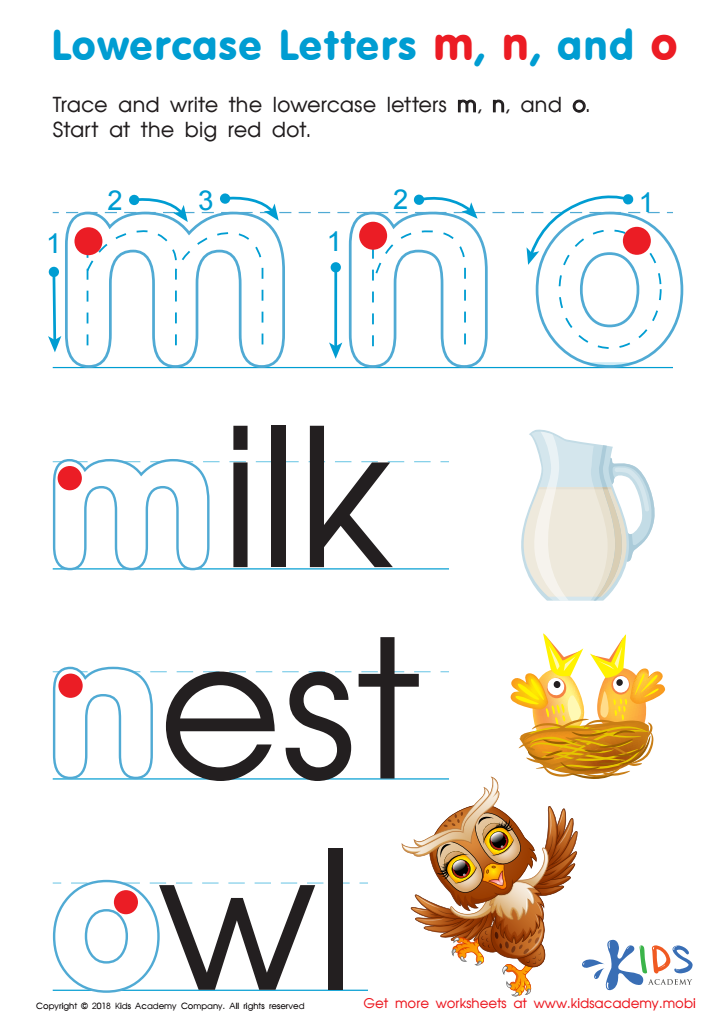
Lowercase Letters m n o Worksheet






Teaching lowercase and uppercase letter writing to children aged 4-9 is essential for several reasons. First, mastering both forms of letters is crucial for early literacy skills. As children learn to distinguish between uppercase and lowercase letters, they enhance their ability to read and write effectively. This understanding supports their transition into more complex texts, as most written language employs a combination of the two forms.
In addition, learning correct letter formation significantly impacts children's handwriting legibility. Good penmanship fosters confidence and encourages self-expression through writing. As children start crafting stories or recording their thoughts, neat handwriting ensures clear communication, essential during their formative education years.
Moreover, understanding when to use uppercase letters—for the beginning of sentences, proper nouns, or acronyms—reinforces grammatical skills vital for academic success. This knowledge sets a strong foundation for language arts, which is integral in developing critical thinking and comprehension skills.
Lastly, engaging in activities that promote letter-writing proficiency can strengthen the bond between parents, teachers, and children. Collectively practicing letter formation through creative exercises can be a joyful and memorable experience, fostering a love for learning that lasts a lifetime.







