Uppercase identification Upper & Lowercase Letters Worksheets for Ages 4-9
5 filtered results
-
From - To
Discover engaging Uppercase Identification Worksheets designed for children ages 4-9! These fun and interactive activities help young learners distinguish between uppercase and lowercase letters, laying a solid foundation for their literacy skills. Each worksheet encourages children to identify, trace, and match letters, ensuring they grasp the importance of letter recognition in reading and writing. Aligned with educational standards, these worksheets foster development through playful learning, enhancing both fine motor skills and cognitive abilities. Perfect for use at home or in the classroom, our resources make learning the alphabet enjoyable and effective. Empower your child’s literacy journey today!
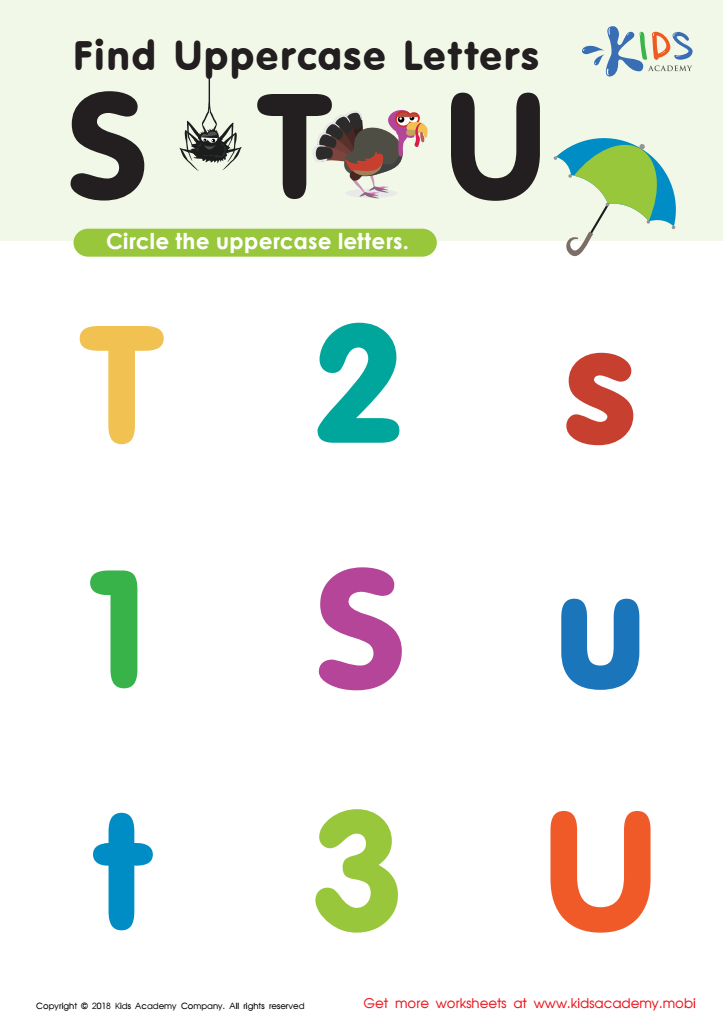
Find Uppercase Letters Worksheet
 Assign to My Students

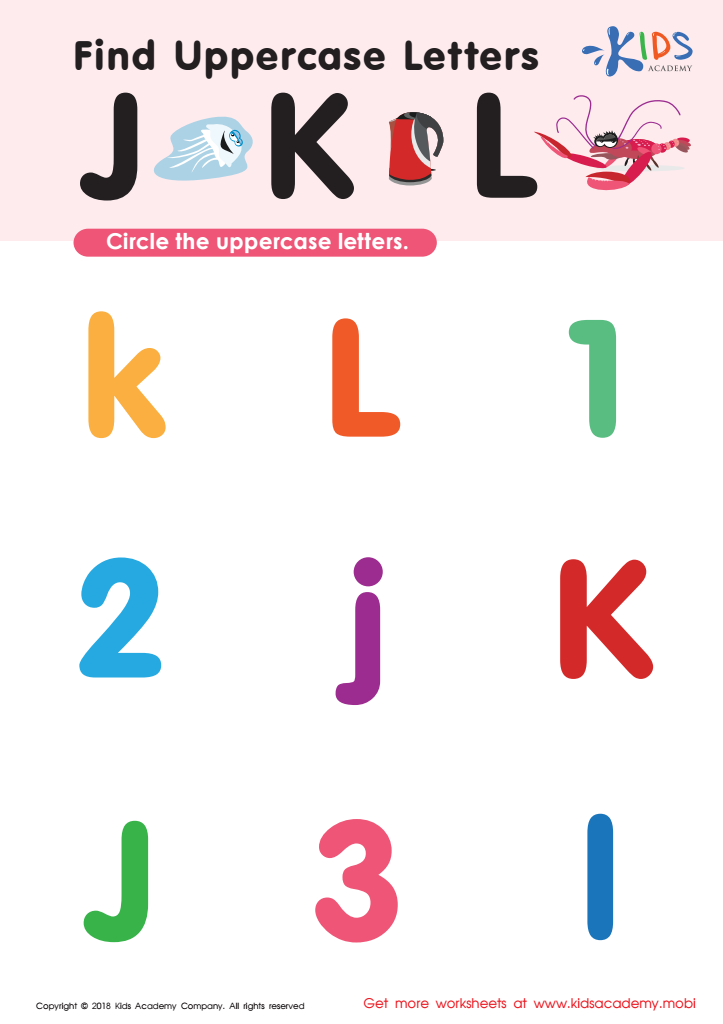
Find Uppercase Letters J, K, and L Worksheet
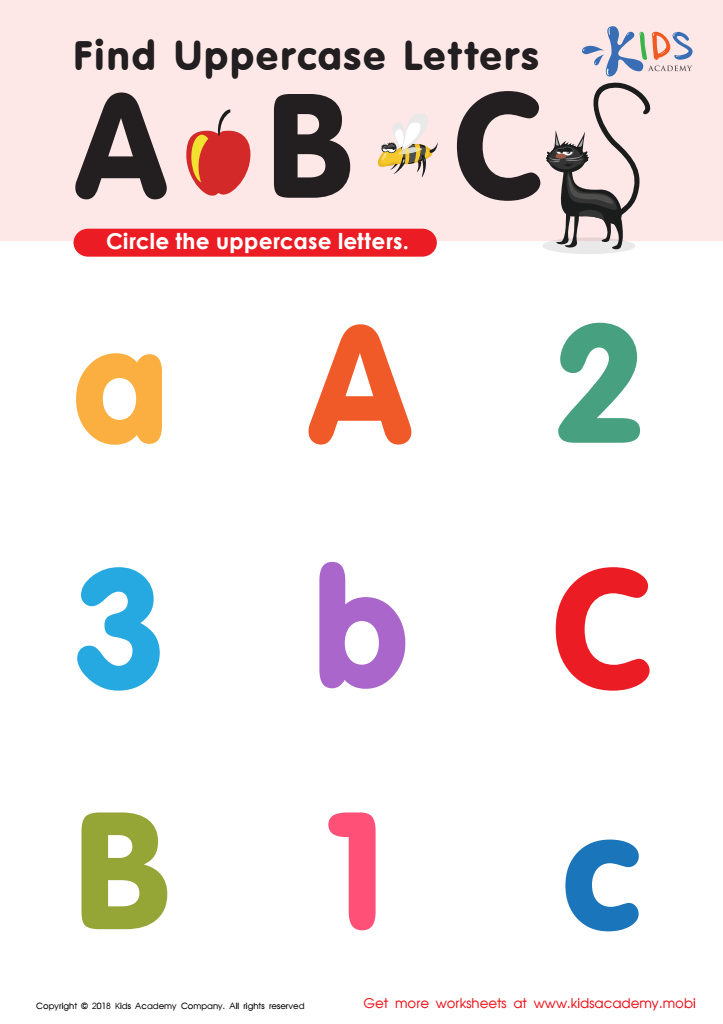
Find Uppercase Letters A, B, and C Worksheet
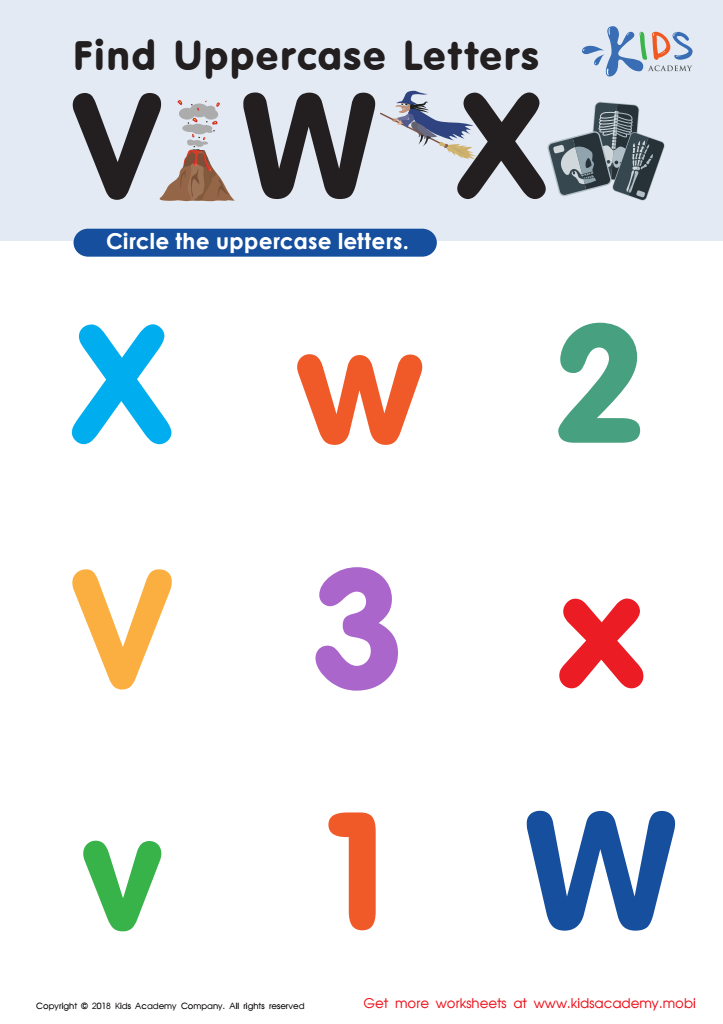
Find Uppercase Letters V, W, X Worksheet
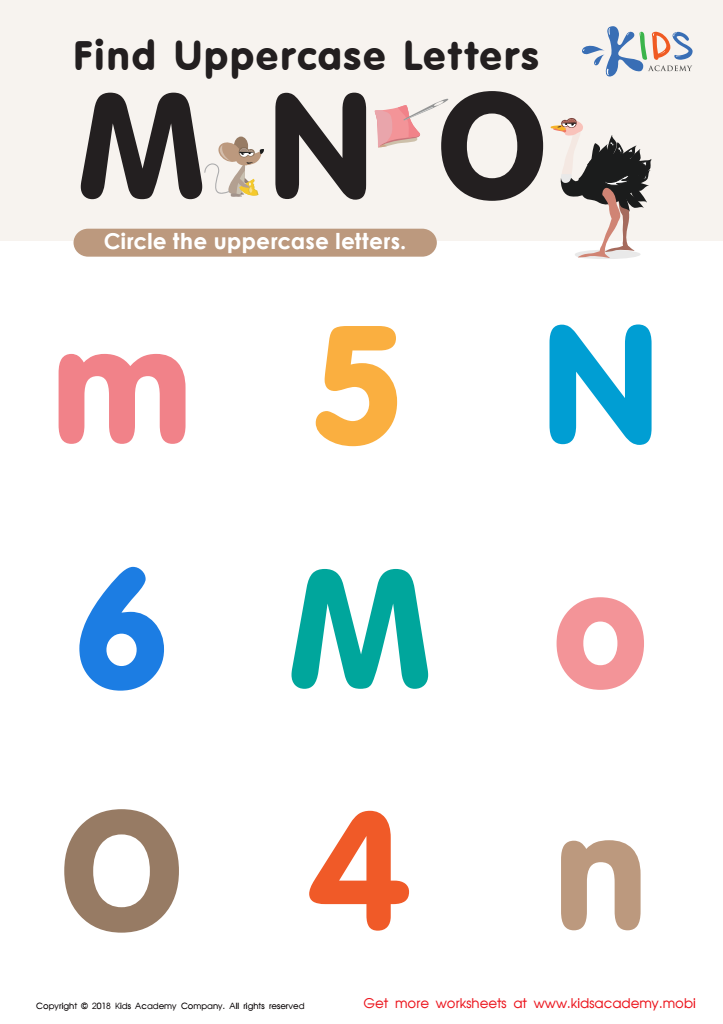
Find Uppercase Letters M, N, and O Worksheet






Understanding uppercase and lowercase letters is foundational for young learners aged 4-9. This knowledge is crucial not just for literacy development, but also for overall communication skills. Uppercase letters, often used at the beginning of sentences or for proper nouns, serve important functions in writing. Recognizing when and how to use them allows children to encode and decode written language effectively.
Moreover, an early grasp of letter identification contributes to reading fluency and comprehension. When children can quickly recognize letters, they can focus more on the meaning of words, leading to greater reading confidence and enjoyment.
Teachers and parents play a critical role in introducing these concepts through engaging and interactive activities. Encouraging children to explore letters through games, songs, and stories reinforces their learning in fun ways.
Additionally, a solid understanding of capitalization rules is vital for students as they progress academically. Written assignments often have specific expectations regarding proper usage, and mastering these skills helps students express themselves more clearly and confidently.
Overall, fostering uppercase and lowercase letter identification at an early age builds a strong foundation for writing and literacy, setting children on a path toward successful communication skills throughout their educational journey.







