Sound Association Vowels Worksheets for Ages 4-9
3 filtered results
-
From - To
Welcome to our "Sound Association Vowels Worksheets" specifically designed for children aged 4-9! These engaging worksheets aim to enhance phonemic awareness through fun and interactive activities centered around vowel sounds. Your little learners will explore the connections between letters and sounds, develop essential reading skills, and boost their vocabulary in an enjoyable way. Our thoughtfully crafted exercises include matching sounds to corresponding pictures, completing words, and more, providing a comprehensive approach to sound recognition. Perfect for home or classroom use, these worksheets make learning vowels a delightful experience. Download now and watch your child gain confidence in their reading journey!
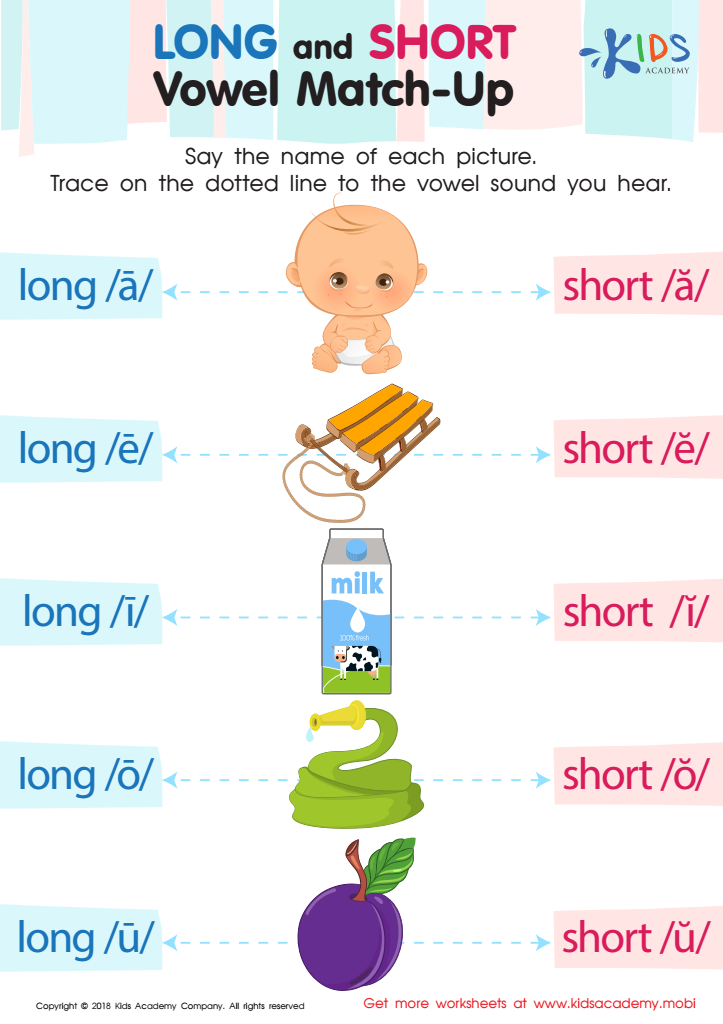
Long and Short Vowel Match up Reading Worksheet
 Assign to My Students
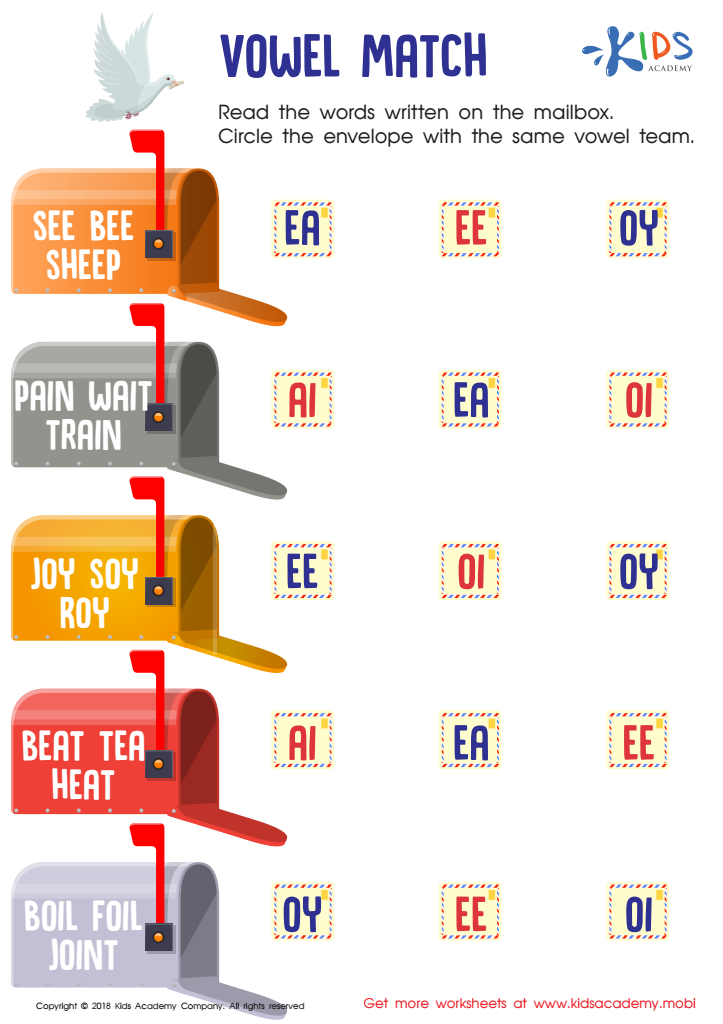
Vowel match Worksheet
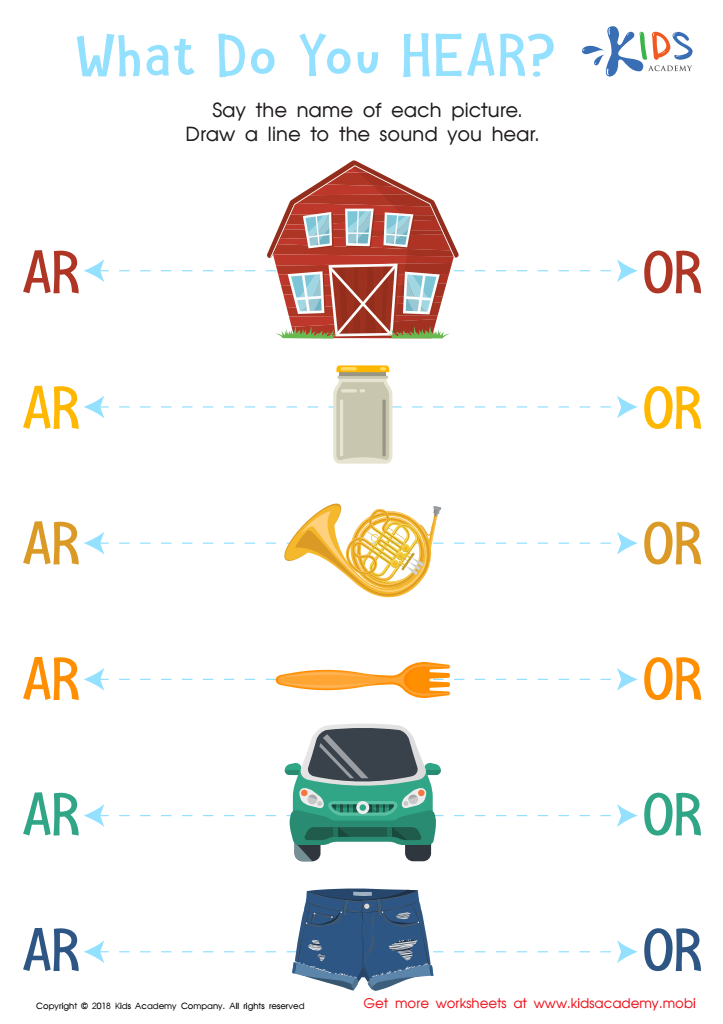
What do you hear Worksheet





Sound Association Vowels are crucial for early literacy development in children aged 4-9. Understanding how vowels function phonetically helps children decode words, enhancing their reading skills. Research shows that a strong foundation in phonemic awareness, particularly with vowels, is essential for successful reading and writing. When children can identify and manipulate vowel sounds, they're better equipped to tackle unfamiliar words and improve their overall vocabulary.
For parents and teachers, fostering an environment that emphasizes Sound Association Vowels encourages a love for learning. Engaging activities that play with vowel sounds help develop critical listening and articulation skills. Furthermore, this foundational knowledge supports spelling and comprehension, which are vital to academic success. Developing expertise in vowels also boosts children’s confidence, as they become more proficient readers and writers.
Given that early literacy skills are predictive of long-term academic achievements, prioritizing attention to Sound Association Vowels can make a significant difference. In the fast-paced digital age, where strong reading skills are increasingly important, ensuring that children grasp vowel sounds will have lasting effects on their educational journey. Thus, parents and teachers should actively promote and support the exploration of vowel sounds to unlock children’s literacy potential.







