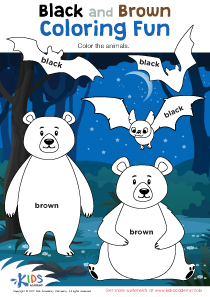
Vocabulary Building English for Beginners Worksheets for Ages 4-9
6 filtered results
Difficulty Level
Grade
Age
-
From - To
Subject
Activity
Standards
Boost your child's language skills with "Vocabulary Building English for Beginners Worksheets for Ages 4-9"! Designed specifically for young learners, our engaging worksheets make mastering new words fun and interactive. Perfect for kids learning English as a second language, these activities include colorful images, matching games, and simple exercises that enhance vocabulary and promote comprehension. Whether at home or in the classroom, help your child confidently expand their word knowledge with tailored worksheets that cater to their age and skill level. Start your child's language journey today with our expertly crafted resources!
Favorites
With answer key
Interactive
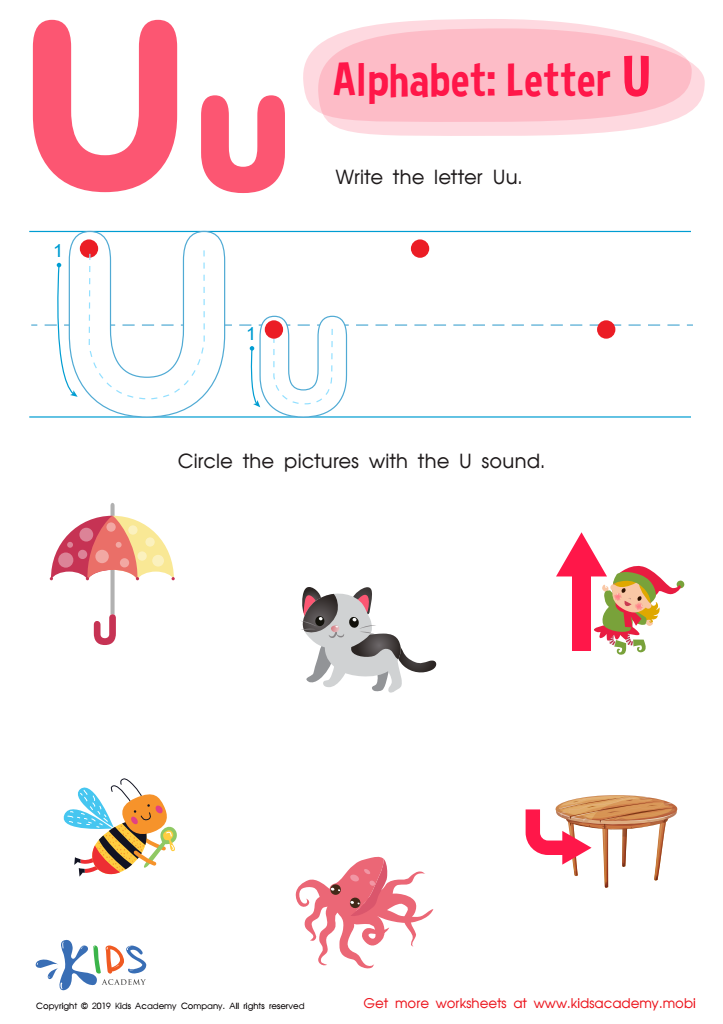
Letter U Tracing Worksheet
Your students can have fun and learn about the alphabet with this letter «U» worksheet. Pre-schoolers will trace the letter «U», circle words with the letter sound, and learn phonics while boosting their confidence. Doing these tasks will help them understand the letter more.
Letter U Tracing Worksheet
Worksheet
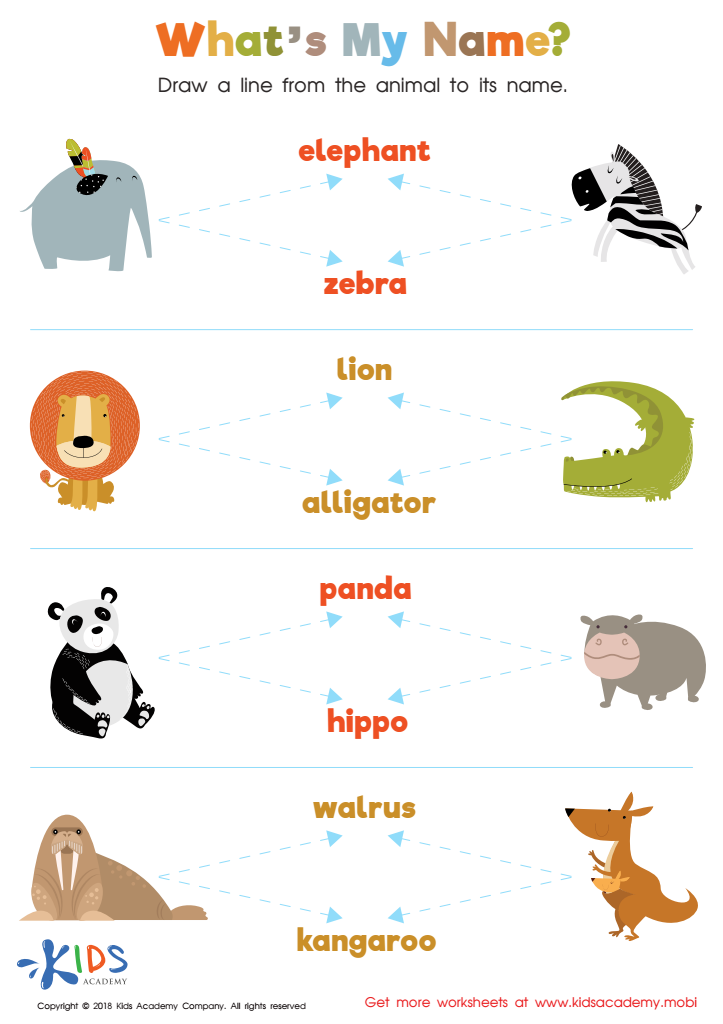
Animals and Their Names Worksheet
Match animals with their names with this worksheet! Draw a line from the word to its picture. Say the name of each animal. Later, search for these animals at the zoo - great for reinforcing learning!
Animals and Their Names Worksheet
Worksheet
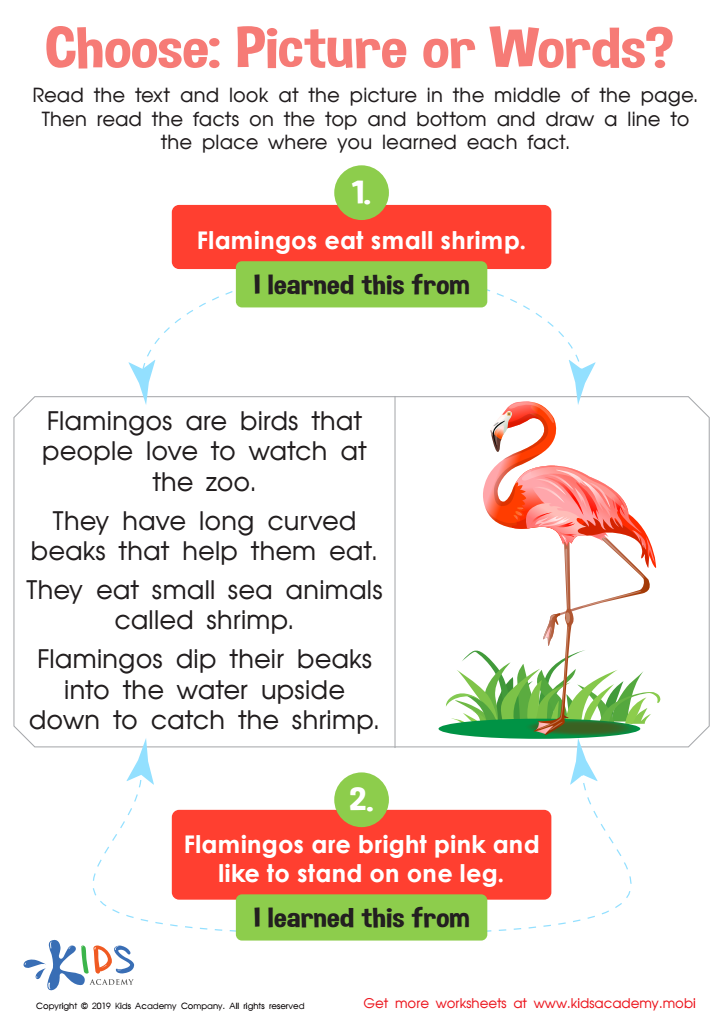
Choose Picture Words Worksheet
Pictures are powerful tools for children learning to read. Early readers apply their prior knowledge and pictures to create understanding. This PDF worksheet lets them understand the combined power of pictures and words, by having them choose one to answer how they learned the facts about flamingoes.
Choose Picture Words Worksheet
Worksheet
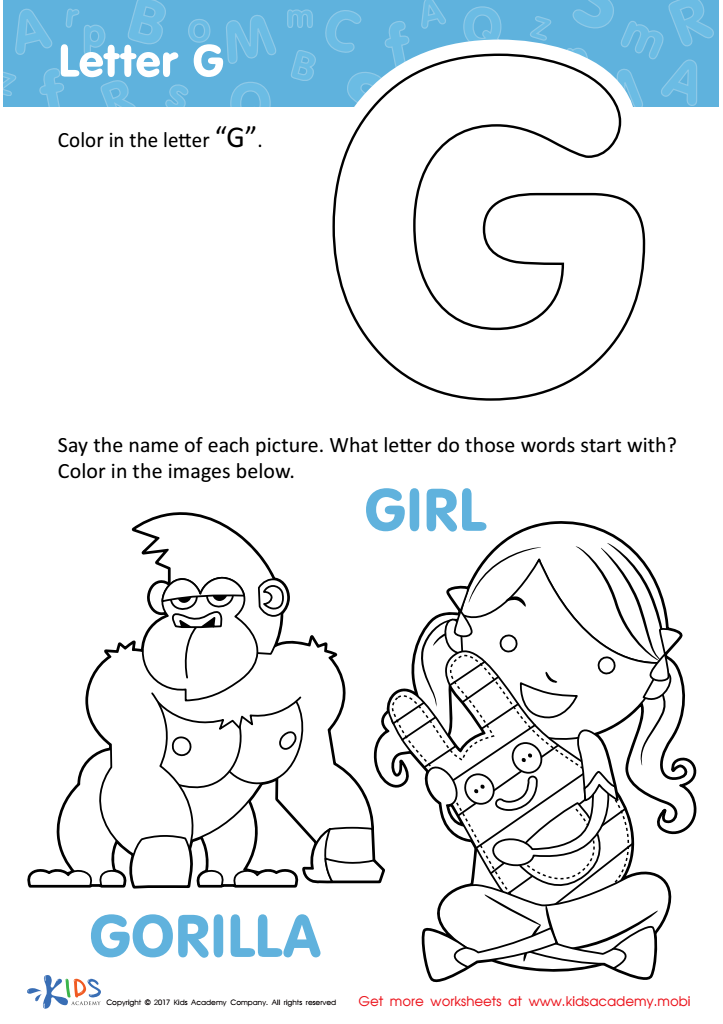
Letter G Coloring Sheet
This "G" coloring page encourages creativity and teaches kids the letter "G" sound. With its fun visuals and familiar words, it's sure to excite your child. Plus, you can talk about the letter’s sound with the pictures given.
Download (PDF)
 Assign to My Students
Assign to My Students
Letter G Coloring Sheet
Worksheet
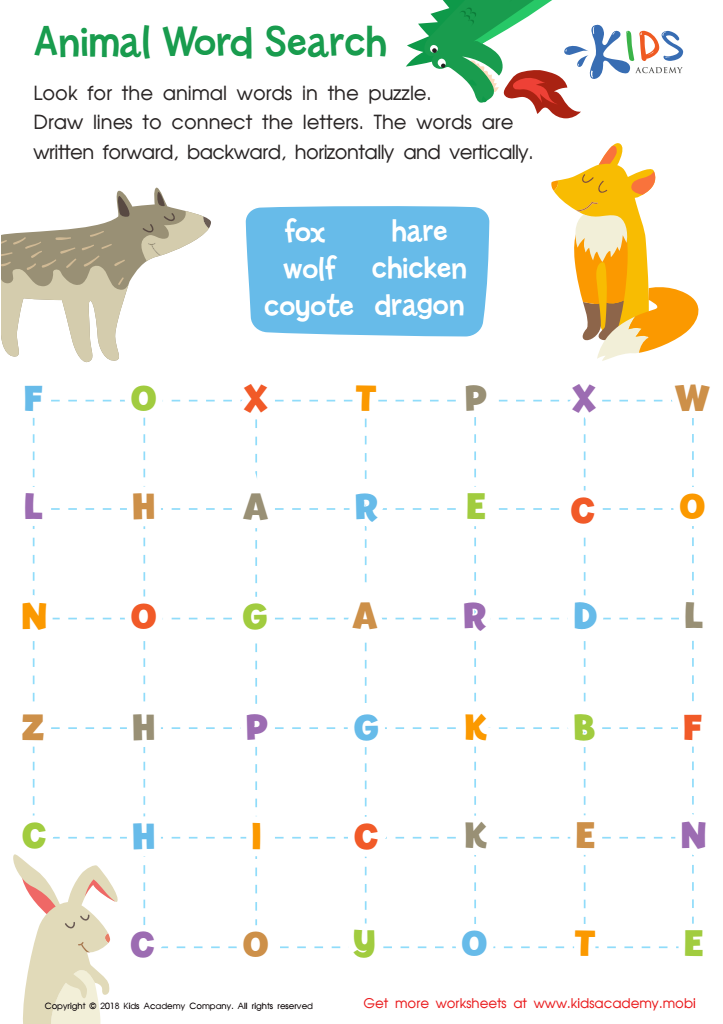
Animal Word Search Worksheet
Students can have fun and strengthen spelling and vocabulary skills with this word search worksheet. Search for animal words and circle the letters in the puzzle. Words can be found forwards, backwards, horizontally or vertically, providing a great challenge to foster critical thinking skills. An enriching activity for all ages!
Animal Word Search Worksheet
Worksheet
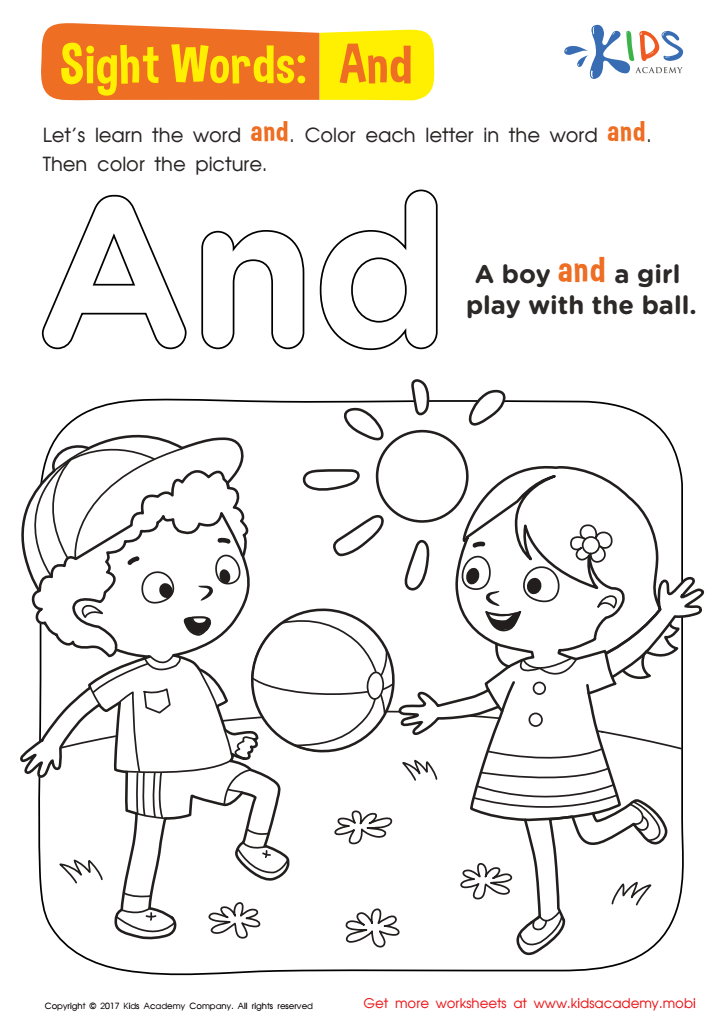
And Worksheet Sight Words Worksheet
Help your child get a jumpstart on reading with sight words! Print out this fun worksheet and get your child to read the sentence. Point out the word "and", then color the word and enjoy the rest of the scene! It's a great way to introduce sight words and get their early reading skills going!
Download (PDF)
Assign to My Students
Assign to My Students
And Worksheet Sight Words Worksheet
Worksheet
Join Kids Academy for Free
Who is primarily going to use this learning content?




Vocabulary building for children ages 4-9 is a crucial aspect of their early education and development. This formative period serves as the foundation for their future communication skills, reading comprehension, and academic success. Children with a robust vocabulary are better equipped to express their thoughts, understand others, and engage in learning.
Parents and teachers should care deeply about boosting children's vocabularies because the early years are when the brain is most receptive to language acquisition. Research indicates that children who start school with larger vocabularies perform better academically. These children find it easier to decode new words, understand complex instructions, and engage in higher-level thinking activities.
Building a strong vocabulary also enhances children's social skills. Being able to express oneself clearly and understand others helps young children make friends, resolve conflicts, and participate in group activities. This lays the groundwork for positive social interactions and emotional well-being.
Incorporating vocabulary-building activities—like reading aloud, playing word games, and engaging in conversations—can be both fun and educational. These activities enrich a child’s language input and offer more opportunities to explore new words in context. For this reason, parents and teachers should prioritize vocabulary development, ensuring children are well-prepared for future educational challenges and social interactions.