
Addition up to 5 Worksheets for Ages 4-9
4 filtered results
Difficulty Level
Grade
Age
-
From - To
Subject
Activity
Standards
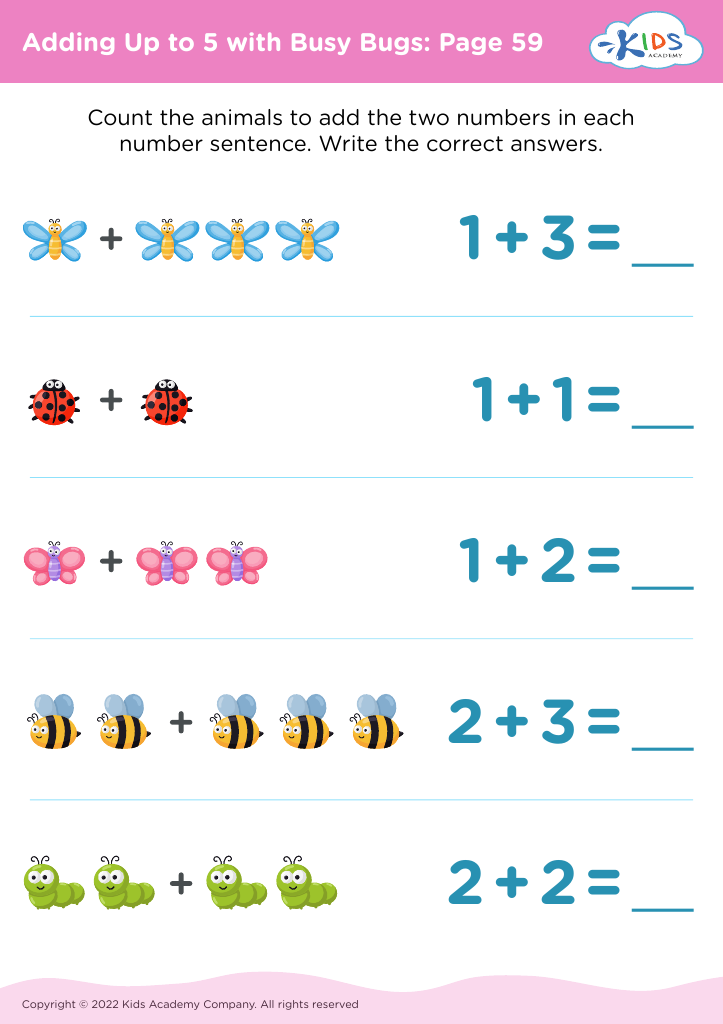
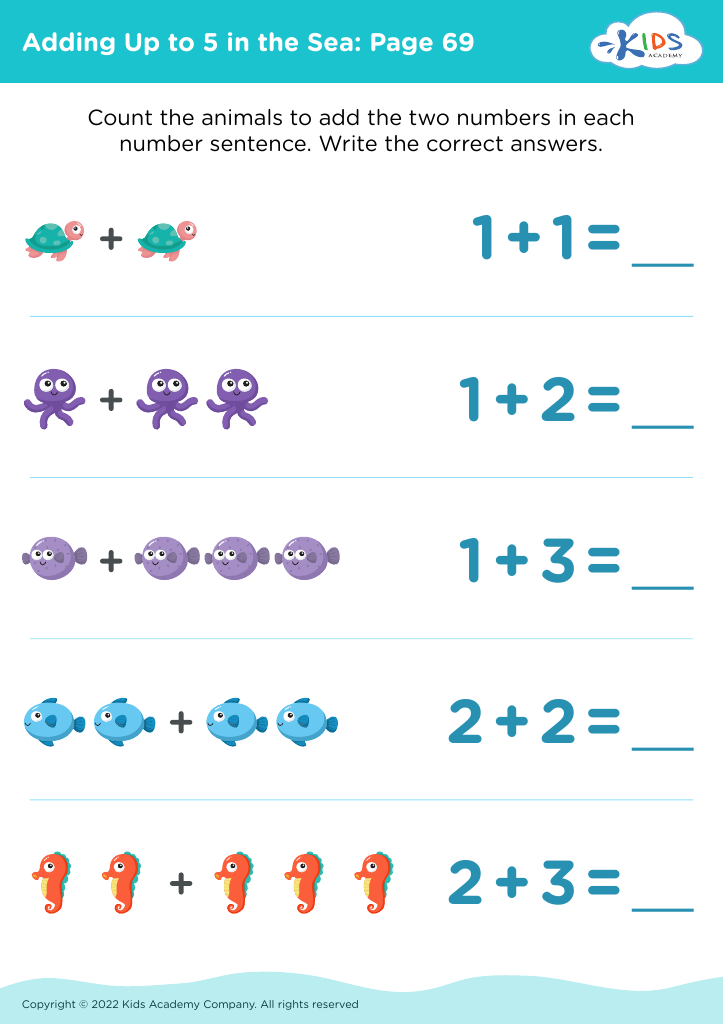
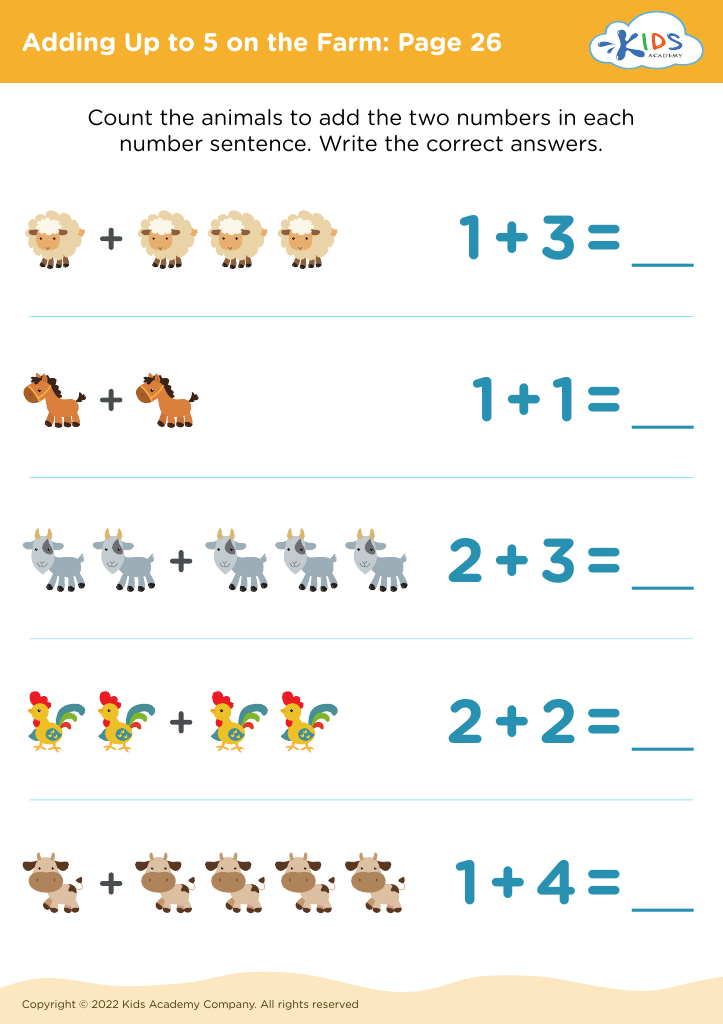
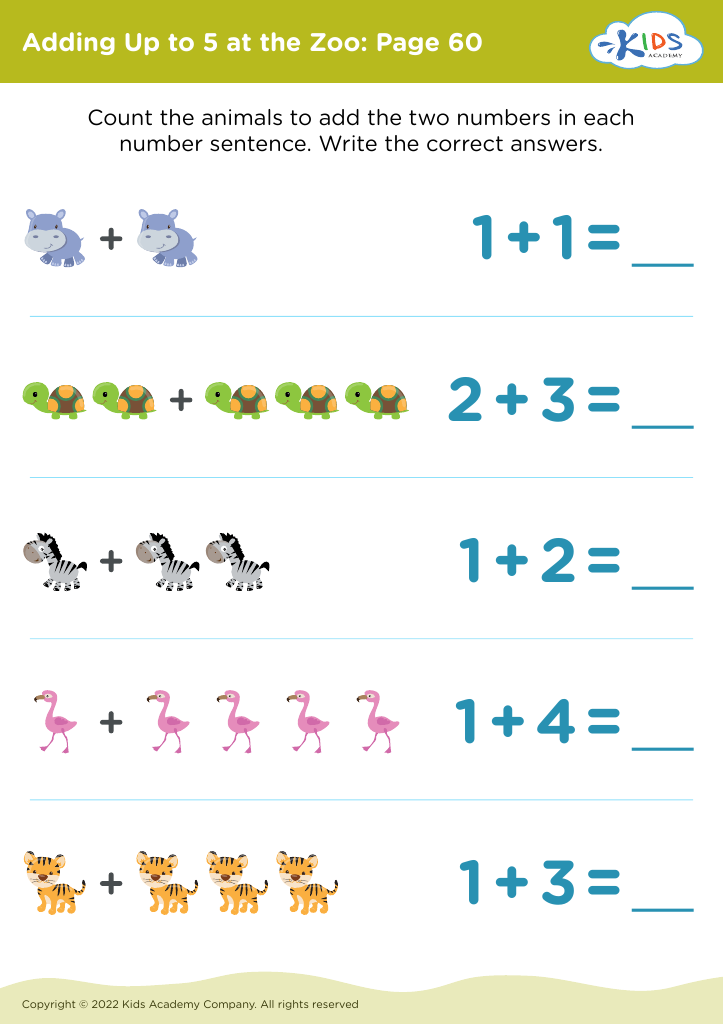
Discover our engaging "Addition up to 5 Worksheets" tailored for children ages 4-9! These worksheets are designed to make early math fun and interactive, helping young learners master basic addition skills. Featuring vibrant illustrations and simple, clear instructions, our worksheets encourage children to explore addition through various activities, such as visual aids and hands-on practice. Perfect for classroom use or home learning, these resources support educators and parents in nurturing a strong foundational understanding of math. Download our worksheets today and watch your child's confidence and skills grow as they learn to add with ease!
Favorites
With answer key
Interactive
Join Kids Academy for Free
Who is primarily going to use this learning content?








Parents and teachers should prioritize teaching addition up to 5 for ages 4-9 because it lays the foundational skills for all future mathematics. Mastering this basic concept leads to improved number sense, which is essential for understanding larger numbers and more complex mathematical operations later on. Early familiarity with addition not only builds confidence but also encourages a positive attitude towards math, minimizing anxiety and resistance that can develop from a lack of understanding.
In these formative years, children thrive on interactive and engaging learning experiences, and addition can be taught through fun activities, games, and everyday situations. This makes math relatable and enjoyable, encouraging lifelong learning practices. Additionally, the social skills developed during collaborative math games aid in teamwork and communication skills, crucial for holistic development.
These foundational skills also play an essential role in cognitive development, enhancing a child's problem-solving abilities and logical reasoning. Furthermore, understanding addition prepares children for broader academic success across subjects, as math is intricately linked to science, literacy, and even social studies. By focusing on addition up to 5, parents and teachers cultivate essential skills that bridge academic and real-world applications, empowering children to excel academically and socially.








